

 Podgląd w skali 1:1
 Wyślij jako kartkę
 Udostępnij
 Szczegóły dzieła
 Przewodnik

 Pobierz obraz
 Podobne obiekty
 RTG
RTG Pokaz slajdów
 Statystyki
The student


 Rozwiń treść
Dzieło sztuki prezentowane na tej stronie podlega ochronie prawem autorskim, co oznacza, że nie mamy prawa do tworzenia ani sprzedaży jego identycznej reprodukcji. Ochrona ta jest egzekwowana na mocy umów międzynarodowych, takich jak Konwencja berneńska oraz przez przepisy prawa krajowego, w tym te określone w Prawo autorskie USA – Tytuł 17.
Metoda ta jest w pełni zgodna z przepisami prawa autorskiego, ponieważ nie polega na kopiowaniu ani powielaniu chronionego dzieła. Stanowi ona kreatywną reinterpretację – nowy obraz, który czerpie inspirację z oryginału, ale nie jest z nim tożsamy.
Giclée / Wydruk artystyczny
Wydruki giclée lub płótna o jakości muzealnej, szybka realizacja i szeroki wybór opcji wykończenia. ( Zamów ręcznie malowaną reprodukcję Przejdź do wersji cyfrowej)




P118B zł10

P118H zł10

P118W zł10

P438Z zł10

P508JH zł12

P508YH zł12

P805H zł10

P805Z zł10

P919BZ zł10

P919G zł10

P919XJ zł10

P959ZH zł10

P968JZ zł12

W106C zł8

W218G zł10

W218JH zł8

W218Y zł10

W307PJ zł10

W316G zł10

W316PJ zł8

W316Y zł10

W398PJ zł8

W4111J zł10

W500HY zł15

W500JH zł15

W692G zł12

W849H zł8

W940BG zł15

W953PJ zł8




Wybierz spośród naszych standardowych rozmiarów, które zachowują oryginalne proporcje dzieła sztuki.

Wpisz wymaganą szerokość i wysokość, aby dopasować grafikę do ramy lub ściany. Wydruk można jedynie przyciąć, nigdy nie powiększając go poza oryginalny obraz, dlatego format o innych proporcjach spowoduje utratę części kompozycji. Przed rozpoczęciem druku prześlemy Ci cyfrowy podgląd do zatwierdzenia. Obraz wyświetlany na tej stronie nie pokazuje rzeczywistego przycięcia — jedynie podgląd oddaje ten efekt.
Dostawa na cały świat () w ciągu 2 tygodni zamiast standardowych 4/5 tygodni. (25 Październik)

Bezpłatna ekspresowa wysyłka na cały świat

Wysokiej jakości płótno lniane

Pełne ubezpieczenie przesyłki

Gwarancja zwrotu należności celnych i podatków importowych

Gwarancja wiernego odwzorowania kolorów

100-dniowa polityka zwrotów (tylko w przypadku wad)

Gwarancja 100% zwrotu pieniędzy

Zniżka przy zakupie wielu sztuk
 Opcja ze szkłem jest dostępna wyłącznie w rozmiarach poniżej 110 cm

The student
Giclée / Wydruk artystyczny
Wymiary reprodukcji
-


Cena całkowita
zł 307
A Quiet Introspection: The Soul of Mario Sironi’s The Student
In the quiet corners of art history, certain works possess the power to halt time, inviting the viewer into a sanctuary of thought and stillness. The Student, a masterful creation by the Italian maestro Mario Sironi, is one such masterpiece. This evocative portrait captures a woman lost in a moment of profound introspection, seated at a table that serves as an altar to intellect and solitude. Clad in somber black attire, her dark hair framing a face of contemplative depth, she sits before a mirror—a classic symbol of self-reflection and the duality of identity. The scene is not merely a depiction of a person, but an invitation into a private, cerebral world where the boundaries between the physical room and the internal mind begin to blur.
The composition is rich with an atmosphere of scholarly elegance. Surrounding the central figure is a curated landscape of artistic and intellectual artifacts: statues that stand like silent sentin Riens, vases that anchor the space with classical grace, and a single book resting near her hand, suggesting a life dedicated to the pursuit of knowledge. The presence of these objects transforms the setting from a simple room into an atelier of the soul. For the discerning collector or interior designer, this painting offers more than just visual beauty; it provides a focal point of sophisticated gravity, making it an ideal centerpiece for spaces dedicated to study, libraries, or refined living areas where conversation and thought are encouraged.
Technique and the Luminosity of Divisionism
To understand the emotional weight of The Student, one must look closely at Sironi’s early mastery of Divisionism. Before his later shifts toward more monumental and architectural styles, Sironi utilized this technique to breathe life into his subjects through a delicate interplay of light. Rather than blending colors on the palette, he applied small, distinct strokes of pigment that, when viewed from a distance, coalesce in the eye of the beholder to create a shimmering, luminous effect. This method allows the shadows in the woman's black clothing to feel deep and velvety, while simultaneously capturing the subtle glints of light reflecting off the porcelain vases and the smooth surfaces of the surrounding sculptures.
This meticulous approach to color and light creates a sense of vibrating stillness. The technique lends a dreamlike quality to the scene, where the air itself feels heavy with the scent of old paper and the quiet dust of a sunlit studio. For those seeking a high-quality reproduction, this complexity of texture is what makes a hand-painted version so captivating; the physical layering of paint recreates the rhythmic energy of Sironi’s brushwork, ensuring that the light seems to dance across the canvas just as it does in the original work.
A Legacy of Intellectual Elegance
Mario Sironi’s journey from a student of engineering to a titan of modern Italian art is reflected in the structural integrity of this piece. There is an architectural precision to how he places the statues and objects within the frame, creating a balanced, harmonious environment that feels both grounded and ethereal. The Student serves as a bridge between the classical traditions of his heritage and the burgeoning modernism of the early 20th century. It captures a moment of transition—much like the subject herself—between the external world of objects and the internal world of ideas.
Integrating a reproduction of this caliber into a contemporary interior allows for a profound connection to the history of European modernism. It is a piece that speaks to the timelessness of human curiosity and the beauty found in solitude. Whether placed in a sun-drenched gallery or a moody, dark-toned study, The Student brings with it an aura of prestige and a deep, resonant emotional intelligence that continues to inspire art lovers and decorators across the globe.
Pytania i odpowiedzi
Czy kolory dzieła „The student” – Mario Sironi są żywe czy stonowane?
Kolory dzieła „The student” – Mario Sironi charakteryzują się Muted nasyceniem oraz Monochromatic intensywnością.
Jak mogę pobrać obraz „The student” – Mario Sironi?
Możliwość pobrania dzieła „The student”: strona Pobierz plik cyfrowy oferuje wysokiej rozdzielczości cyfrowe zdjęcie do pobrania.
Co przedstawia i jaką atmosferę oddaje „The student” – Mario Sironi?
"The student" przedstawia woman, black clothing, mirror, statues, vases, book, table, a jego nastrojowy charakter można określić jako Classic.
Biografia artysty
Mario Sironi: Życie w cieniu nowoczesnej sztuki Włoch
Wczesne lata i edukacja
- Urodzony 12 maja 1885 roku w Sassari, na Sardynii, we Włoszech.
- Jego ojciec był inżynierem, a dziadek ze strony matki, Ignazio Villa, był szanowanym architektem i rzeźbiarzem – co zapewniło mu wczesny kontakt ze światem sztuki.
- Początkowo studiował inżynierię na Uniwersytecie Rzymskim, lecz porzucił te studia w 1903 roku po załamaniu nerwowym. Wydarzenie to stało się punktem zwrotnym, kierującym jego życie ku sztuce.
- Formalne kształcenie artystyczne rozpoczął w Scuola Libera del Nudo przy Accademia di Belle Arti di Roma, gdzie poznał swojego pierwszego znaczącego nauczyciela, Giacomo Ballę.
Rozwój artystyczny i inspiracje
- Wczesna twórczość była silnie zainspirowana dywizjonizmem, techniką kładącą nacisk na rozdzielenie barw w celu uzyskania luminizmu – czego przykładem są dzieła takie jak „Student”.
- Około 1914 roku artysta eksperymentował krótko z futuryzmem, wystawiając swoje prace w Galleria Sprovieri w Rzymie. Szybko jednak odszedł od skupienia tego nurtu na szybkości i dynamizmie.
- Przełom nastąpił po I wojnie światowej, kiedy to wykształcił styl charakteryzujący się masywnymi, nieruchomymi formami i geometrycznymi kształtami. Było to wynikiem doświadczeń wojennych oraz narastającego poczucia izolacji.
- Do kluczowych wpływów należeli: Giacomo Balla (wczesne szkolenie), Giorgio de Chirico i Carlo Carrà (wpływ malarstwa metaffizycznego na formę) oraz elementy neoklasycyzmu i klasycyzmu prymitywistycznego.
Novecento Italiano i dojrzały styl
- W 1922 roku Sironi został współzałożycielem ruchu Novecento Italiano – będącego powrotem do ładu w powojennej sztuce europejskiej, kładącego nacisk na klarowność i tradycję.
- Jego dojrzały styl charakteryzuje:
- Nacisk na kształty geometryczne i uproszczone formy.
- Świadomie niezdarną estetykę w późniejszych dziełach.
- Eksploracja krajobrazów przemysłowych oraz życia klasy robotniczej.
- Do najważniejszych dzieł z tego okresu należą „Wenus” (1921-1923) oraz „Samotność” („Solitudine”, 1925).
Przynależność polityczna i późniejsze lata życia
- Sironi był zwolennikiem Benito Mussoliniego i wniósł ogromny wkład w publikacje faszystowskie, tworząc ponad 1700 karykatur.
- Wierzył w integrację sztuki z architekturą, dążąc do tworzenia monumentalnych dzieł dla przestrzeni publicznych – co odzwierciedlało ideały reżimu faszystowskiego.
- Po II wojnie światowej jego powiązania z faszyzmem doprowadziły do spadku popularności oraz uznania krytyków.
- W dużej mierze wycofał się z życia publicznego, kontynuując malowanie w stosunkowym odosobnieniu aż do śmierci.
Główne osiągnięcia i znaczenie historyczne
- Twórczość Sironiego stanowi istotny wkład w włoski modernizm, stanowiąc pomost między futuryzmem a późniejszymi prądami artystycznymi.
- Jego eksploracja tematów takich jak samotność i wyobcowanie rezonowała z lękami XX wieku.
- Mimo kontrowersji związanych z jego przynależnością polityczną, jego sztuka była prezentowana na najważniejszych wystawach międzynarodowych, m.in. w Centre Georges Pompidou (1981) oraz w Royal Academy w Londynie (1989).
- Zmarł 13 sierpnia 1961 roku w Mediolanie.
- Jego dziedzictwo tkwi w unikalnej syntezie stylistycznej oraz potężnych przedstawieniach kondycji ludzkiej w szybko zmieniającym się świecie.

Mario Sironi
1885 - 1961 , Włochy
Krótka nota
- Artistic Movement Or Style: Futurismo, Novecento Italiano
- Artists Or Movements Influenced By This Artist: ['Giorgio de Chirico']
- Artists Who Influenced This Artist: ['Giacomo Balla']
- Date Of Birth: 1885-05-12
- Date Of Death: 1961-08-13
- Full Name: Mario Sironi
- Nationality: Italian
- Notable Artworks:
- La Lampada
- Venere
- Solitudine
- Place Of Birth: Sassari, Italia
Powiązane artykuły
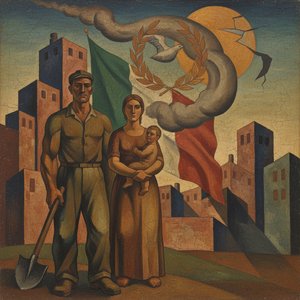
Mario Sironi: A Poetic of Modern Italian Identity Through Symbolism & Social Commentary
Explore the profound works of Mario Sironi, a key figure in Italian Modernism. Discover his evolution from Futurism to Metaphysical painting and his powerful social commentary. Learn about his legacy at OriginalUniqueArt.
Reflections of Reality: Exploring the Metaphysical Power of Mirror Images in Fine Art
Explore the profound symbolism of mirror images in fine art. From Surrealist distortions to classical self-portraits, discover how masters use reflections to explore reality, identity, and the infinite through a sophisticated art-historical lens.
Reflections of Reality: The Metaphysical Power of Mirrors in Fine Art History
Explore the profound symbolism of mirrors in fine art history. From Surrealist distortions to Vanitas themes, discover how masters use reflections to capture reality and the metaphysical soul.
Lustro w sztuce: Studium odbicia jako symbolu tożsamości i percepcji od renesansu do współczesności
Poznaj fascynującą historię lustra w sztuce – od renesansowych portretów po współczesne instalacje. Analiza symboliki odbicia, tożsamości i percepcji wizualnej. Ekspercka wiedza dla kolekcjonerów i miłośników sztuki.

Mirroring the Soul: A Curated Exploration of Reflection and Self-Perception in Art History
Embark on a sophisticated journey through art history's most captivating masterpieces of reflection. Explore how legendary artists used mirrors to explore identity, surrealism, and the soul through expert art historical analysis.
