

 Wyślij
 Udostępnij
 Szczegóły
 Przewodnik

 Pobierz plik obrazu
 Podobne obiekty
 Pokaz slajdów
 Statystyki
Dress


 Czytaj więcej
Giclée / Wydruk artystyczny
Wydruki giclée lub płótna o jakości muzealnej, szybka realizacja i szeroki wybór opcji wykończenia. ( Kup ręcznie malowany obraz Przełącz na wersję cyfrową)




































Wybierz spośród naszych standardowych rozmiarów, które zachowują oryginalne proporcje dzieła sztuki.

Wpisz wymaganą szerokość i wysokość, aby dopasować grafikę do ramy lub ściany. Wydruk można jedynie przyciąć, nigdy nie powiększając go poza oryginalny obraz, dlatego format o innym proporcji spowoduje utratę części kompozycji. Przed rozpoczęciem druku prześlemy Ci cyfrowy podgląd do zatwierdzenia. Obraz wyświetlany na tej stronie nie pokazuje rzeczywistego przycięcia — jedynie podgląd oddaje ten efekt.
Dostawa na cały świat () w ciągu 2 tygodni zamiast standardowych 4/5 tygodni. (24 Październik)

Bezpłatna ekspresowa wysyłka na cały świat

Wysokiej jakości płótno lniane

Pełne ubezpieczenie transportowe

Gwarancja zwrotu należności celnych i podatków importowych

Gwarancja idealnego odwzorowania barw

100-dniowy okres na zwrot dzieła w przypadku wykrycia wad produkcyjnych

Gwarancja 100% zwrotu pieniędzy

Oferta przy zakupie wielu sztuk
 Opcja ze szkłem jest dostępna wyłącznie w rozmiarach poniżej 110 cm

Dress
Giclée / Wydruk artystyczny
Rozmiar reprodukcji
-


Suma do zapłaty
zł 307
A Glimpse of Parisian Elegance: Mariano Fortuny’s “Dress”
Mariano Fortuny y Marsal's "Dress," a captivating black and white photograph capturing a mannequin adorned in an opulent gown, offers more than just a visual representation; it’s a portal into the innovative world of a Spanish designer who revolutionized theatrical lighting and textile artistry at the turn of the 20th century. The image, dated 1925, presents a study in controlled elegance – a testament to Fortuny's meticulous approach and his ability to evoke a sense of timeless sophistication through carefully orchestrated detail. The mannequin, posed against a simple wall, becomes a stage for the dress itself, highlighting its intricate design and commanding presence.
Fortuny’s genius lay not just in creating beautiful garments but in fundamentally altering how they were presented. Born in 1871 in Granada, Spain, his early life was shaped by the untimely death of his father, a genre painter, which led to a move to Paris and an immersion into the world of textiles – a passion that would define his entire career. He wasn’t merely a fashion designer; he was a visionary inventor, driven by a desire to mimic the soft, diffused light of the East in theatrical productions. This pursuit led him to develop the “fortuny cyclorama,” a revolutionary dome system that utilized reflecting surfaces to create seamless transitions between scenes and bathe performers in an ethereal glow – a technique directly informing his approach to garment design.
The Delphos Dress: A Masterclass in Orientalist Design
“Dress” is intimately connected to Fortuny’s most celebrated creation, the “Delphos” gown. Inspired by the opulence of the Alhambra palace in Granada and drawing heavily on his travels through the Middle East, the Delphos dress embodies a distinctly Orientalist aesthetic. The photograph captures elements of this influence – the flowing lines, the intricate patterns reminiscent of mosaics and textiles, and the overall sense of luxurious comfort. The dress itself is constructed from layers of silk, cording, and delicate beads, creating a textured surface that catches the light beautifully. It’s a garment designed to be worn with grace and confidence, projecting an aura of refined mystery.
Fortuny's meticulous attention to detail extended beyond mere aesthetics; he was obsessed with achieving a specific *feeling* through his designs. He believed in creating garments that told stories – narratives of exotic lands, ancient civilizations, and the beauty of the natural world. The “Dress” photograph subtly hints at this narrative, inviting the viewer to imagine the wearer gliding through grand halls or strolling along sun-drenched streets.
Technique and Innovation: Fortuny’s Legacy
The photograph's stark black and white palette emphasizes the textures and forms of the dress, highlighting Fortuny’s masterful use of fabric manipulation. The layering of silk creates a sense of depth and movement, while the beads add subtle shimmer and sparkle. His innovative approach to lighting, pioneered in his theatrical work, is also evident in the way the photograph captures the play of light on the garment's surface. This wasn’t simply about creating beautiful clothes; it was about controlling and shaping light itself.
Fortuny’s impact extended far beyond fashion. He established a workshop that produced not only clothing but also stage sets, tapestries, and decorative fabrics – all united by his distinctive artistic vision. His work continues to inspire designers today, demonstrating the enduring power of combining artistry, innovation, and a deep appreciation for cultural heritage. The “Dress” photograph serves as a poignant reminder of Fortuny’s legacy—a testament to a singular talent who transformed the world of design in the early 20th century.
Collecting the Spirit of Fortuny
Reproductions of Fortuny's designs, like this "Dress," offer a remarkable opportunity to bring his visionary aesthetic into your home. Whether you’re drawn to the romantic allure of the Delphos gown or simply appreciate the elegance and sophistication of his textile artistry, a Fortuny reproduction is more than just a decorative object; it’s a window into a bygone era—a celebration of creativity, innovation, and timeless beauty.
Pytania i odpowiedzi
W którym roku powstało dzieło "Dress"?
Dzieło „Dress” autorstwa Mariano Fortuny powstało w 1925.
Czy mogę użyć rozszerzonej rzeczywistości, aby zobaczyć „Dress” autorstwa Mariano Fortuny w swoim pokoju?
Dzieło „Dress” posiada podgląd w rozszerzonej rzeczywistości: strona Podgląd AR dzieła pozwala zobaczyć je w Twojej własnej przestrzeni na kompatybilnym urządzeniu.
Z jakiego kraju pochodzi dzieło Orientalist Fashion Design pt. "Dress"?
"Dress" zostało stworzone przez Mariano Fortuny, urodzonego w Hiszpania, w ramach nurtu Orientalist Fashion Design. Pochodzenie artysty wiąże to dzieło z Orientalist Fashion Design w wydaniu twórców z Hiszpania.
Biografia artysty
Early Life and Inspiration
Mariano Fortuny, a name synonymous with theatrical innovation and opulent textiles, was born in Reus, Spain, in 1871 – an event that irrevocably shaped his artistic trajectory. His father, Mariano Fortuny y Marsal, a respected genre painter, tragically passed away when the young boy was just three years old. This sudden loss propelled the family to Paris, France, where his mother, Cecilia de Madrazo, recognized and nurtured his burgeoning talents. It was in this vibrant Parisian environment that Mariano’s artistic journey truly began, immersed in the world of textiles and fabrics – a formative influence that would profoundly impact his later creations. From an early age, Fortuny demonstrated remarkable versatility, excelling not only in painting but also showcasing skills in photography, sculpting, architecture, etching, and theatrical stage lighting. His innate curiosity and inventive spirit were evident from the start, leading him to experiment with materials and techniques, laying the groundwork for his revolutionary contributions to the world of design.Artistic Talents and Revolutionary Inventions
Mariano Fortuny’s artistic abilities blossomed throughout his youth, revealing a keen eye for detail and an innovative approach to traditional art forms. He quickly established himself as a skilled painter, demonstrating mastery in various styles and subjects. However, it was his inventive drive that truly set him apart. Between 1901 and 1934, Fortuny patented over twenty groundbreaking inventions – a testament to his relentless pursuit of innovation. Perhaps his most significant achievement was the “fortuny cyclorama dome,” a quarter-dome structure crafted from plaster or cloth designed to create seamless transitions between scenes in theatrical productions. This ingenious device utilized indirect lighting and sophisticated reflection techniques, dramatically altering the perception of space and time on stage. Fortuny’s treatise, "Eclairage Scenique" (1904), meticulously documented his discoveries regarding light manipulation, detailing how different surfaces could be used to alter color, intensity, and overall effect. His work wasn't limited to stage design; he also developed innovative methods for creating textiles, pushing the boundaries of material science and artistic expression.Collaborations and Recognition
Fortuny’s unique vision gained widespread recognition in the 1920s, solidifying his position as a leading figure in both art and design. He forged significant collaborations with influential figures from across Europe, leaving an indelible mark on various creative fields. His work resonated deeply with Richard Wagner, the German composer, whose operas inspired Fortuny to explore themes of drama, light, and atmosphere in his paintings. The renowned opera house, La Scala in Milan, became a testing ground for his innovations, where he adapted his dome design for the theater’s grand scale and even invented a suction fan system to maintain its taut structure – a remarkable feat of engineering. Beyond Wagner, Fortuny's contributions were celebrated by figures like Marcel Proust, the French novelist, who was deeply moved by Fortuny’s artistic vision and incorporated elements of his work into his literary masterpieces. His legacy extended beyond the stage, influencing fashion designers and textile manufacturers alike.Legacy and Venetian Influence
Mariano Fortuny passed away in Venice, Italy, on May 3, 1949, leaving behind a remarkable body of work that continues to captivate audiences today. His influence can be seen in the enduring popularity of his signature “Delphos” gown – a flowing, pleated silk creation that became a symbol of elegance and freedom during the Art Deco era. Fortuny’s life and artistic journey were also depicted in Pere Gimferrer's novel "Fortuny," further cementing his place in literary history. More than just an artist, Fortuny was a true polymath—a painter, inventor, designer, and visionary who pushed the boundaries of creativity across multiple disciplines. His legacy continues to inspire artists and designers worldwide, demonstrating the power of innovation, imagination, and a deep appreciation for beauty. The Museo Mariano Fortuny y Madrazo in Venice stands as a testament to his extraordinary life and work, inviting visitors to explore the magic and artistry that defined this remarkable figure.
Mariano Fortuny
1871 - 1949 , Hiszpania
Najważniejsze informacje
- Artistic Movement Or Style: Orientalizm art.
- Artists Or Movements Influenced By This Artist: ['Marcel Proust']
- Artists Who Influenced This Artist: ['Richard Wagner']
- Date Of Birth: 11 maja 1871
- Date Of Death: 3 maja 1949
- Full Name: Mariano Fortuny y Marsal
- Nationality: Hiszpański
- Notable Artworks:
- Teagown
- Portrait Henriette
- Place Of Birth: Granada, Hiszpania
Zobacz także powiązane artykuły
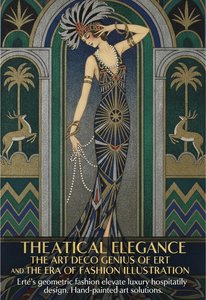
Theatrical Elegance: The Art Deco Genius of Erté and the Era of Fashion Illustration
Explore the theatrical elegance of Erté and the Art Deco era. Discover how his mastery of geometric line and fashion illustration can elevate luxury hospitality design through premium, hand-painted reproductions and bespoke architectural art solutions.

Złota Era Stylu: Estetyczne Zasady i Trwałe Dziedzictwo Art Deco
Poznaj fascynującą historię Art Deco – od narodzin stylu po współczesne inspiracje. Ekspercka analiza cech, wpływ na architekturę i wzornictwo oraz ikoniczne dzieła tego glamour okresu. Odkryj dziedzictwo Art Deco!

Mariano Fortuny: A Fusion of Art, Fashion & Design – Exploring a Venetian Innovator's Legacy
Explore the captivating world of Mariano Fortuny – artist, designer & innovator. Discover his revolutionary textiles, iconic Delphos gown, and lasting influence on art, fashion & interiors. A collector's guide to a Venetian master.

The Theatrical Elegance of Art Deco: The Line Work and Fashion Genius of Erté
Discover the unparalleled elegance of Art Deco through the lens of Erté. Explore a masterclass in linear precision, theatrical costume design, and high-fashion illustration that continues to define modern luxury and sophisticated interior aesthetics.
Draped Narratives: Fashion as Symbol & Subject in Historical Art
Explore the fascinating history of fashion as a symbol of power & status in art! Discover masterpieces from Gainsborough to Tissot and learn how clothing shaped societal narratives. Find museum-quality reproductions at OriginalUniqueArt.
