Dada Art Movement
Trap (Marcel Duchamp)
Marcel Duchamp (1887–1968) stworzył Trap. Należy do nurtu Dada Art Movement. Wykonano w technice Wood.
- Wood

 Ręcznie malowany obraz olejny
 Wyślij jako kartkę
 Udostępnij
 Karta informacyjna


 Pobierz obraz
 Podobne obiekty
 Pokaz slajdów
 Pytania i odpowiedzi

 Statystyki
Trap w skrócie
- Tytuł
- Trap
- Artysta
- Marcel Duchamp (1887–1968)
- Miejsce urodzenia artysty
- Blainville-Crevon, Francja
- Technika wykonania
- Wood
- Temat
- readymade, duchamp, coat rack, minimalism, art object, conceptual art
Co przedstawia Trap?
Introduction to Marcel Duchamp and the Dada Art Movement
Marcel Duchamp (1887-1968), a pioneering artist of the early 20th century, was instrumental in shaping modern art through his provocative works. As a leading figure of the Dada movement, Duchamp sought to challenge traditional notions of art and culture by creating pieces that defied conventional expectations (The Dada Art Movement Introduction).'Trap': A Readymade Masterpiece
Among Duchamp's most notable contributions is 'Trap' (1917), a readymade artwork consisting of a wooden and metal coatrack. The artist submitted it to a show at the Bourgeois Art Gallery, requesting that it be placed near the entryway. During the exhibition, 'Trap' went largely unnoticed as an art piece, which was precisely Duchamp's intention (Painting by 'Marcel Duchamp' | Marcel Duchamp:Trap).The Readymade Concept and the Demise of Artistic Tradition
Duchamp's readymades, including 'Trap', were designed to question the very nature of art. By selecting ordinary objects and presenting them as works of art, Duchamp aimed to challenge the notion that artistic value is inherently tied to an object's aesthetic qualities or craftsmanship (Art Movements 1/2).Duchamp's Legacy and Influence on Contemporary Art
Marcel Duchamp's groundbreaking approach to art has had a lasting impact on contemporary artists, who continue to explore the boundaries of artistic expression. His work serves as a reminder that art can be found in the most unexpected places, and that its value lies not only in its physical form but also in the ideas it represents (Art Movements 1/2). To learn more about Marcel Duchamp's life and work, visit Marcel Duchamp's page on OriginalUniqueArt.com. Additionally, explore our extensive collection of art movements and artists to deepen your understanding of the evolution of art throughout history (A Journey Through Art History with OriginalUniqueArt’s Extensive Collection). Note: This article is intended for informational purposes only. For a more comprehensive understanding of Marcel Duchamp and his work, consider consulting scholarly resources or enrolling in an art history course.Zdjęcia w wysokiej rozdzielczości dzieła Trap
Chronione prawem autorskim: pliki te służą wyłącznie do osobistego wglądu i nie stanowią licencji na ich powielanie.
Marcel Duchamp, Trap.
Odpowiedzi na pytania dotyczące Trap
Z jakiej techniki wykorzystano "Trap"?
„Trap” wykonano w technice Wood.
Co przedstawia „Trap” – Marcel Duchamp?
Tematyka obecna w „Trap” – Marcel Duchamp obejmuje readymade, duchamp, coat rack, minimalism, art object, conceptual art, questioning art. Razem stanowią one podsumowanie tematyki dzieła.
Czy „Trap” – Marcel Duchamp znajduje się w domenie publicznej?
Jeśli chodzi o prawa autorskie, "Trap" znajduje się w nadal objęte ochroną prawa autorskiego.
Kto stworzył "Trap"?
Autorem dzieła „Trap” jest Marcel Duchamp. Praca ta figuruje w katalogu pod nazwiskiem Marcel Duchamp.
Do jakiego nurtu artystycznego należy „Trap” – Marcel Duchamp?
„Trap” to dzieło należące do nurtu Dada Art Movement. Nurt ten określa tradycję artystyczną, w której osadzone jest dzieło.
Do którego etapu twórczości Marcel Duchamp należy dzieło „Trap”?
W dorobku artystycznym Marcel Duchamp dzieło „Trap” przypada na Dada Era. Ten etap pozwala zestawić je z innymi pracami twórcy.
Czy dzieło „Trap” autorstwa Marcel Duchamp znajduje się w domenie publicznej i dlaczego?
„Trap” – Marcel Duchamp jest nadal objęte ochroną prawa autorskiego. Okres ochrony praw autorskich liczony jest od śmierci artysty, która nastąpiła w 1968.
Jakie miejsce w dorobku twórczym Marcel Duchamp zajmuje dzieło "Trap"?
"Trap" wpisuje się w nurt Dada Art Movement w twórczości Marcel Duchamp, której charakterystyczne motywy obejmują challenging artistic conventions, questioning established values, anti-art, anti-rationality stance, provoking viewer engagement, foundation for modern art.
W jaki sposób tematyka dzieła "Trap" odnosi się do typowych motywów twórczości Marcel Duchamp?
Powracające motywy w twórczości Marcel Duchamp obejmują challenging artistic conventions, questioning established values, anti-art, anti-rationality stance, provoking viewer engagement, foundation for modern art; „Trap” koncentruje się na readymade, duchamp, coat rack, minimalism, art object, conceptual art, questioning art.
O artyście: Marcel Duchamp
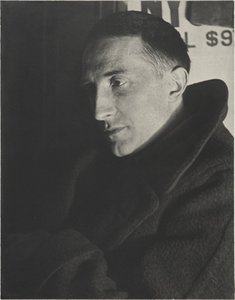
1887–1968, Francja
Marcel Duchamp
Życie i sztuka Marcela Duchampa Urodzony 28 lipca 1887 roku w Blainville w Normandii, we Francji, Marcel Duchamp wkroczył w świat, w którym impuls tworzenia był głęboko wpisany w jego własną krew. Był czwartym z siedmiu dzieci urodzonych przez Eugene’a i Lucie Duchamp. Był to dom pełen twórców i myślicieli; jego rodzeństwo dzieliło tę samą kreatywną niespokojność, gdyż jego bracia, Jacques Villon i Raymond Duchamp-Villon, wraz z siostrą Suzanne Duchamp-Crotti, wszyscy podążyli ścieżką artystyczną. Choć ostatecznie stał się postacią o niezwykłej złożoności, łączącą korzenie francuskie z amerykańskimi, jego początki pozostały zakorzenione w spokojnej atmosferze Normandii.
Inne prace Marcel Duchamp
 Nude Descending a Staircase, No.2 - Abstrakcja schody1912
 Sad young man in a train - Smutny młody mężczyzna w поезде1911
 Given: 1. Wodospad, 2. Gaz oświetlający1966
 Fontanna (Duchamp)1917
Eseje o Trap
 Dadaism Explained: The Radical Anti-Art Movement That Redefined ModernityExplore the radical origins of Dadaism. Discover how this anti-art movement emerged from WWI chaos to challenge logic and redefine modern a…
 Marcel Duchamp: The Top 25 Masterpieces That Redefined Modern ArtExplore 25 iconic Marcel Duchamp masterpieces that redefined Dadaism. Discover the full collection online at OriginalUniqueArt.com.
 25 Masterpieces by Édouard Manet: The Rebel Who Redefined Modern ArtStep into the revolutionary world of Édouard Manet. Explore 25 iconic Impressionist masterpieces, from scandalous classics to timeless port…