Cubism
Father (Marcel Duchamp)
Marcel Duchamp (1887–1968) stworzył Father. Należy do nurtu Cubism. Wykonano w technice Acrylic On Canvas.
- Acrylic On Canvas

 Podgląd w skali 1:1

 Ręcznie malowany obraz olejny
 Wyślij jako kartkę
 Udostępnij
 Karta informacyjna


 Pobierz obraz
 Podobne obiekty
 RTG
 Pokaz slajdów
 Pytania i odpowiedzi

 Statystyki
Father w skrócie
- Tytuł
- Father
- Artysta
- Marcel Duchamp (1887–1968)
- Miejsce urodzenia artysty
- Blainville-Crevon, Francja
- Technika wykonania
- Acrylic On Canvas
- Ruch
- Cubism
- Temat
- portrait, cubism, fragmentation, introspection, earth tones, older man
Co przedstawia Father?
Marcel Duchamp’s ‘Father’: A Cubist Portrait of Introspection
Marcel Duchamp's “Father,” painted in 1910, stands as a poignant testament to the artist’s exploration of familial bonds and psychological depth within the framework of Expressionism. More than just a likeness of his father, Eugène Duchamp, the painting delves into themes of vulnerability, contemplation, and the quiet dignity of aging—elements that resonate powerfully with viewers today.
- Style & Technique: The artwork embodies the stylistic hallmarks of Expressionism, characterized by bold brushstrokes and dramatic lighting. Thick impasto creates a palpable textural surface, conveying emotion through physicality rather than meticulous realism. Duchamp’s masterful manipulation of pigment captures the nuances of light and shadow, emphasizing the figure's solemn expression.
- Composition: The painting utilizes a simplified geometric composition—primarily dominated by the central figure seated in a chair—to heighten its impact. Overlapping planes contribute to a sense of depth, subtly disrupting traditional perspective conventions. This deliberate distortion serves not merely as aesthetic choice but as a symbolic representation of fractured perception.
- Color Palette: Employing earthy tones—primarily browns and ochres—the color palette evokes a mood of melancholy and introspection. The subdued hues underscore the painting’s contemplative atmosphere, mirroring the quiet contemplation conveyed by the subject’s gaze.
- Symbolism: “Father” transcends a simple portrait; it embodies Duchamp's preoccupation with familial relationships and the passage of time. The posture of Eugène Duchamp—seated calmly yet thoughtfully—suggests resilience amidst vulnerability, encapsulating the artist’s desire to portray dignity and inner strength.
Exploring Cubism: A Revolutionary Approach
“Father” is firmly rooted in the burgeoning movement of Cubism, spearheaded by Picasso and Braque. Duchamp's engagement with Cubist principles—particularly the fragmentation of form and simultaneous viewpoints—represents a radical departure from academic painting traditions. This stylistic influence underscores his commitment to questioning established artistic conventions and prioritizing conceptual exploration over visual representation.
- Geometric Abstraction: The artwork’s geometric abstraction—evident in the simplified shapes defining the chair and the man's facial features—reflects Cubist’s rejection of illusionistic depth. Instead, Duchamp prioritizes structural clarity and intellectual engagement, inviting viewers to consider the painting on a deeper level.
- Multiple Perspectives: The depiction of Eugène Duchamp from various angles simultaneously challenges conventional notions of perspective. This technique mirrors Cubism's ambition to capture reality as it is perceived by multiple observers—a concept that fundamentally altered artistic discourse.
The Significance of Impasto and Texture
Duchamp’s deliberate use of impasto—thickly applied paint—is crucial to conveying the painting’s emotional resonance. The textured surface captures the physicality of the brushstrokes, mirroring Eugène Duchamp's own presence within the artwork. This tactile element enhances the viewer’s experience, inviting contemplation and fostering a connection with the artist’s expressive intent.
- Material Choice: Oil paints on canvas—a standard medium for Expressionist painters—were selected to maximize textural impact and luminosity. Duchamp skillfully utilizes brushwork to sculpt form and imbue the painting with palpable energy.
- Emotional Impact: The resulting surface contributes significantly to “Father’s” emotional depth, mirroring Eugène Duchamp's inner life and conveying a sense of quiet dignity—a testament to Duchamp’s artistic vision.
A Legacy Beyond Representation
"Father" exemplifies Duchamp’s broader philosophical stance: rejecting the pursuit of visual beauty in favor of intellectual inquiry. By prioritizing conceptual exploration over realistic depiction, he ushered in a new era of art history—one characterized by questioning assumptions and redefining artistic value. This enduring legacy continues to inspire artists and collectors alike who appreciate the profound emotional impact of art that transcends mere surface appearance."
Zdjęcia w wysokiej rozdzielczości dzieła Father
Chronione prawem autorskim: pliki te służą wyłącznie do osobistego wglądu i nie stanowią licencji na ich powielanie.
Marcel Duchamp, Father.
Odpowiedzi na pytania dotyczące Father
Z jakiej techniki wykorzystano "Father"?
Technika wykonania dzieła „Father” – Marcel Duchamp to Acrylic On Canvas. Reprodukcje mają na celu wierne oddanie wyglądu tej techniki.
Co przedstawia „Father” – Marcel Duchamp?
„Father” – Marcel Duchamp przedstawia: portrait, cubism, fragmentation, introspection, earth tones, older man, abstract form, depth.
Czy obraz „Father” – Marcel Duchamp można swobodnie reprodukować?
Status praw autorskich dla „Father” – Marcel Duchamp: dzieło znajduje się w nadal objęte ochroną prawa autorskiego. Określa to, czy reprodukcje obrazu mogą być sporządzane swobodnie.
Kto stworzył "Father"?
Autorem dzieła „Father” jest Marcel Duchamp. Praca ta figuruje w katalogu pod nazwiskiem Marcel Duchamp.
Do jakiego nurtu należy "Father"?
„Father” – Marcel Duchamp należy do nurtu Cubism. Nurt ten stanowi stylistyczny kontekst dzieła.
Do którego okresu twórczości Marcel Duchamp należy dzieło „Father”?
„Father” pochodzi z okresu Mature Period w twórczości Marcel Duchamp. Klasyfikacja ta wiąże dzieło z rozwojem artysty.
Czy dzieło „Father” autorstwa Marcel Duchamp znajduje się w domenie publicznej i dlaczego?
Dzieło "Father" autorstwa Marcel Duchamp znajduje się w nadal objęte ochroną prawa autorskiego. Okres ochrony praw autorskich liczony jest od daty śmierci artysty, a Marcel Duchamp zmarł(a) w 1968.
W jaki sposób "Father" wpisuje się w tematykę i styl twórczości Marcel Duchamp?
"Father" wpisuje się w nurt Cubism w twórczości Marcel Duchamp, której charakterystyczne motywy obejmują father portrait series, exploration of identity, shift towards abstraction, expressionism, cubism, early 20th century art, introspection, melancholy.
W jaki sposób tematyka dzieła "Father" odnosi się do typowych motywów twórczości Marcel Duchamp?
„Father” przedstawia portrait, cubism, fragmentation, introspection, earth tones, older man, abstract form, depth, podczas gdy powracające motywy u Marcel Duchamp to father portrait series, exploration of identity, shift towards abstraction, expressionism, cubism, early 20th century art, introspection, melancholy. Porównanie tych dwóch elementów ukazuje, jak dzieło nawiązuje do typowej dla tego artysty tematyki.
O artyście: Marcel Duchamp
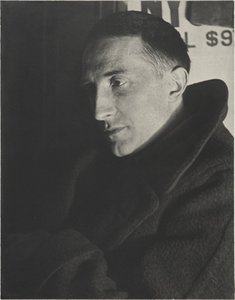
1887–1968, Francja
Marcel Duchamp
Życie i sztuka Marcela Duchampa Urodzony 28 lipca 1887 roku w Blainville w Normandii, we Francji, Marcel Duchamp wkroczył w świat, w którym impuls tworzenia był głęboko wpisany w jego własną krew. Był czwartym z siedmiu dzieci urodzonych przez Eugene’a i Lucie Duchamp. Był to dom pełen twórców i myślicieli; jego rodzeństwo dzieliło tę samą kreatywną niespokojność, gdyż jego bracia, Jacques Villon i Raymond Duchamp-Villon, wraz z siostrą Suzanne Duchamp-Crotti, wszyscy podążyli ścieżką artystyczną. Choć ostatecznie stał się postacią o niezwykłej złożoności, łączącą korzenie francuskie z amerykańskimi, jego początki pozostały zakorzenione w spokojnej atmosferze Normandii.
Inne prace Marcel Duchamp
 Nude Descending a Staircase, No.2 - Abstrakcja schody1912
 Sad young man in a train - Smutny młody mężczyzna w поезде1911
 Given: 1. Wodospad, 2. Gaz oświetlający1966
 Fontanna (Duchamp)1917
Eseje o Father
 Dekonstrukcja Rzeczywistości: Rewolucyjny Wpływ Kubizmu na Sztukę XX WiekuOdkryj rewolucyjny wpływ kubizmu na sztukę XX wieku! Analiza dzieł Picassa i Braque’a, historia nurtu, techniki oraz dziedzictwo. Ekspercka…
 The Sculptural Surface: Analyzing the Impact of Impasto and Texture in Oil PaintingMaster the science of impasto and oil texture through expert analysis. Explore the depth of fine art mastery now.
 Marcel Duchamp: The Top 25 Most Influential Artworks of a Modern IconExplore 25 iconic Marcel Duchamp masterpieces and Dadaist gems. Discover the full collection online at OriginalUniqueArt.com.