Cubist Sculpture · 1914
Bottlerack (Marcel Duchamp, 1914)
Marcel Duchamp (1887–1968) stworzył Bottlerack. Dzieło pochodzi z 1914. Należy do nurtu Cubist Sculpture. Wykonano w technice Found Object Art. Wymiary to 59 × 37 cm.
- 1914
- Found Object Art
- 59 × 37 cm

 Ręcznie malowany obraz olejny
 Wyślij jako kartkę
 Udostępnij
 Karta informacyjna


 Pobierz obraz
 Podobne obiekty
 Pokaz slajdów
 Pytania i odpowiedzi

 Statystyki
Bottlerack w skrócie
- Tytuł
- Bottlerack
- Artysta
- Marcel Duchamp (1887–1968)
- Miejsce urodzenia artysty
- Blainville-Crevon, Francja
- Data powstania
- 1914
- Technika wykonania
- Found Object Art
- Wymiary
- 59 × 37 cm
- Ruch
- Cubist Sculpture
- Epoka
- Modern
- Temat
- metal sculpture, industrial art, geometric form, conceptual art, shelf structure, hook arrangement
Co przedstawia Bottlerack?
The Radical Simplicity of the Everyday
In the early twentieth century, a profound shift occurred in the landscape of modern art, one that moved away from the pursuit of traditional beauty toward a deeper, more intellectual engagement with reality. At the heart of this revolution stands Marcel Duchamp’s Bottlerack, a work created in 1914 that continues to challenge our very definition of what an artwork can be. On its surface, the piece presents a deceptively simple subject: a stack of metal shelves or racks, reminiscent of industrial utility rather than high art. Yet, within this mundane structure lies the seed of a conceptual explosion. By selecting a mass-produced object and elevating it to the status of sculpture, Duchamp bypassed the need for traditional virtuosity, instead inviting us to find profound meaning in the most commonplace of items.
The sculpture embodies the rebellious spirit of Dadaism, an avant-garde movement that emerged as a visceral reaction against the chaos and perceived irrationality of the era. Through the lens of this piece, we see the rejection of established aesthetic conventions in favor of a new, provocative logic. The technique employed—primarily the use of steel tubing and hooks—emphasizes a stark, industrial materiality. There is no attempt to hide the object's utilitarian origins; rather, Duchamp celebrates its geometric precision and structural honesty. This deliberate choice underscores his rejection of "retinal art"—art intended only to please the eye—and instead directs our attention toward the intellectual act of selection and the transformative power of the artist's gaze.
Symbolism and the Birth of the Readymade
Beyond its physical presence, Bottlerack carries a heavy symbolic weight that resonates through the decades. It serves as a primary example of the "readymade," a term Duchamp used to describe ordinary manufactured goods that become art through the mere act of choice and repositioning. The stack of hooks acts as a metaphor for the artist’s intervention into the realm of the everyday, asserting that creativity can be found in appropriation and conceptual thought rather than just skillful execution. This piece is not merely a rack; it is a declaration of independence from the constraints of representation, a monument to the idea that art can exist entirely outside the boundaries of beauty or narrative.
For the modern collector or interior designer, a high-quality reproduction of Bottlerack offers more than just a visual accent; it provides a conversation piece that evokes feelings of detachment, curiosity, and intellectual rigor. The sculpture’s stark lines and industrial aesthetic lend themselves beautifully to contemporary spaces, where they can act as a focal point of minimalist sophistication. To display this work is to invite the spirit of Duchamp into one's environment—to celebrate the beauty of structure and to honor the revolutionary moment when the boundaries between life and art were forever dissolved.
Zdjęcia w wysokiej rozdzielczości dzieła Bottlerack
Chronione prawem autorskim: obraz przedstawiono wyłącznie w celach informacyjnych.
Inne rozmiary, kadrowanie i cytowanie →Marcel Duchamp, Bottlerack (1914).
Odpowiedzi na pytania dotyczące Bottlerack
W którym roku powstało dzieło „Bottlerack” – Marcel Duchamp?
"Bottlerack" powstało w 1914 roku. Data ta pozwala umiejscowić dzieło w kontekście twórczości Marcel Duchamp oraz epoki, w której powstało.
W jakiej technice wykonano „Bottlerack” – Marcel Duchamp?
„Bottlerack” wykonano w technice Found Object Art.
Jakie są wymiary oryginału "Bottlerack"?
Oryginalne wymiary dzieła „Bottlerack” to 59 x 37 cm. Znajomość pierwotnej skali może być pomocna przy wyborze odpowiedniego rozmiaru reprodukcji.
Co przedstawia „Bottlerack” – Marcel Duchamp?
„Bottlerack” – Marcel Duchamp przedstawia: metal sculpture, industrial art, geometric form, conceptual art, shelf structure, hook arrangement, dada aesthetic.
Czy „Bottlerack” – Marcel Duchamp znajduje się w domenie publicznej?
Jeśli chodzi o prawa autorskie, "Bottlerack" znajduje się w nadal objęte ochroną prawa autorskiego.
Kto stworzył "Bottlerack"?
„Bottlerack” zostało stworzone przez Marcel Duchamp. Informacje na tej stronie dotyczą oryginalnego dzieła autorstwa Marcel Duchamp.
Do jakiego nurtu artystycznego należy „Bottlerack” – Marcel Duchamp?
„Bottlerack” – Marcel Duchamp należy do nurtu Cubist Sculpture. Nurt ten stanowi stylistyczny kontekst dzieła.
Do którego etapu twórczości Marcel Duchamp należy dzieło „Bottlerack”?
"Bottlerack" reprezentuje Dada Era twórczości Marcel Duchamp.
Ile lat miał(a) Marcel Duchamp, tworząc "Bottlerack" w 1914 roku?
Gdy w 1914 roku powstało dzieło „Bottlerack”, Marcel Duchamp – urodzony/a w 1887 – miał/a 27 lat.
O artyście: Marcel Duchamp
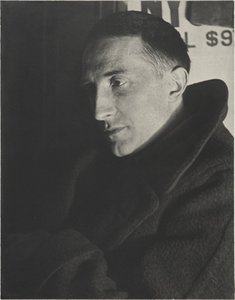
1887–1968, Francja
Marcel Duchamp
Życie i sztuka Marcela Duchampa Urodzony 28 lipca 1887 roku w Blainville w Normandii, we Francji, Marcel Duchamp wkroczył w świat, w którym impuls tworzenia był głęboko wpisany w jego własną krew. Był czwartym z siedmiu dzieci urodzonych przez Eugene’a i Lucie Duchamp. Był to dom pełen twórców i myślicieli; jego rodzeństwo dzieliło tę samą kreatywną niespokojność, gdyż jego bracia, Jacques Villon i Raymond Duchamp-Villon, wraz z siostrą Suzanne Duchamp-Crotti, wszyscy podążyli ścieżką artystyczną. Choć ostatecznie stał się postacią o niezwykłej złożoności, łączącą korzenie francuskie z amerykańskimi, jego początki pozostały zakorzenione w spokojnej atmosferze Normandii.
Inne prace Marcel Duchamp
 Nude Descending a Staircase, No.2 - Abstrakcja schody1912
 Sad young man in a train - Smutny młody mężczyzna w поезде1911
 Given: 1. Wodospad, 2. Gaz oświetlający1966
 Fontanna (Duchamp)1917
Eseje o Bottlerack
 Przemysł w Sztuce: 10 Arcydzieł Oddających Klimat Fabryk i Maszyn | OriginalUniqueArtOdkryj 10 arcydzieł sztuki przemysłowej! Poznaj historie Hopper'a, Caillebotte'a i innych mistrzów. Reprodukcje obrazów w stylu industrialn…
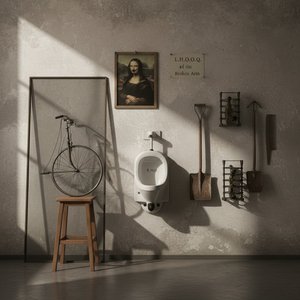 Marcel Duchamp: Challenging Conventions & Redefining Art in the 20th CenturyExplore the revolutionary art of Marcel Duchamp! Discover how his Dadaist readymades challenged artistic conventions & redefined modern art…
 The Radical Evolution of the Bottle in Still Life: From Cubist Deconstruction to Pop Art BoldnessTrace the evolution of bottle still life from Cubism to Pop Art with expert insight. Explore how masters redefined everyday objects now.