 Podgląd w skali
 Wyślij jako kartkę
 Udostępnij
 Szczegóły dzieła

 Pobierz
 Podobne obiekty
 RTG
RTG Pokaz slajdów
Self Portrait with Bouquet
 Acrylic On Canvas
- WallArt
- Surrealism
 1981
1981 73.0 x 54.0 cm
 Rozwiń treść
Ręcznie malowana reprodukcja olejowa
Ręcznie malowany obraz olejny na płótnie, wykonany na zamówienie przez naszych artystów w wybranym przez Ciebie wymiarze i oprawie. ( Zamów wydruk Przełącz na obraz)




P118B $10

P118H $10

P118W $10

P438Z $10

P508JH $12

P508YH $12

P805H $10

P805Z $10

P919BZ $10

P919G $10

P919XJ $10

P959ZH $10

P968JZ $12

W106C $8

W218G $10

W218JH $8

W218Y $10

W307PJ $10

W316G $10

W316PJ $8

W316Y $10

W398PJ $8

W4111J $10

W500HY $15

W500JH $15

W692G $12

W849H $8

W940BG $15

W953PJ $8




Wybierz spośród naszych standardowych rozmiarów, które zachowują oryginalne proporcje dzieła sztuki.

Możesz wprowadzić własne wymiary, aby dopasować obraz do konkretnej ramy lub przestrzeni. Jeśli wybrany rozmiar nie będzie odpowiadał proporcjom oryginału, przytniecie dzieło sztuki lub rozszerzymy je o dodatkowe elementy, ręcznie domalowane przez artystę. Przed rozpoczęciem produkcji wyślemy projekt cyfrowy do Twojej akceptacji.
Należy pamiętać, że podgląd na ekranie nie odzwierciedla rzeczywistego przycinania ani rozszerzania obrazu. Tylko projekt dokładnie pokaże ostateczną kompozycję.
Choć oferujemy możliwość zamówienia niestandardowych rozmiarów, zalecamy wybór wymiaru z gotowej listy, aby zachować oryginalne proporcje dzieła.
Po złożeniu zamówienia zespół OriginalUniqueArt.com skontaktuje się z klientem drogą mailową w celu uzyskania instrukcji i prześle wizualizację projektu
Dostawa na całym świecie () w ciągu 3–4 tygodni zamiast standardowych 5 tygodni. (11 Sierpień). Bez kompromisów w kwestii jakości.

Bezpłatna ekspresowa wysyłka na cały świat

Wysokiej jakości płótno lniane

Pełne ubezpieczenie przesyłki

Gwarancja zwrotu należności celnych i podatków importowych

Gwarancja wiernego odwzorowania kolorów

Polityka 60-dniowego zwrotu (tylko w przypadku wad)

Gwarancja 100% zwrotu kosztów

Zniżka przy zamówieniu wielu produktów
 Opcja ze szkłem jest dostępna wyłącznie w rozmiarach poniżej 110 cm

Self Portrait with Bouquet
Technika reprodukcji
Wymiary reprodukcji
-


Cena całkowita
$ 300
Opis dzieła
A Dreamscape of Memory: Unpacking Marc Chagall’s ‘Self Portrait with Bouquet’
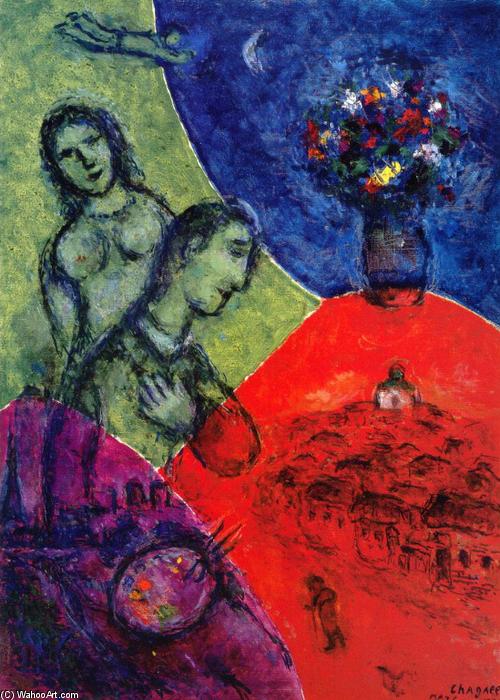
Marc Chagall's 1981 “Self Portrait with Bouquet” isn’t merely a painting; it’s an immersion into the artist’s deeply personal and profoundly evocative world. Created in the twilight years of his illustrious career, this work transcends simple portraiture, becoming a shimmering tapestry woven from memory, folklore, and the enduring power of imagination. The piece, rendered in oil on canvas at 73 x 54 cm, immediately captivates with its surrealist atmosphere – a world where familiar forms are subtly distorted, inviting viewers to step into a dreamlike realm.
At the heart of the composition stands Chagall himself, depicted not as a stern or imposing figure, but rather as a somewhat spectral presence. His gaze is introspective, hinting at a quiet melancholy that permeates the entire scene. He’s rendered in muted tones, almost blending into the background, suggesting a detachment from the vibrant chaos surrounding him. Beside him stands a woman, her form partially obscured, adding to the painting's enigmatic quality. This figure isn’t explicitly defined; she exists as an echo of memory, perhaps representing a beloved muse or a cherished past.
The Language of Color and Symbolism
Chagall’s masterful use of color is central to the painting’s impact. Bold reds, yellows, and blues dominate the upper portion, punctuated by the lush bouquet that cascades across the canvas. Flowers – lilies, poppies, and irises – are not simply decorative elements; they're potent symbols deeply rooted in Chagall’s Jewish heritage. Lilies often represent purity and resurrection, while poppies evoke remembrance and fleeting beauty. The vibrant hues contrast sharply with the darker tones of the background, creating a dynamic tension that draws the eye and fuels the painting’s emotional resonance.
Adding to this rich symbolism is the presence of two figures ascending into the sky – often interpreted as angels or celestial beings. Their inclusion elevates the scene beyond a simple self-portrait, suggesting a connection between the earthly realm and the spiritual. The clock in the upper left corner introduces an element of time, perhaps reflecting on Chagall’s long life and artistic journey, or serving as a reminder of the ephemeral nature of beauty and memory.
Historical Context and Artistic Style
“Self Portrait with Bouquet” was created in 1981, a period when Chagall was at the height of his creative powers. He had spent much of his life exploring themes of Jewish folklore, childhood memories, and the complexities of human relationships – all filtered through his uniquely surrealist lens. This work exemplifies his signature style: a blend of Cubism, Fauvism, and Symbolism, characterized by flattened perspectives, distorted forms, and an intense emotionality. It’s important to note that Chagall's art was deeply influenced by his upbringing in Vitebsk, Belarus – a town brimming with cultural diversity and steeped in tradition.
The painting’s creation coincided with a renewed interest in Chagall’s work during the 1980s. His paintings were increasingly recognized for their emotional depth and their ability to transport viewers to another world. “Self Portrait with Bouquet” stands as a testament to his enduring legacy, offering a glimpse into the mind of one of the 20th century's most beloved artists. Reproductions capture the vibrancy and dreamlike quality of the original, allowing art lovers everywhere to experience Chagall’s vision firsthand.
O artyście
A Life Painted in Dreams: The World of Marc Chagall
Marc Chagall, born Moishe Shagal in 1887 in the small Belarussian town of Liozna near Vitebsk, wasn’t merely a painter; he was a poet of color, a weaver of dreams, and a chronicler of memory. His life, spanning nearly a century, mirrored the tumultuous currents of the 20th century, yet his art remained steadfastly rooted in a deeply personal vision—one infused with the folklore of his Hasidic Jewish upbringing and an unwavering belief in the power of imagination. Vitebsk itself was more than just a birthplace; it became the emotional core of his artistic universe, a recurring motif populated by flying figures, whimsical animals, and the vibrant hues of remembered landscapes. The town’s unique blend of cultures—Russian Orthodox churches alongside bustling Jewish marketplaces—forged an aesthetic sensibility that would defy easy categorization throughout his long career. Though he sought formal training first with a local sign painter and later in St. Petersburg under Léon Bakst, and then in Paris at the Académie de la Grande Chaumière, Chagall never fully embraced any single artistic movement. He absorbed elements of Cubism, Symbolism, and Fauvism, but always filtered them through his own intensely personal lens, creating a style that was uniquely, unmistakably Chagall.Early Years and Artistic Beginnings
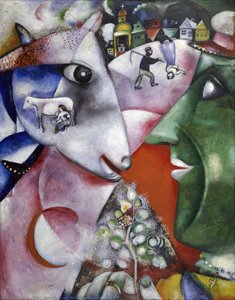
Chagall’s formative years were marked by hardship and displacement. Born into a family of impoverished Jewish artisans, he experienced the trauma of pogroms—violent attacks against Jews—which instilled in him a profound awareness of persecution and loss. Despite these challenges, he pursued his artistic ambitions with unwavering determination, initially studying sign painting before enrolling at St. Petersburg’s Imperial Art Academy under Léon Bakst, where he honed his skills in theatrical design. However, Bakst's insistence on adhering to academic conventions clashed with Chagall’s innate inclination toward expressive abstraction, prompting him to forge his own path—a path that would ultimately lead him away from formal training and towards a radically original artistic vision. His early paintings, such as I and the Village (1911), already demonstrated his distinctive approach: he eschewed realistic representation in favor of fragmented imagery imbued with symbolic meaning. The village wasn’t rendered realistically but as a collection of recollections, bathed in luminous colors—a technique that would become central to his oeuvre. This ability to transmute personal experience into universal themes became a hallmark of his art and foreshadowed the stylistic innovations that would characterize his subsequent work.The Symbolist Influence and Vitebsk’s Vision
Chagall's artistic development was profoundly shaped by Symbolism, particularly by artists like Gustave Moreau and Edvard Munch. He embraced the Symbolists’ preoccupation with emotion and psychological depth, rejecting the objective depiction of reality in favor of subjective expression. The influence of folklore—particularly Jewish folklore—was equally significant. Chagall drew inspiration from biblical stories, folktales, and Jewish traditions, incorporating fantastical elements into his paintings that evoked a sense of wonder and enchantment. Vitebsk remained an enduring presence in Chagall’s artistic imagination. He depicted the town repeatedly throughout his career, capturing its distinctive atmosphere—the juxtaposition of Orthodox churches and Jewish marketplaces—with vibrant colors and dreamlike distortions. These images weren't merely topographical representations; they were expressions of nostalgia for a lost homeland and reflections on themes of identity and belonging.Cubism and Beyond: Experimentation and Innovation
While Chagall absorbed elements of Cubism, pioneered by Pablo Picasso and Georges Braque, he never fully embraced its geometric rigor. Instead, he adapted Cubist principles—such as fragmentation and multiple perspectives—to his own expressive style, creating canvases that defied conventional spatial conventions. He experimented with collage techniques, incorporating newspaper clippings and other found objects into his paintings—a practice that reflected his engagement with the cultural landscape of his time. His palette became increasingly bold and chromatic, employing colors that seemed to defy natural laws—colors that pulsed with emotion and conveyed a sense of otherworldly beauty. This willingness to push boundaries—to challenge artistic conventions—was driven by an unwavering belief in the transformative power of art.Mature Works and Legacy
Chagall’s mature oeuvre encompasses a vast range of subjects—biblical narratives, portraits, landscapes, still lifes—each rendered with unparalleled sensitivity and imagination. Paintings like White Crucifixion (1937) are emotionally charged meditations on suffering and redemption, reflecting the anxieties of the era while simultaneously reaffirming Chagall’s humanist values. His stained glass windows for the Hadassah Hebrew University Medical Center synagogue in Jerusalem—a monumental undertaking that cemented his reputation as a visionary artist—represent a culmination of his artistic explorations. These works stand as testament to his enduring influence on subsequent generations of artists, who continue to draw inspiration from his lyrical style and his profound engagement with universal themes. Marc Chagall’s legacy extends beyond his paintings; it resides in the indelible mark he left on the history of art—a mark characterized by beauty, imagination, and an unwavering commitment to expressing the deepest recesses of human experience. He died March 28, 1985, leaving behind a body of work that continues to captivate audiences worldwide.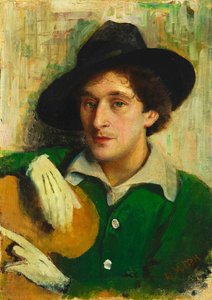
Marc Chagall
1887 - 1985 , Білорусь
Krótka nota
- Artistic Movement Or Style: Modernizm, Kubizm
- Artists Or Movements Influenced By This Artist:
- Surrealizm
- Artyści nowoczesni
- Artists Who Influenced This Artist:
- Bakst
- Delaunay
- Borowikowy
- Date Of Birth: 7 lipca 1887
- Date Of Death: 28 marca 1985
- Full Name: Marc Chagall
- Nationality: Rosjanin-Francuz
- Notable Artworks:
- I i Wieś
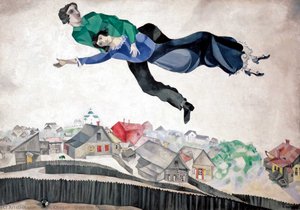
- Nad Vitebskiem
- Białe Ukrzyżowanie
- Place Of Birth: Liozna, Białoruś
Powiązane artykuły
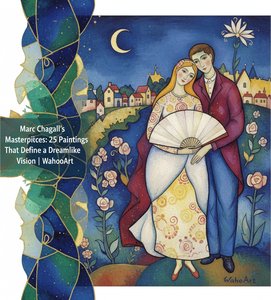
Marc Chagall: 25 Najlepszych Dzieł Mistrza Koloru | OriginalUniqueArt.com
Odkryj 25 najpiękniejszych dzieł Marca Chagalla! Poznaj historie, symbole i unikalny styl tego mistrza koloru. Reprodukcje obrazów Chagalla idealne do Twojego wnętrza – OriginalUniqueArt.com. Eksploruj pełną kolekcję online!

Celestial Messengers: Angels in Painting – A Historical & Artistic Exploration
Explore the captivating history of angels in painting! Discover symbolism, iconic Renaissance & Byzantine masterpieces, and renowned artists. Expert insights for art lovers & collectors at OriginalUniqueArt.

Niebiańscy Posłańcy w Sztuce: Ewolucja Symboliki i Emocjonalnego Oddziaływania Anielskich Reprezentacji na Przez Wieki
Odkryj fascynującą historię aniołów w sztuce! Analizujemy ewolucję ikonografii, symbolikę i emocjonalny wpływ anielskich reprezentacji od starożytności po współczesność. Ekspercka analiza dla miłośników sztuki.
René Magritte: 25 Arcydzieł Surrealizmu dla Miłośników Sztuki i Wystroju Domu
Odkryj 25 najbardziej znanych obrazów René Magritte'a – arcydzieł surrealizmu pełnych tajemnicy i symboliki. Poznaj historie, techniki i inspiracje tego belgijskiego mistrza. Reprodukcje najwyższej jakości na OriginalUniqueArt.com! Eksploruj kolekcję online.
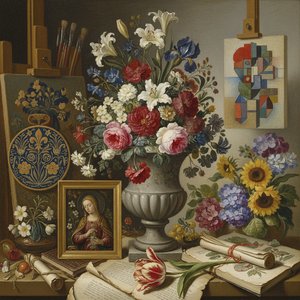
Kwiatowy Symbolizm w Malarstwie Zachodnim: Historyczna Podróż przez Znaczenia i Interpretacje
Odkryj fascynującą historię kwiatowego symbolizmu w malarstwie zachodnim! Poznaj znaczenie roślinnych motywów od starożytności po współczesność. Ekspercka analiza alegorii i interpretacji obrazów.