

 Zobacz w skali 1:1
 Wyślij
 Udostępnij
 Szczegóły
 Przewodnik

 Pobierz plik obrazu
 Podobne obiekty
 RTG
RTG Pokaz slajdów
 Statystyki
Serious Man, or The Serious One


 Czytaj więcej
Dzieło sztuki prezentowane na tej stronie podlega ochronie prawem autorskim, co oznacza, że nie mamy prawa do tworzenia ani sprzedaży jego identycznej reprodukcji. Ochrona ta jest egzekwowana na mocy umów międzynarodowych, takich jak Konwencja berneńska oraz przez przepisy prawa krajowego, w tym te określone w Prawo autorskie USA – Tytuł 17.
Jako pełną szacunku i legalną alternatywę oferujemy personalizowane, malowane ręcznie dzieła sztuki inspirowane oryginałem. Nasi wykwalifikowani i profesjonalni artyści starannie analizują styl, nastrój oraz artystyczną esencję pierwowzoru, aby stworzyć nowe, unikalne dzieło, które przywołuje te same emocje – pozostając jednocześnie w pełni oryginalną kreacją.
Metoda ta jest w pełni zgodna z przepisami prawa autorskiego, ponieważ nie polega na kopiowaniu ani powielaniu chronionego dzieła. Stanowi ona kreatywną reinterpretację – nowy obraz, który czerpie inspirację z oryginału, ale nie jest z nim tożsamy.
Ręcznie malowana reprodukcja olejowa
Ręcznie malowany obraz olejny na płótnie, wykonany na zamówienie przez naszych artystów w wybranym przez Ciebie wymiarze i oprawie. ( Przełącz na wersję drukowaną Przełącz na wersję cyfrową)




P118B zł10

P118H zł10

P118W zł10

P438Z zł10

P508JH zł12

P508YH zł12

P805H zł10

P805Z zł10

P919BZ zł10

P919G zł10

P919XJ zł10

P959ZH zł10

P968JZ zł12

W106C zł8

W218G zł10

W218JH zł8

W218Y zł10

W307PJ zł10

W316G zł10

W316PJ zł8

W316Y zł10

W398PJ zł8

W4111J zł10

W500HY zł15

W500JH zł15

W692G zł12

W849H zł8

W940BG zł15

W953PJ zł8




Wybierz spośród naszych standardowych rozmiarów, które zachowują oryginalne proporcje dzieła sztuki.

Wpisz wymaganą szerokość i wysokość, aby obraz pasował do Twojej ramy lub ściany. Ponieważ jest to dzieło malowane ręcznie, w przypadku rozmiaru o innym proporcji artysta może domalować nieco więcej wokół obrazu lub przyciąć fragmenty — wybór należy do Ciebie. Przed rozpoczęciem pracy prześlemy Ci cyfrową wizualizację do zatwierdzenia. Obraz widoczny na tej stronie nie przedstawia rzeczywistego efektu — jedynie wizualizacja oddaje realny rezultat.
Po złożeniu zamówienia zespół OriginalUniqueArt.com skontaktuje się z klientem drogą mailową w celu uzyskania instrukcji i prześle wizualizację projektu
Dostawa na całym świecie () w ciągu 3–4 tygodni zamiast standardowych 5 tygodni. (24 Październik). Bez kompromisów w kwestii jakości.

Bezpłatna ekspresowa wysyłka na cały świat

Wysokiej jakości płótno lniane

Pełne ubezpieczenie transportowe

Gwarancja zwrotu należności celnych i podatków importowych

Gwarancja idealnego odwzorowania barw

100-dniowy okres na zwrot dzieła w przypadku wykrycia wad produkcyjnych

Gwarancja 100% zwrotu pieniędzy

Oferta przy zakupie wielu sztuk
 Opcja ze szkłem jest dostępna wyłącznie w rozmiarach poniżej 110 cm

Serious Man, or The Serious One
Technika wykonania
Rozmiar reprodukcji
-


Suma do zapłaty
zł 1155
Serious Man, or The Serious One
The American artist Man Ray (1890-1976) fundamentally reshaped photography’s role—shifting it from mere documentation of reality into an expressive art form itself. His artistic journey commenced in New York with paintings; however, a pivotal encounter with Dadaism, spearheaded by Marcel Duchamp in 1915, propelled his conceptual explorations far beyond conventional boundaries. Ray embraced the ready-made principle, exemplified by “The Gift” (1921)—a flatiron meticulously affixed with tacks—demonstrating an audacious challenge to artistic norms and elevating commonplace objects into potent symbols of artistic inquiry. Paris became Ray’s crucible for diverse artistic pursuits, encompassing cinema alongside portraiture and fashion photography. It was within this realm that he honed his photographic skills, aligning himself with Surrealism and establishing himself as a trailblazer of innovative techniques. His experimentation sought to capture the subconscious mind's elusive imagery—a core tenet of Surrealist thought.- Subject Matter: Ray’s oeuvre centers on abstract compositions featuring stacked rectangular forms in shades of brown and beige, resembling an open envelope or stack of documents. This deliberate simplification underscores a preoccupation with conveying essential ideas through geometric shapes and subtle textural nuances.
- Style: The artwork leans toward abstract expressionism, prioritizing emotional resonance over representational accuracy. Lines predominantly traverse horizontally, fostering a sense of order and stability—a counterpoint to the inherent dynamism of Surrealist aesthetics.
- Technique: Ray’s masterful approach involves layering pigment on paper—often utilizing silkscreen printing—creating nuanced tonal variations and textural surfaces that contribute significantly to the artwork's overall impact. This meticulous process reflects a commitment to capturing fleeting moments of perception and conveying complex emotions through visual language.
Historical Context & Dada Influence
Ray’s artistic trajectory coincided with the burgeoning Dada movement—a reaction against rationalism and bourgeois values following World War I. Influenced profoundly by Duchamp's conceptual provocations, Ray embraced the ready-made as a subversive tool for questioning established artistic conventions. “The Gift,” alongside other Dada assemblages, challenged notions of originality and authorship—demanding viewers reconsider their preconceptions about art’s definition. This embrace of chance and absurdity mirrored Dada’s broader ethos—a deliberate rejection of traditional artistic forms in favor of spontaneous expression and intellectual disruption.Symbolism & Emotional Resonance
The stacked rectangular forms within “Serious Man” serve as evocative symbols—suggesting documents, memories, or perhaps the layered complexities of human experience. The muted brown palette contributes to a contemplative mood—inviting viewers to engage in introspection and contemplate profound questions about identity and perception. Ultimately, Ray’s artwork transcends mere visual representation—eliciting an emotional response rooted in ambiguity and intellectual curiosity. It encourages contemplation on themes of order versus chaos, stability versus dynamism—reflecting the artist's enduring fascination with exploring the boundaries of consciousness.Material Considerations & Reproduction Quality
Typically executed on archival-grade paper—often textured linen or Somerset Satin—Ray’s prints benefit from exceptional pigment dispersion and color fidelity. High-resolution reproductions capture the subtle tonal variations and textural nuances inherent in the original artwork—preserving its artistic integrity for discerning collectors and interior designers alike. Careful attention to printing techniques ensures that the reproduced image faithfully conveys Ray's vision—allowing viewers to appreciate the beauty and complexity of this seminal Surrealist masterpiece.Pytania i odpowiedzi
Czy mogę obejrzeć podgląd „Serious Man, or The Serious One” autorstwa Man Ray przed złożeniem zamówienia?
Podgląd dzieła „Serious Man, or The Serious One” autorstwa Man Ray jest dostępny na stronie Podgląd danego utworu.
Czy „Serious Man, or The Serious One” autorstwa Man Ray to znane dzieło sztuki?
Poziom popularności odnotowany dla „Serious Man, or The Serious One” autorstwa Man Ray wynosi Iconic.
Jakie umiejscowienie najlepiej pasuje do formatu dzieła „Serious Man, or The Serious One” autorstwa Man Ray?
Format Portrait dzieła „Serious Man, or The Serious One” autorstwa Man Ray jest rekomendowany do Hotel Lobby. Format oraz przestrzeń wspólnie pomagają w odpowiednim rozmieszczeniu reprodukcji.
Biografia artysty
A Life Illuminated by Shadows
Emmanuel Radnitzky, known to the world as Man Ray, was a restless spirit who defied easy categorization. Born in 1890 in Philadelphia to Russian Jewish immigrant parents, his journey from aspiring painter to pioneering photographer and filmmaker embodies the radical artistic ferment of the early 20th century. The shift from “Manny” Radnitzky to the enigmatic “Man Ray” itself speaks volumes about an artist determined to forge a new identity, one unbound by convention. His family’s move to New York City proved pivotal, exposing him to the burgeoning modernist scene and instilling in him a lifelong fascination with experimentation. Early influences included the European avant-garde showcased at Alfred Stieglitz's 291 gallery, and the gritty realism of the Ashcan School – a blend that would subtly inform his later work. Though initially dedicated to painting, it was photography that ultimately became Ray’s most potent medium for exploring the boundaries of perception and reality. He wasn't merely capturing images; he was inventing new ways of *seeing*. His early artistic endeavors were marked by a desire to break from traditional styles, influenced by his exposure to both European modernism and the raw energy of New York City life. The Ferrer Centre, with its anarchist leanings and emphasis on free expression, proved particularly formative during this period, fostering an environment where experimentation was not just encouraged but expected.Dada, Surrealism, and the Pursuit of the Impossible
Man Ray's artistic trajectory took a dramatic turn with his encounter with Marcel Duchamp in New York around 1915. This meeting sparked a shared fascination with challenging traditional notions of art, leading to explorations of “ready-mades” – ordinary manufactured objects elevated to the status of artwork. This rebellious spirit propelled Ray into the heart of the Dada movement, an anti-art protest born from the disillusionment of World War I. In 1921, he made the momentous decision to relocate to Paris, becoming a central figure in both the Dada and Surrealist circles that flourished there. While never fully aligning himself with any rigid artistic dogma, Ray embraced the Surrealists’ exploration of the unconscious mind, dreams, and the irrational. His work during this period is characterized by a dreamlike quality, often unsettling yet undeniably captivating. He wasn't interested in depicting reality as it *is*, but rather as it *feels* – fragmented, distorted, and imbued with hidden meanings. This embrace of the subconscious allowed him to move beyond mere representation towards an exploration of psychological states and emotional resonance within his art. His collaborations with other Surrealist artists, like Salvador Dalí, further solidified his position within the movement, though he always maintained a degree of independence in his artistic vision.Rayographs and the Alchemy of Light
Perhaps Man Ray is most celebrated for his invention of the “rayograph,” a cameraless photographic technique he stumbled upon almost by accident. These images—created by placing objects directly onto light-sensitive paper and exposing them to light—resulted in ethereal, ghostly compositions that defied conventional photographic representation. The rayograph wasn't simply an alternative method; it was a philosophical statement about the nature of photography itself. By eliminating the camera lens, Ray stripped away the illusion of objectivity, revealing the inherent subjectivity of the medium. These weren’t representations *of* things, but rather direct imprints *from* them, imbued with a sense of mystery and otherworldliness. Beyond rayographs, his photographic portraits – particularly those of artists like Lee Miller (who would become both his muse and collaborator) – are renowned for their striking compositions and psychological depth. He experimented relentlessly with solarization, multiple exposures, and darkroom manipulation, pushing the boundaries of what photography could achieve. Solarization, in particular, became a signature technique, creating dramatic reversals of tone that added an element of the uncanny to his portraits.Beyond Stillness: Film and a Lasting Legacy
Man Ray’s artistic curiosity extended beyond still images into the realm of filmmaking. His experimental films, such as *Le Retour à la Raison* (1923) and *L'Étoile de Mer* (1928), were characterized by their surreal imagery, unconventional editing techniques, and rejection of narrative conventions. These weren’t stories told in a traditional sense; they were visual poems, explorations of form, rhythm, and the subconscious. He often employed innovative techniques like stop-motion animation and superimposition to create disorienting and dreamlike effects. Though his film work remained relatively small in volume, it was profoundly influential on subsequent generations of avant-garde filmmakers. Throughout his long career, Man Ray continued to challenge artistic norms, refusing to be confined by labels or expectations. He died in Paris in 1976, leaving behind a body of work that continues to inspire and provoke. His legacy lies not only in his technical innovations but also in his unwavering commitment to artistic freedom and his relentless pursuit of the impossible—a true pioneer who forever altered our perception of art and reality.A Continuing Influence
- Photography: Man Ray’s techniques, particularly rayography and solarization, continue to be explored by contemporary photographers.
- Surrealism: His contributions solidified the movement's visual language and inspired countless artists across disciplines.
- Experimental Film: His pioneering work in film laid the groundwork for future generations of avant-garde filmmakers.
- Fashion Photography: Ray’s innovative approach to portraiture and composition influenced the development of modern fashion photography.

Man Ray
1890 - 1976 , Stany Zjednoczone
Najważniejsze informacje
- Artistic Movement Or Style: Dada, Surrealizm
- Artists Or Movements Influenced By This Artist: ['Surrealizm']
- Artists Who Influenced This Artist: ['Marcel Duchamp']
- Date Of Birth: 27 sierpnia 1890
- Date Of Death: 18 listopada 1976
- Full Name: Emmanuel Radnitzky
- Nationality: Amerykański
- Notable Artworks:
- Rayographs
- Le Retour à la Raison
- L'Étoile de Mer
- Place Of Birth: Philadelphia, USA
Zobacz także powiązane artykuły

25 Arcydzieł Kandinskiego: Kolor, Duchowość i Abstrakcja w Twoim Domu | OriginalUniqueArt.com
Odkryj 25 arcydzieł Wassily Kandinskiego – pioniera abstrakcji i ekspresjonizmu! Poznaj historie, techniki i emocje kryjące się za jego kolorowymi kompozycjami. Reprodukcje obrazów najwyższej jakości na OriginalUniqueArt.com. Eksploruj pełną kolekcję online!

Top 10 arcydzieł ekspresjonizmu abstrakcyjnego – inspiracje dla Twojego wnętrza | OriginalUniqueArt.com
Odkryj 10 arcydzieł ekspresjonizmu abstrakcyjnego – Pollock, Rothko, de Kooning i inni. Poznaj historie artystów, techniki i inspiracje dla Twojego wnętrza. Reprodukcje najwyższej jakości na OriginalUniqueArt.com!

Pure Chaos & Color: The High-Voltage World of Abstract Expressionism
Dive into the high-voltage world of Abstract Expressionism. Explore the raw energy of Action Painting and the legendary masters of the New York School through a visual journey of pure chaos and color. Discover how to bring bold, high-impact abstract art into your modern space.

Geometria Sztuki: 10 Arcydzieł Abstrakcji Geometrycznej | OriginalUniqueArt.com
Odkryj 10 arcydzieł abstrakcji geometrycznej! Poznaj historię Mondriana, Kandinskiego i Maleвича. Inspiracje wnętrzarskie z malarstwem abstrakcyjnym – reprodukcje najwyższej jakości na OriginalUniqueArt.com. Eksploruj kolekcję online!
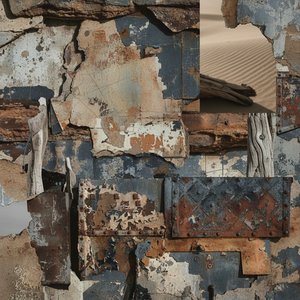
Aaron Siskind: Deconstructing Reality – A Photographic Exploration of Texture, Form & the Abstract Landscape
Explore the transformative journey of Aaron Siskind, from social realism to pioneering abstract photography. Discover his iconic series & lasting influence on modern art. A guide for collectors.
