

 Zobacz w skali 1:1
 Wyślij
 Udostępnij
 Szczegóły
 Przewodnik

 Pobierz plik obrazu
 Podobne obiekty
 RTG
RTG Pokaz slajdów
 Statystyki
Boy with Skull
 Oil
Oil- WallArt
- Symbolism
 1893
1893- 19th Century
 95.0 x 66.0 cm
 Ateneum Art Museum
 Czytaj więcej
Ręcznie malowana reprodukcja olejowa
Ręcznie malowany obraz olejny na płótnie, wykonany na zamówienie przez naszych artystów w wybranym przez Ciebie wymiarze i oprawie. ( Przełącz na wersję drukowaną Przełącz na wersję cyfrową)




P118B zł10

P118H zł10

P118W zł10

P438Z zł10

P508JH zł12

P508YH zł12

P805H zł10

P805Z zł10

P919BZ zł10

P919G zł10

P919XJ zł10

P959ZH zł10

P968JZ zł12

W106C zł8

W218G zł10

W218JH zł8

W218Y zł10

W307PJ zł10

W316G zł10

W316PJ zł8

W316Y zł10

W398PJ zł8

W4111J zł10

W500HY zł15

W500JH zł15

W692G zł12

W849H zł8

W940BG zł15

W953PJ zł8




Wybierz spośród naszych standardowych rozmiarów, które zachowują oryginalne proporcje dzieła sztuki.

Wpisz wymaganą szerokość i wysokość, aby obraz pasował do Twojej ramy lub ściany. Ponieważ jest to dzieło malowane ręcznie, w przypadku rozmiaru o innym proporcji artysta może domalować nieco więcej wokół obrazu lub przyciąć fragmenty — wybór należy do Ciebie. Przed rozpoczęciem pracy prześlemy Ci cyfrową wizualizację do zatwierdzenia. Obraz widoczny na tej stronie nie przedstawia rzeczywistego efektu — jedynie wizualizacja oddaje realny rezultat.
Po złożeniu zamówienia zespół OriginalUniqueArt.com skontaktuje się z klientem drogą mailową w celu uzyskania instrukcji i prześle wizualizację projektu
Dostawa na całym świecie () w ciągu 3–4 tygodni zamiast standardowych 5 tygodni. (24 Październik). Bez kompromisów w kwestii jakości.

Bezpłatna ekspresowa wysyłka na cały świat

Wysokiej jakości płótno lniane

Pełne ubezpieczenie transportowe

Gwarancja zwrotu należności celnych i podatków importowych

Gwarancja idealnego odwzorowania barw

100-dniowy okres na zwrot dzieła w przypadku wykrycia wad produkcyjnych

Gwarancja 100% zwrotu pieniędzy

Oferta przy zakupie wielu sztuk
 Opcja ze szkłem jest dostępna wyłącznie w rozmiarach poniżej 110 cm

Boy with Skull
Technika wykonania
Rozmiar reprodukcji
-


Suma do zapłaty
zł 1155
A Haunting Encounter with Mortality
In the quiet, somber depths of Magnus Enckell’s 1893 masterpiece, Boy with Skull, we are invited into a moment of profound and unsettling stillness. The painting presents a scene that feels pulled from the periphery of a dream or a dark folk tale, where the innocence of childhood meets the stark reality of death. A young boy sits grounded, his small frame positioned toward the edge of the composition, yet his focus is entirely consumed by the object in his hands: a human skull. There is no fear in his gaze, only a quiet, contemplative curiosity that bridges the gap between the living and the departed. This juxtaposition creates an eerie atmosphere, one that lingers in the mind long after the viewer has looked away, making it a piece that demands emotional engagement.
As a leading figure of the Finnish Symbolist movement, Enckell was a master at navigating the complexities of the human psyche. During this period of his career, his palette remained subdued and melancholic, eschewing the bright colorism he would later adopt with the Septem group. This restraint is vital to the impact of Boy with Skull; the muted tones and soft transitions allow the shadows to breathe, wrapping the subject in a shroud of mystery. The technique emphasizes texture and light in a way that feels almost tactile, as if one could feel the coldness of the bone and the weight of the boy's heavy thoughts. For the collector, this subtlety offers a sophisticated depth, providing a focal point that is both intellectually stimulating and visually serene.
Symbolism and the Weight of Existence
Beyond its surface-level strangeness, the painting serves as a powerful memento mori—a meditation on the inevitability of death. The skull, a universal symbol of mortality, acts as a mirror to the boy's burgeoning consciousness. In the hands of a child, the object loses its terror and becomes an instrument of inquiry, representing the moment when the human spirit begins to grapple with the concept of finitude. Enckell utilizes this symbolism to explore themes of transition and the cyclical nature of life. The composition, which places the boy slightly off-center, creates a sense of imbalance that mirrors the psychological tension inherent in contemplating one's own end.
For interior designers and curators of fine art, this piece offers an unparalleled opportunity to introduce narrative depth into a space. It is not merely a decoration but a conversation starter, a work that brings a sense of historical gravity and philosophical inquiry to a room. Whether placed in a dimly lit study or as a striking centerpiece in a contemporary gallery setting, the painting’s ability to evoke both unease and wonder makes it an extraordinary acquisition for those who appreciate art that challenges the boundaries of the seen and the unseen.
Pytania i odpowiedzi
Jaka paleta i dominujący kolor definiują "Boy with Skull"?
„Boy with Skull” autorstwa Magnus Enckell wykorzystuje paletę w odcieniach Earthy, w której dominuje kolor Rosy Brown (#d5b87b).
W którym muzeum znajduje się oryginał "Boy with Skull"?
Dzieło „Boy with Skull” autorstwa Magnus Enckell znajduje się w zbiorach Ateneum Art Museum, Helsinki, Finlandia. Informacja o muzeum dotyczy oryginału, a nie reprodukcji.
Do którego pomieszczenia w domu najlepiej pasuje reprodukcja "Boy with Skull"?
Zalecaną przestrzenią dla „Boy with Skull” autorstwa Magnus Enckell jest Living Room. Sugestia ta może zostać oczywiście dostosowana do Twojego wnętrza.
Biografia artysty
The Emergence of a Symbolist Vision
Born in the coastal town of Hamina in 1870, Knut Magnus Enckell was destined to become a cornerstone of the Finnish Golden Age. His early journey was one of profound transition, moving from the quiet landscapes of his youth toward the vibrant, intellectual currents of Paris. After initial studies in Helsinki under the guidance of Gunnar Berndtson, Enckell sought the rigorous training of the Académie Julian, where the influence of masters like Jules-Joseph Lefebvre and Jean-Joseph Benjamin-Constant began to shape his artistic eye. While his early education was rooted in the prevailing Naturalism of the era, a deeper, more introspective impulse soon began to stir within his work, pulling him away from mere representation toward the enigmatic and evocative realms of Symbolism.A Transformation of Light and Color
The trajectory of Enckell’s career is marked by a remarkable aesthetic metamorphosis that mirrored the shifting tides of European modernism. In his formative years, his canvases were characterized by a subdued, almost somber palette that captured the melancholic depths of the human psyche. However, from 1902 onwards, a dramatic shift occurred; the shadows retreated to make way for an increasingly bright and luminous colorism. As a leading figure in the Septem group, Enckell embraced a new language of light, pushing the boundaries of Finnish art through bold, vibrant hues. This evolution was not merely technical but spiritual, as his use of radiant colors allowed him to explore themes that were previously shrouded in muted tones, bringing a newfound vitality to the Symbolist movement.The Tapestry of Myth and Psyche
Enckell’s oeuvre is a captivating exploration of the unseen, where mythology, theatre, and the human soul converge upon the canvas. His works often feel like fever dreams or whispered legends, capturing moments of profound psychological tension and ethereal beauty. He possessed a unique ability to blend the tangible world with the subconscious, creating scenes that resonate with both mystery and grace. Among his most evocative contributions are:- Fantasia (1895): A hauntingly beautiful watercolor that utilizes impressionistic brushwork to depict a mythological figure submerged in water, evoking themes of nature and deep melancholy.
- Midsummer Day Service in Lohja Church (1899): An atmospheric oil painting that captures the solemnity of Finnish religious ceremony through warm tones and intricate Gothic details.
- Boy with Skull: A poignant exploration of mortality and the darker, more existential facets of his Symbolist explorations.
A Lasting Legacy in Finnish Art
Beyond his technical mastery, Magnus Enckell remains a figure of immense historical significance. He was more than just a painter; he was a cultural influencer who helped redefine the identity of Finnish art on an international stage. His ability to oscillate between being a traditionalist and a radical reformer allowed him to leave an indelible mark on the landscape of early 20th-century European art. Today, his legacy is preserved in the great institutions of Finland, standing as a testament to a life spent chasing the light through the shadows of the human spirit.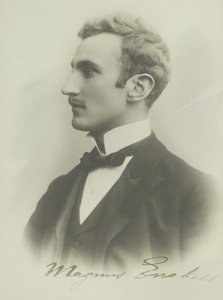
Magnus Enckell
1870 - 1925 , Finland
Najważniejsze informacje
- Full Name: Knut Magnus Enckell
- Nationality: Finnish
- Date Of Birth: 1870
- Date Of Death: 1925
- Place Of Birth: Hämeenlinna, Finland
- Notable Artworks:
- Fantasia
- Midsummer Day Service in Lohja Church
- Boy with Skull
- Artistic Movement Or Style: Symbolism
Zobacz także powiązane artykuły

Subtelna paleta: Emocjonalny rezonans i estetyczny wpływ stonowanych barw w sztuce
Odkryj subtelny świat tonalizmu – ruchu artystycznego fascynującego mistycyzmem i emocjonalnym oddaniem pejzażu. Analiza twórczości Whistlera, Innessa i innych mistrzów. Ekspercka wiedza o technikach i historii malarstwa.

Akseli Gallen-Kallela: Shaping Finnish Identity Through National Romanticism & Symbolism
Explore the captivating world of Akseli Gallen-Kallela, Finland's iconic National Romantic painter. Discover his symbolic landscapes, Kalevala illustrations & lasting impact on Finnish identity. Expert analysis & high-quality reproductions at OriginalUniqueArt.
Albert Edelfelt: A Pioneer of Finnish Realism & International Impressionist Circles
Explore the life & work of Albert Edelfelt, a pioneering Finnish Realist painter who bridged Impressionism & national identity. Discover his masterpieces and lasting influence on art history.

The Subdued Palette: Exploring Emotional Resonance & Aesthetic Impact in Muted Artworks
Explore the power of muted colors in art! Discover the history, psychology & techniques behind serene palettes. Find inspiration & expert advice for creating emotionally resonant spaces with OriginalUniqueArt.
The Subdued Resonance: Exploring Emotional Depth & Artistic Nuance within Muted Color Palettes
Explore the captivating world of muted colors in art & design! Discover historical context, psychological effects, techniques, and inspiration for creating serene spaces. Elevate your aesthetic with OriginalUniqueArt.