Expressionism
Carnival (Lyonel Feininger)
Lyonel Feininger (1871–1956) stworzył Carnival. Należy do nurtu Expressionism. Wykonano w technice Oil On Canvas.
- Oil On Canvas

 Podgląd w skali 1:1

 Ręcznie malowany obraz olejny
 Wyślij jako kartkę
 Udostępnij
 Karta informacyjna


 Pobierz obraz
 Podobne obiekty
 RTG
 Pokaz slajdów
 Pytania i odpowiedzi

 Statystyki
Carnival w skrócie
- Tytuł
- Carnival
- Artysta
- Lyonel Feininger (1871–1956)
- Miejsce urodzenia artysty
- Nowy Jork, Stany Zjednoczone
- Technika wykonania
- Oil On Canvas
- Ruch
- Expressionism
- Epoka
- Early Modern
- Temat
- people, figures, street scene, building, clock tower, umbrella
Co przedstawia Carnival?
Identification of Carnival by Lyonel Feininger
The street comes alive in Carnival, a spirited oil on canvas work by Lyonel Feininger. Created in 1911, this piece captures a moment of public celebration. The scene unfolds with a sense of movement, as if the viewer has just stepped into the middle of a bustling procession. People move through the space, their presence adding a layer of human energy to the urban setting.
Lyonel Feininger brings this specific vision to life through his unique handling of the medium. The oil paint carries the weight of the figures and the architecture, grounding the festive atmosphere in a tangible reality. Every brushstroke contributes to the feeling of a city in motion, caught in the middle of a joyful, crowded event. It is a window into a specific time and place, preserved through the artist's hand.
Composition and Visual Elements
A lively street scene unfolds before the eyes, filled with the restless energy of a crowd in motion. At least nine individuals populate the thoroughfare, each caught in a private moment of transit. One figure carries an umbrella against the sky, while another relies on a cane to navigate the pavement. Some travelers shoulder handbags or backpacks, their bodies angled as they move through the urban space. The figures appear to drift past one another, creating a sense of constant, rhythmic movement through the heart of the city.
In the background, the architecture looms with a sense of permanence. A building with a prominent clock tower watches over the pedestrians, its structure anchoring the bustling activity below. The composition draws the eye through the layers of the street, where the interplay of people and buildings creates a complex, layered perspective. The arrangement of the crowd suggests a spontaneous gathering, a slice of daily life where every person contributes to the collective pulse of the scene.
Technique and Artistic Style
The oil on canvas pulses with a restless energy, capturing a moment of movement through a lens of Expressionism. Colors collide and dance across the surface, refusing to settle into quietude. There is a palpable sense of rhythm in the way the pigments are applied, mirroring the lively street scene unfolding before us. The brushwork feels alive, driven by a desire to translate the emotional heat of a public celebration into visible, tactile strokes.
A subtle tension exists between the emotional intensity of Expressionism and the structural discipline of Cubist influence. While the colors scream with life, the underlying forms suggest a more calculated, geometric arrangement. This intersection of styles creates a visual language where the chaos of a crowd meets the organized logic of modernism. The figures move through a space that feels both spontaneous and carefully constructed, as if the artist is balancing the raw feeling of the moment with a precise, architectural eye.
Where to See This Artwork Today
The lively energy of this scene remains preserved within the walls of the Art Institute of Chicago. Visitors traveling to Chicago, IL, US, find this piece held within the institution's permanent collection. It resides there as a part of the Joseph Winterbotham Collection, waiting for those who wander through the museum's galleries to encounter its movement.
The painting stays housed in the Art Institute of Chicago, Chicago. It exists in this specific space, allowing the colors and the figures to remain part of the city's cultural landscape. One can find it among the many works that populate the museum's halls, where the spirit of the carnival continues to exist in its physical form.
Zdjęcia w wysokiej rozdzielczości dzieła Carnival

Domena publiczna: artysta zmarł w 1956.
Inne rozmiary, kadrowanie i cytowanie →Lyonel Feininger, Carnival. Domena publiczna
Odpowiedzi na pytania dotyczące Carnival
Z jakiej techniki wykorzystano "Carnival"?
Technika wykonania dzieła „Carnival” – Lyonel Feininger to Oil On Canvas. Reprodukcje mają na celu wierne oddanie wyglądu tej techniki.
Co przedstawia „Carnival” – Lyonel Feininger?
„Carnival” – Lyonel Feininger przedstawia: people, figures, street scene, building, clock tower, umbrella, cane, handbags.
Czy dzieło "Carnival" znajduje się w domenie publicznej?
Jeśli chodzi o prawa autorskie, "Carnival" znajduje się w należy do domeny publicznej – autorskie prawa majątkowe wygasły.
Któremu artyście przypisuje się "Carnival"?
„Carnival” zostało stworzone przez Lyonel Feininger. Informacje na tej stronie dotyczą oryginalnego dzieła autorstwa Lyonel Feininger.
Do jakiego nurtu artystycznego należy „Carnival” – Lyonel Feininger?
„Carnival” to dzieło należące do nurtu Expressionism. Nurt ten określa tradycję artystyczną, w której osadzone jest dzieło.
Do którego etapu twórczości Lyonel Feininger należy dzieło „Carnival”?
"Carnival" reprezentuje Early Period twórczości Lyonel Feininger.
Z czego wynika obecny status praw autorskich dzieła "Carnival"?
„Carnival” – Lyonel Feininger jest należy do domeny publicznej – autorskie prawa majątkowe wygasły. Okres ochrony praw autorskich liczony jest od śmierci artysty, która nastąpiła w 1956.
W jaki sposób "Carnival" wpisuje się w tematykę i styl twórczości Lyonel Feininger?
"Carnival" wpisuje się w nurt Expressionism w twórczości Lyonel Feininger, której charakterystyczne motywy obejmują expressionism and cubism influence, urban life exploration, pivotal early career work, transition to fine art.
W jaki sposób tematyka dzieła "Carnival" odnosi się do typowych motywów twórczości Lyonel Feininger?
Powracające motywy w twórczości Lyonel Feininger obejmują expressionism and cubism influence, urban life exploration, pivotal early career work, transition to fine art; „Carnival” koncentruje się na people, figures, street scene, building, clock tower, umbrella, cane, handbags.
O artyście: Lyonel Feininger

1871–1956, Stany Zjednoczone
Lyonel Feininger
Early Life and Artistic Roots Lyonel Charles Adrian Feininger, a name synonymous with the vibrant intersection of Expressionism and modern art, was born in New York City on July 17, 1871. His lineage was deeply rooted in artistic heritage; his father, Karl Wilhelm Friedrich Feininger, was a celebrated German-American violinist and composer, while his mother, Elizabeth Feininger, possessed a remarkable voice as an American singer. This familial legacy of musical and artistic talent profoundly shaped Lyonel’s early development, instilling within him a deep appreciation for creative expression from a remarkably young age. His childhood was marked by extensive travels throughout Europe, experiences that proved pivotal in shaping his artistic sensibilities.
Inne prace Lyonel Feininger
 The honeymooners
 Boats1917
 Sailing Boats
 Blue Coast

Eseje o Carnival
 Lyonel Feininger: Bridging Expressionism & Cubism – A Study of Spiritual GeometryExplore the captivating world of Lyonel Feininger, a pivotal figure bridging Expressionism & Cubism. Discover his architectural visions, Ba…
 The Architecture of the Crowd: Examining Human Presence in Urban CompositionsExplore the evolution of urban art from Caillebotte to modern street murals. Discover the pulse of the city through masterworks.
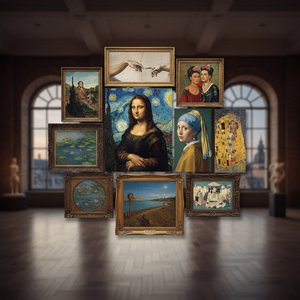 10 arcydzieł malarstwa olejnego, które na zawsze zmieniły sztukę | OriginalUniqueArt.comPoznaj 10 arcydzieł malarstwa olejowego, które zrewolucjonizowały świat sztuki! Van Gogh, Monet, Picasso i inni – odkryj historie, techniki…