
 Wyślij jako kartkę
 Udostępnij
 Szczegóły dzieła
 Przewodnik

 Pobierz obraz
 Podobne obiekty
 Pokaz slajdów
 Pytania i odpowiedzi
 Statystyki
Teddy Boy i Dziewczyna


 Rozwiń treść
Dzieło sztuki prezentowane na tej stronie podlega ochronie prawem autorskim, co oznacza, że nie mamy prawa do tworzenia ani sprzedaży jego identycznej reprodukcji. Ochrona ta jest egzekwowana na mocy umów międzynarodowych, takich jak Konwencja berneńska oraz przez przepisy prawa krajowego, w tym te określone w Prawo autorskie USA – Tytuł 17.
Metoda ta jest w pełni zgodna z przepisami prawa autorskiego, ponieważ nie polega na kopiowaniu ani powielaniu chronionego dzieła. Stanowi ona kreatywną reinterpretację – nowy obraz, który czerpie inspirację z oryginału, ale nie jest z nim tożsamy.
Giclée / Wydruk artystyczny
Wydruki giclée lub płótna o jakości muzealnej, szybka realizacja i szeroki wybór opcji wykończenia. ( Zamów ręcznie malowaną reprodukcję Przejdź do wersji cyfrowej)




































Wybierz spośród naszych standardowych rozmiarów, które zachowują oryginalne proporcje dzieła sztuki.

Wpisz wymaganą szerokość i wysokość, aby dopasować grafikę do ramy lub ściany. Wydruk można jedynie przyciąć, nigdy nie powiększając go poza oryginalny obraz, dlatego format o innych proporcjach spowoduje utratę części kompozycji. Przed rozpoczęciem druku prześlemy Ci cyfrowy podgląd do zatwierdzenia. Obraz wyświetlany na tej stronie nie pokazuje rzeczywistego przycięcia — jedynie podgląd oddaje ten efekt.
Dostawa na cały świat () w ciągu 2 tygodni zamiast standardowych 4/5 tygodni. (7 Listopad)

Bezpłatna ekspresowa wysyłka na cały świat

Wysokiej jakości płótno lniane

Pełne ubezpieczenie przesyłki

Gwarancja zwrotu należności celnych i podatków importowych

Gwarancja wiernego odwzorowania kolorów

100-dniowa polityka zwrotów (tylko w przypadku wad)

Gwarancja 100% zwrotu pieniędzy

Zniżka przy zakupie wielu sztuk
 Opcja ze szkłem jest dostępna wyłącznie w rozmiarach poniżej 110 cm

Teddy Boy i Dziewczyna
Giclée / Wydruk artystyczny
Wymiary reprodukcji
-


Cena całkowita
zł 317
Teddy Boy and Girl, 1955 – A Sculptural Echo of Youthful Rebellion
Lynn Chadwick’s “Teddy Boy and Girl,” created in 2002 after the original sculpture was rediscovered, stands as a striking testament to British art history and a profound reflection on societal anxieties surrounding adolescence during the postwar era. This monumental bronze sculpture captures the essence of the ‘teddy boy’ subculture—a movement born from the liberation afforded by the end of rationing—and embodies Chadwick's provocative engagement with prevailing social ideologies.- Subject Matter: The sculpture depicts two figures, stylized representations of young men and women dressed in iconic 1950s attire: drainpipe trousers and pleated coats. These garments immediately evoke the rebellious spirit of the teddy boy movement, characterized by defiance against societal norms and a fascination with American rock ‘n’ roll culture.
- Style & Technique: Chadwick's signature approach—geometric abstraction blended with subtle emotional resonance—is evident in the sculpture’s angular forms and simplified contours. He achieved this distinctive aesthetic through meticulous welding of an iron skeleton, followed by covering it with a “stolit” skin composed of iron filings and plaster. Subsequent carving into the plaster ensured that the underlying iron armature remained visible, mirroring Chadwick's famous description: "they've got their bones on the outside," highlighting a deliberate visual metaphor for vulnerability and resilience.
- Historical Context: The sculpture’s creation coincided with the 1956 Venice Biennale, where Chadwick represented Britain and secured the International Sculpture Prize—a prize previously awarded to established artists. This recognition solidified Chadwick's reputation as a pioneer in exploring contemporary youth culture and confronting societal anxieties. Michael Bird’s interpretation suggests that Chadwick deliberately adopted this title as “bourgeoisie-baiter,” reflecting the broader cultural critique prevalent at the time.
- Symbolism: The sculpture transcends mere representation; it speaks to themes of identity formation, rebellion against authority, and the complexities of youthful experience. The juxtaposition of angular forms symbolizes both strength and vulnerability—a duality that encapsulates the anxieties surrounding adolescence during a period marked by significant social change.
Further Insights – The Geometry of Fear
Lynn Chadwick's work is often categorized within Herbert Read’s influential concept of “Geometry of Fear,” coined during the British Pavilion at the Venice Biennale in 1952. As Read eloquently articulated, Chadwick’s sculptures grapple with unspoken anxieties—a notion that continues to resonate today. The sculpture’s spiky forms and deliberate use of iron filings underscore this preoccupation with confronting uncomfortable truths about human experience.A Legacy of Bold Vision
Chadwick's contribution to British sculpture is undeniable, securing him a place alongside luminaries like Robert Adams, Kenneth Armitage RA, Reg Butler, Geoffrey Clarke RA, Eduardo Paolozzi RA, William Turnbull and Bernard Meadows as innovators who challenged conventional artistic conventions. His enduring influence stems from his unwavering commitment to exploring profound themes through innovative sculptural techniques—a testament to Chadwick’s visionary spirit and lasting impact on the art world.Pytania i odpowiedzi
Ile lat miał(a) Lynn Chadwick, tworząc "Teddy Boy i Dziewczyna" w 2002 roku?
Gdy w 2002 roku powstało dzieło „Teddy Boy i Dziewczyna”, Lynn Chadwick – urodzony/a w 1914 – miał/a 88 lat.
Jaki jest dominujący kolor w „Teddy Boy i Dziewczyna” – Lynn Chadwick?
Dominującym kolorem dzieła „Teddy Boy i Dziewczyna” – Lynn Chadwick jest Szary (#71635a).
Gdzie mogę zobaczyć podgląd dzieła "Teddy Boy i Dziewczyna"?
Strona Podgląd w pomieszczeniu dzieła „Teddy Boy i Dziewczyna” pozwala na podgląd obrazu przed złożeniem zamówienia.
Biografia artysty
The Architect of Form: The Life and Legacy of Lynn Chadwick
In the landscape of twentieth-century British sculpture, few names command as much reverence for their ability to marry structural rigor with profound human vulnerability as Lynn Chadwick. Born in 1914 in Barnes, London, Chadwick did not follow the traditional path of an art academy student; instead, his aesthetic language was forged in the precise, disciplined world of architectural drawing. Under the mentorship of the modernist architect Rodney Thomas, Chadwick learned to perceive the world through a lens of compositional balance and spatial awareness. This early training as a draughtsman became the very marrow of his sculptural practice, allowing him to treat bronze and steel not merely as materials, but as instruments for composing complex, geometric architectures in three-dimensional space.
The turbulence of the mid-twentieth century left an indelible mark on his creative psyche. Though initially a conscientious objector, Chadwick’s service as a pilot escorting Atlantic convoys during World War II instilled in him a unique perspective on observation and the distillation of reality. The vast, often perilous expanses he witnessed from the cockpit seemed to inform the stark, sometimes lonely landscapes inhabited by his later figures. Upon returning to civilian life, his work transitioned from the ephemeral—exploring mobiles made of wire, balsa wood, and copper—to the monumental. He began to master a technique that would become his signature: constructing an iron skeleton, applying a "stolit" skin of iron filings and plaster, and finally casting the result in bronze. This process created surfaces that felt both skeletal and organic, often described as having a texture reminiscent of crabs or weathered earth.
The Geometry of Fear and the Spirit of Rebellion
Chadwick emerged as a central figure in the post-war movement known as the Geometry of Fear, a group of sculptors whose works reflected the anxieties and tensions of a world recovering from global conflict. His sculptures are characterized by an austere elegance, utilizing sharp angles and heavy, textured forms to evoke a sense of stillness that is simultaneously charged with latent energy. Yet, amidst this gravity, Chadwick possessed a remarkable ability to capture the pulse of contemporary culture. One of his most poignant achievements was his ability to translate the burgeoning spirit of youth into permanent form.
His 1955 work, "Teddy Boy and Girl," serves as a masterful example of this cultural intersection. In this piece, he moved beyond abstract tension to celebrate the rebellious energy of the post-rationing era, immortalizing the stylized, defiant aesthetic of the "teddy boy" subculture. Through these figures, Chadwick proved that modernism could be both intellectually rigorous and socially resonant, capturing the very essence of a generation finding its voice through fashion and attitude.
A Lasting Impression on Modernity
The significance of Lynn Chadwick’s contribution to art history lies in his refusal to separate the mathematical from the emotional. His career was marked by prestigious accolades, most notably winning the International Sculpture Prize at the 1956 Venice Biennale, an achievement that solidified his standing on the global stage. His ability to manipulate heavy metals into shapes that suggest movement and breath allowed him to bridge the gap between the industrial and the human.
Today, the enduring power of his work is reflected in its presence within the world's most esteemed institutions, ensuring that his vision of geometric emotion continues to inspire:
- The Museum of Modern Art (MoMA), New York
- The Tate, London
- The Centre Georges Pompidou, Paris
As we look back upon his oeuvre, we see more than just bronze and steel; we see a lifelong meditation on the balance between strength and fragility, between the rigid lines of architecture and the fluid complexities of the human soul. Lynn Chadwick remains a titan of British modernism, an artist who taught us that even within the most starkly geometric forms, a heartbeat can be found.

Lynn Chadwick
1914 - 2003 , United Kingdom
Krótka nota
- Artistic Movement Or Style: Semi-abstract sculpture
- Artists Or Movements Influenced By This Artist: Geometry of Fear
- Artists Who Influenced This Artist: Rodney Thomas
- Date Of Birth: 1914
- Date Of Death: 2003
- Full Name: Lynn Russell Chadwick
- Nationality: British
- Notable Artworks:
- Untitled (547)
- Untitled (724)
- Untitled (686)
- Place Of Birth: Barnes, United Kingdom
Powiązane artykuły

10 Legendarnych Brązów, Które Zrewolucjonizowały Sztukę | OriginalUniqueArt
Odkryj 10 legendarnych rzeźb brązowych, które zrewolucjonizowały sztukę! Poznaj historie Rodina, Donatello i innych mistrzów. Inspiracje wnętrzarskie & reprodukcje najwyższej jakości na OriginalUniqueArt.com.

10 Legendarnych Brązów Rzeźbiarskich, Które Zmieniły Sztukę | OriginalUniqueArt
Odkryj 10 legendarnych rzeźb brązowych od Rodina, Degasa i innych mistrzów! Poznaj historię powstania arcydzieł sztuki i inspiruj się do dekoracji wnętrz. Reprodukcje najwyższej jakości na OriginalUniqueArt.com – zobacz kolekcję!

Trwałe Formy: Ewolucja Technik i Tematów w Rzeźbie Przez Wieki – Od Antyku do Renesansu
Poznaj fascynującą historię rzeźby od antyku do renesansu! Odkryj techniki, wybitnych artystów i wpływ na współczesną sztukę. Ekspercka analiza dla kolekcjonerów i miłośników.
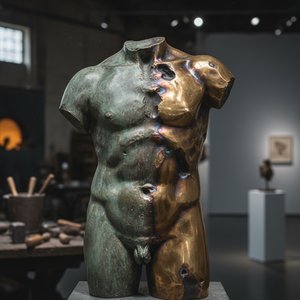
Dziedzictwo Brązu: Historia, Techniki i Współczesne Interpretacje Rzeźby
Poznaj historię i techniki rzeźby z brązu – od antycznych arcydzieł po współczesne interpretacje. Przewodnik dla kolekcjonerów i inwestorów sztuki. Ekspercka analiza wartości dzieł.

Trwała Forma: Rzeźba w Historii – Technika i Rezonans Emocjonalny
Poznaj historię rzeźby od antyku do współczesności! Ekspercka analiza technik, stylów i emocjonalnego wpływu arcydzieł. Inspiracje dla kolekcjonerów i miłośników sztuki.
