

 Zobacz w skali 1:1
 Wyślij
 Udostępnij
 Szczegóły
 Przewodnik

 Pobierz plik obrazu
 Podobne obiekty
 RTG
RTG Pokaz slajdów
 Statystyki
Concetto spaziale (La notte)
 Oil On Canvas
- WallArt
- Spatial Expressionism
 1956
1956- Modern
 100.0 x 36.0 cm
 Museo del Novecento
 Czytaj więcej
Giclée / Wydruk artystyczny
Wydruki giclée lub płótna o jakości muzealnej, szybka realizacja i szeroki wybór opcji wykończenia. ( Kup ręcznie malowany obraz Przełącz na wersję cyfrową)




P118B $10

P118H $10

P118W $10

P438Z $10

P508JH $12

P508YH $12

P805H $10

P805Z $10

P919BZ $10

P919G $10

P919XJ $10

P959ZH $10

P968JZ $12

W106C $8

W218G $10

W218JH $8

W218Y $10

W307PJ $10

W316G $10

W316PJ $8

W316Y $10

W398PJ $8

W4111J $10

W500HY $15

W500JH $15

W692G $12

W849H $8

W940BG $15

W953PJ $8




Wybierz spośród naszych standardowych rozmiarów, które zachowują oryginalne proporcje dzieła sztuki.

Możesz wprowadzić własne wymiary, aby dopasować dzieło do konkretnej ramy lub przestrzeni. Jeśli wybrany rozmiar nie będzie odpowiadał proporcjom oryginalnego obrazu, przytniecie dzieło lub rozszerzymy obraz za pomocą odbicia lustrzanego lub jednolitego wypełnienia krawędzi. Przed rozpoczęciem produkcji prześlemy cyfrową wizualizację do Twojej akceptacji.
Prosimy pamiętać, że podgląd na ekranie nie odzwierciedla faktycznego przycinania ani rozszerzania. Tylko wizualizacja dokładnie pokaże końcową kompozycję.
Mimo dostępności niestandardowych rozmiarów, zalecamy wybór wymiaru z listy zdefiniowanej, aby zachować oryginalne proporcje.
Dostawa na cały świat () w ciągu 2 tygodni zamiast standardowych 4/5 tygodni. (27 Wrzesień)

Bezpłatna ekspresowa wysyłka na cały świat

Wysokiej jakości płótno lniane

Pełne ubezpieczenie transportowe

Gwarancja zwrotu należności celnych i podatków importowych

Gwarancja idealnego odwzorowania barw

100-dniowy okres na zwrot dzieła w przypadku wykrycia wad produkcyjnych

Gwarancja 100% zwrotu pieniędzy

Oferta przy zakupie wielu sztuk
 Opcja ze szkłem jest dostępna wyłącznie w rozmiarach poniżej 110 cm

Concetto spaziale (La notte)
Giclée / Wydruk artystyczny
Rozmiar reprodukcji
-


Suma do zapłaty
$ 80
A Portal Through the Void: The Radical Vision of Lucio Fontana
In the quiet tension of 1956, Lucio Fontana executed a work that would forever alter the trajectory of modern art. Concetto spaziale (La notte) is not merely a canvas to be observed; it is an invitation to step beyond the two-dimensional plane. At first glance, the viewer is met with a deep, atmospheric expanse of blue—a hue that oscillates between the midnight navy of a storm-tossed sea and the ethereal cerulean of a twilight sky. This is not a flat application of pigment, but a layered, textured world where the paint seems to breathe with the weight of the night itself. The composition is deceptively simple, yet it carries an immense gravitational pull, drawing the eye toward the two irregular incisions that disrupt the surface. These are not mere marks; they are wounds in the fabric of reality, deliberate ruptures that transform the canvas from a window into a portal.The Alchemy of Spatialism and Technique
To understand this masterpiece, one must delve into the revolutionary spirit of Spatialism, the avant-garde movement Fontana pioneered. Rejecting the exhausted traditions of perspective and illusionistic depth, Fontana sought to incorporate the third dimension directly into the medium. Through his signature technique of perforation, he broke the "skin" of the painting, allowing the space behind the canvas to become an active participant in the art. In La notte, the texture around these cuts suggests a complex alchemy of oil paint, gesso, and perhaps even subtle glimmers of light-reflecting materials that catch the eye like distant stars. The physical presence of these incisions creates a profound sense of depth, making the dark, amorphous forms appear as if they are emerging from an unseen realm or receding into an infinite void. This tactile approach bridges the gap between painting and sculpture, offering a sensory experience that is both cerebral and visceral.A Symphony of Silence and Symbolism
Beyond its technical brilliance, the work resonates with a deep, existential symbolism that continues to captivate collectors and designers alike. The choice of blue—a color traditionally associated with infinity, melancholy, and the divine—serves as the perfect backdrop for an exploration of the void. The dark, jagged interruptions act as symbols of disruption and liberation, representing the moment when human consciousness breaks through established boundaries to encounter the unknown. For the interior designer, this piece offers a commanding presence; its minimalist yet profound composition allows it to anchor a room with a sense of quiet mystery and intellectual sophistication. It is an artwork that does not demand attention through noise, but rather commands it through a powerful, resonant silence. Owning a reproduction of such a seminal work means bringing a fragment of the twentieth century's most daring philosophical inquiry into one's personal space, providing a constant source of inspiration and contemplative wonder.Biografia artysty
A Life Forged in Spatialism
Lucio Fontana, a name synonymous with radical innovation in 20th-century art, was born into a world poised between tradition and modernity. His journey began not in Italy, the nation he would come to define within the artistic landscape, but in Rosario, Argentina, in 1899. The son of an Italian sculptor, Luigi Fontana, young Lucio inherited a craftsman’s sensibility alongside a burgeoning artistic vision. This early exposure to form and material proved foundational, even as his life became a series of geographical and stylistic explorations. Returning to Italy with his family, he absorbed the rich cultural heritage of Europe, studying at the Brera Academy in Milan and immersing himself in the avant-garde movements that were beginning to challenge established norms. However, the pull of his origins remained strong; multiple returns to Argentina punctuated his career, shaping his perspective and fueling a desire to transcend conventional artistic boundaries. Fontana’s early work reflected this duality – initially rooted in figurative sculpture and painting, it gradually evolved towards abstraction, hinting at the revolutionary path he was destined to forge.Breaking the Canvas: The Birth of Spatialism
The devastation of World War II proved a catalyst for Fontana's most groundbreaking artistic endeavor. Witnessing the destruction and upheaval firsthand, he felt compelled to redefine art’s purpose in a world irrevocably altered. This led to the formulation of *Spatialism*, a movement that sought not merely to represent space but to incorporate it as an integral element of the artwork itself. Fontana believed traditional painting was limited by its two-dimensionality, confining art within a static plane. He envisioned a new form of expression that would break down these barriers, acknowledging the infinite depth and potential of space beyond the canvas. This wasn’t simply about creating illusions of depth; it was about physically opening up the artwork to reveal what lay *beyond*. Beginning in the late 1940s, Fontana began his now-iconic series of slashed and punctured canvases – the *Concetti Spaziali* (Spatial Concepts). These weren't acts of destruction but rather deliberate interventions, revealing a void that symbolized the vastness of the cosmos. The slashes, often executed with a razor blade, were precise and purposeful, transforming the canvas into a window onto another dimension. He wasn’t destroying the painting; he was liberating it from its limitations.Influences and Artistic Kinship
Fontana's artistic development wasn’t born in isolation. He engaged with a diverse range of influences, absorbing and transforming them into his unique visual language. The expressive power of Vincent van Gogh resonated deeply within him, particularly the emotional intensity conveyed through brushwork. He also admired the satirical edge of Pieter Bruegel the Elder, finding inspiration in the older master’s ability to critique societal flaws. However, a pivotal encounter with the work of Polish artist Jan Grzegorz Stanisławski proved particularly transformative. Stanisławski's exploration of light and color within his 'Mullein' series profoundly impacted Fontana’s approach to abstraction and spatial representation. Furthermore, his participation in groups like *Abstraction-Création* in Paris exposed him to a broader network of avant-garde artists, fostering an exchange of ideas that fueled his experimentation. While distinctively original, Fontana’s work also shares affinities with other post-war movements such as Zero and Nouveau Réalisme, all striving to redefine the boundaries of art and challenge conventional perceptions.The Evolution of Technique: From Slash to Hole
Fontana's technique evolved dramatically over time. Initially, the *Concetti Spaziali* were characterized by bold, decisive slashes that created a dramatic contrast between the painted surface and the exposed canvas behind it. These works immediately captured attention and sparked debate about their meaning and purpose. However, Fontana didn’t remain static. He began to experiment with more subtle interventions, creating *hole paintings* – canvases meticulously pierced with tiny holes to reveal the underlying support. This technique, developed in the late 1950s and early 1960s, further emphasized the concept of spatial depth and invited viewers to contemplate the relationship between the surface and the void. He also ventured into sculpture, producing works that echoed the themes of volume and void found in his two-dimensional pieces – monumental installations that blurred the boundaries between painting, sculpture, and architecture. The *Soffitto Spaziale* (Spatial Ceiling) projects were particularly ambitious, transforming entire rooms into immersive environments designed to evoke a sense of infinite space.A Lasting Resonance
Lucio Fontana’s death in Comabbio, Italy, in 1968, marked the end of a remarkable career but not the end of his influence. Today, his works are held in prestigious museum collections worldwide – from The Metropolitan Museum of Art to the Ballarat Fine Art Gallery in Australia – testament to his enduring legacy. He remains a pivotal figure in post-war abstract art, celebrated for his courage to challenge conventions and redefine the very essence of artistic expression. Fontana didn’t simply paint *on* canvas; he engaged with space itself, creating works that invite viewers to contemplate the infinite possibilities beyond the visible world. His legacy is not merely a collection of slashed canvases but a profound invitation to perceive reality in new and expansive ways. He demonstrated that art could be more than representation—it could be an exploration of existence itself.
Lucio Fontana
1899 - 1968 , Argentyna
Najważniejsze informacje
- Artistic Movement Or Style: Spatializm
- Artists Or Movements Influenced By This Artist:
- Zero
- Nouveau Réalisme
- Artists Who Influenced This Artist:
- Jan Grzegorz Stanisławski
- Vincent van Gogh
- Date Of Birth: 1899
- Date Of Death: 1968
- Full Name: Lucio Fontana
- Nationality: Argentyńsko-Włoski
- Notable Artworks:
- Concetto Spaziale
- Soffitto Spaziale
- Place Of Birth: Rosario, Argentyna
Zobacz także powiązane artykuły
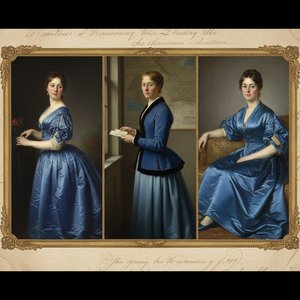
Azure Visions: Exploring Representations of the Blue Dress in Western Art History
Explore the rich history of the blue dress in Western art! Discover its symbolism, from Renaissance masterpieces to modern interpretations by artists like Martin & Schiele. Uncover cultural meanings and artistic techniques.

Top 10 Sławnych Obrazów w Odcieniach Szaroniebieskiego – Inspiracje dla Wnętrz | OriginalUniqueArt.com
Odkryj 10 najsłynniejszych obrazów w odcieniach szaroniebieskiego! Poznaj historie Claude Moneta, Degasa i Van Gogha. Inspiracje wnętrzarskie i reprodukcje najwyższej jakości na OriginalUniqueArt.com – sztuka dla Twojego domu.

Serene Blue Backgrounds: Discover Soulful Art to Transform Your Space with Timeless Elegance
Transform your home with soulful blue art. From serene Monet impressions to modern textured sculptures, discover curated masterpieces designed to inspire calm. Explore expert art consultations and bespoke hand-painted reproductions to create your personal sanctuary.
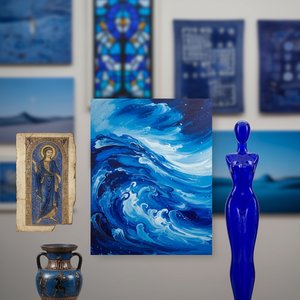
Błękit w Sztuce: Symbolika, Historia i Psychologiczne Oddziaływanie Koloru
Odkryj fascynującą historię błękitu w sztuce! Poznaj symbolikę, psychologię i wpływ tego koloru na arcydzieła renesansu i współczesne trendy. Ekspercka analiza dla miłośników sztuki.

Liquid Vibes: Bold Water Landscapes & Deep Blue Textures to Level Up Your Space
Elevate your space with bold water landscapes and deep blue textures. Discover trending abstract art, from sculptural textiles to premium oil reproductions, designed to bring high-impact, liquid vibes to modern urban interiors.
