 Przełącz na wydania drukowane
 Rozwiń treść







































 W przypadku dzieł sztuki lub reprodukcji, których którykolwiek z boków przekracza 105 cm (około 41 cali), rama zostanie wysłana w formie zestawu do samodzielnego montażu. Metoda ta zapewnia bezpieczną dostawę i zapobiega uszkodzeniom podczas transportu.


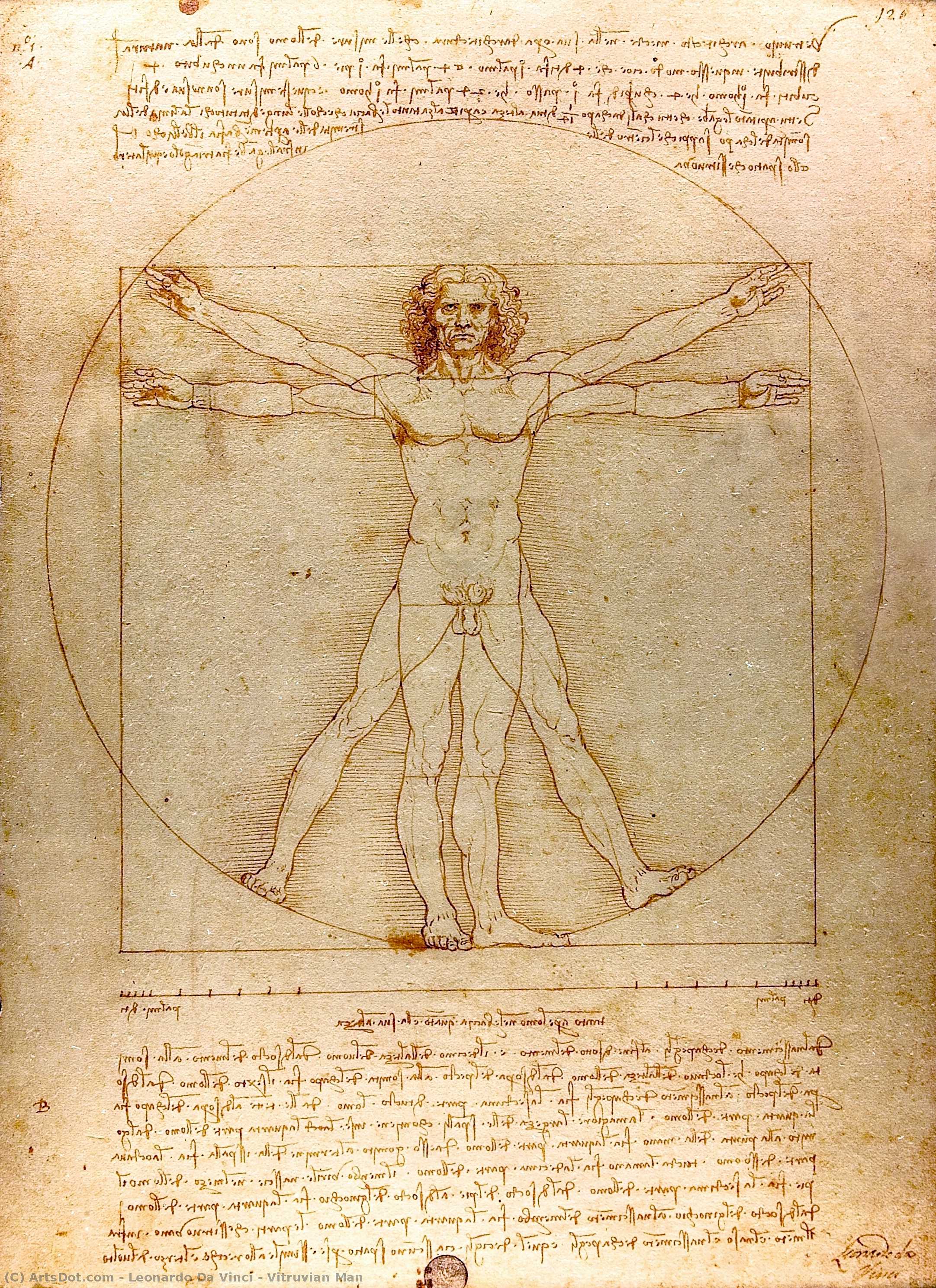
Vitruvian Man – A Renaissance Echo of Harmony and Proportion
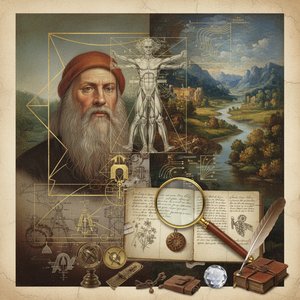
Leonardo da Vinci’s Vitruvian Man transcends mere artistic representation; it stands as a cornerstone of the Renaissance spirit—a testament to humanity's capacity for understanding and embodying universal principles. This meticulously crafted pen and ink drawing, executed around 1490, isn’t simply a depiction of the human form; it’s an audacious assertion that man occupies a central position within the cosmos, mirroring the geometric perfection championed by Vitruvius—the Roman architect whose writings profoundly influenced Da Vinci's thinking.Inspired by Ancient Wisdom
The genesis of this masterpiece lies in Vitruvius’s *De Architectura*, where he proposed that the human body could be accurately contained within a circle and a square – symbols representing divine order and earthly stability. Da Vinci brilliantly translated these concepts into visual form, presenting two interconnected positions of the nude male figure to illustrate the harmonious relationship between man and geometry. This wasn't merely an exercise in artistic creativity; it was a deliberate engagement with scientific inquiry—a desire to capture the essence of human anatomy through the lens of mathematical precision. The artist’s profound understanding of human musculature, gained through anatomical dissection, is palpable throughout the drawing.A Symphony of Line and Shadow
Da Vinci's technique exemplifies High Renaissance ideals – a pursuit of balance and idealized beauty achieved with remarkable finesse. Executed with delicate lines and subtle shading, the drawing conveys both physical realism and intellectual rigor. The choice of pen and ink lends an aura of timelessness to the artwork, while the aged parchment subtly enhances its historical authenticity. Observe the meticulous attention to detail—the precise rendering of muscles, bones, and skin folds—demonstrating Da Vinci’s unwavering commitment to anatomical accuracy. The drawing utilizes linear perspective skillfully, creating depth within the composition and reinforcing the sense of grandeur inherent in Renaissance art.Symbolism Beyond Representation
The Vitruvian Man is laden with symbolic significance. The circle embodies heaven – infinite space and divine perfection—reflecting the cosmological beliefs prevalent during Da Vinci’s time. Conversely, the square symbolizes earth – grounded stability and earthly existence—representing humanity's connection to the physical world. These opposing forms intertwine seamlessly within the figure, symbolizing the harmonious balance between mind and body, intellect and instinct. The golden ratio—approximately 1.618—is subtly incorporated into the drawing’s proportions, further emphasizing mathematical harmony and elevating it beyond mere aesthetic appeal.A Legacy of Inspiration
Today, reproductions of this iconic artwork continue to inspire artists, designers, and collectors alike. Its enduring fascination stems from its ability to encapsulate the very best of Renaissance humanism—a belief in reason, observation, and the transformative power of knowledge. The Vitruvian Man serves as a poignant reminder that beauty can be found not only in visual splendor but also in the pursuit of understanding – a timeless masterpiece that resonates across centuries.Pytania i odpowiedzi
Co wyjaśnia sytuację prawną dotyczącą praw autorskich do „Człowiek Vitruwia” – Leonardo Da Vinci?
Status praw autorskich do dzieła „Człowiek Vitruwia” – należy do domeny publicznej – autorskie prawa majątkowe wygasły – wynika z faktu, że artysta zmarł w 1519.
Jak można wykorzystać „Człowiek Vitruwia” – Leonardo Da Vinci w dekoracji wnętrz?
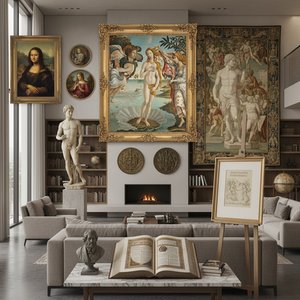
Dzieło „Człowiek Vitruwia” – Leonardo Da Vinci jest polecane do Manifestacja artystyczna, najlepiej w Salon lub strefa dzienna. Zastosowanie oraz przestrzeń pomagają zdecydować, gdzie najlepiej umieścić reprodukcję.
Jak kolory w dziele "Człowiek Vitruwia" współgrają ze sobą?
Kolory dzieła „Człowiek Vitruwia” – Leonardo Da Vinci wykazują Spójna paleta barw harmonię. Harmonia ta opisuje wzajemne relacje między barwami.
 Podgląd w skali 1:1
 Wyślij jako kartkę
 Udostępnij
 Szczegóły dzieła
 Przewodnik

 Pobierz obraz
 Podobne obiekty
 RTG
RTG Pokaz slajdów
 Pytania i odpowiedzi
 Statystyki
 Top 100