
 Wyślij jako kartkę
 Udostępnij
 Szczegóły dzieła
 Przewodnik

 Pobierz obraz
 Podobne obiekty
 Pokaz slajdów
 Pytania i odpowiedzi
 Statystyki
Evening dress,


 Rozwiń treść
Dzieło sztuki prezentowane na tej stronie podlega ochronie prawem autorskim, co oznacza, że nie mamy prawa do tworzenia ani sprzedaży jego identycznej reprodukcji. Ochrona ta jest egzekwowana na mocy umów międzynarodowych, takich jak Konwencja berneńska oraz przez przepisy prawa krajowego, w tym te określone w Prawo autorskie USA – Tytuł 17.
Metoda ta jest w pełni zgodna z przepisami prawa autorskiego, ponieważ nie polega na kopiowaniu ani powielaniu chronionego dzieła. Stanowi ona kreatywną reinterpretację – nowy obraz, który czerpie inspirację z oryginału, ale nie jest z nim tożsamy.
Giclée / Wydruk artystyczny
Wydruki giclée lub płótna o jakości muzealnej, szybka realizacja i szeroki wybór opcji wykończenia. ( Zamów ręcznie malowaną reprodukcję Przejdź do wersji cyfrowej)




































Wybierz spośród naszych standardowych rozmiarów, które zachowują oryginalne proporcje dzieła sztuki.

Wpisz wymaganą szerokość i wysokość, aby dopasować grafikę do ramy lub ściany. Wydruk można jedynie przyciąć, nigdy nie powiększając go poza oryginalny obraz, dlatego format o innych proporcjach spowoduje utratę części kompozycji. Przed rozpoczęciem druku prześlemy Ci cyfrowy podgląd do zatwierdzenia. Obraz wyświetlany na tej stronie nie pokazuje rzeczywistego przycięcia — jedynie podgląd oddaje ten efekt.
Dostawa na cały świat () w ciągu 2 tygodni zamiast standardowych 4/5 tygodni. (12 Listopad)

Bezpłatna ekspresowa wysyłka na cały świat

Wysokiej jakości płótno lniane

Pełne ubezpieczenie przesyłki

Gwarancja zwrotu należności celnych i podatków importowych

Gwarancja wiernego odwzorowania kolorów

100-dniowa polityka zwrotów (tylko w przypadku wad)

Gwarancja 100% zwrotu pieniędzy

Zniżka przy zakupie wielu sztuk
 Opcja ze szkłem jest dostępna wyłącznie w rozmiarach poniżej 110 cm

Evening dress,
Giclée / Wydruk artystyczny
Wymiary reprodukcji
-


Cena całkowita
zł 316
A Study in Shadow and Silhouette: Deconstructing the Evening Dress
Lee Alexander McQueen’s “Evening Dress,” a black-and-white photograph captured in 2007, isn't merely a documentation of fashion; it’s a meticulously crafted exploration of form, texture, and the inherent drama within restraint. The image, strikingly devoid of color, immediately establishes an atmosphere of sophisticated melancholy – a deliberate choice that elevates the garment beyond its purely decorative function and invites contemplation on themes of timelessness and the fleeting nature of beauty. McQueen, a designer renowned for his provocative yet deeply considered work, masterfully utilizes photographic realism to achieve this effect, employing controlled lighting and a shallow depth of field to draw the viewer’s eye directly to the mannequin and the exquisite details of the dress itself.
The composition is deceptively simple. Centered precisely within the frame, the mannequin becomes an island of focus against a deliberately blurred background – a strategic move that amplifies the dress's presence and emphasizes its verticality. The photograph’s perspective, subtly low-angled, lends a sense of grandeur to the garment, suggesting both elegance and a hint of imposing formality. The deliberate lack of extraneous detail forces the viewer to engage with the textures and lines of the fabric itself: the subtle sheen, the carefully draped folds, and the precise construction that speaks volumes about the skill of its creation. The matte surface of the mannequin’s material provides a grounding contrast to the luxuriousness of the dress, highlighting its intricate details.
The Architect of Form: Technique and Craftsmanship
McQueen's choice of black-and-white photography is crucial to understanding the photograph’s intent. It strips away superficial distractions, forcing us to appreciate the fundamental elements of design – line, shape, texture, and volume. The studio lighting, soft and diffused, avoids harsh contrasts, instead creating a delicate interplay of light and shadow that reveals the fabric's complex surface. This technique is reminiscent of classical portraiture, lending an air of timelessness to the image. The shallow depth of field – a hallmark of photographic realism – ensures that the dress remains sharply in focus while the background melts into a soft, indistinct blur, effectively isolating the subject and directing our attention entirely to its form.
Beyond the technical aspects, the photograph’s execution reveals McQueen's deep understanding of tailoring. The meticulous rendering of the fabric’s folds and draping suggests an intimate knowledge of how materials behave and respond to movement. The photograph isn’t simply a representation; it’s a study in construction – a testament to the designer’s commitment to precision and his ability to transform simple materials into objects of extraordinary beauty and drama. The image feels like a carefully considered blueprint, revealing the underlying structure that supports its captivating aesthetic.
Echoes of History and Symbolism
McQueen's work was deeply rooted in historical references, often drawing inspiration from Victorian mourning rituals, gothic literature, and the macabre. This photograph subtly echoes those influences through its starkness and the sense of contained drama. The monochromatic palette evokes a feeling of timelessness, suggesting that the dress transcends fleeting trends and speaks to enduring ideals of beauty and sophistication. The absence of color can also be interpreted as a deliberate rejection of superficiality, focusing instead on the intrinsic qualities of form and texture.
Furthermore, the image’s composition subtly references classical sculpture – the mannequin's pose mirroring the stance of a figure in profile, creating a sense of formality and monumentality. The dress itself, with its flowing lines and elegant silhouette, embodies the ideals of romanticism and beauty, while simultaneously hinting at an underlying melancholy—a characteristic often associated with McQueen’s work. The photograph invites us to consider not just what we see, but also what it represents: a celebration of craftsmanship, a meditation on beauty, and a subtle commentary on the passage of time.
A Legacy in Black and White
“Evening Dress” is more than just a fashion photograph; it’s a miniature masterpiece that encapsulates McQueen's unique vision. It stands as a testament to his mastery of form, texture, and composition, demonstrating his ability to elevate the mundane into the extraordinary. Reproductions of this image offer an opportunity to appreciate the subtle nuances of McQueen’s artistry – a chance to bring a touch of timeless elegance and understated drama into any space. The photograph's enduring appeal lies in its ability to evoke emotion through restraint, reminding us that true beauty often resides not in vibrant color but in the quiet power of form and shadow.
Pytania i odpowiedzi
Jaki układ ma „Evening dress,” – Lee Alexander McQueen?
Dzieło „Evening dress,” – Lee Alexander McQueen ma format Tall. Format ten określa proporcje kompozycji.
Jak opisany jest nastrój dzieła „Evening dress,” – Lee Alexander McQueen?
Nastrój dzieła „Evening dress,” – Lee Alexander McQueen opisuje się jako Elegant. Klasyfikacja ta może pomóc w dopasowaniu pracy do konkretnego wnętrza.
Do jakiego pomieszczenia polecane jest dzieło „Evening dress,” – Lee Alexander McQueen?
Zalecaną przestrzenią dla „Evening dress,” – Lee Alexander McQueen jest Living Room. Sugestia ta może być oczywiście dostosowana do Twojego wnętrza.
Biografia artysty
A Rebel Tailor: The Life and Legacy of Lee Alexander McQueen
Lee Alexander McQueen, a name synonymous with boundary-pushing fashion and dramatic artistry, emerged from a working-class upbringing in London’s East End to become one of the most influential designers of his generation. Born on March 17, 1969, young Lee displayed an early aptitude for creativity, crafting dresses for his sisters – a nascent expression of the vision that would later captivate and often shock the fashion world. This initial spark led him to leave school at sixteen and embark on an apprenticeship on Savile Row, the hallowed ground of British tailoring. It was here, amidst the precision and tradition of bespoke menswear, that McQueen honed his technical skills – a foundation upon which he would build his revolutionary aesthetic. His time with Anderson & Sheppard, crafting suits even for figures like Prince Charles, instilled in him an unparalleled understanding of cut, construction, and form. However, McQueen’s ambition extended beyond traditional tailoring; he sought to deconstruct and reimagine the very language of clothing. Subsequent roles with theatrical costumiers Angels and Bermans further fueled his imagination, exposing him to a world of fantasy, performance, and dramatic expression.Early Years & Apprenticeship: From East End Roots to Savile Row Precision
Lee Alexander McQueen was born in Lewisham, London, into a family rooted in working-class tradition. His father, Ronald, was a taxi driver, and his mother, Joyce, taught social science—a grounding that would shape McQueen’s perspective on the world. Growing up in Stratford, he experienced firsthand the realities of urban life, fostering an early awareness of social disparities. At sixteen, defying expectations, McQueen abandoned formal education to pursue an apprenticeship at Savile Row, London’s prestigious tailoring district. This decision proved pivotal, immersing him in the meticulous craft of bespoke menswear and establishing a lifelong fascination with impeccable construction and masterful technique. The influence of Anderson & Sheppard—where he honed his skills crafting suits for royalty—was particularly profound, imparting an understanding of tradition alongside innovation. It was here that McQueen began to forge his distinctive style, blending heritage with daring experimentation.Saint Martins & Isabella Blow: Finding His Voice Amidst Artistic Exploration
McQueen’s formal education at Central Saint Martins College of Art and Design marked a turning point in his artistic journey. Recognizing his innate talent for conceptual design alongside technical proficiency, he embraced the challenge of transforming raw materials into evocative narratives. His 1992 graduate collection—inspired by the chilling tales of Jack the Ripper—immediately garnered attention, presenting a dark, provocative statement that foreshadowed his future explorations of history, psychology, and societal taboos. Crucially, the entire collection was purchased by Isabella Blow, an eccentric fashion editor who became McQueen’s mentor and champion. Blow recognized the brilliance within him, providing not only financial support but invaluable guidance as he navigated the complexities of the burgeoning BritArt movement. Her unwavering belief in his vision fueled his creativity and solidified their enduring friendship—a relationship that would continue to shape McQueen’s career trajectory.From Atelier to Runway: Mastering Craftsmanship & Embracing Performance
McQueen’s apprenticeship at Savile Row instilled in him an unparalleled understanding of tailoring, but he refused to confine himself solely to tradition. He sought to expand his skillset by working with theatrical costumiers Angels and Bermans—experiences that exposed him to the transformative power of performance art and encouraged him to push boundaries beyond conventional fashion aesthetics. This adventurous spirit led him to Milan, where he honed his craft as a design assistant under Romeo Gigli—a formative period that nurtured his appreciation for understated elegance alongside bold experimentation. Upon returning to London, McQueen enrolled at Central Saint Martins again, completing his MA in Fashion Design and cementing his commitment to artistic innovation. He began his career designing women’s collections, establishing himself as a visionary stylist who challenged established norms and captivated audiences with his unconventional designs—a hallmark of his distinctive style.A Legacy of Innovation & Provocation: McQueen's Impact on Haute Couture
Lee Alexander McQueen revolutionized haute couture by fusing meticulous tailoring with theatrical presentation and provocative conceptual ideas. His collections consistently interrogated societal anxieties, confronting uncomfortable truths about identity, sexuality, and mortality with unflinching honesty—a characteristic that distinguished him from many of his contemporaries. He achieved international acclaim as head designer for Givenchy, earning British Designer of the Year awards four times during his tenure—a testament to his exceptional talent and unwavering dedication to artistic excellence. His groundbreaking runway shows captivated audiences worldwide, transforming fashion into a form of performance art and establishing McQueen as one of the most influential designers of his era. Beyond his designs, he championed a fearless approach to creativity, inspiring generations of artists and designers to embrace experimentation and challenge conventions—leaving an indelible mark on the landscape of contemporary fashion. His tragic death in 2010 solidified his status as a cultural icon, ensuring that his visionary aesthetic would continue to resonate for years to come.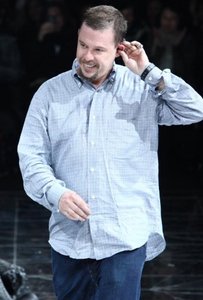
Lee Alexander McQueen
1969 - 2010 , Wielka Brytania
Krótka nota
- Artistic Movement Or Style: Avant-garde Moda
- Artists Or Movements Influenced By This Artist: ['Contemporary projektanci']
- Artists Who Influenced This Artist:
- Jack Ripper
- Estetyka japońska
- Date Of Birth: March 17, 1969
- Date Of Death: February 11, 2010
- Full Name: Lee Alexander McQueen
- Nationality: Brytyjski
- Notable Artworks:
- Kurtki
- Sukienki wieczorowe
- Szalek
- Place Of Birth: Londyn, Wielka Brytania
Powiązane artykuły
Piktorializm w Polsce: Poszukiwanie Duszy Fotografii i Estetyki Malarskiej
Poznaj historię piktorializmu w Polsce – nurtu fotografii artystycznej dążącego do estetyki malarskiej. Odkryj kluczowe postacie, techniki i wpływ na polską sztukę. Ekspercka analiza i fascynujące fakty!

Monochromatyczne Wizje: Estetyka i Historyczne Znaczenie Fotografii Czarno-Białej
Odkryj fascynujący świat fotografii czarno-białej! Poznaj historię, techniki i arcydzieła monochromatycznej sztuki. Inspiracje, porady i analiza wpływu na współczesną estetykę. OriginalUniqueArt.com.
The Lens of Luxury: A Visual Journey Through the Evolution and Artistry of Fashion Photography
Embark on a visual journey through the evolution of fashion photography. Discover how masters like Gianfranco Ferré blended geometry, surrealism, and texture to redefine high-fashion art for collectors and connoisseurs of luxury imagery.
Draped Narratives: Fashion as Symbol & Subject in Historical Art
Explore the fascinating history of fashion as a symbol of power & status in art! Discover masterpieces from Gainsborough to Tissot and learn how clothing shaped societal narratives. Find museum-quality reproductions at OriginalUniqueArt.

Beyond the Lens: Photography's Enduring Influence on Modern & Contemporary Art
Explore photography's pivotal role in shaping modern & contemporary art. Discover key movements, influential artists like Stieglitz, and expert collecting advice from OriginalUniqueArt.
