

 Zobacz w skali 1:1
 Wyślij
 Udostępnij
 Szczegóły
 Przewodnik

 Pobierz plik obrazu
 Podobne obiekty
 RTG
RTG Pokaz slajdów
 Statystyki
People
 Oil On Canvas
- WallArt
- Impressionism
 1923
1923- Modern
 91.0 x 121.0 cm
 Czytaj więcej
Dzieło sztuki prezentowane na tej stronie podlega ochronie prawem autorskim, co oznacza, że nie mamy prawa do tworzenia ani sprzedaży jego identycznej reprodukcji. Ochrona ta jest egzekwowana na mocy umów międzynarodowych, takich jak Konwencja berneńska oraz przez przepisy prawa krajowego, w tym te określone w Prawo autorskie USA – Tytuł 17.
Jako pełną szacunku i legalną alternatywę oferujemy personalizowane, malowane ręcznie dzieła sztuki inspirowane oryginałem. Nasi wykwalifikowani i profesjonalni artyści starannie analizują styl, nastrój oraz artystyczną esencję pierwowzoru, aby stworzyć nowe, unikalne dzieło, które przywołuje te same emocje – pozostając jednocześnie w pełni oryginalną kreacją.
Metoda ta jest w pełni zgodna z przepisami prawa autorskiego, ponieważ nie polega na kopiowaniu ani powielaniu chronionego dzieła. Stanowi ona kreatywną reinterpretację – nowy obraz, który czerpie inspirację z oryginału, ale nie jest z nim tożsamy.
Ręcznie malowana reprodukcja olejowa
Ręcznie malowany obraz olejny na płótnie, wykonany na zamówienie przez naszych artystów w wybranym przez Ciebie wymiarze i oprawie. ( Przełącz na wersję drukowaną Przełącz na wersję cyfrową)




P118B zł10

P118H zł10

P118W zł10

P438Z zł10

P508JH zł12

P508YH zł12

P805H zł10

P805Z zł10

P919BZ zł10

P919G zł10

P919XJ zł10

P959ZH zł10

P968JZ zł12

W106C zł8

W218G zł10

W218JH zł8

W218Y zł10

W307PJ zł10

W316G zł10

W316PJ zł8

W316Y zł10

W398PJ zł8

W4111J zł10

W500HY zł15

W500JH zł15

W692G zł12

W849H zł8

W940BG zł15

W953PJ zł8




Wybierz spośród naszych standardowych rozmiarów, które zachowują oryginalne proporcje dzieła sztuki.

Możesz wprowadzić własne wymiary, aby dopasować obraz do konkretnej ramy lub przestrzeni. Jeśli wybrany rozmiar nie będzie odpowiadał proporcjom oryginału, przytniecie dzieło sztuki lub rozszerzymy je o dodatkowe elementy, ręcznie domalowane przez artystę. Przed rozpoczęciem produkcji wyślemy projekt cyfrowy do Twojej akceptacji.
Należy pamiętać, że podgląd na ekranie nie odzwierciedla rzeczywistego przycinania ani rozszerzania obrazu. Tylko projekt dokładnie pokaże ostateczną kompozycję.
Choć oferujemy możliwość zamówienia niestandardowych rozmiarów, zalecamy wybór wymiaru z gotowej listy, aby zachować oryginalne proporcje dzieła.
Po złożeniu zamówienia zespół OriginalUniqueArt.com skontaktuje się z klientem drogą mailową w celu uzyskania instrukcji i prześle wizualizację projektu
Dostawa na całym świecie () w ciągu 3–4 tygodni zamiast standardowych 5 tygodni. (13 Październik). Bez kompromisów w kwestii jakości.

Bezpłatna ekspresowa wysyłka na cały świat

Wysokiej jakości płótno lniane

Pełne ubezpieczenie transportowe

Gwarancja zwrotu należności celnych i podatków importowych

Gwarancja idealnego odwzorowania barw

100-dniowy okres na zwrot dzieła w przypadku wykrycia wad produkcyjnych

Gwarancja 100% zwrotu pieniędzy

Oferta przy zakupie wielu sztuk
 Opcja ze szkłem jest dostępna wyłącznie w rozmiarach poniżej 110 cm

People
Technika wykonania
Rozmiar reprodukcji
-


Suma do zapłaty
zł 1119
A Midnight Encounter with the Extraordinary
In the quiet, shadowed hours of 1923, Konstantin Yuon captured a moment that defies the boundaries of traditional realism, inviting us into a world where the terrestrial and the celestial collide. His painting, People, presents a hauntingly beautiful nocturnal scene that begins with a group of figures gathered before a simple fence, yet quickly transcends the mundane. As the eye wanders through the composition, it discovers an unexpected narrative: an airplane cutting through the dark sky and, most strikingly, a massive spaceship looming above the horizon. This juxtaposition of human presence with advanced, otherworldly technology creates a profound sense of mystery, pulling the viewer into a dreamscape where the limits of science fiction and reality are indistively blurred.
The atmosphere of the piece is thick with intrigue, making it an ideal centerpiece for those looking to add a layer of intellectual depth and conversation to a sophisticated interior. The artist masterfully utilizes the darkness of the night to frame the subjects, using light not just to illuminate faces, but to evoke a sense of wonder. For collectors and designers, this work offers more than mere decoration; it provides a window into a moment of cosmic curiosity, where the stillness of a group of onlookers meets the silent, majestic movement of something far beyond our world.
The Mastery of Konstantin Yuon
To understand the technical brilliance behind People, one must look to the rich artistic lineage of Konstantin Yuon. Trained at the prestigious Moscow School of Painting, Sculpture and Architecture under masters like Konstantin Korovin, Yuon possessed a profound command over light and texture. His journey from the delicate nuances of Impressionism to the structured narratives of Soviet Realism allowed him to manipulate oil on canvas with exceptional fluidity. In this particular work, his technique serves the theme of mystery; the brushwork is deliberate yet atmospheric, allowing the edges of the figures to blend softly into the nocturnal landscape, much like a memory fading into the night.
The emotional impact of the painting lies in its ability to evoke both solitude and collective awe. There is a palpable tension between the grounded, earthly presence of the people and the soaring, technological marvels above them. This duality makes the artwork particularly compelling for modern spaces, where it can serve as a focal point that stimulates the imagination. Whether placed in a contemporary gallery setting or a classic study, Yuon’s ability to weave symbolism—the airplane representing human progress and the spaceship representing the infinite unknown—ensures that the painting remains a timeless exploration of the human condition in an ever-expanding universe.
Pytania i odpowiedzi
Z jakim uczuciem wiąże się "People"?
„People” budzi Mysterious uczucia. Ton emocjonalny opisuje wrażenie, jakie wywołuje to dzieło.
Któremu artyście przypisuje się "People"?
„People” zostało stworzone przez Konstantin Yuon. Informacje na tej stronie opisują oryginalne dzieło autorstwa Konstantin Yuon.
Kto jest autorem i z jakiego roku pochodzi "People"?
Dzieło "People" zostało stworzone przez Konstantin Yuon w 1923 roku.
Jaki nastrój towarzyszy stylowi Impressionism w dziele „People”?
"People" niesie ze sobą Mysterious wydźwięk emocjonalny w obrębie nurtu Impressionism.
Gdzie mogę kupić ręcznie malowaną reprodukcję dzieła „People” autorstwa Konstantin Yuon?
„People” jest dostępny jako ręcznie malowana reprodukcja olejowa na płótnie lnianym. Zamówienie można złożyć na ta strona, wybierając spośród dostępnych rozmiarów.
Czy dostępna jest prezentacja multimedialna dla „People” autorstwa Konstantin Yuon?
Dostępna jest prezentacja zdjęć: strona Pokaz slajdów dzieła „People” autorstwa Konstantin Yuon.
Do którego okresu twórczości Konstantin Yuon należy dzieło „People”?
"People" reprezentuje Mature Period twórczości Konstantin Yuon.
Jakie miejsce w historii sztuki zajmuje „People” autorstwa Konstantin Yuon?
„People” autorstwa Konstantin Yuon należy do nurtu Impressionism, przypadającego na okres Modern. Razem nadają one dziełu jego miejsce w historii sztuki.
Biografia artysty
Early Life and Artistic Foundations
Konstantin Fyodorovich Yuon, born in Moscow on October 24, 1875, emerged from a family deeply rooted in both Swiss-Russian heritage and a palpable artistic inclination. His brother, Paul Juon, would later achieve renown as a composer – a familial connection that hinted at the creative currents flowing through their upbringing. From his earliest years, Konstantin demonstrated an innate fascination with visual expression, nurtured by a mother who fostered artistic pursuits within the home’s walls. This early exposure served as the fertile ground for his formal education at the Moscow School of Painting, Sculpture and Architecture from 1892 to 1898. There, he was fortunate enough to be mentored by distinguished masters such as Konstantin Savitsky and Konstantin Korovin – figures whose techniques and philosophies would profoundly shape his initial artistic trajectory. These formative years weren’t confined solely to the borders of Russia; Yuon embarked on journeys across Western Europe, particularly Paris, where he encountered the vibrant and revolutionary currents of the Impressionist movement. While undeniably captivated by artists like Camille Pissarro, he didn't simply mimic their style; instead, he skillfully synthesized these influences with a uniquely Russian sensibility – forging his own distinctive artistic voice that blended observation with emotional depth.From Symbolism to Soviet Realism
Yuon’s early works are characterized by an evocative blend of Impressionistic landscapes imbued with subtle Symbolist undertones. Paintings such as To the Trinity (1903) and Tverskoy Boulevard (1909) exemplify this period, capturing fleeting moments of light and atmosphere while simultaneously hinting at deeper, more profound emotional resonances. He wasn’t content to remain solely within the confines of Impressionism; Yuon began experimenting with lyrical landscapes that incorporated elements drawn from traditional Russian art forms – the delicate precision reminiscent of Palekh miniature painting and the spiritual depth echoing the iconography of ancient icons. This masterful fusion created a visual language entirely his own, deeply rooted in national identity yet open to innovative approaches. However, the tumultuous political landscape of the early 20th century dramatically altered the course of Yuon’s artistic development. As the Soviet era dawned, he found himself navigating the shifting demands of a new ideological framework. His style gradually evolved towards a more academic approach, embracing the tenets of Socialist Realism – a style that prioritized accessibility and served as a powerful tool for propagating revolutionary ideals. This transition is powerfully illustrated in his monumental work Parade on the Red Square on November 7, 1941 – a patriotic depiction brimming with strength and resilience during the heart of World War II.A Multifaceted Career and Institutional Leadership
Konstantin Yuon’s contributions extended far beyond the realm of simply painting; he was a truly multifaceted figure who profoundly impacted the Russian art world. He co-founded both the Union of Russian Artists and, later, the Association of Artists of Revolutionary Russia – actively shaping the direction of artistic expression during periods of dramatic social change. His administrative talents were further recognized through his leadership roles: he served as director of the Research Institute of the Academy of Arts (1948–1950) and, culminating in a distinguished career, became the First Secretary of the Union of Soviet Artists (1956–1958). These positions afforded him considerable influence over artistic policy and education – allowing him to champion his vision for Russian art. His dedication was formally acknowledged with prestigious accolades, including the Stalin Prize in 1943 and the Order of Lenin – solidifying his status as a national treasure.Key Influences and Artistic Style
Yuon’s artistic style evolved significantly throughout his career, reflecting both personal influences and broader historical currents. Initially drawn to the Impressionist movement, particularly the work of Camille Pissarro, he skillfully integrated elements of Symbolism into his landscapes – creating works that possessed a haunting beauty and conveyed subtle emotional undertones. Later in his career, as the Soviet era took hold, he embraced Socialist Realism, producing monumental paintings that celebrated Soviet ideals and achievements. His early works are characterized by loose brushstrokes, vibrant colors, and an emphasis on capturing fleeting moments of light and atmosphere. As his style evolved, he became more deliberate in his compositions, employing a tighter, more controlled technique to convey a sense of order and purpose. Despite these stylistic shifts, Yuon consistently maintained a deep connection to Russian tradition – incorporating elements of Palekh miniature painting and icon artistry into his work.Legacy and Enduring Influence
Konstantin Yuon’s legacy is complex and profoundly significant—a testament to an artist who navigated turbulent times while remaining steadfastly committed to his craft. He stands as a pivotal figure in Russian art history, bridging the gap between the aesthetic sensibilities of the late 19th century and the ideological demands of the Soviet era. His early Symbolist landscapes possess a haunting beauty that continues to captivate viewers, while his later Socialist Realist works offer valuable insights into the artistic strategies employed by the Soviet regime. Today, Yuon’s paintings are proudly displayed in prominent museum collections across Russia – including the Tretyakov Gallery and the Taganrog Art Museum – ensuring their accessibility for generations to come. His work remains a subject of scholarly study and critical appreciation, solidifying his place as one of the most important artists of the 20th century.- Notable Works: New Planet, Bean Vine, Parade on the Red Square on November 7, 1941.
- Key Influences: Konstantin Savitsky, Konstantin Korovin, Valentin Serov, Camille Pissarro.
- Artistic Movements: Impressionism, Symbolism, Socialist Realism.

Konstantin Yuon
1875 - 1958 , Rosja
Najważniejsze informacje
- Artistic Movement Or Style: Импрессионизм, Символизм, Социалистический реализм
- Artists Or Movements Influenced By This Artist: ['Константин Савицкий']
- Artists Who Influenced This Artist:
- Константин Коровин
- Валентин Серов
- Камиль Писсо
- Date Of Birth: 24 октября 1875 г.
- Date Of Death: 1958 год
- Full Name: Konstantin Fyodorovich Yuon
- Nationality: Русский
- Notable Artworks:
- Новая планета
- Виноградник
- Парад на Красной площади 7 ноября 1941 г.
- Place Of Birth: Москва, Россия
Zobacz także powiązane artykuły
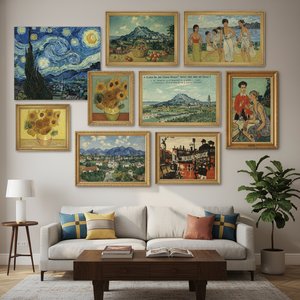
10 Arcydzieł Postimpresjonizmu, Które Zdefiniowały Sztukę. Inspiracje do Dekoracji Domu.
Odkryj 10 arcydzieł postimpresjonizmu Van Gogha, Moneta i Cézanne'a! Poznaj historie artystów, techniki malarskie i inspiracje do dekoracji wnętrz. Reprodukcje obrazów najwyższej jakości na OriginalUniqueArt.com – sztuka dla Twojego domu.

Konstantin Korovin: A Master of Russian Impressionism & Evocative Light
Explore the captivating world of Konstantin Korovin, a leading Russian Impressionist painter renowned for his vibrant landscapes & innovative theater designs. Discover his life, legacy, and enduring artistic impact.

Konstantin Somov: A Master of Russian Aestheticism & Symbolist Elegance
Explore the captivating world of Konstantin Somov, a leading figure of Russian Symbolism & Aestheticism. Discover his exquisite portraits, ballet scenes, and Rococo-inspired masterpieces. Learn about his life, influences, and enduring legacy.
Tajemnicze Obrazy: 10 Arcydzieł Wzbudzających Głęboką Emocję | OriginalUniqueArt.pl
Odkryj 10 arcydzieł sztuki, które wzbudzają głębokie emocje i tajemnicę. Poznaj historie artystów, techniki malarskie i symbolikę słynnych obrazów. Reprodukcje najwyższej jakości na OriginalUniqueArt.pl – inspiracje do Twojego wnętrza! Eksploruj kolekcję online.

Konstantin Bogaevsky: A Legacy of Russian Symbolism & the Poetics of Nostalgia
Explore the captivating world of Konstantin Bogaevsky (1872-1943), a leading figure in Russian Symbolism. Discover his dreamlike Crimean landscapes, influences & lasting legacy with OriginalUniqueArt.