

 Zobacz w skali 1:1
 Wyślij
 Udostępnij
 Szczegóły
 Przewodnik

 Pobierz plik obrazu
 Podobne obiekty
 RTG
RTG Pokaz slajdów
 Statystyki
Early Spring

 Czytaj więcej
Giclée / Wydruk artystyczny
Wydruki giclée lub płótna o jakości muzealnej, szybka realizacja i szeroki wybór opcji wykończenia. ( Kup ręcznie malowany obraz Przełącz na wersję cyfrową)




































Wybierz spośród naszych standardowych rozmiarów, które zachowują oryginalne proporcje dzieła sztuki.

Wpisz wymaganą szerokość i wysokość, aby dopasować grafikę do ramy lub ściany. Wydruk można jedynie przyciąć, nigdy nie powiększając go poza oryginalny obraz, dlatego format o innym proporcji spowoduje utratę części kompozycji. Przed rozpoczęciem druku prześlemy Ci cyfrowy podgląd do zatwierdzenia. Obraz wyświetlany na tej stronie nie pokazuje rzeczywistego przycięcia — jedynie podgląd oddaje ten efekt.
Dostawa na cały świat () w ciągu 2 tygodni zamiast standardowych 4/5 tygodni. (23 Październik)

Bezpłatna ekspresowa wysyłka na cały świat

Wysokiej jakości płótno lniane

Pełne ubezpieczenie transportowe

Gwarancja zwrotu należności celnych i podatków importowych

Gwarancja idealnego odwzorowania barw

100-dniowy okres na zwrot dzieła w przypadku wykrycia wad produkcyjnych

Gwarancja 100% zwrotu pieniędzy

Oferta przy zakupie wielu sztuk
 Opcja ze szkłem jest dostępna wyłącznie w rozmiarach poniżej 110 cm

Early Spring
Giclée / Wydruk artystyczny
Rozmiar reprodukcji
-


Suma do zapłaty
zł 308
Biografia artysty
A Life Shaped by Light and Shadow
Born in Kiev in 1858 to a merchant family, Konstantin Yakovlevich Kryzhitsky possessed an early inclination toward the pencil that even his mathematics teacher could not ignore. This talent found its first formal structure at the drawing school of Mykola Murashko, where the foundations of landscape observation were laid. In 1877, he moved to St. Petersburg to enter the Imperial Academy of Arts, placing himself under the tutelage of Mikhail Clodt. His time at the Academy was marked by both academic rigor and a certain youthful volatility. There is a recorded moment of intense devotion when, driven by a sudden passion for the works of Arkhip Kuindzhi, he chose to destroy years of his own preliminary sketches to pursue a more direct, observational method of painting.
His academic progression was marked by tangible success, earning him several silver medals and a small gold medal for his work The Oaks. By 1889, his reputation had reached the highest levels of Russian society when his painting Forest Vista was acquired by Tsar Alexander III, an event that led to his designation as an Academician. He was a man of significant professional standing, eventually serving as the first chairman of the Society of Artists named after A. I. Kuindzhi between 1909 and 1911.
The Art of the Natural World
Kryzhitsky’s technical focus remained rooted in the traditions of Russian realistic landscape painting. He possessed a particular skill for capturing the subtle shifts in atmosphere, whether through the clarity of a frosty morning or the heavy stillness before a storm. His work often sought to translate the physical properties of light onto canvas, using oils and watercolors to render the textures of water, foliage, and ice.
His repertoire included a variety of seasonal and environmental studies:
- Forest Stream (1909): A study in depth and tranquility, focusing on the movement of water through dense woods.
- A Whiff of Spring (1910): A work that became central to a period of intense public scrutiny regarding his use of photographic references.
- Ice Cutting in a Warm Afternoon Light (1886): An early demonstration of his ability to balance light and shadow.
- Coastal Scene with Sailboat (1893): A broader view of maritime landscape.
A Final, Tragic Chapter
The later years of Kryzhitsky’s life were shadowed by a controversy that the press of the time handled with great severity. In 1910, accusations of plagiarism emerged when critics noted similarities between his work and that of Yakov Brovar, specifically regarding a tree in the Białowieża Forest. The debate centered on his use of photography as a tool for composition—a practice that, while common, was viewed by some contemporaries as a breach of artistic integrity. The weight of this public disgrace proved too heavy to bear.
In April 1911, the same year he presided over the Kuindzhi art society, Kryzhitsky ended his life in his office. He left behind a suicide note and a body of work that remains held in significant collections, such as the State Russian Museum and the State Tretyakov Gallery. His career stands as a complex portrait of an artist who navigated the tension between traditional academic training and the evolving photographic realities of the early twentieth century.
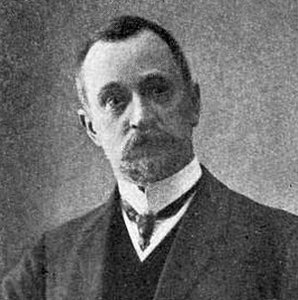
Konstantin Yakovlevich Kryzhitsky
1858 - 1911
Najważniejsze informacje
- Artistic Movement Or Style: Russian realistic landscape painting
- Artists Who Influenced This Artist:
- Mykola Murashko
- Mikhail Clodt
- Arkhip Kuindzhi
- Full Name: Konstantin Yakovlevich Kryzhitsky
- Nationality: Ukrainian and Polish descent
- Notable Artworks:
- Forest Stream
- The Oaks
- Forest Vista
- Before the Thunderstorm
- A Boy Fishing on the Lake Shore near a Birch
- Coastal Scene with Sailboat
- A River Landscape at Dusk
- Ice Cutting in a Warm Afternoon Light
- The Battleship of the Imperial Russian Navy
- Figure Near a Forest Pond
- A Breath of Spring
- Place Of Birth: Kiev, Ukraine
- Date Of Birth: 1858
- Date Of Death: 1911