

 Zobacz w skali 1:1
 Wyślij
 Udostępnij
 Szczegóły
 Przewodnik

 Pobierz plik obrazu
 Podobne obiekty
 RTG
RTG Pokaz slajdów
 Statystyki
Self-Portrait
 Akryl na papierze
- Fauvism
 1910
1910- Nowoczesność
 27.0 x 26.0 cm
 Czytaj więcej
Giclée / Wydruk artystyczny
Wydruki giclée lub płótna o jakości muzealnej, szybka realizacja i szeroki wybór opcji wykończenia. ( Kup ręcznie malowany obraz Przełącz na wersję cyfrową)




P118B zł10

P118H zł10

P118W zł10

P438Z zł10

P508JH zł12

P508YH zł12

P805H zł10

P805Z zł10

P919BZ zł10

P919G zł10

P919XJ zł10

P959ZH zł10

P968JZ zł12

W106C zł8

W218G zł10

W218JH zł8

W218Y zł10

W307PJ zł10

W316G zł10

W316PJ zł8

W316Y zł10

W398PJ zł8

W4111J zł10

W500HY zł15

W500JH zł15

W692G zł12

W849H zł8

W940BG zł15

W953PJ zł8




Wybierz spośród naszych standardowych rozmiarów, które zachowują oryginalne proporcje dzieła sztuki.

Wpisz wymaganą szerokość i wysokość, aby dopasować grafikę do ramy lub ściany. Wydruk można jedynie przyciąć, nigdy nie powiększając go poza oryginalny obraz, dlatego format o innym proporcji spowoduje utratę części kompozycji. Przed rozpoczęciem druku prześlemy Ci cyfrowy podgląd do zatwierdzenia. Obraz wyświetlany na tej stronie nie pokazuje rzeczywistego przycięcia — jedynie podgląd oddaje ten efekt.
Dostawa na cały świat () w ciągu 2 tygodni zamiast standardowych 4/5 tygodni. (23 Październik)

Bezpłatna ekspresowa wysyłka na cały świat

Wysokiej jakości płótno lniane

Pełne ubezpieczenie transportowe

Gwarancja zwrotu należności celnych i podatków importowych

Gwarancja idealnego odwzorowania barw

100-dniowy okres na zwrot dzieła w przypadku wykrycia wad produkcyjnych

Gwarancja 100% zwrotu pieniędzy

Oferta przy zakupie wielu sztuk
 Opcja ze szkłem jest dostępna wyłącznie w rozmiarach poniżej 110 cm

Self-Portrait
Giclée / Wydruk artystyczny
Rozmiar reprodukcji
-


Suma do zapłaty
zł 308
A Bold Statement of Form and Feeling
Kazimir Malevich's 1910 “Self-Portrait” is not merely a depiction of an individual; it’s a declaration. Painted in gouache on paper, this work stands as a pivotal example of the Fauvist movement – a radical departure from the naturalistic traditions that had dominated Western art for centuries. More than just a portrait, it's a concentrated distillation of color and form, a visual embodiment of Malevich’s burgeoning exploration of pure feeling and abstraction. The painting immediately commands attention with its vibrant palette: a striking red tie dominates the composition, juxtaposed against a background that seems to dissolve into an energetic swirl of blues and greens. This isn’t a realistic rendering; it's an emotional landscape rendered in pigment.
The Fauvist Impulse
Born from a reaction against Impressionism’s focus on capturing fleeting moments of light, Fauvism embraced the deliberate distortion of color for expressive effect. Artists like Henri Matisse and André Derain used intense hues – often divorced from naturalistic representation – to evoke moods and sensations directly. Malevich's “Self-Portrait” perfectly embodies this principle. The bold red isn’t simply a description of his tie; it’s a conduit for energy, confidence, or perhaps even defiance. The artist deliberately avoids subtle gradations, opting instead for flat areas of color that vibrate with intensity. This technique creates a sense of immediacy and raw emotion, pulling the viewer directly into the painting's core.
A Study in Geometric Simplicity
While firmly rooted in Fauvism, Malevich’s work is already hinting at his later development of Suprematism – an even more radical movement that sought to eliminate all representational elements from art. Notice the simplification of form within the portrait itself; the face is rendered with broad strokes and minimal detail, prioritizing the overall composition over a precise likeness. The background, too, is reduced to dynamic shapes and colors, suggesting movement and energy rather than a specific location. This deliberate reduction reflects Malevich’s belief that art should transcend the limitations of the visible world and tap into a realm of pure feeling and spirituality – a concept central to Suprematism.
Context within Post-Impressionism
To understand “Self-Portrait,” it's crucial to situate it within the broader context of Post-Impressionism. This movement, spanning from roughly 1886 to 1905, represented a diverse range of artistic approaches that reacted against Impressionism’s emphasis on capturing light and color. Artists like Paul Cézanne, Vincent van Gogh, and Paul Gauguin explored subjective experience, emotional intensity, and symbolic meaning in their work. Malevich's Fauvist tendencies align with this broader trend toward greater expressiveness and experimentation within the Post-Impressionist landscape. His exploration of color and form paved the way for the revolutionary developments that would characterize 20th-century art.
A Legacy of Abstraction
“Self-Portrait” is more than just a beautiful painting; it’s a foundational work in the history of modern art. It represents a crucial step toward abstraction, demonstrating Malevich's willingness to challenge conventional artistic norms and explore new ways of representing reality – or, perhaps more accurately, representing inner experience. Reproductions of this powerful image continue to resonate with viewers today, offering a glimpse into the mind of a visionary artist who fundamentally altered the course of art history. Explore high-quality reproductions on OriginalUniqueArt.com for a stunning addition to your collection.
Pytania i odpowiedzi
Ile lat miał Kazimierz Malewicz, gdy powstało dzieło „Self-Portrait”?
Kazimierz Malewicz stworzył/a "Self-Portrait" w wieku 32 lat. Artysta urodził/a się w 1878, a datowanie dzieła to 1910.
Z jakich materiałów wykonano "Self-Portrait" i w jakim stylu?
„Self-Portrait” autorstwa Kazimierz Malewicz łączy technikę Akryl na papierze ze stylem Fauvism. Technika i nurt opisują sposób wykonania oraz styl dzieła.
W jaki sposób mogę kupić wydruk „Self-Portrait” autorstwa Kazimierz Malewicz?
„Self-Portrait” jest dostępny jako szlachetna odbitka na płótnie bawełnianym lub archiwalnym papierze płótnopodobnym. Zamówienia można składać na stronie Wydruk artystyczny, wybierając dowolny rozmiar.
Biografia artysty
Kazimir Malevich: Pionier Sztuki Abstrakcyjnej
Kazimir Severinovich Malevich (1878-1935) był ukraińskim twórcą, który stał się jednym z najważniejszych pionierów sztuki abstrakcyjnej i wyznaczył nowy kierunek dla europejskiego ruchu artystycznego XX wieku. Jego twórczość wpłynęła na wielu późniejszych artystów i nadal fascynuje widzów całym świata. Jego dzieła są rozpoznawalne dzięki prostocie form oraz głębokości filozoficznej refleksji nad naturą sztuki i rzeczywistości.Życie i Początki Artystyczne
- Narodził się w Kiowie Oblast w 1878 roku jako syn Polaka, Kazimir Severinovich Malevich wychował się w rodzinie o bogatej historii kulturowej Ukrainy. Jego dzieciństwo wpłynęło na jego późniejsze zainteresowania sztuką i kulturą folklorystyczną
- Jego edukacja rozpoczęła się w Kiowie Uniwersytecie, gdzie studiował matematykę i filozofię – umiejętności te miały istotne znaczenie dla rozwoju jego teorii sztuki.
- Podczas podróży do Paryża w 1912 roku Malevich zetknął się z najnowszymi osiągnięciami europejskiej sztuki, co zainspirowało go do eksperymentów twórczych i poszukiwania nowych sposobów wyrażania emocji oraz idei.
Rozwój Artystyczny i Ruch Suprematyzm
- Przebaczając się jego wcześniejszym zainteresowaniom sztuką impresjonistyczną, symbolistyczną i fawistyczną, Malevich stopniowo przekształcił swój styl w kierunku abstrakcji. Jego twórczość inspirowana była filozofią Nietzschego oraz ideami ruchu Bauhaus
- Największą osobistą zmianę przyniósł mu kontakt z kubizmem francuskiego malarza Pablo Picasso, który nauczył się od niego wykorzystywać elementy obrazu do przedstawiania rzeczywistości w sposób wielowymiarowy.
- W 1915 roku Malevich założył ruch Suprematyzm – filozofię sztuki abstrakcyjnej, która głosiła, że kolor i linia powinny królować nad przedmiotami oraz narracją obrazu. Jego najważniejszym dziełem stało się „Czarna Kwadrat”, który zapowiedział nowy etap rozwoju sztuki nowoczesnej
Najważniejsze Dzieła
- „Czarna Kwadrat” (1915): Jest to jedno z najbardziej rozpoznawalnych obrazów Malewicha i stanowi punkt kulminacyjny jego twórczości. Jego minimalistyczna forma oraz głębokie znaczenie filozoficzne wpłynęły na wielu innych artystów
- „White on White” (1918): Kolejne dzieło Malewicha, które wyraża ideę czystej abstrakcji i koncentruje się wyłącznie na kolorze oraz geometrii. Jest to obraz, który wyzwalał kontrowersje wśród krytyków sztuki i filozofów
- „Stroyuschiysya dom” (1916): „Dom Pod Budową” jest jednym z najwcześniejszych przykładów suprematyzmu i przedstawia abstrakcyjną reprezentację architektury ukraińskiej. Obraz ten odzwierciedla zainteresowanie Malewicha kulturą folklorystyczną oraz wpływem sztuki na społeczeństwo
Znaczenie Historyczne i Dziedzictwo
- Kazimir Malevich zrewolucjonizował świat sztuki XX wieku, wprowadzając nowe idee filozoficzne oraz estetyczne. Jego twórczość inspirowana była filozofią Nietzschego oraz ideami ruchu Bauhaus
- Jego dzieła stały się ikoną abstrakcji i miały ogromny wpływ na rozwój innych kierunków sztuki nowoczesnej, takich jak Minimalizm i Konstrukcjonizm
- Malevich pozostawił po sobie bogate dziedzictwo intelektualne oraz twórcze, które nadal fascynuje naukowców i artystów. Jego twórczość jest analizowana i studiowana na całym świecie
Życie Późniejsze i Śmierć
- Po II Wojnie Światowej Malevich kontynuował działalność twórczą oraz pedagogiczną, ucząc się sztuki abstrakcyjnej młodych ludzi w Leningradzie (obecnie Sankt Petersburg). Jego twórczość inspirowana była filozofią Nietzschego oraz ideami ruchu Bauhaus
- Kazimir Malevich zmarł w Leningradzie w 1935 roku i został uznany za jednego z najważniejszych przedstawicieli sztuki nowoczesnej XX wieku. Jego dzieła znajdują się w muzeach na całym świecie

Kazimierz Malewicz
1878 - 1935 , Ukraina
Najważniejsze informacje
- Artistic Movement Or Style: Suprematyzm, Sztuka abstrakcyjna
- Artists Or Movements Influenced By This Artist:
- Minimalizm
- Konstrukcjonizm
- El Lissitzky
- Artists Who Influenced This Artist:
- Impressionizm
- Fauvizm
- Kubizm
- Date Of Birth: 1878
- Date Of Death: 1935
- Full Name: Kazimir Severinovich Malevich
- Nationality: Ukraiński/Rosyjski
- Notable Artworks:
- Czarna Kwadrat
- Białe na Białym
- Dom w Budowie
- Place Of Birth: Kyiv, Ukraina
Zobacz także powiązane artykuły
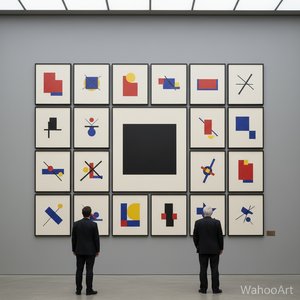
Kazimir Malevich: 25 Arcydzieł Suprematyzmu dla Miłośników Sztuki i Wystroju Domu
Odkryj 25 arcydzieł Kazimira Malevicha – pioniera suprematyzmu i abstrakcji. Poznaj historie, techniki i inspiracje za 'Czarnym Kwadratem' i innymi kultowymi dziełami. Reprodukcje najwyższej jakości na OriginalUniqueArt.com.

Crimson Threads of Narrative: Exploring Symbolism & Representation in Artworks Featuring the Red Dress
Explore the rich symbolism of the red dress in art history! From ancient power displays to iconic portraits like Cézanne’s 'Madame Cezanne', discover the cultural and artistic significance behind this captivating color. Expert analysis & insights.
Henri Matisse: 25 Arcydzieł Koloru i Inspiracji | OriginalUniqueArt.com
Odkryj 25 arcydzieł Henri Matisse’a – od żywych kolorów fauwizmu po ikoniczne kompozycje. Poznaj historię, technikę i inspiracje malarstwa francuskiego. Reprodukcje obrazów najwyższej jakości na OriginalUniqueArt.com! Eksploruj kolekcję online.
Reflecting the Self: A History of Portraiture & Psychological Insight
Explore the fascinating history of self-portraiture from Renaissance masters like Dürer & Rembrandt to modern interpretations. Discover the psychological insights and artistic techniques behind these iconic works. Expert analysis for art enthusiasts.

Blask i geometria pragnień: Wpływ Art Deco na współczesną kulturę wizualną
Odkryj fascynujący świat Art Deco! Poznaj historię tego ikonicznego stylu, jego wpływ na architekturę i design oraz dziedzictwo we współczesnej kulturze wizualnej. Ekspercka analiza i inspiracje dla miłośników sztuki.


