
() ·
Wydruk stworzony specjalnie dla Ciebie, z dbałością o każdy szczegół
Giclée / Wydruk artystyczny
Wydruki giclée lub płótna o jakości muzealnej, szybka realizacja i szeroki wybór opcji wykończenia. ( Zamów ręcznie malowaną reprodukcję Przejdź do wersji cyfrowej)
Biografia artysty
Karl Knaths (1891-1971): American Modernist painter known for Cubist-influenced abstract works with recognizable subjects. Explore his unique color theory & geometric style.
 Rozwiń treść
od ·
Rozdział 1
Na jakim podłożu ma zostać wydrukowane?
Płótno jest drukowane farbami giclée i może zostać naciągnięte na ramę lub oprawione jak obraz; papier dostarczany jest w formie płaskiej lub w ramie z szybą.
Rozdział 2
Jak duży powinien być ten format?
Przesuń suwak, aby zmienić rozmiar; obraz po lewej stronie przedstawia ramę w jej rzeczywistej szerokości. Zachowano proporcje oryginału.
Wybierz spośród naszych standardowych rozmiarów, które zachowują oryginalne proporcje dzieła sztuki.

Wpisz wymaganą szerokość i wysokość, aby dopasować grafikę do ramy lub ściany. Wydruk można jedynie przyciąć, nigdy nie powiększając go poza oryginalny obraz, dlatego format o innych proporcjach spowoduje utratę części kompozycji. Przed rozpoczęciem druku prześlemy Ci cyfrowy podgląd do zatwierdzenia. Obraz wyświetlany na tej stronie nie pokazuje rzeczywistego przycięcia — jedynie podgląd oddaje ten efekt.
Rozdział 3
W jaki sposób ma zostać dostarczone?
Wybierz krawędzie płótna naciągniętego na ramę
Wybierz ramę

Białe krawędzie zł1

rozmyte krawędzie zł1

Przedłużony zł1

P118B zł10

P118H zł10

P118W zł10

P438Z zł10

P508JH zł12

P508YH zł12

P805H zł10

P805Z zł10

P919BZ zł10

P919G zł10

P919XJ zł10

P959ZH zł10

P968JZ zł12

W106C zł8

W218G zł10

W218JH zł8

W218Y zł10

W307PJ zł10

W316G zł10

W316PJ zł8

W316Y zł10

W398PJ zł8

W4111J zł10

W500HY zł15

W500JH zł15

W692G zł12

W849H zł8

W940BG zł15

W953PJ zł8

H24-GOLD zł30

H24-SILVER zł30

H36-GOLD zł45

H36-SILVER zł45
W oprawie
Profil: . Wymiar całkowity w ramie: .
Rozdział 4
Dostawa na cały świat () w ciągu 2 tygodni zamiast standardowych 4/5 tygodni. (25 Listopad)
Ostatnie szlify
Tabliczka informacyjna, jak w muzeum?
Szczegóły grawerowanej brązowej tabliczki
This elegant plaque features the artist's name and the title of the artwork, finely engraved for a timeless presentation.
It is made from bronze with a refined, elegant finish. The text is precisely laser-engraved for a sharp and permanent result. Measuring 9x2 cm, the plaque is compact yet easy to read. It's built to be durable and scratch-resistant, offering a professional, museum-quality look. Mounting is simple thanks to the included adhesive backing.
Szczegóły przezroczystej tabliczki akrylowej
The plaque includes essential engraved details such as the artist's name, the title of the artwork, the date it was created, the type of media used-like oil on canvas or watercolor-a brief description of the piece, and a QR code that links to the complete artwork information.
It is crafted from clear acrylic, offering a sleek, modern appearance. The text is UV-engraved in black to ensure strong visual contrast. With a size of 10x15 cm, it ensures optimal readability. It comes equipped with two metal hooks for secure wall mounting. The plaque is designed to be weather-resistant, making it suitable for various environments, and it includes interactive features that work seamlessly with smartphone scanning.
Szczegóły czarnej tabliczki akrylowej
This elegant plaque includes engraved information such as the artist's name, the title of the artwork, the date it was created, the type of media used (like oil on canvas or watercolor), a short description of the artwork, and a QR code for quick access to more information.
The plaque itself is made from refined black acrylic with a premium finish. The text is laser-engraved in white for high contrast and readability. Its size is 10x15 cm, designed to be easy to read. It comes with two metal hooks for professional mounting. The design is sleek and fits any interior style. It is also weather-resistant and durable, with built-in digital integration for mobile compatibility.
Werniks ochronny?
Kiedy potrzebujesz dostawy?
Rozdział 5
Twój wydruk, zgodnie z zamówieniem

Composition
Technika reprodukcji
Wymiary reprodukcji
-

Opcje oprawy reprodukcji
-
-
W przypadku dzieł sztuki lub reprodukcji, których którykolwiek z boków przekracza 105 cm (około 41 cali), rama zostanie wysłana w formie zestawu do samodzielnego montażu. Metoda ta zapewnia bezpieczną dostawę i zapobiega uszkodzeniom podczas transportu.
Wymagany profesjonalny montaż – nie jest to produkt typu DIY.
Zestaw musi zostać złożony, a płótno naciągnięte przez doświadczonego profesjonalnego ramiarza, przy użyciu kleju do drewna (brak w zestawie), kleszczy do naciągania płótna oraz ścisków, które utrzymają krosna w równej pozycji podczas schnięcia kleju. Nieprawidłowy montaż lub nierównomierne napięcie płótna może trwale uszkodzić dzieło sztuki i nie podlega naszej gwarancji.
 W przypadku dzieł sztuki lub reprodukcji, których którykolwiek z boków przekracza 105 cm (około 41 cali), rama zostanie wysłana w formie zestawu do samodzielnego montażu. Metoda ta zapewnia bezpieczną dostawę i zapobiega uszkodzeniom podczas transportu.
W zestawie znajdują się wszystkie listwy z litego drewna, precyzyjnie docięte do wymiarów.
Montaż odbywa się przy użyciu dołączonych wkrętów oraz kleju do drewna do łączenia narożników, którego zestaw nie zawiera i który musi zostać dostarczony przez ramiarza.
Wymagane są profesjonalne narzędzia, których nie ma w zestawie: kleszcze do naciągania płótna (napinacz) oraz zaciski, które pozwolą utrzymać listwy w równej pozycji podczas schnięcia kleju.
Ważne:
Do połączenia narożników niezbędny jest klej do drewna, listwy należy unieruchomić za pomocą ścisków do momentu całkowitego wyschnięcia kleju, a naciągnięcie płótna na złożoną ramę wymaga użycia kleszczy do naciągania płótna. Żaden z tych elementów nie jest dołączony do zestawu. Przed zamówieniem tego rozmiaru zalecamy konsultację z doświadczonym ramiarzem.

Etykieta obiektu
-
-

Lakier ochronny
Lakier z połyskiem (pogłębia kolory, chroni przed światłem i wilgocią)
-

Ekspresowa
Dostawa na cały świat () w ciągu 2 tygodni zamiast standardowych 4/5 tygodni. (25 Listopad)
-
Przesyłka ekspresowa
Dostawa na cały świat () w ciągu 4-5 tygodni. (2 Grudzień).
W cenie
Cena całkowita
zł 320
Opcja ze szkłem jest dostępna wyłącznie w rozmiarach poniżej 110 cm
W każdym zamówieniu
- Bezpłatna ekspresowa wysyłka na cały świat
- Wysokiej jakości płótno lniane
- Pełne ubezpieczenie przesyłki
- Gwarancja zwrotu należności celnych i podatków importowych
- Gwarancja wiernego odwzorowania kolorów
- 100-dniowa polityka zwrotów (tylko w przypadku wad)
- Gwarancja 100% zwrotu pieniędzy
- Zniżka przy zakupie wielu sztuk


 Podgląd w skali 1:1

 Wyślij jako kartkę
 Udostępnij
 Szczegóły dzieła
 Przewodnik


 Pobierz obraz
 Podobne obiekty
 RTG
 Pokaz slajdów
 Pytania i odpowiedzi
 Statystyki
W liczbach
- 1936rok powstania dzieła
- 29dostępne ramy do wyboru
- standardowe formaty, w ich własnych proporcjach
- 5tygodni na namalowanie i dostarczenie dzieła
O oryginale

- 102.0 x 102.0 cm


Ten utwór podlega ochronie prawem autorskim
Dzieło sztuki prezentowane na tej stronie podlega ochronie prawem autorskim, co oznacza, że nie mamy prawa do tworzenia ani sprzedaży jego identycznej reprodukcji. Ochrona ta jest egzekwowana na mocy umów międzynarodowych, takich jak Konwencja berneńska oraz przez przepisy prawa krajowego, w tym te określone w Prawo autorskie USA – Tytuł 17.
Jako pełną szacunku i legalną alternatywę oferujemy personalizowane, malowane ręcznie dzieła sztuki inspirowane oryginałem. Nasi wykwalifikowani i profesjonalni artyści starannie analizują styl, nastrój oraz artystyczną esencję pierwowzoru, aby stworzyć nowe, unikalne dzieło, które przywołuje te same emocje – pozostając jednocześnie w pełni oryginalną kreacją.
Metoda ta jest w pełni zgodna z przepisami prawa autorskiego, ponieważ nie polega na kopiowaniu ani powielaniu chronionego dzieła. Stanowi ona kreatywną reinterpretację – nowy obraz, który czerpie inspirację z oryginału, ale nie jest z nim tożsamy.

Karl Knaths
1891 - 1971, United States
Krótkie informacje o Karl Knaths
- Full Name: Karl Knaths
- Nationality: American
- Date Of Birth: 1952
- Date Of Death: 1971
- Place Of Birth: Eau Claire, United States of America
- Notable Artworks:
- The Bottle
- Wisconsin
- Artistic Movement Or Style: Cubism, Modernism
- Artists Who Influenced This Artist:
- Cézanne
- Kandinsky
Biografia artysty
A Life Dedicated to Abstract Modernism
Karl Knaths, born in Eau Claire, Wisconsin, in 1891, emerged as a pivotal figure in the development of American Modernism. His artistic journey was not one of immediate recognition but rather a sustained exploration of form, color, and the underlying principles governing aesthetic experience. While often categorized within the Cubist tradition, Knaths’s work transcends simple classification; it is characterized by a unique synthesis of geometric abstraction and recognizable subject matter, imbued with a deeply personal vision. His paintings are not merely representations of the world but rather carefully constructed meditations on its essence, filtered through a rigorous intellectual framework.Early Influences and Artistic Awakening
Knaths’s early life was marked by responsibility following his father's passing, leading him to an apprenticeship as a baker. However, this practical path was subtly redirected by Zona Gale, a local author who recognized the nascent artistic talent within the young man. Gale facilitated an introduction to Dudley Crafts Watson at the Milwaukee Art Institute, providing Knaths with formal training and setting him on a course toward professional artistry. The watershed moment in his development arrived with the 1913 Armory Show in Chicago. Though initially unsettled by the radical departures from traditional art, he was profoundly impacted by Paul Cézanne’s approach—particularly the use of blocks of muted color to construct compositions and redefine spatial relationships. This exposure ignited a passion for exploring new modes of visual expression. Further experience as a scenery painter with the Wisconsin Players honed his skills in design and composition, while a move to Provincetown, Massachusetts, in 1919 proved decisive. There, he found a vibrant artistic community and forged crucial connections with Agnes and Helen Weinrich, sisters who had studied art in Europe; Agnes, in particular, played a vital role in refining his personal style.The Evolution of a Distinctive Style
Throughout the 1920s and 30s, Knaths’s artistic voice began to solidify. His early work demonstrated a strong emphasis on line quality, subdued color palettes, and the juxtaposition of geometric forms—characteristics that would define his mature style. These paintings weren't strictly Cubist in nature but rather reflected an assimilation of Cézanne’s structural principles alongside emerging modernist ideas. Knaths immersed himself in theoretical texts by Carl Einstein, Wilhelm Ostwald, Piet Mondrian, Wassily Kandinsky, Jay Hambidge, and Gino Severini, absorbing concepts related to color theory, proportion, and the connections between music and painting. This intellectual curiosity was further enriched by his marriage to Helen Weinrich, a trained musician whose insights undoubtedly influenced his exploration of synesthetic relationships—the idea that different senses could be linked through artistic expression. He described his process as one of gradual refinement: “I learned to move slowly from color relations, to line sequence, to better spacing, proportions, to a thematic play of shapes.” This methodical approach underscores the deliberate and considered nature of his work.Mature Practice and Theoretical Foundations
By the 1930s, Knaths’s mature style had fully emerged. He developed a complex theoretical framework for his art, incorporating mathematical principles and color theory into his compositions. He believed in measurable correspondences between sound in music and color and space in painting—a concept that guided his artistic choices and informed his unique aesthetic sensibility. His paintings often depicted recognizable subjects—landscapes, still lifes, and figures—but these were rendered through a distinctive lens of geometric abstraction, transforming familiar forms into dynamic arrangements of planes and colors. Knaths was not only an artist but also a dedicated educator, lecturing extensively at institutions like Bennington College, Black Mountain College, and the Skowhegan School of Painting, sharing his artistic philosophy and techniques with aspiring artists. He also participated in the WPA's Federal Art Program as both a muralist and instructor, contributing to the cultural landscape of the era. Throughout his career, he maintained a consistent exhibition record, with numerous solo shows in New York City, solidifying his reputation within the art world.Legacy and Historical Significance
Karl Knaths’s contribution to American Modernism lies in his unique synthesis of Cubist aesthetics, rigorous intellectual inquiry, and personal artistic vision. While influenced by European masters like Cézanne and Kandinsky, he forged a distinct style characterized by its disciplined structure, controlled color palettes, and thematic exploration of shapes. His commitment to theoretical underpinnings—drawing from mathematics, music, and color theory—set him apart from many of his contemporaries. Though his work experienced periods of relative obscurity, it has been increasingly recognized for its originality and intellectual depth, securing his place as a significant figure in 20th-century American art. He demonstrated that abstraction need not be devoid of meaning or connection to the world around us; rather, it could serve as a powerful means of exploring fundamental truths about perception, form, and the human experience. His legacy continues to inspire artists and scholars alike, reminding us of the enduring power of artistic vision grounded in intellectual rigor.Powiązane artykuły

Masterpieces of Abstraction: The Top 25 Wassily Kandinsky Artworks
Explore 25 iconic Wassily Kandinsky masterpieces. From Blue Rider to abstraction, discover his genius. Explore the full collection on OriginalUniqueArt.com.

Beyond Imitation: The Cultural Resonance of Fine Art Reproduction & Discerning Collectors
Explore the cultural significance of fine art reproduction & its appeal to discerning collectors. Discover how reproductions enhance aesthetics, build collections, and signal status. Expert insights & museum-quality artistry.

25 Must-See Masterpieces at the Smithsonian American Art Museum
Explore 25 iconic works from the Smithsonian American Art Museum. From Hopper to O'Keeffe, discover masterpieces on OriginalUniqueArt.com.
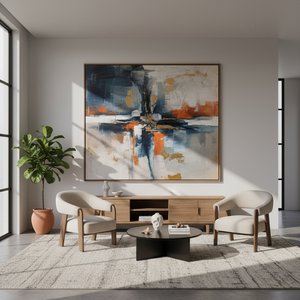
Beyond Reproduction: The Aesthetic and Emotional Value of Commissioned Art in Contemporary Interior Spaces
Discover the art of commissioning bespoke paintings & portraits. Expert guidance from artist selection to final placement. Elevate your space with unique, emotionally resonant artwork – a lasting investment in artistry and personal expression.