Baroque
St. Peter (Jusepe de Ribera)
Jusepe de Ribera (1591–1652) stworzył St. Peter. Należy do nurtu Baroque. Wykonano w technice Oil On Canvas. Przechowywane jest w Museo del Prado w Madryt, Hiszpania.
- Oil On Canvas
- Museo del Prado, Madryt

 Podgląd w skali 1:1

 Ręcznie malowany obraz olejny
 Wyślij jako kartkę
 Udostępnij
 Przewodnik


 Pobierz obraz
 Podobne obiekty
 RTG
 Pokaz slajdów
 Pytania i odpowiedzi

 Statystyki
St. Peter: najważniejsze informacje
- Tytuł
- St. Peter
- Artysta
- Jusepe de Ribera (1591–1652)
- Miejsce urodzenia artysty
- Xàtiva, Hiszpania
- Technika wykonania
- Oil On Canvas
- Gdzie można je zobaczyć
- Museo del Prado, Madryt, Hiszpania
- Ruch
- Baroque
- Epoka
- Early Modern
- Temat
- man, beard, book, keys, cloak, brown
Co przedstawia St. Peter?
The Portrait of St. Peter by Jusepe de Ribera
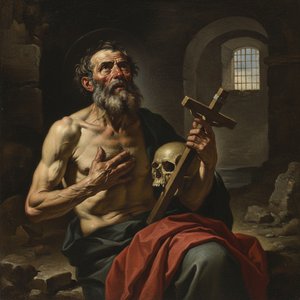
In this oil painting on canvas, Jusepe de Ribera presents us with a portrait of St. Peter. The subject, a central figure among the apostles of Jesus and recognized as the first Pope, is rendered with a profound sense of presence. Ribera focuses on the man himself, capturing the weight of his role and the character of his lived experience. There is a quiet intensity in the way the figure is presented, inviting a closer look at the weathered details of his countenance.
The work is a significant example of the Baroque style. Through this approach, the artist emphasizes the spiritual and human dimensions of the apostle. The depiction avoids idealization, opting instead for a directness that feels immediate. By focusing on the specific attributes of the saint, Ribera allows the subject to command the space, presenting a figure that is both a religious icon and a man of flesh and bone.
Composition and Visual Elements of the Portrait
The composition is built upon a stable pyramidal structure, with the head of St. Peter forming the apex of the form. He is presented from the waist up, his body turned slightly toward the viewer's left. In his right hand, he holds a book and a set of keys, objects that anchor the figure within the frame. This arrangement directs the eye upward toward his weathered features, creating a sense of quiet, grounded presence.
A strong light source enters from the left, illuminating his face and upper body while casting the rest of the figure into deep shadow. This light creates a sharp contrast against a background that is nearly black, pushing the subject forward into the viewer's space. The color palette is restrained, dominated by warm earth tones—ochre, brown, and gold—which emphasize the textures of his skin and the heavy folds of his clothing.
Technique and Artistic Style of the Work
The work is defined by a profound use of tenebrism, where the subject emerges from a nearly black background into a sharp, focused light. This dramatic chiaroscuro creates a sense of volume, pulling the figure forward and emphasizing the physical presence of the man. Such a heavy interplay of light and shadow reflects the influence of Caravaggio, grounding the religious subject in a palpable, earthly reality. The light source, positioned to the left, carves out the contours of the face and the weathered texture of the skin, casting deep shadows that heighten the emotional weight of the portrait.
Ribera’s approach to the medium is tactile and deliberate. He employs a technique of layering paint to build up depth, allowing the viewer to sense the physical weight of the drapery and the coarse nature of the beard. Visible brushstrokes are not hidden; instead, they contribute to the overall effect, lending a sense of immediacy to the rendering of the fabric and the aged features. Strong, defined lines delineate the eyes, nose, and mouth, providing a structural clarity that balances the more fluid, organic shapes of the figure. The result is a composition that feels both intensely personal and physically substantial.
Other Works by Jusepe de Ribera
The artist's exploration of this particular subject matter is reflected in several other significant pieces within our collection and major institutions. We hold St. Simeon 1 in our catalog, a work that speaks to the same profound human experience found in this portrait. Another notable piece in our collection is The Repentance of Saint Peter, which is currently housed in the Museum of Fine Arts, Lyon.
Beyond our own holdings, Ribera's preoccupation with the themes of remorse and spiritual weight is evident in other historical examples. The work known as Penitent St. Peter, dated about 1630, is held at the Kunsthistorisches Museum in Vienna. This piece shares a similar intensity in its depiction of the apostle's character. Additionally, The Tears of Saint Peter, which dates to 1612, is part of the collection at the Metropolitan Museum of Art in New York. These works collectively illustrate the artist's ability to capture the complexities of faith and the physical reality of the human condition through his characteristic use of light and shadow.
W którym muzeum znajduje się St. Peter?
Museo del Prado
Madryt, Hiszpania
Historia Museo del Prado Korzenie Museo del Prado są nierozerwalnie związane z Kolekcją Królewską Hiszpanii, sięgając swoimi początkami XVIII wieku. To, co narodziło się z wizji Gabinetu Historii Naturalnej za panowania Ferdynanda VII, z czasem przekształciło się w dedykowane sanktuarium malarstwa i rzeźby. Ta ewolucja zmieniła naukowe przedsięwzięcie w prawdziwy skarbiec najcenniejszych dóbr hiszpańskiej korony.


St. Peter w wysokiej rozdzielczości
Domena publiczna: artysta zmarł w 1652.
Jusepe de Ribera, St. Peter, Museo del Prado. Domena publiczna
Ekspert ds. cyfrowych weryfikuje kolory względem oryginału i retuszuje plik, zachowując wierność pociągnięciom pędzla artysty.
Kup obraz w wysokiej rozdzielczościPytania o St. Peter
Z czego wynika obecny status praw autorskich dzieła "St. Peter"?
„St. Peter” – Jusepe de Ribera jest należy do domeny publicznej – autorskie prawa majątkowe wygasły. Okres ochrony praw autorskich liczony jest od śmierci artysty, która nastąpiła w 1652.
Do jakiego nurtu artystycznego należy „St. Peter” – Jusepe de Ribera?
„St. Peter” – Jusepe de Ribera należy do nurtu Baroque. Nurt ten stanowi stylistyczny kontekst dzieła.
Do jakiego pomieszczenia polecane jest dzieło „St. Peter” – Jusepe de Ribera?
Zalecaną przestrzenią dla „St. Peter” – Jusepe de Ribera jest Restaurant. Sugestia ta może być oczywiście dostosowana do Twojego wnętrza.
Jakie kolory dominują w „St. Peter” – Jusepe de Ribera?
Kolorystyka dzieła „St. Peter” – Jusepe de Ribera: paleta Dark, w której dominuje Phthalo Green (#2d120e).
Co to za dzieło: "St. Peter"?
W katalogu dzieło „St. Peter” – Jusepe de Ribera zostało sklasyfikowane jako WallArt. Kategoria ta ułatwia odnajdywanie podobnych prac.
Czy kolory w "St. Peter" są intensywne czy stonowane?
Intensywność barw w dziele „St. Peter” wynosi Balanced. Intensywność określa, jak nasycone wydają się kolory.
Jak technika i ruch łączą się w "St. Peter"?
"St. Peter" powstało przy użyciu Oil On Canvas, w stylu Baroque.
W jaki sposób „St. Peter” – Jusepe de Ribera łączy Baroque z krajem pochodzenia artysty?
"St. Peter" powstało dzięki Jusepe de Ribera, urodzonemu w Hiszpania, w ramach nurtu Baroque. Pochodzenie artysty wiąże to dzieło z Baroque w wydaniu twórców z Hiszpania.
Czy „St. Peter” – Jusepe de Ribera to jasne czy ciemne dzieło?
Pod względem postrzeganej jasności, „St. Peter” – Jusepe de Ribera jest deep_shadow.
O artyście: Jusepe de Ribera

1591–1652, Hiszpania
Jusepe de Ribera
A Life Forged in Shadow and Light Jusepe de Ribera, znany również jako Lo Spagnoletto – „Hiszpanek” – był monumentalną postacią epoki baroku, artystą, którego obrazy pulsowały intensywnością dramatyczną i bezkompromisowym realizmem. Urodzony w Xàtívie, w Hiszpanii, w 1591 roku, jego wędrówka zaprowadziła go daleko poza walencjskie korzenie, ostatecznie ugruntowując jego pozycję jako jednego z najważniejszych malarzy XVII wieku we Włoszech, a konkretnie w Neapolu, mieście wówczas pod panowaniem hiszpańskim. Życie Ribery nie było jedynie kroniką rozwoju artystycznego; to była narracja splótkała się z trudami, ambicjami i niezachwianym zaangażowaniem w przedstawianie ludzkiego stanu w całej jego surowej złożoności. Początkowe szczegóły biograficzne pozostają częściowo owiane tajemnicą, jednak wiemy, że przybył do Włoch około 1607 roku, początkowo osiadając w Rzymie, a następnie przenosząc się do Neapolu w 1616 – miasto, które stało się zarówno jego artystycznym azylem, jak i miejscem, gdzie kształtowała się jego unikalna stylistyka.
Inne prace Jusepe de Ribera
 Magdalena Ventura z mężem i synem1631
 Chory na koślawość stopy
 St. Onuphrius1637
 The Duel of Women (The Duel of Isabella de Carazzi and Diambra de Pettinella)1636
Eseje o St. Peter
 Masterpieces of Light: The Top 25 Artworks by Duccio di BuoninsegnaJourney through the divine elegance of Duccio di Buoninsegna. Explore 25 iconic Sienese masterpieces, from the Maestà to the Rucellai Madon…
 Jusepe de Ribera: Dramatic Realism & Spiritual Intensity in the Spanish Golden AgeExplore the powerful Baroque paintings of Jusepe de Ribera, master of tenebrism and dramatic realism. Discover his spiritual intensity, inf…
 Mastering the Shadows: The Dramatic Power of Chiaroscuro and Tenebrism in Baroque Fine ArtExplore the profound drama of chiaroscuro and tenebrism. Discover how masters like Caravaggio used light and shadow to sculpt emotion and v…