Wersja olejowa
 Wszystko o St. Andrew







































 W przypadku dzieł sztuki lub reprodukcji, których którykolwiek z boków przekracza 105 cm (około 41 cali), rama zostanie wysłana w formie zestawu do samodzielnego montażu. Metoda ta zapewnia bezpieczną dostawę i zapobiega uszkodzeniom podczas transportu.


A Moment of Quiet Sorrow
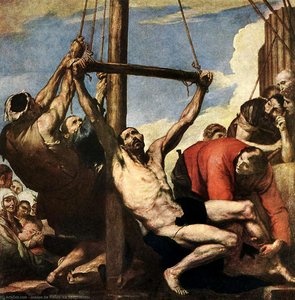
The air in the room feels heavy, thick with the weight of unspoken prayers. St. Andrew sits in a space where light and shadow struggle for dominance, his form emerging from a darkness so profound it feels tangible. He leans forward, his body heavy with a fatigue that transcends the physical. A large book lies open before him, its pages perhaps holding the very scriptures that now weigh upon his spirit. His hand rests against his forehead, a gesture of profound contemplation or perhaps a silent plea against the exhaustion of the soul. The scene is one of intense solitude, where the only companion is the quiet gravity of his own thoughts.
The light does not merely illuminate; it strikes. It catches the stark white of his beard and the pale skin of his hands, carving his features out of the surrounding gloom. This dramatic interplay of light and shadow creates a sense of immediate, visceral presence. Every wrinkle in his brow and every fold of his heavy drapery tells a story of a man caught in a moment of spiritual struggle. The textures are palpable: the coarseness of the fabric, the weathered surface of the book, and the soft, aged quality of his skin all pull the viewer into his private, somber world.
The Language of Light and Form
The composition draws the eye inward, focusing entirely on the saint's emotional state through a deliberate use of shape and shadow. The following elements define the visual experience:
- The stark chiaroscuro that isolates the figure against an undefined, dark background.
- The organic, heavy lines of the drapery that add volume to his slumped posture.
- The earthy palette of ochre, brown, and black that reinforces the somber mood.
- The rectangular grounding of the open book against the fluid, human shapes of the saint.
The technique relies on a masterful layering of oil paint, allowing for subtle gradations of light that mimic the way shadow clings to the contours of a face. There is a certain roughness to the brushwork in the shadows, a jaggedness that mirrors the internal tension of the subject. This is not a polished, idealized depiction, but a raw, honest encounter with a man in the midst of deep reflection.
The Weight of Faith
In this 1616 work, the depiction of the apostle moves away from the grandiosity often associated with religious figures, opting instead for a profound human vulnerability. The book serves as a silent anchor, representing the knowledge and scripture that define his life and his burden. His weary expression and the slight slump of his shoulders suggest a man who has carried much, perhaps feeling the immense weight of his calling. The darkness surrounding him does not feel empty; it feels like a space for introspection, a void where the physical world falls away to leave only the essence of his devotion and his struggle.
Pytania i odpowiedzi
Czy St. Andrew jest dziełem namalowanym ręcznie, czy wydrukiem?
Malowane ręcznie: wykwalifikowany artysta wykonuje olejną kopię St. Andrew na płótnie lnianym.
Jaki rozmiar wybrać dla St. Andrew?
Wymiary oryginału to 93 x 111 cm. Dostępne rozmiary obejmują zakres od 34.8 x 28.7 cm (zł784) do 241.9 x 199.8 cm (zł6942); tabela na tej stronie przedstawia główne warianty oraz ich ceny.
Ile trwa dostawa?
Czas dostawy wynosi od 4 do 5 tygodni, przy czym oferujemy bezpłatną ekspresową wysyłkę na cały świat; na tej stronie dostępna jest również opcja pilnej produkcji. Możesz dokonać zwrotu w ciągu 100 dni z pełnym zwrotem kosztów, bez żadnych dodatkowych warunków.
Jakiej techniki użył/a Jusepe de Ribera w pracy St. Andrew?
Oil On Canvas
 Podgląd w skali 1:1

 Wyślij jako kartkę
 Udostępnij
 Szczegóły dzieła
 Karta informacyjna


 Pobierz obraz
 Podobne obiekty
 RTG
 Pokaz slajdów
 Pytania i odpowiedzi

 Statystyki