Cubism
L (Juan Gris)
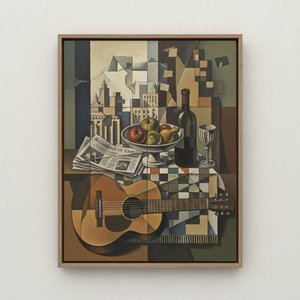
Juan Gris (1887–1927) stworzył L. Należy do nurtu Cubism. Wykonano w technice Oil On Canvas. Przechowywane jest w Biennale Internazionale dell'Antiquariato di Firenze w Florencja, Włochy.

 Podgląd w skali 1:1

 Ręcznie malowany obraz olejny
 Wyślij jako kartkę
 Udostępnij
 Karta informacyjna


 Pobierz obraz
 Podobne obiekty
 RTG
 Pokaz slajdów
 Pytania i odpowiedzi

 Statystyki
L w skrócie
- Tytuł
- L
- Artysta
- Juan Gris (1887–1927)
- Miejsce urodzenia artysty
- Madryt, Hiszpania
- Technika wykonania
- Oil On Canvas
- Gdzie można je zobaczyć
- Biennale Internazionale dell'Antiquariato di Firenze, Florencja, Włochy
- Ruch
- Cubism
- Epoka
- Modern
- Temat
- guitar, music paper, man, geometric abstraction, monochrome, picasso influence
Co przedstawia L?
The Architect of Cubism: The Visionary World of Juan Gris
In the vibrant, avant-garde heart of early 20th-century Paris, a new visual language was being forged—one that dismantled the familiar to reveal a deeper, more structured truth. At the center of this revolution stood Juan Gris, a Spanish master whose analytical mind and poetic soul converged to create some of the most enduring icons of Synthetic Cubism. While contemporaries like Picasso and Braque often focused on the fragmentation of form, Gris brought a unique sense of mathematical precision and crystalline clarity to the movement. His work does not merely break objects apart; it reconstructs them into a harmonious symphony of geometric planes, where every line and shadow serves a deliberate, architectural purpose.
To encounter a piece like "Guitar & Music Paper" is to step into a world where reality is distilled into its most essential elements. The composition is a masterful dance of interlocking rectangles and cubes, creating a rhythmic interplay that guides the eye across the canvas. Gris utilized a sophisticated technique of layering textures and subtle gradations, allowing light to play across the surface as if through a prism. His palette, often characterized by earthy, muted tones, avoids the distraction of bright colors to focus instead on the profound relationship between shape and space. This deliberate restraint creates an atmosphere of contemplative stillness, inviting the viewer to linger within the complexity of the design.
A Symphony of Form and Symbolism
Beyond the technical brilliance lies a deep, symbolic resonance that continues to captivate collectors and decorators alike. The recurring motifs in Gris’s oeuvre—the guitar, the musical score, the newspaper—are not merely objects of study but symbols of the modern era's sensory richness. In "Guitar & Music Paper," the fusion of the instrument with the sheet music suggests a blurring of boundaries between the physical and the ephemeral, between sound and sight. The way the geometric shapes overlap creates an illusion of depth that feels both modern and timeless, making such works incredibly versatile for contemporary interior design.
For the discerning art lover or interior designer, a high-quality reproduction of a Juan Gris masterpiece offers more than just decoration; it provides a focal point of intellectual and aesthetic sophistication. The structured nature of his Cubist compositions lends itself beautifully to modern, minimalist, or mid-century modern environments, where the artwork can act as an anchor of stability and elegance. The emotional impact of his work is one of profound balance—a sense that even in a fragmented world, there is an underlying order and beauty waiting to be discovered. Owning a piece inspired by Gris is an invitation to celebrate the intersection of logic and lyricism, bringing a touch of Parisian avant-garde history into the sanctuary of the home.
W którym muzeum znajduje się L?
Biennale Internazionale dell'Antiquariato di Firenze
Florencja, Włochy
Florentyński Renesans na Nowo: Zanurzenie w Świecie BIAF Florencja oddycha sztuką; to nie jest jedynie miasto, w którym znajduje się sztuka, lecz miasto, które nią jest, wplecioną w same kamienie i odbijającą się echem w jego pałacach. W tej atmosferze trwałego piękna odbywa się Biennale Internazionale dell'Antiquariato di Firenze (BIAł), wydarzenie, które wykracza poza ramy typowych targów staroci, stając się starannie wyselekcjonowaną pielgrzymką do samego serca włoskiej twórczości. Odbywające się w majestatycznym Palazzo Corsini, będącym samo w sobie barokowym arcydziełem, BIAF oferuje nie tylko doświadczenie wizualne, ale prawdziwe zanurzenie – szansę na nawiązanie więzi z wiekami rzemiosła i bogatym dziedzictwem kulturowym Włoch.


Zdjęcia w wysokiej rozdzielczości dzieła L

Domena publiczna: artysta zmarł w 1927.
Inne rozmiary, kadrowanie i cytowanie →Juan Gris, L, Biennale Internazionale dell'Antiquariato di Firenze. Domena publiczna
Odpowiedzi na pytania dotyczące L
W którym muzeum znajduje się oryginał "L"?
„L” – Juan Gris znajduje się w zbiorach Biennale Internazionale dell'Antiquariato di Firenze, Florencja, Włochy. Informacja o muzeum dotyczy oryginału, a nie reprodukcji.
Z jakiej techniki wykorzystano "L"?
Co przedstawia „L” – Juan Gris?
Czy „L” – Juan Gris znajduje się w domenie publicznej?
Jeśli chodzi o prawa autorskie, "L" znajduje się w należy do domeny publicznej – autorskie prawa majątkowe wygasły.
Kto stworzył "L"?
Do jakiego nurtu w sztuce należy „L” – Juan Gris?
Do którego okresu twórczości Juan Gris należy dzieło „L”?
Z czego wynika obecny status praw autorskich dzieła "L"?
O artyście: Juan Gris

1887–1927, Hiszpania
Juan Gris
Wczesne lata, rodzina i kształcenie Urodzony 23 marca 1887 roku w Madrycie jako José Victoriano González-Pérez, człowiek, który miał stać się znany jako Juan Gris, dorastał w licznej i pełnej życia rodzinie. Był trzynastym z czternauciga dzieci. Jego ojciec, Gregorio Gonzalez, był majętnym przedsiębiorcą, a domowe zacisze zapewniło mu stabilny fundament podczas kluczowych lat formacyjnych spędzonych w hiszpańskiej stolicy. Jego wczesna edukacja nabrała technicznego charakteru w Madrycie, w Szkole Sztuk i Nauk, gdzie zgłębiał tajniki inżynierii.
Inne prace Juan Gris
 Portret Madame Josette Gris1916
 Jabłka i winogrona na stole1913
 Kompozycja przed oknem1915
 Śniadanie1915

Eseje o L
 Spontaneity and Matter: Distinguishing CoBrA from Art InformelMaster the differences between CoBrA and Art Informel with our expert guide. Learn to identify these post-war movements today.
 Juan Gris: Cubist Deconstruction & Synthesis – A Comprehensive ExplorationExplore the revolutionary art of Juan Gris – a master of Cubism. Discover his unique approach to deconstruction, vibrant Synthetic Cubist w…
 Understanding the Difference Between Analytical and Synthetic CubismMaster the differences between Analytical and Synthetic Cubism with our expert guide. Learn to identify these iconic art movements now.