- Strona główna

- Obraz cyfrowy
- jörg ratgeb
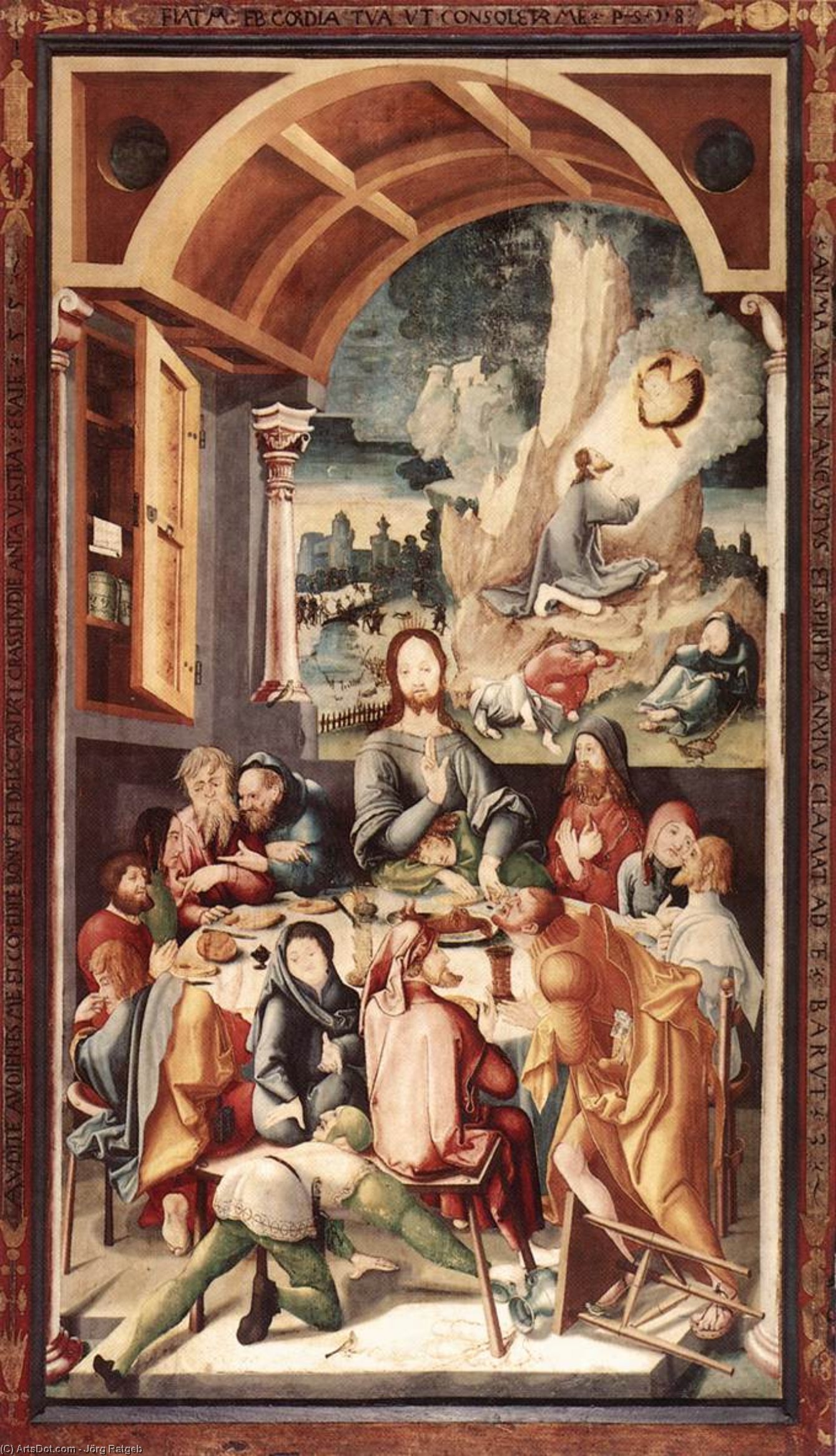
- Last Supper
 Zamów wydruk Zamów reprodukcję
 Udostępnij
 Udostępnij
 Szczegóły dzieła
 Dodaj do ulubionych

 Pobierz
 Podobne obiekty
 RTG
RTG
 Pokaz slajdów
Last Supper


 Rozwiń treść
Kup wysokiej rozdzielczości, ulepszony obraz cyfrowy, znacznie lepszy niż podgląd online.
Każdy plik jest starannie przygotowywany przez naszych specjalistów przy użyciu zaawansowanych narzędzi oraz profesjonalnej, ręcznej retuszy. Dbamy o to, aby każdy obraz cechował się wyjątkową ostrością, precyzyjnym odwzorowaniem kolorów i subtelnymi detalami.
Ostateczny plik dostarczany jest drogą mailową w ciągu 72 godzin, zoptymalizowany do natychmiastowego wykorzystania w profesjonalnych zastosowaniach redakcyjnych i poligraficznych. To ta sama jakość, której ufają czołowe studia projektowe, wydawnictwa oraz galerie sztuki.
Obraz cyfrowy
Pobierz plik o wysokiej rozdzielczości do osobistego wyświetlania, druku oraz projektów kreatywnych.
Zawarte w każdym zamówieniu na obraz cyfrowy
Profesjonalna dostawa cyfrowa, gwarantowana
Wybierając OriginalUniqueArt.com, nie otrzymujesz jedynie obrazu – otrzymujesz profesjonalnie udoskonalone cyfrowe dzieło sztuki, stworzone z najwyższą precyzją i objęte gwarancją satysfakcji. Oto wszystko, co automatycznie dołączane jest do Twojego zamówienia:

Błyskawiczna wysyłka e-mailowa
Plik z obrazem cyfrowym w wysokiej rozdzielczości zostanie przesłany na Twój adres e-mail w ciągu 72 godzin od złożenia zamówienia – gotowy do natychmiastowego użycia.

Plik cyfrowy wzbogacony przez AI
Twoja grafika została profesjonalnie zoptymalizowana przy użyciu zaawansowanych narzędzi AI oraz ręcznej edycji, co zapewnia maksymalną szczegółowość, klarowność i wierność kolorów.

Dożywotnia darmowa ponowna dostawa
Przypadkowo usunąłeś lub zgubiłeś swój plik? Bez obaw – prześlemy go Tobie ponownie w dowolnym momencie, bez żadnych opłat.

Bez opłat importowych – zawsze
Ciesz się swoją sztuką natychmiast, bez żadnych opłat celnych, należności ani kosztów dostawy – pliki cyfrowe są zawsze wolne od podatku.

Gwarancja wierności kolorów
Dzięki zastosowaniu profesjonalnych narzędzi i procesów zarządzania barwą zapewniamy, że Twoje cyfrowe zdjęcie odzwierciedla oryginalne kolory tak wiernie, jak to tylko możliwe.

60-dniowa gwarancja satysfakcji
Jeśli nie będziesz zadowolony ze swojego cyfrowego obrazu, poprawimy go lub zwrócimy 100% kosztów w ciągu 60 dni – bez żadnych pytań.

100% Gwarancja zwrotu pieniędzy
Nie zadowoleni? Otrzymaj pełny zwrot kosztów w ciągu 60 dni od otrzymania pliku cyfrowego – bez zbędnych pytań.

Rabaty na zamówienia hurtowe
Kup 3 obrazy, oszczędź 10% - Kup 5, oszczędź 15% - Kup 10+, oszczędź 20%. Idealne do projektów kreatywnych, galerii i agencji.
Biografia artysty
Alessandro di Mariano Filipepi: The Genesis of a Titan
Tiziano Vecellio, better known as Titian, stands as one of the most pivotal figures in the history of Western art – a master whose influence resonated through centuries and continues to inspire artists today. Born around 1488/90 in Pieve di Cadore, a small town nestled in the foothills of the Dolomites near Belluno in northeastern Italy, Titian’s early life was steeped in the traditions of the Veneto region. His father, Gregorio Vecellio, was a woodcarver and craftsman, while his mother, Lucia Pighetti, came from a family of textile weavers – a lineage that would subtly inform Titian's later fascination with texture and surface. Unlike many artists of his time who entered the workshop of established masters, Titian’s artistic journey began with a somewhat unconventional apprenticeship under Domenico Pistrucci, a painter associated with the court of Andrea Mantegna in Padua. This early exposure to Mantegna’s meticulous detail and classical influences proved crucial, laying the groundwork for Titian's own sophisticated technique. However, it was his subsequent time spent working alongside Giorgione in Venice that truly shaped his artistic vision – a period marked by experimentation with color, light, and atmospheric perspective, elements that would become hallmarks of his distinctive style. Titian’s early works demonstrate a clear debt to Mantegna, yet they quickly evolved into something uniquely Venetian, characterized by a vibrant palette and a loose, painterly approach that prioritized capturing the essence of a scene over strict adherence to academic rules.The Venetian Renaissance: A Crucible for Artistic Innovation
Titian's arrival in Venice coincided with a period of extraordinary artistic ferment – the height of the Venetian Renaissance. Unlike the more restrained and formal style prevalent in Florence, Venetian painting embraced bold colors, dramatic lighting, and a sensual approach to depicting the human form. Giorgione’s influence was particularly profound, demonstrating a masterful use of color and an interest in capturing fleeting moments of beauty and emotion. Titian quickly absorbed these lessons, developing his own distinctive voice within this vibrant artistic milieu. He wasn't merely a follower; he actively challenged conventions, pushing the boundaries of what was considered acceptable in painting at the time. His early works, such as *Landscape with a Goat* and *Two Satyrs in a Landscape*, reveal a fascination with capturing the beauty of nature – not just its physical form but also its atmosphere and mood. These paintings are characterized by loose brushwork, subtle color variations, and an emphasis on creating a sense of depth and space. Crucially, Titian’s work was deeply intertwined with the cultural life of Venice, serving as court painter to prominent families like the Mocenigo and Doria families, and later becoming a favored artist of the Habsburg emperors.The Evolution of a Master: From Early Landscapes to Grand Portraits
Titian's artistic development spanned several distinct phases, each reflecting his evolving interests and techniques. His early years were dominated by landscapes – atmospheric scenes that showcased his mastery of color and light. However, as he matured, Titian increasingly turned to portraiture, establishing himself as one of the greatest portrait painters of his era. His portraits are remarkable not only for their technical skill but also for their psychological depth. He possessed a rare ability to capture the character and personality of his subjects, conveying their status, wealth, and inner lives with subtle gestures and expressions. The Emperor Charles V portrait is a prime example – a monumental work that embodies Titian’s ambition and mastery of color and composition. Throughout his long career, Titian continued to experiment with different genres, producing mythological scenes, religious altarpieces, and even genre paintings depicting everyday life. His style remained remarkably consistent, characterized by a loose brushwork, vibrant colors, and a sensual approach to form. Even as he aged, Titian’s work retained its freshness and vitality, demonstrating his extraordinary talent and dedication to the craft of painting.Major Works and Lasting Influence
Titian's oeuvre is vast and diverse, encompassing a remarkable range of subjects and styles. Among his most celebrated works are *The Birth of Venus*, *Sacred and Profane Love*, *Bacchus and Ariadne*, and numerous altarpieces for Venetian churches. *The Birth of Venus*, painted around 1546-48, is arguably his most iconic work – a sensuous depiction of the goddess Venus emerging from a seashell, embodying both classical beauty and Renaissance ideals. *Sacred and Profane Love*, completed in 1514-15, explores the duality of human experience through a complex allegorical composition. His altarpieces, such as the *Assumption of the Virgin* for Santa Maria Gloriosa dei Frari, demonstrate his ability to create monumental works that combine religious symbolism with dramatic color and dynamic movement. Titian’s influence on subsequent generations of artists was profound. His use of color, his loose brushwork, and his sensual approach to form inspired painters such as Rubens, Rembrandt, and Turner. His emphasis on capturing the essence of a scene rather than slavishly copying reality paved the way for later developments in painting – particularly the rise of Romanticism.A Legacy Forged in Color
Titian died in Venice in 1576 at the age of 87/88, leaving behind a legacy that continues to captivate and inspire. His paintings are housed in major museums around the world, including the National Gallery in London, the Prado Museum in Madrid, and the Galleria dell’Accademia in Venice. More than just a painter, Titian was a pioneer – a master of color, light, and composition who fundamentally altered the course of Western art history. His work stands as a testament to the power of artistic vision and the enduring beauty of the Venetian Renaissance. He remains not only one of the greatest painters of all time but also a symbol of Venice itself – a city renowned for its wealth, its culture, and its unparalleled contribution to the world of art.
jörg ratgeb
1485 - 1526 , Germany
Krótka nota
- Artistic Movement Or Style: Venetian School
- Artists Or Movements Influenced By This Artist:
- Tintoretto
- Veronese
- Artists Who Influenced This Artist:
- Giorgione
- Giovanni Bellini
- Date Of Birth: c. 1488/90
- Date Of Death: 27 August 1576
- Full Name: Tiziano Vecellio
- Nationality: Venetian
- Notable Artworks:
- Venus of Urbino
- Bacchus and Ariadne
- Place Of Birth: Pieve di Cadore, Belluno

