() ·

A painting made for you, by hand

Apollo and Daphne

Ręcznie malowana reprodukcja olejowa

Ręcznie malowany obraz olejny na płótnie, wykonany na zamówienie przez naszych artystów w wybranym przez Ciebie wymiarze i oprawie. ( Przełącz na wydania drukowane Przejdź do wersji cyfrowej)

Opis obiektu

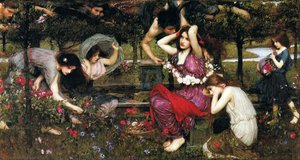
John William Waterhouse’s ‘Apollo and Daphne,’ a breathtaking Pre-Raphaelite oil painting from 1908, captures the dramatic chase of love and transformation with stunning detail. Admire Apollo's pursuit of Daphne as she becomes a laurel tree – discover this iconic artwork.

Biografia artysty

John William Waterhouse – wybitny malarz Pre-Rafaelity, znany z romantycznych obrazów mitologicznych i literackich, w tym 'Lady Shalott' i 'Ophelia'. Jego dzieła fascynują pięknem i emocjami.

from ·

Chapter 1

How large should it be?

Slide to change the size; the picture on the left shows the frame at its real width. The proportions of the original are kept.

Standardowy format
personalizowane
CM
INCH

Wybierz spośród naszych standardowych rozmiarów, które zachowują oryginalne proporcje dzieła sztuki.

szerokość
wysokość

Wpisz wymaganą szerokość i wysokość, aby obraz pasował do Twojej ramy lub ściany. Ponieważ jest to dzieło malowane ręcznie, w przypadku rozmiaru o innych proporcjach artysta może domalować nieco więcej wokół obrazu lub przyciąć jego fragmenty — wybór należy do Ciebie. Przed rozpoczęciem pracy prześlemy Ci cyfrową wizualizację do zatwierdzenia. Obraz widoczny na tej stronie nie przedstawia rzeczywistego efektu — jedynie wizualizacja oddaje realny rezultat.

Chapter 2

How should it arrive?

Choose the edges of the stretched canvas

Choose your frame

Corner sample of the WhiteWrap canvas edge finish, stretched on lite drewno bars
White zł1
Corner sample of the BlurSideWrap canvas edge finish, stretched on lite drewno bars
Blurside zł1
Corner sample of the ExtendedWrap canvas edge finish, stretched on lite drewno bars
Extended zł1
Corner sample of the P118B picture frame: polistyren formowany, 5 cm wide and 3 cm thick
P118B zł10
Corner sample of the P118H picture frame: polistyren formowany, 5 cm wide and 3 cm thick
P118H zł10
Corner sample of the P118W picture frame: polistyren formowany, 5 cm wide and 3 cm thick
P118W zł10
Corner sample of the P438Z picture frame: polistyren formowany, 5.5 cm wide and 3.5 cm thick
P438Z zł10
Corner sample of the P508JH picture frame: polistyren formowany, 7 cm wide and 3.5 cm thick
P508JH zł12
Corner sample of the P508YH picture frame: polistyren formowany, 7 cm wide and 3.5 cm thick
P508YH zł12
Corner sample of the P805H picture frame: polistyren formowany, 5 cm wide and 3.5 cm thick
P805H zł10
Corner sample of the P805Z picture frame: polistyren formowany, 5 cm wide and 3.5 cm thick
P805Z zł10
Corner sample of the P919BZ picture frame: polistyren formowany, 7 cm wide and 3.5 cm thick
P919BZ zł10
Corner sample of the P919G picture frame: polistyren formowany, 7 cm wide and 3.5 cm thick
P919G zł10
Corner sample of the P919XJ picture frame: polistyren formowany, 7 cm wide and 3.5 cm thick
P919XJ zł10
Corner sample of the P959ZH picture frame: polistyren formowany, 5 cm wide and 3 cm thick
P959ZH zł10
Corner sample of the P968JZ picture frame: polistyren formowany, 6 cm wide and 4 cm thick
P968JZ zł12
Corner sample of the W106C picture frame: lite drewno, 5 cm wide and 3 cm thick
W106C zł8
Corner sample of the W218G picture frame: lite drewno, 5 cm wide and 3 cm thick
W218G zł10
Corner sample of the W218JH picture frame: lite drewno, 5 cm wide and 3 cm thick
W218JH zł8
Corner sample of the W218Y picture frame: lite drewno, 5 cm wide and 3 cm thick
W218Y zł10
Corner sample of the W307PJ picture frame: lite drewno, 6 cm wide and 3 cm thick
W307PJ zł10
Corner sample of the W316G picture frame: lite drewno, 6 cm wide and 3 cm thick
W316G zł10
Corner sample of the W316PJ picture frame: lite drewno, 6 cm wide and 3 cm thick
W316PJ zł8
Corner sample of the W316Y picture frame: lite drewno, 6 cm wide and 3 cm thick
W316Y zł10
Corner sample of the W398PJ picture frame: lite drewno, 5 cm wide and 3 cm thick
W398PJ zł8
Corner sample of the W4111J picture frame: lite drewno, 6.5 cm wide and 3.5 cm thick
W4111J zł10
Corner sample of the W500HY picture frame: lite drewno, 7 cm wide and 5 cm thick
W500HY zł15
Corner sample of the W500JH picture frame: lite drewno, 7 cm wide and 5 cm thick
W500JH zł15
Corner sample of the W692G picture frame: lite drewno, 8 cm wide and 4 cm thick
W692G zł12
Corner sample of the W849H picture frame: lite drewno, 5 cm wide and 3 cm thick
W849H zł8
Corner sample of the W940BG picture frame: lite drewno, 7.5 cm wide and 4.5 cm thick
W940BG zł15
Corner sample of the W953PJ picture frame: lite drewno, 6 cm wide and 3.5 cm thick
W953PJ zł8
Corner sample of the H24-GOLD picture frame: rzeźbione drewno pokryte gipsem, 10 cm wide and 6 cm thick
H24-GOLD zł30
Corner sample of the H24-SILVER picture frame: rzeźbione drewno pokryte gipsem, 10 cm wide and 6 cm thick
H24-SILVER zł30
Corner sample of the H36-GOLD picture frame: rzeźbione drewno pokryte gipsem, 15 cm wide and 6.5 cm thick
H36-GOLD zł45
Corner sample of the H36-SILVER picture frame: rzeźbione drewno pokryte gipsem, 15 cm wide and 6.5 cm thick
H36-SILVER zł45

Moulding: . Overall size with the frame: .

Chapter 3

Who paints it, and should anything change?

Examples of what can be changed: Replace face with customer photo; Add pet (e.g., replace cat with dog); Include hidden message in background; Change background landscape or elements.
After order, OriginalUniqueArt.com team will email client for instructions and provide a mockup preview

Dostawa na całym świecie () w ciągu 3–4 tygodni zamiast standardowych 5 tygodni. (2 Listopad). Bez kompromisów w kwestii jakości.

Chapter 4

The finishing touches

A nameplate, as in a museum?

Szczegóły grawerowanej brązowej tabliczki

This elegant plaque features the artist's name and the title of the artwork, finely engraved for a timeless presentation.

It is made from bronze with a refined, elegant finish. The text is precisely laser-engraved for a sharp and permanent result. Measuring 9x2 cm, the plaque is compact yet easy to read. It's built to be durable and scratch-resistant, offering a professional, museum-quality look. Mounting is simple thanks to the included adhesive backing.

Szczegóły przezroczystej tabliczki akrylowej

The plaque includes essential engraved details such as the artist's name, the title of the artwork, the date it was created, the type of media used-like oil on canvas or watercolor-a brief description of the piece, and a QR code that links to the complete artwork information.

It is crafted from clear acrylic, offering a sleek, modern appearance. The text is UV-engraved in black to ensure strong visual contrast. With a size of 10x15 cm, it ensures optimal readability. It comes equipped with two metal hooks for secure wall mounting. The plaque is designed to be weather-resistant, making it suitable for various environments, and it includes interactive features that work seamlessly with smartphone scanning.

Szczegóły czarnej tabliczki akrylowej

This elegant plaque includes engraved information such as the artist's name, the title of the artwork, the date it was created, the type of media used (like oil on canvas or watercolor), a short description of the artwork, and a QR code for quick access to more information.

The plaque itself is made from refined black acrylic with a premium finish. The text is laser-engraved in white for high contrast and readability. Its size is 10x15 cm, designed to be easy to read. It comes with two metal hooks for professional mounting. The design is sleek and fits any interior style. It is also weather-resistant and durable, with built-in digital integration for mobile compatibility.

A protective varnish?

When do you need it?

Chapter 5

Your painting, as you ordered it

Apollo and Daphne

Technika reprodukcji

Wymiary reprodukcji

-

Wybitny mistrz artystyczny

Większa szczegółowość, finezja i dodatkowy czas na realizację

-

Opcje oprawy reprodukcji

-

-

W przypadku dzieł sztuki lub reprodukcji, których którykolwiek z boków przekracza 105 cm (około 41 cali), rama zostanie wysłana w formie zestawu do samodzielnego montażu. Metoda ta zapewnia bezpieczną dostawę i zapobiega uszkodzeniom podczas transportu.

Wymagany profesjonalny montaż – nie jest to produkt typu DIY.
Zestaw musi zostać złożony, a płótno naciągnięte przez doświadczonego profesjonalnego ramiarza, przy użyciu kleju do drewna (brak w zestawie), kleszczy do naciągania płótna oraz ścisków, które utrzymają krosna w równej pozycji podczas schnięcia kleju. Nieprawidłowy montaż lub nierównomierne napięcie płótna może trwale uszkodzić dzieło sztuki i nie podlega naszej gwarancji.

  • W zestawie znajdują się wszystkie listwy z litego drewna, precyzyjnie docięte do wymiarów.

  • Montaż odbywa się przy użyciu dołączonych wkrętów oraz kleju do drewna do łączenia narożników, którego zestaw nie zawiera i który musi zostać dostarczony przez ramiarza.

  • Wymagane są profesjonalne narzędzia, których nie ma w zestawie: kleszcze do naciągania płótna (napinacz) oraz zaciski, które pozwolą utrzymać listwy w równej pozycji podczas schnięcia kleju.

Ważne:
Do połączenia narożników niezbędny jest klej do drewna, listwy należy unieruchomić za pomocą ścisków do momentu całkowitego wyschnięcia kleju, a naciągnięcie płótna na złożoną ramę wymaga użycia kleszczy do naciągania płótna. Żaden z tych elementów nie jest dołączony do zestawu. Przed zamówieniem tego rozmiaru zalecamy konsultację z doświadczonym ramiarzem.

Etykieta obiektu

-

-

Lakier ochronny

Lakier z połyskiem (pogłębia kolory, chroni przed światłem i wilgocią)

-

Personalizacja dzieła

Przykłady możliwości personalizacji: zastąp twarz zdjęciem klienta; dodaj zwierzę domowe (np. zamień kota na psa); umieść ukrytą wiadomość w tle; zmień krajobraz lub elementy tła.

-

Ekspresowa

Dostawa na cały świat () w ciągu 3–4 tygodni zamiast standardowych 5 tygodni. (2 Listopad). Bez kompromisów w kwestii jakości.

-

Przesyłka ekspresowa

Dostawa na cały świat () w ciągu 5 tygodni. (9 Listopad).

W cenie

Cena całkowita

zł 1168

Suma całkowita zł 1168

Opcja ze szkłem jest dostępna wyłącznie w rozmiarach poniżej 110 cm

Included with every order

  • Bezpłatna ekspresowa wysyłka na cały świat
  • Wysokiej jakości płótno lniane
  • Pełne ubezpieczenie przesyłki
  • Gwarancja zwrotu należności celnych i podatków importowych
  • Gwarancja wiernego odwzorowania kolorów
  • 100-dniowa polityka zwrotów (tylko w przypadku wad)
  • Gwarancja 100% zwrotu pieniędzy
  • Zniżka przy zakupie wielu sztuk

A Dance of Desire and Transformation: John William Waterhouse's *Apollo and Daphne*

John William Waterhouse’s 1908 painting, *Apollo and Daphne*, is more than just a depiction of a Greek myth; it’s an exquisitely rendered exploration of desire, resistance, and the poignant beauty of transformation. This masterpiece, housed within the Plymouth City Museum and Art Gallery, exemplifies the Pre-Raphaelite movement's commitment to detailed realism and romantic storytelling, offering a captivating glimpse into a world where gods and mortals intertwine with breathtaking artistry.

The Myth Unveiled: A Story of Pursuit and Flight

The narrative at the heart of *Apollo and Daphne* is rooted in the classic tale from Ovid’s *Metamorphoses*. Apollo, the radiant god of light and music, finds himself irrevocably drawn to Daphne, a nymph renowned for her unparalleled grace and speed. His ardent pursuit, fueled by Eros's arrows, becomes a desperate struggle for Daphne as she attempts to evade his advances. The painting captures this pivotal moment – Apollo reaching out, attempting an embrace, while Daphne recoils in terror, transforming herself into the laurel tree that would forever bear her name. Waterhouse masterfully translates this dramatic scene onto canvas, imbuing it with palpable tension and emotional depth.

Pre-Raphaelite Technique: A Symphony of Color and Texture

Waterhouse’s skill as a Pre-Raphaelite painter is immediately apparent in the meticulous detail and rich textures of *Apollo and Daphne*. Executed in oil on canvas, the painting showcases his mastery of color theory and brushwork. The verdant forest setting – a carefully constructed landscape teeming with lush foliage and dappled light – creates an immersive atmosphere. Notice the subtle gradations of green, the delicate rendering of the leaves, and the way Waterhouse uses light to sculpt the forms of Apollo and Daphne. This technique contributes significantly to the painting’s dreamy, ethereal quality, characteristic of the Pre-Raphaelite style.

Symbolism and Emotional Resonance

Beyond the literal depiction of the myth, *Apollo and Daphne* is rich in symbolic meaning. The laurel tree itself represents Daphne's transformation – a poignant symbol of loss, escape, and ultimately, immortality. Apollo’s outstretched hand embodies both desire and frustration, while Daphne’s posture speaks volumes about her resistance to his affections. The overall mood is one of tragic beauty, capturing the fleeting nature of love and the desperate measures taken to avoid unwanted attention. The inclusion of potted plants adds a layer of domesticity and fragility to the scene, further emphasizing the vulnerability of Daphne.

A Timeless Masterpiece – Reproduction Options

OriginalUniqueArt offers meticulously crafted hand-painted reproductions of John William Waterhouse’s *Apollo and Daphne*, allowing you to bring this iconic artwork into your home or office. Our skilled artisans replicate Waterhouse's technique with the highest level of precision, ensuring that every detail – from the rich colors to the nuanced brushstrokes – is faithfully reproduced. Choose from a range of sizes to perfectly suit your space and budget. Own a piece of art history and experience the enduring power of this captivating masterpiece.

Pytania i odpowiedzi

Czy dzieło „Apollo and Daphne” – Jan Wilhelm Wodsworth Waterhouse jest jasne czy ciemne?

Postrzegana jasność dzieła „Apollo and Daphne” – Jan Wilhelm Wodsworth Waterhouse wynosi deep_shadow. Można ją dopasować do oświetlenia w docelowym pomieszczeniu.

Do którego okresu twórczości Jan Wilhelm Wodsworth Waterhouse należy dzieło „Apollo and Daphne”?

W dorobku artystycznym Jan Wilhelm Wodsworth Waterhouse dzieło „Apollo and Daphne” przypada na Mature Period. Ten etap pozwala zestawić je z innymi pracami twórcy.

W jaki sposób Pre-Raphaelite Revival dzieła „Apollo and Daphne” nawiązuje do kraju pochodzenia artysty?

Dzieło z nurtu Pre-Raphaelite Revival, zatytułowane "Apollo and Daphne", zostało stworzone przez artystę urodzonego w Włochy.

More about this painting

Podgląd w skali 1:1 Podgląd AR Przełącz na wydania drukowane Przejdź do wersji cyfrowej Wyślij jako kartkę
Szczegóły dzieła Przewodnik Dodaj do ulubionych Pobierz obraz Podobne obiekty RTG Pokaz slajdów Q&A Statystyki

In numbers

  • 1908the year it was painted
  • 29frames to choose from
  • standard sizes, in its own proportions
  • 5weeks to paint and deliver it
Jan Wilhelm Wodsworth Waterhouse

Jan Wilhelm Wodsworth Waterhouse

1849 - 1917, Włochy

Quick facts about Jan Wilhelm Wodsworth Waterhouse

  • Artistic Movement Or Style: Prerafaelista, Klasyczny
  • Artists Or Movements Influenced By This Artist: ['Impressionizm']
  • Artists Who Influenced This Artist:
    • Alma-Tadema
    • Frederic Leighton
  • Date Of Birth: 1849
  • Date Of Death: 1917
  • Full Name: John William Waterhouse
  • Nationality: Angielski
  • Notable Artworks:
    • Lady Shalott
    • Ophelia
    • Hylas i Ninie
  • Place Of Birth: Rzym, Włochy

Biografia artysty

A Roman Beginning: The Early Life and Influences of John William Waterhouse

John William Waterhouse, a name synonymous with the romantic allure of Pre-Raphaelite painting, began his artistic journey far from the fog-laden landscapes often associated with the movement. Born in Rome in 1849 to English parents, his earliest years were steeped in the classical beauty of Italy – an environment that would profoundly shape his aesthetic sensibilities. This formative period instilled within him a deep appreciation for ancient Roman art and mythology, themes that would recur throughout his prolific career. The Waterhouse family returned to England in 1854, settling in South Kensington, London, a location strategically chosen for its proximity to the burgeoning Victoria and Albert Museum. Here, young John was exposed to an unparalleled collection of classical sculpture and decorative arts, further nurturing his fascination with antiquity. His initial training was conventional, encompassing studies at the Royal Academy Schools, where he honed his technical skills in drawing and painting, but it was the atmosphere of intellectual curiosity and artistic innovation that truly ignited his passion. Even early works reveal a meticulous attention to detail and a commitment to historical accuracy, qualities that would become hallmarks of his style.

Embracing the Pre-Raphaelite Brotherhood

While Waterhouse’s initial work displayed classical leanings reminiscent of artists like Alma-Tadema and Frederic Leighton, he gradually gravitated towards the ideals of the Pre-Raphaelite Brotherhood. This artistic collective, founded in 1848, championed a return to the detailed observation of nature and the vibrant colors found in early Italian Renaissance art – before what they perceived as the stylistic decline initiated by Raphael. Waterhouse didn’t join the brotherhood itself, but he wholeheartedly embraced its principles, infusing his paintings with a lyrical beauty and emotional depth that resonated deeply with audiences. His 1874 painting, *Sleep and his Half-Brother Death*, exhibited at the Royal Academy, marked a turning point, demonstrating his growing mastery of symbolic narrative and atmospheric effects. This success paved the way for consistent inclusion in the annual exhibitions, establishing him as a rising star within the London art scene. He wasn’t merely replicating Pre-Raphaelite techniques; he was interpreting them through his own unique lens, blending classical precision with romantic sensibility.

Mythological Visions and Arthurian Echoes

Waterhouse's most celebrated works are those that draw inspiration from mythology and Arthurian legend. He possessed a remarkable ability to breathe life into ancient stories, portraying goddesses, nymphs, and tragic heroines with an exquisite blend of beauty and pathos. *The Lady of Shalott*, perhaps his most iconic painting, exists in three versions (1888, 1894, and 1916), each a testament to his enduring fascination with Tennyson’s poem. The image of the doomed lady, adrift on her river barge, became emblematic of Victorian romanticism and the plight of artistic isolation. Similarly, his depictions of Ophelia, capturing the moment before her tragic demise, are imbued with a haunting melancholy. He didn't simply illustrate these tales; he explored their psychological depths, focusing on the emotional states of his subjects. *Hylas and the Nymphs*, *Ariadne*, and *Penelope and the Suitors* are further examples of his ability to transform classical narratives into visually stunning and emotionally resonant works of art. His paintings weren’t just beautiful; they were imbued with a sense of narrative power, inviting viewers to contemplate the complexities of human experience.

Technique and Style – A Delicate Balance

Waterhouse's artistic style was characterized by a remarkable balance between meticulous detail and atmospheric softness. He meticulously rendered fabrics, jewels, and architectural elements with astonishing precision, often employing techniques borrowed from classical art and decorative arts. However, he avoided the overly polished or artificial look that could sometimes plague academic painting. Instead, he favored a luminous palette—rich in blues, greens, and golds—and used subtle gradations of color to create an ethereal quality. His brushwork was generally smooth and blended, but he wasn’t afraid to introduce small areas of visible texture to suggest the surface qualities of his subjects. This combination of technical skill and artistic sensitivity is evident throughout his oeuvre, contributing to the captivating beauty and emotional resonance of his paintings. He often worked on a large scale, creating monumental compositions that commanded attention and invited prolonged contemplation.

Legacy and Lasting Influence

John William Waterhouse continued to paint prolifically until his death in 1917, achieving widespread recognition and acclaim during his lifetime. He was elected a full Academician in 1895 and dedicated time to teaching at the St. John's Wood Art School, nurturing the next generation of artists. While his popularity waned somewhat after World War I, there has been a significant resurgence of interest in his work in recent decades. Today, Waterhouse is celebrated as one of the most important figures of the Pre-Raphaelite movement and a master of Victorian painting. His paintings continue to captivate audiences with their exquisite beauty, emotional depth, and timeless appeal. He left behind a legacy of romantic visions, mythological interpretations, and tragic heroines that continue to inspire artists and art lovers alike. The enduring power of his work lies in its ability to transport viewers to another world – a realm of myth, legend, and profound human emotion.

Najważniejsze informacje

  • Movement: Pre-Raphaelite
  • Artistic style: Romanticism, ethereal
  • Subject or theme: Greek myth, pursuit
  • Dimensions: 142 x 111 cm
  • Artist: John William Waterhouse
  • Notable elements: Detailed, lush forest