
 Podgląd w skali
 Wyślij jako kartkę
 Udostępnij
 Szczegóły dzieła

 Pobierz
 Podobne obiekty
 RTG
RTG Pokaz slajdów
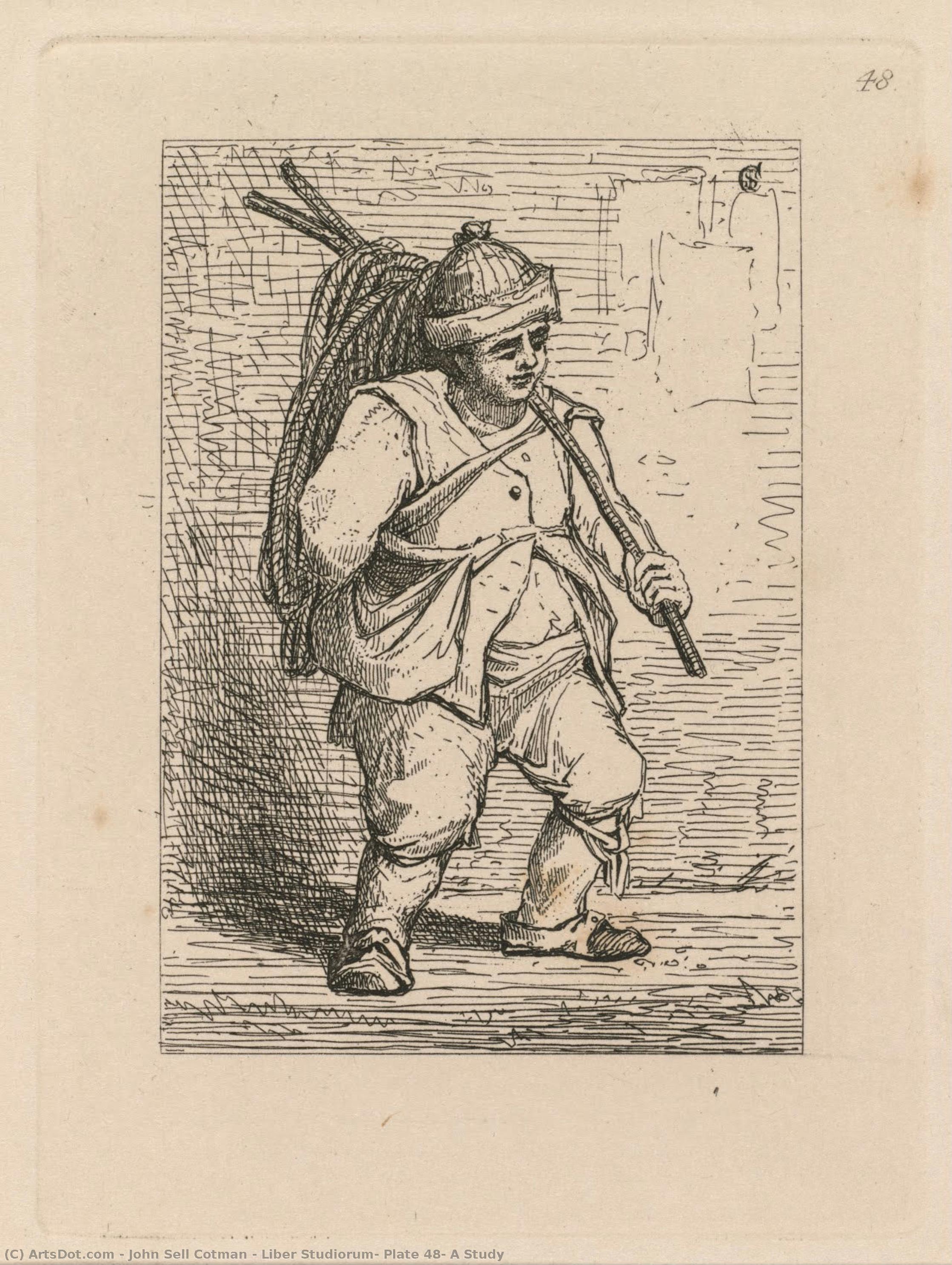
Liber Studiorum: Plate 48, A Study
 Etching
- Romanticism
 1838
1838 49.0 x 32.0 cm
 Muzeum Sztuki w Cleveland
 Rozwiń treść
Kup wysokiej rozdzielczości, ulepszony obraz cyfrowy o znacznie wyższej jakości niż podgląd online.
Każdy plik jest starannie przygotowywany przez naszych specjalistów przy użyciu zaawansowanych narzędzi oraz profesjonalnej, ręcznej retuszy. Dbamy o to, aby każdy obraz cechował się wyjątkową ostrością, precyzyjnym odwzorowaniem kolorów i subtelnymi detalami.
Ostateczny plik dostarczany jest drogą mailową w ciągu 72 godzin, zoptymalizowany do natychmiastowego wykorzystania w profesjonalnych zastosowaniach redakcyjnych i poligraficznych. To ta sama jakość, której ufają czołowe studia projektowe, wydawnictwa oraz galerie sztuki.
Obraz cyfrowy
Pobierz plik o wysokiej rozdzielczości do osobistego wyświetlania, druku oraz projektów kreatywnych. ( Zamów wydruk Przełącz na obraz ręcznie malowany)
W każdym zamówieniu na obraz cyfrowy znajduje się
Profesjonalna dostawa cyfrowa z gwarancją
Wybierając OriginalUniqueArt.com, nie otrzymujesz jedynie obrazu – otrzymujesz profesjonalnie udoskonalone cyfrowe dzieło sztuki, stworzone z najwyższą precyzją i objęte gwarancją satysfakcji. Oto wszystko, co automatycznie dołączane jest do Twojego zamówienia:

Błyskawiczna wysyłka e-mailowa
Plik z obrazem cyfrowym w wysokiej rozdzielczości zostanie przesłany na Twój adres e-mail w ciągu 72 godzin od złożenia zamówienia – gotowy do natychmiastowego użycia.

Plik cyfrowy wzbogacony przez AI
Twoja grafika została profesjonalnie zoptymalizowana przy użyciu zaawansowanych narzędzi AI oraz ręcznej edycji, co zapewnia maksymalną szczegółowość, klarowność i wierność kolorów.

Dożywotnia darmowa ponowna dostawa
Przypadkowo usunąłeś lub zgubiłeś swój plik? Bez obaw – prześlemy go Tobie ponownie w dowolnym momencie, bez żadnych opłat.

Bez opłat importowych – zawsze
Ciesz się swoją sztuką natychmiast, bez żadnych opłat celnych, należności ani kosztów dostawy – pliki cyfrowe są zawsze wolne od podatku.

Gwarancja wierności kolorów
Dzięki zastosowaniu profesjonalnych narzędzi i procesów zarządzania barwą zapewniamy, że Twoje cyfrowe zdjęcie odzwierciedla oryginalne kolory tak wiernie, jak to tylko możliwe.

60-dniowa gwarancja satysfakcji
Jeśli nie będziesz zadowolony ze swojego cyfrowego obrazu, dokonamy jego poprawki lub zwrócimy 100% kosztów w ciągu 60 dni – bez żadnych pytań.

100% Gwarancja zwrotu pieniędzy
Nie jesteś zadowolony? Otrzymaj pełny zwrot kosztów w ciągu 60 dni od otrzymania pliku cyfrowego – bez zbędnych pytań.

Rabaty przy zamówieniach hurtowych
Kup 3 obrazy, oszczędź 10% - Kup 5, oszczędź 15% - Kup 10+, oszczędź 20%. Idealne do projektów kreatywnych, galerii i agencji.
Opis kolekcjonerski
A Study in Weariness: John Sell Cotman's "Liber Studiorum" Plate 48
John Sell Cotman’s “Liber Studiorum” series, a remarkable collection of etchings produced between 1835 and 1849, offers a poignant glimpse into the lives and landscapes of early Victorian England. Plate 48, titled "A Study," is not merely a depiction of a man burdened with a heavy load; it’s a carefully constructed meditation on labor, resilience, and perhaps even the quiet despair inherent in everyday existence. Executed in stark black and white, the image possesses an immediate power, drawing the viewer into its somber narrative.
- Subject Matter: The central figure – a man with a long beard and wearing a hat – embodies the archetype of the working man. His posture suggests exhaustion, his gait is slow and deliberate, and the immense weight he carries speaks volumes about the demands placed upon him.
- Technique: Cotman’s mastery of etching is immediately apparent. The delicate lines create a remarkable sense of texture – the rough fabric of the man's clothing, the weathered surface of the street, and the subtle contours of his face. The use of cross-hatching builds depth and volume, adding to the overall dramatic effect.
- Historical Context: Created in 1838, this plate reflects a period of significant social change in Britain. The Industrial Revolution was transforming the nation’s landscape and its people, leading to increased urbanization and often grueling working conditions. Cotman's work serves as a subtle commentary on these realities.
The Romantic Spirit and Urban Observation
Cotman was a key figure in the British Romantic movement, prioritizing emotional response and subjective experience over strict academic realism. “A Study” exemplifies this approach. Rather than presenting a heroic or idealized image of labor, Cotman chooses to focus on a single, anonymous individual, inviting viewers to contemplate his plight. The scene is not grand or theatrical; it’s intensely intimate, capturing a fleeting moment of quiet suffering.
His connection to Norwich, his birthplace and lifelong home, profoundly shaped his artistic vision. The city's burgeoning industrial activity and the lives of its working-class population undoubtedly influenced his subject matter. He was particularly adept at portraying scenes of urban life with a keen eye for detail and an understanding of human psychology.
Symbolism and Emotional Resonance
The symbolism within “A Study” is deliberately understated, yet powerfully evocative. The heavy load the man carries can be interpreted as representing not just physical labor but also the burdens of poverty, social inequality, and perhaps even existential weariness. The presence of other figures in the background – carrying their own loads – reinforces this sense of collective struggle.
Cotman’s ability to convey emotion through purely visual means is remarkable. The composition, the figure's posture, and the stark contrast between light and shadow combine to create a deeply affecting image that resonates with viewers long after they have first encountered it.
Dimensions & Reproduction Details
This hand-painted reproduction of John Sell Cotman’s “Liber Studiorum: Plate 48, A Study” is meticulously crafted to faithfully capture the nuances and emotional depth of the original etching. Printed on high-quality archival paper, this artwork offers exceptional detail and color fidelity.
Size: 49 x 32 cm (19.25 x 12.6 inches)
Date: 1838
Artist: John Sell Cotman
Code: ART00004872
Biografia artysty
A Norfolk Son: The Life and Art of John Sell Cotman
John Sell Cotman, a name inextricably linked to the serene beauty and evocative atmosphere of early 19th-century England, emerged from the vibrant artistic community of Norwich to become a pivotal figure in British Romanticism. Born on May 16, 1782, into a family deeply rooted in the prosperous trades of silk merchantry and lace dealing, Cotman’s path wasn't immediately destined for the world of art. Yet, an innate sensitivity to the natural world—a profound connection to light, color, and texture—and a burgeoning talent quickly steered him away from commerce and toward a life dedicated to capturing its essence on canvas and paper. His early education at Norwich Grammar School provided a foundational understanding of classical studies, but it was his relocation to London in 1798 that truly ignited the flame within him, setting him upon a transformative artistic journey.
The Norwich School: A Celebration of Local Landscapes
Cotman’s artistic identity became inextricably linked to the Norwich School, a distinctive movement of painters who distinguished themselves by their unwavering focus on depicting the unique character and charm of the Norfolk countryside. Unlike many of his contemporaries, preoccupied with grand historical narratives or idealized classical forms, the Norwich School artists cultivated a deep appreciation for the subtle nuances of their local landscape—the rolling fields, the meandering rivers, the quaint villages, and the ever-changing light. Cotman quickly rose to prominence within this group, developing a style characterized by masterful watercolor technique, meticulous attention to detail, and a uniquely Romantic sensibility. He possessed an exceptional ability to translate fleeting impressions into enduring works of art, capturing the atmosphere and mood of a scene with remarkable sensitivity. His paintings weren’t merely representations of landscapes; they were imbued with emotion—a sense of tranquility, melancholy, or quiet contemplation.
Technique and Style: Watercolor Mastery
Cotman's artistic style was defined by his exceptional command of watercolor, a medium he elevated to new heights. He wasn’t simply applying color to paper; he was sculpting with washes—building up layers of translucent pigment to create atmospheric depth and luminous effects. His technique involved a delicate balance between controlled precision and spontaneous expression, allowing for both meticulous detail and a sense of fluidity and movement. He frequently employed dry brushstrokes to suggest texture and form, while utilizing broad washes of color to evoke the vastness of the sky or the shimmering surface of water. His etchings, often preparatory studies for his paintings, further demonstrated his versatility and technical skill, showcasing his ability to capture subtle tonal variations and intricate details with remarkable precision. He was a master of light and shadow, skillfully manipulating color to create a sense of depth and atmosphere that drew viewers into the heart of his landscapes.
Key Works and Influences
Among Cotman’s most celebrated works are “Jesus Chapel, Norwich Cathedral with the tomb of Sir Thomas Windham,” a quintessential example of the Norwich School's style—a meticulously rendered depiction of a local landmark imbued with a sense of quiet reverence. “View From Yarmouth Bridge, Norfolk, Looking Towards Breydon, Just After Sunset” is another iconic image, capturing the beauty of the coastal landscape at twilight. His work was influenced by the Romantic movement’s emphasis on emotion and imagination, as well as by his encounters with other artists in London, particularly J.M.W. Turner and Thomas Girtin. These experiences broadened his artistic horizons and helped him to develop a more expressive and dynamic style. He also drew inspiration from the works of earlier landscape painters, such as Constable and Gainsborough, adapting their techniques to suit his own unique vision.
Legacy and Enduring Significance
John Sell Cotman’s influence extended far beyond his prolific output. He played a crucial role in shaping the development of British art, particularly within the context of the Norwich School movement. His emphasis on direct observation, atmospheric effects, and emotional resonance resonated with subsequent generations of artists. Furthermore, his dedication to teaching ensured that his artistic principles were passed down to a new cohort of painters. Both of his sons, Miles Edmund Cotman and John Joseph Cotman, followed in their father’s footsteps, contributing to the family's enduring legacy within the art world. Today, Cotman’s works are held in prestigious collections worldwide—the Tate Gallery, the British Museum, the Victoria and Albert Museum, and the Yale Center for British Art—and continue to captivate viewers with their beauty, sensitivity, and profound connection to the natural world. He remains a celebrated figure, not only as a master of watercolor and etching but also as a key representative of the Romantic spirit in English art. His dedication to capturing the essence of place and emotion ensures his enduring relevance for generations to come.

Jan Siel Cotman
1782 - 1842 , Wielka Brytania
Krótka nota
- Artistic Movement Or Style: Szkoła Norwich
- Artists Or Movements Influenced By This Artist: ['Norwich School']
- Artists Who Influenced This Artist:
- Turner
- Girtin
- Date Of Birth: 16 maja 1782
- Date Of Death: 24 lipca 1842
- Full Name: John Sell Cotman
- Nationality: Brytyjczyk
- Notable Artworks:
- Kościół Jezus, Katedra w Norwich
- Widok z mostu w Yarmouth
- Place Of Birth: Norwich, Anglia

