() ·

A painting made for you, by hand

Untitled (D2X2SL)

Ręcznie malowana reprodukcja olejowa

Ręcznie malowany obraz olejny na płótnie, wykonany na zamówienie przez naszych artystów w wybranym przez Ciebie wymiarze i oprawie. ( Przełącz na wydania drukowane Przejdź do wersji cyfrowej)

Opis obiektu

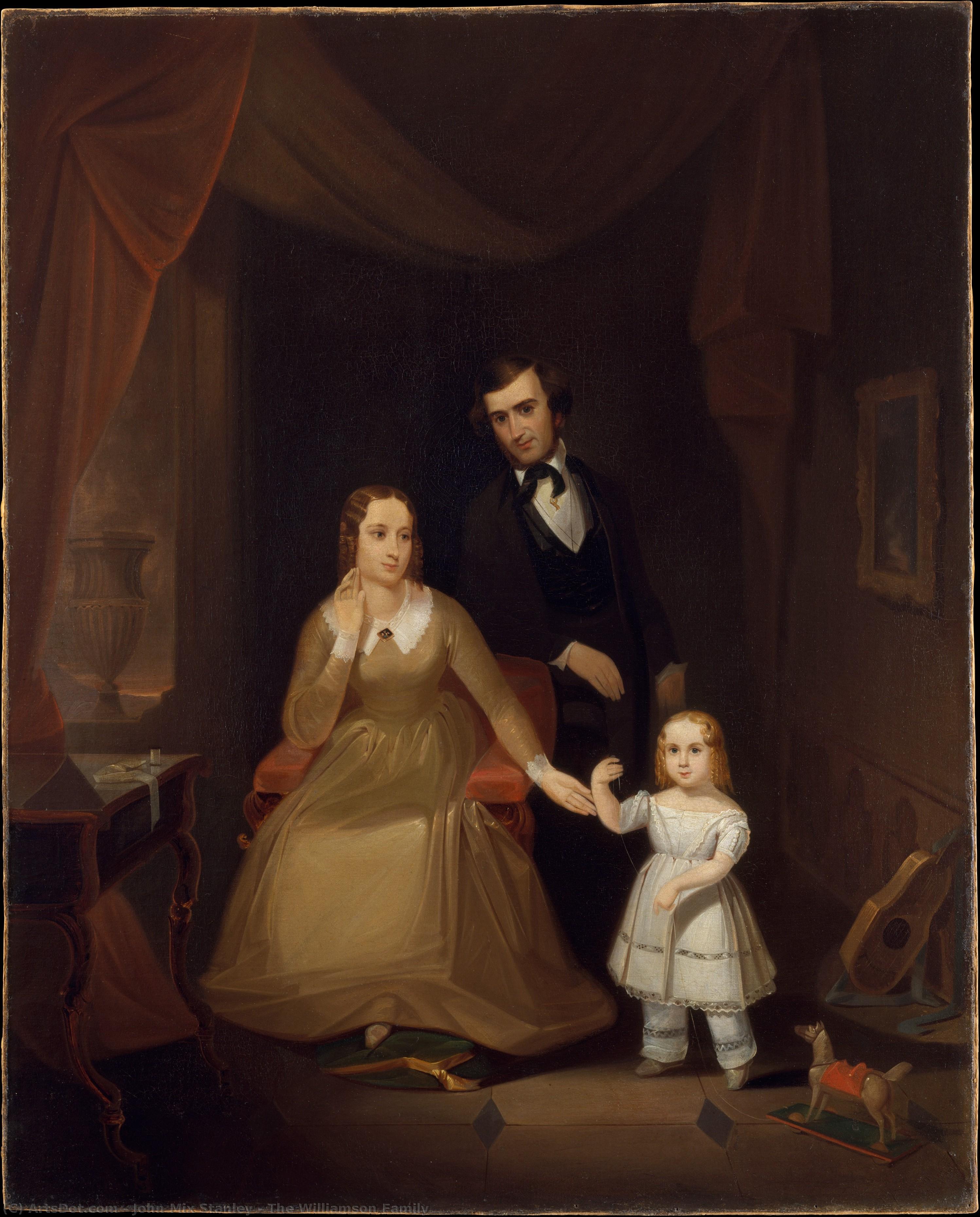
Discover John Mix Stanley’s "Untitled (D2X2SL)", a captivating portrait of the Williamson family from 1841, showcasing formal attire and domestic life amidst Western landscapes. A rare glimpse into 19th-century American society.

Biografia artysty

John Mix Stanley (1814-1872) – amerykański malarz pejzażysta i portrecista, znany z obrazów przedstawiających życie indiańskie na Zachodzie Ameryki. Jego prace to cenne dokumenty historyczne i świadectwo epoki kolonialnej.

from ·

Chapter 1

How large should it be?

Slide to change the size; the picture on the left shows the frame at its real width. The proportions of the original are kept.

Standardowy format
personalizowane
CM
INCH

Wybierz spośród naszych standardowych rozmiarów, które zachowują oryginalne proporcje dzieła sztuki.

szerokość
wysokość

Wpisz wymaganą szerokość i wysokość, aby obraz pasował do Twojej ramy lub ściany. Ponieważ jest to dzieło malowane ręcznie, w przypadku rozmiaru o innych proporcjach artysta może domalować nieco więcej wokół obrazu lub przyciąć jego fragmenty — wybór należy do Ciebie. Przed rozpoczęciem pracy prześlemy Ci cyfrową wizualizację do zatwierdzenia. Obraz widoczny na tej stronie nie przedstawia rzeczywistego efektu — jedynie wizualizacja oddaje realny rezultat.

Chapter 2

How should it arrive?

Choose the edges of the stretched canvas

Choose your frame

Corner sample of the WhiteWrap canvas edge finish, stretched on lite drewno bars
White zł1
Corner sample of the BlurSideWrap canvas edge finish, stretched on lite drewno bars
Blurside zł1
Corner sample of the ExtendedWrap canvas edge finish, stretched on lite drewno bars
Extended zł1
Corner sample of the P118B picture frame: polistyren formowany, 5 cm wide and 3 cm thick
P118B zł10
Corner sample of the P118H picture frame: polistyren formowany, 5 cm wide and 3 cm thick
P118H zł10
Corner sample of the P118W picture frame: polistyren formowany, 5 cm wide and 3 cm thick
P118W zł10
Corner sample of the P438Z picture frame: polistyren formowany, 5.5 cm wide and 3.5 cm thick
P438Z zł10
Corner sample of the P508JH picture frame: polistyren formowany, 7 cm wide and 3.5 cm thick
P508JH zł12
Corner sample of the P508YH picture frame: polistyren formowany, 7 cm wide and 3.5 cm thick
P508YH zł12
Corner sample of the P805H picture frame: polistyren formowany, 5 cm wide and 3.5 cm thick
P805H zł10
Corner sample of the P805Z picture frame: polistyren formowany, 5 cm wide and 3.5 cm thick
P805Z zł10
Corner sample of the P919BZ picture frame: polistyren formowany, 7 cm wide and 3.5 cm thick
P919BZ zł10
Corner sample of the P919G picture frame: polistyren formowany, 7 cm wide and 3.5 cm thick
P919G zł10
Corner sample of the P919XJ picture frame: polistyren formowany, 7 cm wide and 3.5 cm thick
P919XJ zł10
Corner sample of the P959ZH picture frame: polistyren formowany, 5 cm wide and 3 cm thick
P959ZH zł10
Corner sample of the P968JZ picture frame: polistyren formowany, 6 cm wide and 4 cm thick
P968JZ zł12
Corner sample of the W106C picture frame: lite drewno, 5 cm wide and 3 cm thick
W106C zł8
Corner sample of the W218G picture frame: lite drewno, 5 cm wide and 3 cm thick
W218G zł10
Corner sample of the W218JH picture frame: lite drewno, 5 cm wide and 3 cm thick
W218JH zł8
Corner sample of the W218Y picture frame: lite drewno, 5 cm wide and 3 cm thick
W218Y zł10
Corner sample of the W307PJ picture frame: lite drewno, 6 cm wide and 3 cm thick
W307PJ zł10
Corner sample of the W316G picture frame: lite drewno, 6 cm wide and 3 cm thick
W316G zł10
Corner sample of the W316PJ picture frame: lite drewno, 6 cm wide and 3 cm thick
W316PJ zł8
Corner sample of the W316Y picture frame: lite drewno, 6 cm wide and 3 cm thick
W316Y zł10
Corner sample of the W398PJ picture frame: lite drewno, 5 cm wide and 3 cm thick
W398PJ zł8
Corner sample of the W4111J picture frame: lite drewno, 6.5 cm wide and 3.5 cm thick
W4111J zł10
Corner sample of the W500HY picture frame: lite drewno, 7 cm wide and 5 cm thick
W500HY zł15
Corner sample of the W500JH picture frame: lite drewno, 7 cm wide and 5 cm thick
W500JH zł15
Corner sample of the W692G picture frame: lite drewno, 8 cm wide and 4 cm thick
W692G zł12
Corner sample of the W849H picture frame: lite drewno, 5 cm wide and 3 cm thick
W849H zł8
Corner sample of the W940BG picture frame: lite drewno, 7.5 cm wide and 4.5 cm thick
W940BG zł15
Corner sample of the W953PJ picture frame: lite drewno, 6 cm wide and 3.5 cm thick
W953PJ zł8
Corner sample of the H24-GOLD picture frame: rzeźbione drewno pokryte gipsem, 10 cm wide and 6 cm thick
H24-GOLD zł30
Corner sample of the H24-SILVER picture frame: rzeźbione drewno pokryte gipsem, 10 cm wide and 6 cm thick
H24-SILVER zł30
Corner sample of the H36-GOLD picture frame: rzeźbione drewno pokryte gipsem, 15 cm wide and 6.5 cm thick
H36-GOLD zł45
Corner sample of the H36-SILVER picture frame: rzeźbione drewno pokryte gipsem, 15 cm wide and 6.5 cm thick
H36-SILVER zł45

Moulding: . Overall size with the frame: .

Chapter 3

Who paints it, and should anything change?

Examples of what can be changed: Replace face with customer photo; Add pet (e.g., replace cat with dog); Include hidden message in background; Change background landscape or elements.
After order, OriginalUniqueArt.com team will email client for instructions and provide a mockup preview

Dostawa na całym świecie () w ciągu 3–4 tygodni zamiast standardowych 5 tygodni. (2 Listopad). Bez kompromisów w kwestii jakości.

Chapter 4

The finishing touches

A nameplate, as in a museum?

Szczegóły grawerowanej brązowej tabliczki

This elegant plaque features the artist's name and the title of the artwork, finely engraved for a timeless presentation.

It is made from bronze with a refined, elegant finish. The text is precisely laser-engraved for a sharp and permanent result. Measuring 9x2 cm, the plaque is compact yet easy to read. It's built to be durable and scratch-resistant, offering a professional, museum-quality look. Mounting is simple thanks to the included adhesive backing.

Szczegóły przezroczystej tabliczki akrylowej

The plaque includes essential engraved details such as the artist's name, the title of the artwork, the date it was created, the type of media used-like oil on canvas or watercolor-a brief description of the piece, and a QR code that links to the complete artwork information.

It is crafted from clear acrylic, offering a sleek, modern appearance. The text is UV-engraved in black to ensure strong visual contrast. With a size of 10x15 cm, it ensures optimal readability. It comes equipped with two metal hooks for secure wall mounting. The plaque is designed to be weather-resistant, making it suitable for various environments, and it includes interactive features that work seamlessly with smartphone scanning.

Szczegóły czarnej tabliczki akrylowej

This elegant plaque includes engraved information such as the artist's name, the title of the artwork, the date it was created, the type of media used (like oil on canvas or watercolor), a short description of the artwork, and a QR code for quick access to more information.

The plaque itself is made from refined black acrylic with a premium finish. The text is laser-engraved in white for high contrast and readability. Its size is 10x15 cm, designed to be easy to read. It comes with two metal hooks for professional mounting. The design is sleek and fits any interior style. It is also weather-resistant and durable, with built-in digital integration for mobile compatibility.

A protective varnish?

When do you need it?

Chapter 5

Your painting, as you ordered it

Untitled (D2X2SL)

Technika reprodukcji

Wymiary reprodukcji

-

Wybitny mistrz artystyczny

Większa szczegółowość, finezja i dodatkowy czas na realizację

-

Opcje oprawy reprodukcji

-

-

W przypadku dzieł sztuki lub reprodukcji, których którykolwiek z boków przekracza 105 cm (około 41 cali), rama zostanie wysłana w formie zestawu do samodzielnego montażu. Metoda ta zapewnia bezpieczną dostawę i zapobiega uszkodzeniom podczas transportu.

Wymagany profesjonalny montaż – nie jest to produkt typu DIY.
Zestaw musi zostać złożony, a płótno naciągnięte przez doświadczonego profesjonalnego ramiarza, przy użyciu kleju do drewna (brak w zestawie), kleszczy do naciągania płótna oraz ścisków, które utrzymają krosna w równej pozycji podczas schnięcia kleju. Nieprawidłowy montaż lub nierównomierne napięcie płótna może trwale uszkodzić dzieło sztuki i nie podlega naszej gwarancji.

  • W zestawie znajdują się wszystkie listwy z litego drewna, precyzyjnie docięte do wymiarów.

  • Montaż odbywa się przy użyciu dołączonych wkrętów oraz kleju do drewna do łączenia narożników, którego zestaw nie zawiera i który musi zostać dostarczony przez ramiarza.

  • Wymagane są profesjonalne narzędzia, których nie ma w zestawie: kleszcze do naciągania płótna (napinacz) oraz zaciski, które pozwolą utrzymać listwy w równej pozycji podczas schnięcia kleju.

Ważne:
Do połączenia narożników niezbędny jest klej do drewna, listwy należy unieruchomić za pomocą ścisków do momentu całkowitego wyschnięcia kleju, a naciągnięcie płótna na złożoną ramę wymaga użycia kleszczy do naciągania płótna. Żaden z tych elementów nie jest dołączony do zestawu. Przed zamówieniem tego rozmiaru zalecamy konsultację z doświadczonym ramiarzem.

Etykieta obiektu

-

-

Lakier ochronny

Lakier z połyskiem (pogłębia kolory, chroni przed światłem i wilgocią)

-

Personalizacja dzieła

Przykłady możliwości personalizacji: zastąp twarz zdjęciem klienta; dodaj zwierzę domowe (np. zamień kota na psa); umieść ukrytą wiadomość w tle; zmień krajobraz lub elementy tła.

-

Ekspresowa

Dostawa na cały świat () w ciągu 3–4 tygodni zamiast standardowych 5 tygodni. (2 Listopad). Bez kompromisów w kwestii jakości.

-

Przesyłka ekspresowa

Dostawa na cały świat () w ciągu 5 tygodni. (9 Listopad).

W cenie

Cena całkowita

zł 1168

Suma całkowita zł 1168

Opcja ze szkłem jest dostępna wyłącznie w rozmiarach poniżej 110 cm

Included with every order

  • Bezpłatna ekspresowa wysyłka na cały świat
  • Wysokiej jakości płótno lniane
  • Pełne ubezpieczenie przesyłki
  • Gwarancja zwrotu należności celnych i podatków importowych
  • Gwarancja wiernego odwzorowania kolorów
  • 100-dniowa polityka zwrotów (tylko w przypadku wad)
  • Gwarancja 100% zwrotu pieniędzy
  • Zniżka przy zakupie wielu sztuk

A Window into Victorian Domesticity: John Mix Stanley’s “Untitled (D2X2SL)”

John Mix Stanley's "Untitled (D2X2SL)" offers a remarkably intimate glimpse into the life of an American family during the mid-19th century. Painted in 1841, this portrait transcends mere documentation; it’s a carefully constructed tableau of Victorian domesticity, imbued with a quiet dignity and understated elegance. The scene unfolds within a modestly furnished room – a dining table bearing a vase of flowers, two chairs strategically placed, and the subtle suggestion of a life lived comfortably within these walls. The composition is remarkably balanced, drawing the eye to the central figures: a man, a woman, and their young child, united in a gesture of tender affection—their hands clasped together, a visual anchor for the entire scene.

Stanley’s skill lies not just in his ability to capture likenesses, but in his nuanced understanding of light and shadow. He employs a soft, diffused lighting that washes over the figures, creating an atmosphere of warmth and intimacy. Notice how he subtly models the fabric of their clothing – the folds of the man's tie, the gentle curve of the woman’s dress—revealing textures with remarkable detail. The muted color palette—earth tones punctuated by touches of crimson and gold—contributes to the painting’s overall sense of quiet refinement. This restrained approach was characteristic of Stanley’s style, prioritizing observation and emotional resonance over flamboyant display.

The Williamson Family: A Portrait of Early American Life

The subject of the portrait is the Williamson family – James Abeel Williamson, his wife, and their son. Research through The Metropolitan Museum of Art reveals that this particular painting was commissioned to document a prominent New York family during a period of significant westward expansion. Williamson’s lineage extends into Wyoming, New Jersey, and beyond, highlighting the interconnectedness of American society at the time. Stanley's decision to portray them in formal attire speaks volumes about their social standing and the importance placed on appearances within Victorian culture. The inclusion of the dog further reinforces this sense of domesticity – a loyal companion integrated seamlessly into family life.

Further research, accessed through the Smithsonian Institution Archives, reveals that Stanley’s collection was tragically lost in the 1865 fire at the Smithsonian. This loss is a poignant reminder of the fragility of artistic legacy and underscores the importance of reproductions like this one. The archival materials detail Stanley's meticulous process – his extensive travels throughout the American West, his dedication to accurately depicting Native American life alongside portraits of settlers, and his ambition to create a comprehensive visual record of the era.

Symbolism and Context: A Window into Victorian Values

Beyond its straightforward depiction of a family gathering, “Untitled (D2X2SL)” is rich in symbolic meaning. The formal attire represents respectability and adherence to social norms—a key value within 19th-century America. The act of holding hands signifies familial love and unity, while the child’s presence embodies hope for the future. The dining table, with its vase of flowers, suggests prosperity and a celebration of domestic harmony. Stanley's inclusion of Native Americans in the background subtly acknowledges the complex relationship between settlers and indigenous populations – a theme prevalent throughout his work.

Considering the context of John Mix Stanley’s life as a pioneer documenting the American West, this painting is more than just a portrait; it’s a testament to his commitment to capturing the realities of frontier life. His meticulous observations and artistic skill offer a valuable window into the social customs, values, and aspirations of a rapidly changing nation. The reproduction offered by OriginalUniqueArt.com allows you to experience the beauty and emotional depth of this remarkable work firsthand.

Bringing “Untitled (D2X2SL)” Home: A Reproduction for Your Space

OriginalUniqueArt.com’s hand-painted reproductions faithfully recreate Stanley's original techniques, capturing the subtle nuances of light, color, and texture. This ensures that you receive a piece of art that not only honors the legacy of John Mix Stanley but also seamlessly integrates into your own home décor. The size (69 x 56 cm) is ideal for adding a touch of Victorian elegance to living rooms, studies, or hallways.

Whether you are an art enthusiast, a collector seeking authentic reproductions, or simply someone looking to infuse their space with timeless beauty, “Untitled (D2X2SL)” offers a captivating glimpse into the past—a testament to family, tradition, and the enduring power of American artistry.

Pytania i odpowiedzi

Czy mogę zobaczyć obraz „Untitled (D2X2SL)” – John Mix Stanley w widoku rentgenowskim?

"Untitled (D2X2SL)" można badać warstwa po warstwie na stronie Analiza rentgenowska, która oferuje interaktywny podgląd inspirowany stołem świetlnym konserwatora, prezentujący jedenaście optycznych odczytów obrazu.

Czy kolory w "Untitled (D2X2SL)" są intensywne czy stonowane?

Intensywność barw w dziele „Untitled (D2X2SL)” wynosi Monochromatic. Intensywność określa, jak nasycone wydają się kolory.

Co łączy "Untitled (D2X2SL)" z resztą twórczości John Mix Stanley?

"Untitled (D2X2SL)" wpisuje się w nurt American Realism w twórczości John Mix Stanley, której charakterystyczne motywy obejmują westward expansion, native american life, family portraiture, documentary art, exploration.

More about this painting

Podgląd w skali 1:1 Podgląd AR Przełącz na wydania drukowane Przejdź do wersji cyfrowej Wyślij jako kartkę
Szczegóły dzieła Przewodnik Dodaj do ulubionych Pobierz obraz Podobne obiekty RTG Pokaz slajdów Q&A Statystyki

In numbers

  • 1841the year it was painted
  • 29frames to choose from
  • standard sizes, in its own proportions
  • 5weeks to paint and deliver it
John Mix Stanley

John Mix Stanley

1814 - 1872, Stany Zjednoczone

Quick facts about John Mix Stanley

  • Artistic Movement Or Style: Realizm romantyczny
  • Artists Or Movements Influenced By This Artist: ['Catlin']
  • Artists Who Influenced This Artist: ['George Catlin']
  • Date Of Birth: 17 stycznia 1814
  • Date Of Death: 10 kwietnia 1872
  • Full Name: John Mix Stanley
  • Nationality: Amerykański
  • Notable Artworks:
    • Ko rak koo kiss
    • Passing an Obstruction
    • Wnętrze wigwam
  • Place Of Birth: Canandaigua, USA

Biografia artysty

A Pioneer of the American West: The Life and Art of John Mix Stanley

John Mix Stanley, born in Canandaigua, New York, on January 17, 1814, wasn’t simply a painter; he was a chronicler of a rapidly changing America – a visual witness to the westward expansion and its profound impact on Native American cultures. His life story is one woven with threads of resilience, self-reliance, and an unwavering dedication to capturing the spirit of the frontier, a journey marked by both remarkable achievements and heartbreaking losses. Orphaned at the tender age of twelve, Stanley’s early years instilled within him a pragmatic resourcefulness that would shape his entire career – a necessity born from hardship and a determination to forge his own path. He began his artistic apprenticeship as a coach maker by fourteen, a practical trade that honed his observational skills and fostered an appreciation for detail – qualities he would later translate into his paintings. It was through diligent self-teaching, fueled by a nascent talent, that he ultimately transitioned to the world of art, eventually finding his way to Detroit in 1832 where he began his artistic journey as an itinerant sign and portrait painter. This initial period wasn’t merely about mastering technical skills; it served as a crucial training ground – a time for absorbing the nuances of light, form, and human expression, laying the foundation for his distinctive style.

From Frontier Portraits to Panoramic Visions

Stanley's artistic trajectory took a dramatic turn in 1842 when he embarked on an expedition to the American Southwest alongside Sumner Dickerman. This journey wasn’t simply a scenic excursion; it was a deliberate and deeply felt quest to document Native American life, profoundly influenced by the earlier work of George Catlin – though Stanley's approach often possessed a subtly different character. Establishing himself at Fort Gibson in Indian Territory (present-day Oklahoma), he immersed himself completely within tribal cultures, attending significant councils like the one between Cherokee and Texas representatives at Tahlequah. He meticulously recorded these encounters through portraits and scenes of daily life – capturing not just appearances but also the essence of ceremony, tradition, and social structure. His commitment to this documentation continued throughout the Mexican-American War in 1846, where he served as a draftsman for Colonel Stephen Watts Kearney’s expedition to California and the Oregon Territory, producing detailed sketches that vividly portrayed the scale and drama of the military campaign. This experience broadened his artistic perspective and honed his ability to capture dynamic movement and spatial relationships. A subsequent sojourn to Hawaii from 1847 to 1848 saw him immortalizing King Kamehameha III and his family in striking portraits, reflecting a fascination with royalty and a keen eye for capturing regal bearing and dignified composure. Stanley wasn’t content with static representation; he sought to convey the dynamism of a culture, the weight of history, and the individual character of his subjects – often employing dramatic lighting and carefully considered compositions. He organized large exhibitions of his work throughout the 1850s, culminating in a major display at the Smithsonian Institution in 1852 featuring nearly 200 works representing 43 distinct tribes. Though met with considerable acclaim, Stanley’s attempts to secure government funding for his extensive collection proved unsuccessful – a frustrating setback that foreshadowed later challenges and ultimately contributed to the loss of much of his work.

Style, Influences, and Historical Significance

Stanley's artistic style was rooted in academic principles, drawing heavily from the traditions of European landscape painting. However, he infused this foundation with the immediacy of on-site observation – a characteristic that distinguished his work from purely formal approaches. He meticulously studied the techniques of artists like George Catlin, whose depictions of Native American life had garnered considerable attention, but often lacked the same level of empathetic engagement with his subjects. Stanley’s portraits were characterized by a remarkable detail and realism, capturing not just physical likenesses but also subtle expressions and gestures that revealed personality and emotion. His landscapes, too, demonstrated a keen understanding of light, color, and composition – reflecting the rugged beauty of the American West. Despite this technical proficiency, some critics noted a certain detachment in Stanley’s portrayals, viewing them more as objective records than deeply felt interpretations. Nevertheless, his work remains invaluable as historical documentation, providing unique insights into 19th-century encounters between European Americans and Native American tribes – offering glimpses into the clothing, customs, and social structures of diverse cultures at a pivotal moment in history. The tragic loss of much of his artwork in the 1865 Smithsonian fire—along with subsequent losses in other fires—significantly impacted his legacy, obscuring his contributions for decades.

A Legacy Rediscovered

Returning to Detroit in 1863, Stanley continued to paint until his death on April 10, 1872. Though he faced persistent financial hardship and the devastating loss of much of his life’s work – a profound blow that threatened to erase his artistic achievements entirely – his legacy endures through the surviving paintings held by museums across the nation. These works serve as poignant reminders of his dedication, skill, and pioneering spirit. Stanley's contribution to understanding 19th-century America is immeasurable; he was more than just an artist; he was a visual chronicler of a vanishing world, capturing the essence of the American West during a period of profound transformation. His paintings are not merely beautiful objects; they are windows into the past, offering invaluable insights into the lives and cultures of those who inhabited this vast and dynamic landscape. John Mix Stanley stands as a testament to the power of observation, resilience, and artistic dedication – a true pioneer of the American West.
  • Pioneering Documentation: Stanley was among the first artists to systematically document Native American cultures through painting.
  • Extensive Travel: His travels across the American Southwest and Hawaii resulted in a vast body of work depicting diverse landscapes and peoples.
  • Historical Record: Surviving paintings provide valuable insights into 19th-century frontier life and Native American cultures.

Najważniejsze informacje

  • Title: Untitled (D2X2SL)
  • Artistic style: Realism, American West art
  • Artist: John Mix Stanley
  • Dimensions: 69 x 56 cm
  • Year: 1841

Quiz o sztuce

Do każdego pytania dotyczy tylko jedna poprawna odpowiedź.

Pytanie 1:
What is the primary subject of John Mix Stanley’s ‘Untitled (D2X2SL)’?
Pytanie 2:
According to the description, what formal attire is worn by the figures in the painting?
Pytanie 3:
What object is prominently displayed on the dining table in the painting?
Pytanie 4:
In what year was ‘Untitled (D2X2SL)’ painted?
Pytanie 5:
John Mix Stanley is best known for his depictions of which group of people?
Odkryj dzieła sztuki uporządkowane według tematów, stylów i cech charakterystycznych.



































