Text size

() ·

A painting made for you, by hand

William Kingdon Clifford

Ręcznie malowana reprodukcja olejowa

Ręcznie malowany obraz olejny na płótnie, wykonany na zamówienie przez naszych artystów w wybranym przez Ciebie wymiarze i oprawie. ( Przełącz na wydania drukowane Przejdź do wersji cyfrowej)

Opis obiektu

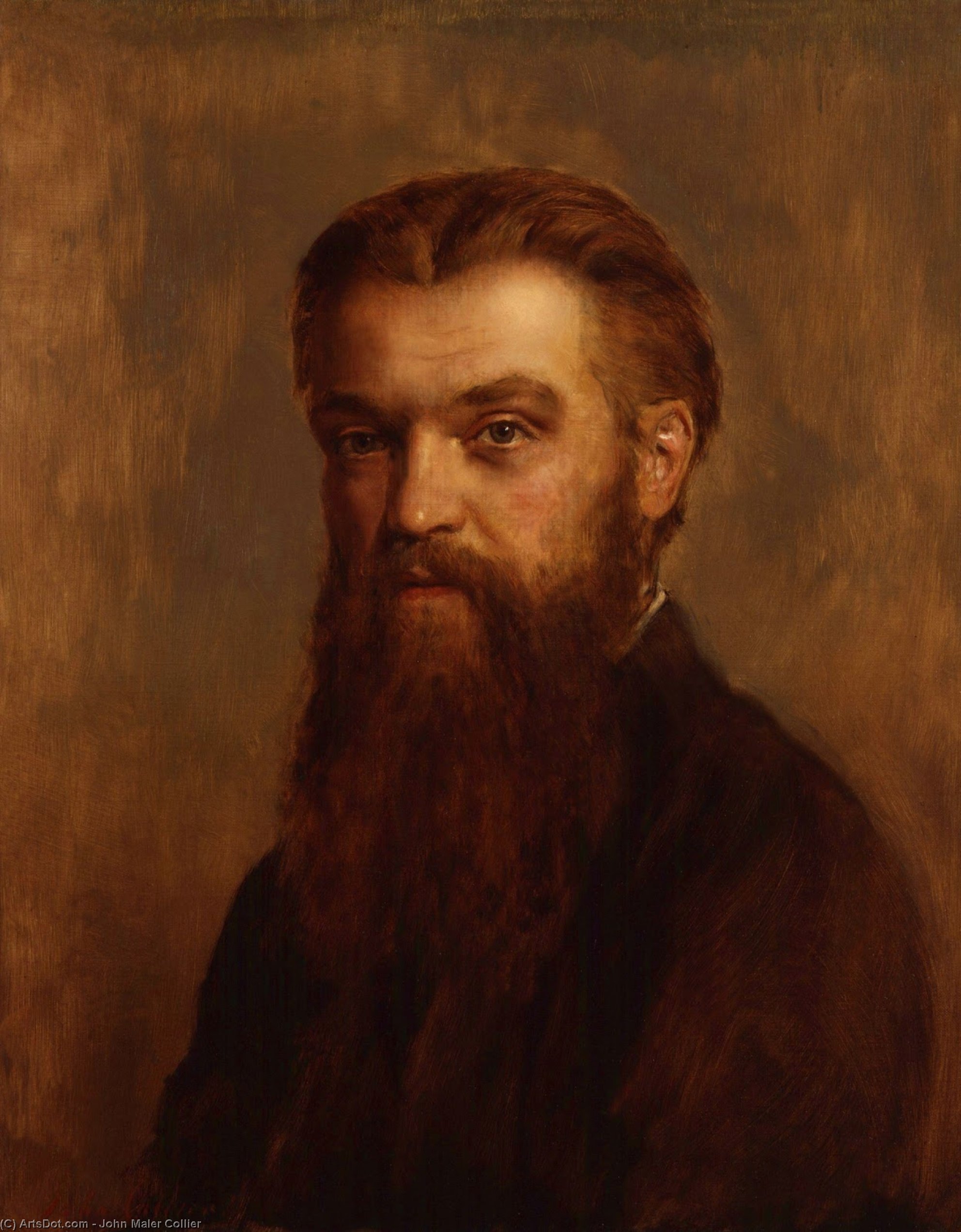
Experience John Maler Collier's stunning 'William Kingdon Clifford' portrait! This Pre-Raphaelite masterpiece captures the mathematician’s intellect with rich detail and vibrant colors. A timeless work of art.

Biografia artysty

John Maler Collier (1850-1934) – wybitny brytyjski malarz portretowy w stylu prerafaelitów, znany z precyzyjnych i barwnych obrazów przedstawiających angielskie życie towarzyskie, artystów i naukowców.

from ·

Chapter 1

How large should it be?

Slide to change the size; the picture on the left shows the frame at its real width. The proportions of the original are kept.

Standardowy format
personalizowane
CM
INCH

Wybierz spośród naszych standardowych rozmiarów, które zachowują oryginalne proporcje dzieła sztuki.

szerokość
wysokość

Wpisz wymaganą szerokość i wysokość, aby obraz pasował do Twojej ramy lub ściany. Ponieważ jest to dzieło malowane ręcznie, w przypadku rozmiaru o innych proporcjach artysta może domalować nieco więcej wokół obrazu lub przyciąć jego fragmenty — wybór należy do Ciebie. Przed rozpoczęciem pracy prześlemy Ci cyfrową wizualizację do zatwierdzenia. Obraz widoczny na tej stronie nie przedstawia rzeczywistego efektu — jedynie wizualizacja oddaje realny rezultat.

Chapter 2

How should it arrive?

Choose the edges of the stretched canvas

Choose your frame

Corner sample of the WhiteWrap canvas edge finish, stretched on lite drewno bars
White zł1
Corner sample of the BlurSideWrap canvas edge finish, stretched on lite drewno bars
Blurside zł1
Corner sample of the ExtendedWrap canvas edge finish, stretched on lite drewno bars
Extended zł1
Corner sample of the P118B picture frame: polistyren formowany, 5 cm wide and 3 cm thick
P118B zł10
Corner sample of the P118H picture frame: polistyren formowany, 5 cm wide and 3 cm thick
P118H zł10
Corner sample of the P118W picture frame: polistyren formowany, 5 cm wide and 3 cm thick
P118W zł10
Corner sample of the P438Z picture frame: polistyren formowany, 5.5 cm wide and 3.5 cm thick
P438Z zł10
Corner sample of the P508JH picture frame: polistyren formowany, 7 cm wide and 3.5 cm thick
P508JH zł12
Corner sample of the P508YH picture frame: polistyren formowany, 7 cm wide and 3.5 cm thick
P508YH zł12
Corner sample of the P805H picture frame: polistyren formowany, 5 cm wide and 3.5 cm thick
P805H zł10
Corner sample of the P805Z picture frame: polistyren formowany, 5 cm wide and 3.5 cm thick
P805Z zł10
Corner sample of the P919BZ picture frame: polistyren formowany, 7 cm wide and 3.5 cm thick
P919BZ zł10
Corner sample of the P919G picture frame: polistyren formowany, 7 cm wide and 3.5 cm thick
P919G zł10
Corner sample of the P919XJ picture frame: polistyren formowany, 7 cm wide and 3.5 cm thick
P919XJ zł10
Corner sample of the P959ZH picture frame: polistyren formowany, 5 cm wide and 3 cm thick
P959ZH zł10
Corner sample of the P968JZ picture frame: polistyren formowany, 6 cm wide and 4 cm thick
P968JZ zł12
Corner sample of the W106C picture frame: lite drewno, 5 cm wide and 3 cm thick
W106C zł8
Corner sample of the W218G picture frame: lite drewno, 5 cm wide and 3 cm thick
W218G zł10
Corner sample of the W218JH picture frame: lite drewno, 5 cm wide and 3 cm thick
W218JH zł8
Corner sample of the W218Y picture frame: lite drewno, 5 cm wide and 3 cm thick
W218Y zł10
Corner sample of the W307PJ picture frame: lite drewno, 6 cm wide and 3 cm thick
W307PJ zł10
Corner sample of the W316G picture frame: lite drewno, 6 cm wide and 3 cm thick
W316G zł10
Corner sample of the W316PJ picture frame: lite drewno, 6 cm wide and 3 cm thick
W316PJ zł8
Corner sample of the W316Y picture frame: lite drewno, 6 cm wide and 3 cm thick
W316Y zł10
Corner sample of the W398PJ picture frame: lite drewno, 5 cm wide and 3 cm thick
W398PJ zł8
Corner sample of the W4111J picture frame: lite drewno, 6.5 cm wide and 3.5 cm thick
W4111J zł10
Corner sample of the W500HY picture frame: lite drewno, 7 cm wide and 5 cm thick
W500HY zł15
Corner sample of the W500JH picture frame: lite drewno, 7 cm wide and 5 cm thick
W500JH zł15
Corner sample of the W692G picture frame: lite drewno, 8 cm wide and 4 cm thick
W692G zł12
Corner sample of the W849H picture frame: lite drewno, 5 cm wide and 3 cm thick
W849H zł8
Corner sample of the W940BG picture frame: lite drewno, 7.5 cm wide and 4.5 cm thick
W940BG zł15
Corner sample of the W953PJ picture frame: lite drewno, 6 cm wide and 3.5 cm thick
W953PJ zł8
Corner sample of the H24-GOLD picture frame: rzeźbione drewno pokryte gipsem, 10 cm wide and 6 cm thick
H24-GOLD zł30
Corner sample of the H24-SILVER picture frame: rzeźbione drewno pokryte gipsem, 10 cm wide and 6 cm thick
H24-SILVER zł30
Corner sample of the H36-GOLD picture frame: rzeźbione drewno pokryte gipsem, 15 cm wide and 6.5 cm thick
H36-GOLD zł45
Corner sample of the H36-SILVER picture frame: rzeźbione drewno pokryte gipsem, 15 cm wide and 6.5 cm thick
H36-SILVER zł45

Moulding: . Overall size with the frame: .

Chapter 3

Who paints it, and should anything change?

Examples of what can be changed: Replace face with customer photo; Add pet (e.g., replace cat with dog); Include hidden message in background; Change background landscape or elements.
After order, OriginalUniqueArt.com team will email client for instructions and provide a mockup preview

Dostawa na całym świecie () w ciągu 3–4 tygodni zamiast standardowych 5 tygodni. (2 Listopad). Bez kompromisów w kwestii jakości.

Chapter 4

The finishing touches

A nameplate, as in a museum?

Szczegóły grawerowanej brązowej tabliczki

This elegant plaque features the artist's name and the title of the artwork, finely engraved for a timeless presentation.

It is made from bronze with a refined, elegant finish. The text is precisely laser-engraved for a sharp and permanent result. Measuring 9x2 cm, the plaque is compact yet easy to read. It's built to be durable and scratch-resistant, offering a professional, museum-quality look. Mounting is simple thanks to the included adhesive backing.

Szczegóły przezroczystej tabliczki akrylowej

The plaque includes essential engraved details such as the artist's name, the title of the artwork, the date it was created, the type of media used-like oil on canvas or watercolor-a brief description of the piece, and a QR code that links to the complete artwork information.

It is crafted from clear acrylic, offering a sleek, modern appearance. The text is UV-engraved in black to ensure strong visual contrast. With a size of 10x15 cm, it ensures optimal readability. It comes equipped with two metal hooks for secure wall mounting. The plaque is designed to be weather-resistant, making it suitable for various environments, and it includes interactive features that work seamlessly with smartphone scanning.

Szczegóły czarnej tabliczki akrylowej

This elegant plaque includes engraved information such as the artist's name, the title of the artwork, the date it was created, the type of media used (like oil on canvas or watercolor), a short description of the artwork, and a QR code for quick access to more information.

The plaque itself is made from refined black acrylic with a premium finish. The text is laser-engraved in white for high contrast and readability. Its size is 10x15 cm, designed to be easy to read. It comes with two metal hooks for professional mounting. The design is sleek and fits any interior style. It is also weather-resistant and durable, with built-in digital integration for mobile compatibility.

A protective varnish?

When do you need it?

Chapter 5

Your painting, as you ordered it

William Kingdon Clifford

Technika reprodukcji

Wymiary reprodukcji

-

Wybitny mistrz artystyczny

Większa szczegółowość, finezja i dodatkowy czas na realizację

-

Opcje oprawy reprodukcji

-

-

W przypadku dzieł sztuki lub reprodukcji, których którykolwiek z boków przekracza 105 cm (około 41 cali), rama zostanie wysłana w formie zestawu do samodzielnego montażu. Metoda ta zapewnia bezpieczną dostawę i zapobiega uszkodzeniom podczas transportu.

Wymagany profesjonalny montaż – nie jest to produkt typu DIY.
Zestaw musi zostać złożony, a płótno naciągnięte przez doświadczonego profesjonalnego ramiarza, przy użyciu kleju do drewna (brak w zestawie), kleszczy do naciągania płótna oraz ścisków, które utrzymają krosna w równej pozycji podczas schnięcia kleju. Nieprawidłowy montaż lub nierównomierne napięcie płótna może trwale uszkodzić dzieło sztuki i nie podlega naszej gwarancji.

  • W zestawie znajdują się wszystkie listwy z litego drewna, precyzyjnie docięte do wymiarów.

  • Montaż odbywa się przy użyciu dołączonych wkrętów oraz kleju do drewna do łączenia narożników, którego zestaw nie zawiera i który musi zostać dostarczony przez ramiarza.

  • Wymagane są profesjonalne narzędzia, których nie ma w zestawie: kleszcze do naciągania płótna (napinacz) oraz zaciski, które pozwolą utrzymać listwy w równej pozycji podczas schnięcia kleju.

Ważne:
Do połączenia narożników niezbędny jest klej do drewna, listwy należy unieruchomić za pomocą ścisków do momentu całkowitego wyschnięcia kleju, a naciągnięcie płótna na złożoną ramę wymaga użycia kleszczy do naciągania płótna. Żaden z tych elementów nie jest dołączony do zestawu. Przed zamówieniem tego rozmiaru zalecamy konsultację z doświadczonym ramiarzem.

Etykieta obiektu

-

-

Lakier ochronny

Lakier z połyskiem (pogłębia kolory, chroni przed światłem i wilgocią)

-

Personalizacja dzieła

Przykłady możliwości personalizacji: zastąp twarz zdjęciem klienta; dodaj zwierzę domowe (np. zamień kota na psa); umieść ukrytą wiadomość w tle; zmień krajobraz lub elementy tła.

-

Ekspresowa

Dostawa na cały świat () w ciągu 3–4 tygodni zamiast standardowych 5 tygodni. (2 Listopad). Bez kompromisów w kwestii jakości.

-

Przesyłka ekspresowa

Dostawa na cały świat () w ciągu 5 tygodni. (9 Listopad).

W cenie

Cena całkowita

zł 1168

Suma całkowita zł 1168

Opcja ze szkłem jest dostępna wyłącznie w rozmiarach poniżej 110 cm

Included with every order

  • Bezpłatna ekspresowa wysyłka na cały świat
  • Wysokiej jakości płótno lniane
  • Pełne ubezpieczenie przesyłki
  • Gwarancja zwrotu należności celnych i podatków importowych
  • Gwarancja wiernego odwzorowania kolorów
  • 100-dniowa polityka zwrotów (tylko w przypadku wad)
  • Gwarancja 100% zwrotu pieniędzy
  • Zniżka przy zakupie wielu sztuk

The Enigmatic Gaze: John Maler Collier’s William Kingdon Clifford

John Maler Collier's 1899 portrait of William Kingdon Clifford isn’t merely a likeness; it’s a carefully constructed embodiment of Victorian intellectualism, rendered with the meticulous detail and evocative storytelling characteristic of the Pre-Raphaelite movement. Collier, a master of capturing the essence of his subjects – as evidenced by his equally compelling portraits of Sir Michael Foster and Sir Ignatius Valentine Chirol – has here created an image that transcends simple representation, offering a glimpse into the mind of a mathematician and philosopher grappling with profound concepts.

The painting immediately draws the eye to Clifford’s face. His expression is one of quiet contemplation, his brow furrowed slightly as if lost in thought, yet his gaze holds a directness that invites engagement. The subtle lines etched around his eyes and mouth speak volumes about a life dedicated to rigorous study and intellectual pursuit. Collier's skill lies not just in capturing physical features but in conveying the inner world of his subject – a feat achieved through masterful use of light and shadow, and a remarkably sensitive understanding of human psychology.

  • Color Palette: The muted tones—a symphony of browns, greys, and ochres—lend an air of gravitas and seriousness to the portrait. Collier eschews bright, vibrant colors in favor of a palette that reflects the subject’s intellectual pursuits, suggesting a focus on abstract thought rather than worldly concerns.
  • Composition: The arrangement is deliberately restrained, emphasizing Clifford's figure within a simple, uncluttered background. This simplicity allows the viewer to concentrate fully on the subject and his expression.
  • Technique: Collier’s brushwork is remarkably smooth and controlled, indicative of his meticulous approach to portraiture. He employs layering techniques to create depth and texture, particularly in Clifford's clothing and facial features.

The Pre-Raphaelite Influence & Victorian Portraiture

Collier’s work is firmly rooted in the Pre-Raphaelite aesthetic – a movement that sought to revive the artistic conventions of 15th-century Italian art, rejecting the perceived artificiality and materialism of academic painting. The Pre-Raphaelites valued truth, beauty, and moral purpose, often drawing inspiration from literature, mythology, and medieval legends. Collier’s portraits are characterized by their rich detail, vibrant colors (though subtly employed here), and a tendency to imbue his subjects with symbolic meaning.

This portrait also reflects the broader trends in Victorian-era portraiture. During this period, portrait painting became increasingly popular among the wealthy and influential, serving as both a means of commemorating individuals and displaying social status. Collier’s work exemplifies this trend, capturing the intellectual prestige associated with figures like Clifford, who were prominent in academic circles.

Symbolism & Intellectual Depth

Beyond its surface appearance, the portrait is laden with symbolic significance. Clifford's spectacles – a ubiquitous symbol of intellect and scholarly pursuit – immediately establish his profession and suggest a life dedicated to reason and observation. The carefully chosen attire—a dark suit and tie—underscores his status as a respected member of Victorian society. The subtle lighting highlights his face, drawing attention to the intensity of his gaze and hinting at the complex thoughts swirling within his mind.

Furthermore, Clifford’s subject matter – mathematics and philosophy – speaks to the intellectual ferment of the late 19th century, a period marked by rapid scientific advancements and philosophical debates. Collier's portrait captures this spirit of inquiry and intellectual exploration, offering a visual representation of a mind grappling with fundamental questions about the nature of reality.

Replicas & A Window into Victorian Thought

Reproductions of Collier’s “William Kingdon Clifford” offer art lovers a unique opportunity to connect with this remarkable portrait and gain insight into the intellectual landscape of the Victorian era. The painting serves as a powerful reminder of the enduring legacy of Pre-Raphaelite art and its ability to capture not only physical likenesses but also the essence of human character and intellect. High-quality reproductions, like those available on OriginalUniqueArt.com, allow us to appreciate Collier’s masterful technique and the profound symbolism embedded within this iconic portrait.

Pytania i odpowiedzi

Do którego pomieszczenia w domu najlepiej pasuje reprodukcja "William Kingdon Clifford"?

Reprodukcja "William Kingdon Clifford" doskonale pasuje do Living Room.

Czy w „William Kingdon Clifford” – Jan Maler Collier zastosowano silne kontrasty czy raczej łagodne harmonie?

Kompozycja kolorystyczna „William Kingdon Clifford” – Jan Maler Collier łączy w sobie Serene kontrast z Unified Palette harmonią.

Czy można pobrać obraz "William Kingdon Clifford"?

Obraz „William Kingdon Clifford” – Jan Maler Collier można pobrać na stronie Pobierz plik cyfrowy dzieła: wysokiej rozdzielczości cyfrowe zdjęcie do pobrania.

More about this painting

Podgląd w skali 1:1 Podgląd AR Przełącz na wydania drukowane Przejdź do wersji cyfrowej Wyślij jako kartkę
Szczegóły dzieła Przewodnik Dodaj do ulubionych Pobierz obraz Podobne obiekty RTG Pokaz slajdów Q&A Statystyki

In numbers

  • 1899the year it was painted
  • 29frames to choose from
  • standard sizes, in its own proportions
  • 5weeks to paint and deliver it
Jan Maler Collier

Jan Maler Collier

1850 - 1934, Wielka Brytania

Quick facts about Jan Maler Collier

  • Artyści-Inspiracje:
    • Jean-Paul Laurens
    • Millais
    • Alma-Tadema
  • Data Urodzenia: 27 stycznia 1850
  • Data Śmierci: 11 kwietnia 1934
  • Miejsce Urodzenia: Londyn, Wielka Brytania
  • Narodowość: Brytyjczyk
  • Pełne Imię: John Maler Collier
  • Styl Artystyczny: Prerafaelizm
  • Znaczące Dzieła:
    • Lovelace Stamer
    • Sir John Lubbock FRS
    • Duke of York (George V)
    • Prince of Wales (Edward VIII)

Biografia artysty

John Maler Collier: Portretysta Epoki i Mistrz Szczegółów

John Maler Collier, malarz i pisarz angielski, urodzony w Londynie w 1850 roku, a zmarły w 1934, pozostawił po sobie bogate dziedzictwo portretów, które stanowią bezcenne świadectwo brytyjskiego społeczeństwa końca XIX i początku XX wieku. Jego twórczość, głęboko zakorzeniona w estetyce prerafaelitów, charakteryzuje się niezwykłą dbałością o szczegóły, bogatą paletę barw oraz tendencją do umieszczania portretów w narracyjnych scenach, nadających im dodatkowy wymiar znaczeniowy. Collier nie był jedynie rejestratorem podobieństw; był opowiadaczem historii, uchwyceniem charakteru i statusu swoich modeli.

Początki i Formacja Artystyczna

Collier pochodził z rodziny o wybitnych osiągnięciach – jego dziadek był kwakerem, handlowcem i członkiem parlamentu, a ojciec sędzią w Radzie Prywilejów. To środowisko zapewniło mu dostęp do edukacji i kręgów społecznych, które miały istotny wpływ na jego przyszłą karierę artystyczną. Po nauce w Eton College Collier podjął studia malarskie w Akademii Monachijskiej w 1875 roku, gdzie doskonalił swoje umiejętności pod kierunkiem uznanych mistrzów. Dodatkowo kształcił się w Paryżu u Jean-Paula Laurensa, co wpłynęło na jego późniejszy styl i technikę. Te doświadczenia akademickie połączone z naturalnym talentem Colliera stworzyły solidne fundamenty dla jego przyszłej kariery portrecisty.

Prerafaelizm i Portret w Wykonaniu Colliera

W twórczości Colliera silnie odczuwalny jest wpływ prerafaelitów, czego dowodem jest niezwykła dbałość o detale, bogactwo kolorystyki oraz skłonność do przedstawiania portretów w kontekście narracyjnym. Nie ograniczał się jedynie do rejestrowania wyglądu; starał się uchwycić charakter i osobowość swoich modeli, często umieszczając ich w scenach z życia codziennego lub nawiązujących do literatury i historii. Jego portrety to nie tylko podobizny, ale również okna na świat przedstawiony przez artystę – pełne symboli i subtelnych niuansów. Collier specjalizował się przede wszystkim w portretach, malując wybitne postacie z różnych dziedzin: sztuki, nauki, polityki i arystokracji. Na jego płótnach można zobaczyć takie osobistości jak Charles Darwin, Thomas Henry Huxley (jego teść), Rudyard Kipling, Sir Lawrence Alma-Tadema oraz dwóch Lordów Kanclerzy.

Portrety Królewskie i Rozpoznanie

Collier zyskał uznanie dzięki prestiżowym zamówieniom od rodziny królewskiej. W 1901 roku namalował portret Księcia Walii (późniejszego Edwarda VIII) jako Mistrza Trinity House, a później portret samego Księcia Walii, który został zaprezentowany na Durbar Hall w Jodhpurze, Rajputana. Te monumentalne dzieła umocniły jego pozycję jednego z czołowych portrecistów epoki i przyniosły mu szerokie uznanie zarówno w kręgach artystycznych, jak i wśród arystokracji. Jego umiejętność oddawania charakteru i godności królewskich postaci przyczyniła się do jego trwałej sławy.

Dziedzictwo i Znaczenie Historyczne

John Maler Collier został uhonorowany Orderem Imperium Brytyjskiego (OBE) w 1920 roku, co świadczy o uznaniu dla jego zasług dla sztuki. Choć jego twórczość spotkała się z różnymi ocenami – niektórzy krytycy porównywali go do Franka Holla ze względu na powagę i surowość portretów, inni doceniali jego "mocne i zaskakujące wyczucie koloru" – pozostawił po sobie bogate dziedzictwo. Collier prowadził skrupulatną dokumentację swoich modeli w formie ręcznie napisanego tomu zwanego “Sitters Book”, który znajduje się obecnie w National Portrait Gallery, stanowiąc bezcenne źródło informacji o jego karierze i portretowanych osobach. Szestnaście jego obrazów znajduje się w zbiorach National Portrait Gallery w Londynie, a dwa w Tate Gallery, co potwierdza trwałą wartość jego twórczości dla historii sztuki.

Najważniejsze informacje

  • Movement: Pre-Raphaelite
  • Subject or theme: Intellectual portrait
  • Location: National Portrait Gallery, London
  • Artistic style: Portraiture, Detail-oriented
  • Notable elements: Thoughtful expression

Quiz o sztuce

Do każdego pytania dotyczy tylko jedna poprawna odpowiedź.

Pytanie 1:
What artistic movement is John Maler Collier’s ‘William Kingdon Clifford’ primarily associated with?
Pytanie 2:
In the painting ‘William Kingdon Clifford’, what is depicted as a key characteristic of the subject’s appearance?
Pytanie 3:
What year was ‘William Kingdon Clifford’ painted?
Pytanie 4:
Which of the following best describes John Maler Collier’s artistic style?
Pytanie 5:
Where is the original painting ‘William Kingdon Clifford’ currently housed?
Odkryj dzieła sztuki uporządkowane według tematów, stylów i cech charakterystycznych.