
 Podgląd w skali 1:1
 Wyślij jako kartkę
 Udostępnij
 Szczegóły dzieła
 Przewodnik

 Pobierz obraz
 Podobne obiekty
 RTG
RTG Pokaz slajdów
 Pytania i odpowiedzi
 Statystyki
The Crucifixion

- 126.0 x 57.0 cm


 Rozwiń treść
Dzieło sztuki prezentowane na tej stronie podlega ochronie prawem autorskim, co oznacza, że nie mamy prawa do tworzenia ani sprzedaży jego identycznej reprodukcji. Ochrona ta jest egzekwowana na mocy umów międzynarodowych, takich jak Konwencja berneńska oraz przez przepisy prawa krajowego, w tym te określone w Prawo autorskie USA – Tytuł 17.
Metoda ta jest w pełni zgodna z przepisami prawa autorskiego, ponieważ nie polega na kopiowaniu ani powielaniu chronionego dzieła. Stanowi ona kreatywną reinterpretację – nowy obraz, który czerpie inspirację z oryginału, ale nie jest z nim tożsamy.
Giclée / Wydruk artystyczny
Wydruki giclée lub płótna o jakości muzealnej, szybka realizacja i szeroki wybór opcji wykończenia. ( Zamów ręcznie malowaną reprodukcję Przejdź do wersji cyfrowej)




P118B zł10

P118H zł10

P118W zł10

P438Z zł10

P508JH zł12

P508YH zł12

P805H zł10

P805Z zł10

P919BZ zł10

P919G zł10

P919XJ zł10

P959ZH zł10

P968JZ zł12

W106C zł8

W218G zł10

W218JH zł8

W218Y zł10

W307PJ zł10

W316G zł10

W316PJ zł8

W316Y zł10

W398PJ zł8

W4111J zł10

W500HY zł15

W500JH zł15

W692G zł12

W849H zł8

W940BG zł15

W953PJ zł8




Wybierz spośród naszych standardowych rozmiarów, które zachowują oryginalne proporcje dzieła sztuki.

Wpisz wymaganą szerokość i wysokość, aby dopasować grafikę do ramy lub ściany. Wydruk można jedynie przyciąć, nigdy nie powiększając go poza oryginalny obraz, dlatego format o innych proporcjach spowoduje utratę części kompozycji. Przed rozpoczęciem druku prześlemy Ci cyfrowy podgląd do zatwierdzenia. Obraz wyświetlany na tej stronie nie pokazuje rzeczywistego przycięcia — jedynie podgląd oddaje ten efekt.
Dostawa na cały świat () w ciągu 2 tygodni zamiast standardowych 4/5 tygodni. (4 Listopad)

Bezpłatna ekspresowa wysyłka na cały świat

Wysokiej jakości płótno lniane

Pełne ubezpieczenie przesyłki

Gwarancja zwrotu należności celnych i podatków importowych

Gwarancja wiernego odwzorowania kolorów

100-dniowa polityka zwrotów (tylko w przypadku wad)

Gwarancja 100% zwrotu pieniędzy

Zniżka przy zakupie wielu sztuk
 Opcja ze szkłem jest dostępna wyłącznie w rozmiarach poniżej 110 cm

The Crucifixion
Giclée / Wydruk artystyczny
Wymiary reprodukcji
-


Cena całkowita
zł 315
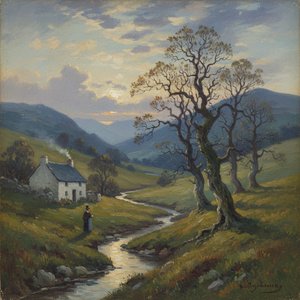
A Vision of Suffering and Serenity: Kyffin Williams’ “The Crucifixion”
Sir John “Kyffin” Williams, a name inextricably linked with the soul of Wales, wasn't merely a painter; he was a translator of landscapes, emotions, and the very spirit of his homeland. Born in Llangefni, Anglesey, in 1918, his life unfolded against the backdrop of a nation grappling with identity and heritage – a tension that profoundly shaped his artistic vision. While often categorized as a landscape artist, Williams’ oeuvre reveals a deeply personal engagement with themes of faith, mortality, and the enduring beauty found within hardship. “The Crucifixion,” painted in 1960, exemplifies this complex interplay, offering not a literal depiction of the biblical event but rather an intensely felt meditation on suffering, sacrifice, and ultimately, a quiet sense of serenity.A Fragmented Landscape, A Distorted Figure
The painting immediately commands attention with its unconventional composition. It’s not a grand, theatrical scene; instead, it presents a fragmented landscape dominated by a dark, brooding sky – a palpable representation of the emotional weight of the subject matter. The central figure of Christ on the cross is rendered in an almost abstracted manner, his form partially obscured by the surrounding elements. Williams employs a bold, impasto technique, layering thick strokes of oil paint to create a textured surface that seems to vibrate with energy. This physicality mirrors the intensity of the scene, conveying both the violence and the profound sorrow associated with the crucifixion. The use of muted tones – deep blues, browns, and greys – contributes to the painting’s somber mood, while subtle hints of light suggest a glimmer of hope amidst the darkness.Technique and Influences: Bridging Abstraction and Tradition
Williams' distinctive style evolved over his long career, drawing inspiration from both traditional landscape painting and emerging abstract expressionism. He was deeply influenced by artists like Piero della Francesca, whose use of light and shadow to create a sense of depth and drama is evident in “The Crucifixion.” However, Williams departs significantly from the Renaissance master’s idealized forms, opting for a more fragmented and emotionally charged approach. The influence of abstract expressionism can be seen in the painting's loose brushwork and emphasis on conveying feeling rather than precise representation. He was also heavily influenced by his time spent in Patagonia, where he painted dramatic landscapes under the intense light of the Southern Hemisphere, which informed his use of color and texture.Symbolism and Spiritual Depth
Beyond its formal qualities, “The Crucifixion” is rich in symbolic meaning. The fragmented landscape can be interpreted as a reflection of Christ’s brokenness and suffering, while the dark sky represents the overwhelming weight of sin and death. Yet, despite the bleakness of the scene, there's an underlying sense of peace and acceptance. Some art historians suggest that Williams was exploring themes of redemption and forgiveness through this work. The painting isn’t about glorifying violence; it’s about confronting the uncomfortable realities of human existence and finding solace in faith. The absence of explicit religious iconography – no halo, no crown of thorns – invites viewers to engage with the painting on a deeply personal level, prompting contemplation about the nature of suffering, sacrifice, and the possibility of transcendence.A Legacy of Welsh Art: Kyffin Williams’ Enduring Impact
Sir John Kyffin Williams remains one of Wales' most celebrated artists, his work profoundly shaping the landscape of modern British art. His ability to capture the essence of the Welsh countryside while simultaneously exploring complex emotional and spiritual themes is a testament to his artistic genius. “The Crucifixion” stands as a powerful example of this talent, offering viewers a glimpse into the soul of a man deeply connected to his land and his faith. Today, his paintings are exhibited in galleries across Wales and beyond, ensuring that his legacy continues to inspire and move audiences for generations to come. Reproductions of this evocative piece offer a tangible connection to Williams’ profound vision, allowing others to experience the quiet power of his artistic expression.Pytania i odpowiedzi
Jaki układ ma „The Crucifixion” – John Kyffin Williams?
Format dzieła „The Crucifixion” to Tall. Jest to pomocna informacja podczas planowania miejsca, w którym zostanie umieszczona reprodukcja.
Jaki jest ogólny nastrój dzieła „The Crucifixion” – John Kyffin Williams?
Nastrój dzieła „The Crucifixion” – John Kyffin Williams opisuje się jako Dramatic. Klasyfikacja ta może pomóc w dopasowaniu pracy do konkretnego wnętrza.
Jakie wnętrze najlepiej współgra z kolorystyką „The Crucifixion” – John Kyffin Williams?
Biorąc pod uwagę jego Earthy kolorystykę, dzieło "The Crucifixion" idealnie pasuje do Living Room.
Biografia artysty
A Defining Voice of Welsh Landscape
Sir John “Kyffin” Williams, a name inextricably linked to the very essence of Wales, stands as one of the most significant figures in 20th-century British art. More than just a painter, he was a cultural chronicler, a storyteller who translated the rugged beauty and profound emotional depth of his homeland onto canvas with an unparalleled sensitivity. Born in Llangefni, on the Isle of Anglesey, in 1918, Williams’s life journey mirrored the textured complexity of the landscapes he so passionately depicted – a blend of heritage, challenge, and unwavering dedication to capturing the spirit of Wales. His connection to his homeland wasn't merely geographical; it was deeply ingrained within his being, a legacy shaped by both affection and a subtle distance fostered by his mother, who seemingly held a reserved view of Welsh language and culture. This early tension may have inadvertently fueled a lifelong commitment to visually celebrating the land she subtly discouraged him from embracing.From Military Service to Artistic Awakening
Williams’s artistic path wasn't paved with ease; it unfolded through a series of unexpected turns. Educated at Moreton Hall School near Chirk and then at Shrewsbury, his life took an abrupt shift with a severe bout of polio encephalitis that resulted in epilepsy. Ironically, this physical challenge proved to be a catalyst for his creative destiny. Recognizing the therapeutic potential of art, doctors advised him to pursue painting as a means of self-expression and emotional release. This suggestion ignited a profound connection within him – a creative impulse fueled by the evocative power of Piero della Francesca’s works. The encounter with della Francesca's paintings sparked a lifelong devotion to artistic exploration, shaping his aesthetic sensibilities for decades to come. A brief but formative period in the 6th Battalion Royal Welch Fusiliers was cut short due to his medical condition, yet it wasn’t a detour; rather, it provided him with a much-needed respite and freedom to enroll at London's Slade School of Fine Art during its wartime relocation to Oxford. There, he honed his skills under the guidance of influential figures like Randolph Schwabe, Allan Gwynne-Jones, and Tancred Borenius, earning the prestigious Slade Portrait Prize – a testament to his burgeoning talent.A Life Dedicated to Teaching and Exploration
For many years, Williams skillfully balanced his artistic pursuits with a dedicated teaching career, serving as senior art master at Highgate School in London from 1944 until 1973. This role wasn't merely a profession; it was an opportunity to nurture the creative potential of countless young artists, shaping their perspectives and fostering a love for visual expression. During this time, he also continued his own artistic development, experimenting with techniques and exploring new subjects. A pivotal moment in his life arrived in 1968 when he received a Winston Churchill Fellowship, granting him the opportunity to travel to Y Wladfa – the Welsh settlement in Patagonia – an experience that profoundly impacted his artistic vision. The vast, windswept landscapes of Patagonia, so dramatically different yet resonating with the spirit of Wales, infused his work with a new sense of scale and emotional depth. He meticulously documented this journey not only through paintings but also through a captivatingly anecdotal book titled “Across the Straits,” offering readers a glimpse into his personal reflections on identity and belonging.Technique, Themes, and Lasting Legacy
Kyffin Williams’s artistic style was instantly recognizable – characterized by bold, expressive brushstrokes and a distinctive use of impasto. He employed thick layers of oil paint applied with a palette knife, creating textured surfaces that seemed to pulsate with life. This wasn't simply a stylistic choice; it was an integral part of his method for conveying the ruggedness of the Welsh countryside, the weight of its history, and the emotional resonance of its landscapes. His subjects were remarkably diverse, ranging from evocative depictions of rural Wales – farms, mountains, and villages – to dramatic scenes from Patagonia and atmospheric studies of Venice. However, it was his portrayal of Wales—its people, its traditions, and its inherent spirit—that truly defined him as an artist. He didn’t merely record what he saw; he captured *how* it felt to be Welsh, imbuing his paintings with a profound sense of place and belonging. His work is often imbued with a melancholic beauty, reflecting the quiet dignity and resilience of the Welsh people. Throughout his illustrious career, Williams received numerous accolades recognizing his artistic merit and contributions to British art. He was appointed a Royal Academician in 1974, an honor bestowed upon only the most distinguished artists. In 1982, he was awarded an OBE (Officer of the Order of the British Empire), and in 1999, he received a KBE (Knight Commander of the Order of the British Empire) – a testament to his enduring legacy and profound impact on the art world. The establishment of the Kyffin Williams Drawing Prize in 2009 further solidified his place in artistic history by providing ongoing support for emerging Welsh artists. Today, Oriel Ynys Môn on Anglesey proudly houses a permanent exhibition dedicated to his work, ensuring that future generations can appreciate the enduring beauty and profound emotional resonance of Sir John Kyffin Williams’s vision – a legacy that will undoubtedly continue to inspire and captivate audiences for years to come.
John Kyffin Williams
1918 - 2006 , Walia
Krótka nota
- Artistic Movement Or Style: Malarski krajobrazowy
- Artists Or Movements Influenced By This Artist: ['Nowe malarstwo']
- Artists Who Influenced This Artist: ['Piero della Francesca']
- Date Of Birth: 9 maja 1918
- Date Of Death: 1 września 2006
- Full Name: John Kyffin Williams
- Nationality: Walijczyk
- Notable Artworks:
- Storm Approaching
- View from Pwllfanogl
- Place Of Birth: Llangefni, Wielka Brytania
Powiązane artykuły

Romantyczny Krajobraz w Malarstwie: 10 Arcydzieł, Które Zdefiniowały Epokę | OriginalUniqueArt.com
Odkryj 10 arcydzieł romantyzmu w malarstwie! Poznaj historie Caspara Davida Friedricha, Turnera i innych mistrzów. Inspiracje wnętrzarskie & reprodukcje obrazów najwyższej jakości na OriginalUniqueArt.com. Eksploruj kolekcję online!
Penry Williams: Evoking Welsh Nostalgia Through Impressionistic Landscapes
Explore the captivating world of Penry Williams (1802-1885), a Welsh artist renowned for his evocative Impressionistic landscapes and scenes of Italy. Discover his life, style & legacy with OriginalUniqueArt.

The Timeless Charm of Oil on Board: Reimagining Texture and Light through the Impressionist Lens
Discover the profound intimacy of oil on panel. Explore how Impressionist masters used rigid supports to capture light, texture, and impasto depth through exquisite, handmade oil reproductions for discerning collectors.

Evocations of Place: A Historical Journey Through Landscape Art
Explore the rich history of landscape art with OriginalUniqueArt. Discover renowned artists, movements like Impressionism & Romanticism, and expert guidance for collecting timeless pieces. Find your perfect serene escape today!

John Constable: 25 Najlepszych Obrazów Mistrza Angielskiego Krajobrazu | OriginalUniqueArt
Odkryj 25 arcydzieł Johna Constable'a – mistrza angielskiego krajobrazu! Poznaj romantyczne pejzaże, technikę malarską i inspiracje z Dedham Vale. Reprodukcje obrazów najwyższej jakości na OriginalUniqueArt.com. Eksploruj pełną kolekcję online!


