

 Podgląd w skali 1:1
 Wyślij jako kartkę
 Udostępnij
 Szczegóły dzieła
 Przewodnik

 Pobierz obraz
 Podobne obiekty
 RTG
RTG Pokaz slajdów
 Statystyki
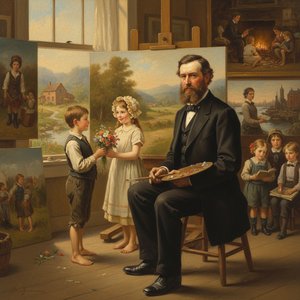
A Surprise Party


 Rozwiń treść
Giclée / Wydruk artystyczny
Wydruki giclée lub płótna o jakości muzealnej, szybka realizacja i szeroki wybór opcji wykończenia. ( Zamów ręcznie malowaną reprodukcję Przejdź do wersji cyfrowej)




P118B zł10

P118H zł10

P118W zł10

P438Z zł10

P508JH zł12

P508YH zł12

P805H zł10

P805Z zł10

P919BZ zł10

P919G zł10

P919XJ zł10

P959ZH zł10

P968JZ zł12

W106C zł8

W218G zł10

W218JH zł8

W218Y zł10

W307PJ zł10

W316G zł10

W316PJ zł8

W316Y zł10

W398PJ zł8

W4111J zł10

W500HY zł15

W500JH zł15

W692G zł12

W849H zł8

W940BG zł15

W953PJ zł8




Wybierz spośród naszych standardowych rozmiarów, które zachowują oryginalne proporcje dzieła sztuki.

Wpisz wymaganą szerokość i wysokość, aby dopasować grafikę do ramy lub ściany. Wydruk można jedynie przyciąć, nigdy nie powiększając go poza oryginalny obraz, dlatego format o innych proporcjach spowoduje utratę części kompozycji. Przed rozpoczęciem druku prześlemy Ci cyfrowy podgląd do zatwierdzenia. Obraz wyświetlany na tej stronie nie pokazuje rzeczywistego przycięcia — jedynie podgląd oddaje ten efekt.
Dostawa na cały świat () w ciągu 2 tygodni zamiast standardowych 4/5 tygodni. (28 Październik)

Bezpłatna ekspresowa wysyłka na cały świat

Wysokiej jakości płótno lniane

Pełne ubezpieczenie przesyłki

Gwarancja zwrotu należności celnych i podatków importowych

Gwarancja wiernego odwzorowania kolorów

100-dniowa polityka zwrotów (tylko w przypadku wad)

Gwarancja 100% zwrotu pieniędzy

Zniżka przy zakupie wielu sztuk
 Opcja ze szkłem jest dostępna wyłącznie w rozmiarach poniżej 110 cm

A Surprise Party
Giclée / Wydruk artystyczny
Wymiary reprodukcji
-


Cena całkowita
zł 308
A Moment of Shared Joy: Unpacking the Charm of “A Surprise Party”
John George Brown’s “A Surprise Party,” painted in 1888, isn't merely a snapshot of childhood; it’s a tender distillation of American sentiment during a period of rapid transformation. The scene unfolds within a modestly furnished parlor – a space both familiar and imbued with a quiet warmth – where two young boys, clearly the center of attention, are engaged in playful interaction alongside their canine companions. The painting immediately draws the eye with its carefully rendered details: the worn but comfortable furniture, the clock on the wall hinting at the passage of time, and the book resting open on a nearby table, suggesting an interlude between moments of joyful play. Brown’s masterful use of light – diffused and gentle – creates an atmosphere of intimacy and contentment, inviting the viewer into this private, cherished moment.
Technically, Brown employs a realistic style, characteristic of his genre paintings. He meticulously captures the textures of fabric, wood, and fur, demonstrating a keen eye for observation honed through years of working as a glass cutter. The brushstrokes are generally smooth and controlled, contributing to the painting’s overall sense of quiet composure. However, it's not simply realism that defines Brown’s work; he imbues his scenes with a subtle emotional resonance, evident in the boys’ expressions of delight and the dogs’ attentive gazes. The color palette is muted yet harmonious – browns, creams, and greens dominate – reflecting the domestic setting and reinforcing the painting’s feeling of comfort and familiarity.
The Victorian Context: Childhood and Sentiment in American Art
To fully appreciate “A Surprise Party,” it's crucial to understand the social and artistic climate of late 19th-century America. The period witnessed a burgeoning middle class eager to embrace domesticity and celebrate family life. Artists like Brown responded to this shift by depicting scenes of everyday American life, particularly those centered on childhood. This fascination with children wasn’t simply sentimental; it reflected a growing awareness of their vulnerability and the importance of nurturing their development. Brown's work aligns with this trend, offering a glimpse into a world where simple pleasures – companionship, play, and shared moments – were valued above all else.
Furthermore, Brown’s career trajectory is itself a compelling narrative. An immigrant from England who found success in the American art market, he skillfully navigated the demands of his patrons while retaining a deep affection for the subjects he painted. His ability to capture the essence of American childhood – its innocence, its resilience, and its inherent charm – cemented his place as one of the era’s most beloved genre painters. The painting speaks volumes about Brown's own journey and his understanding of the values that defined the burgeoning American identity.
Symbolism and Emotional Resonance
Beyond its technical merits, “A Surprise Party” is rich in symbolic meaning. The presence of the dogs suggests loyalty, companionship, and a shared joy. The clock on the wall serves as a subtle reminder of time passing, emphasizing the fleeting nature of childhood moments. Even the book, open but unread, hints at an interruption to the boys’ play – a pause for reflection or perhaps simply a desire to momentarily escape into another world. The painting isn't about grand gestures or dramatic events; it’s about the quiet beauty of ordinary moments shared between loved ones.
Ultimately, “A Surprise Party” evokes a powerful sense of nostalgia and warmth. It captures a fleeting moment of pure joy – a testament to the simple pleasures of childhood and the enduring value of human connection. It's a painting that invites us to slow down, appreciate the beauty in everyday life, and cherish the moments we share with those closest to us.
Pytania i odpowiedzi
Ile światła zdają się odbijać kolory dzieła "A Surprise Party"?
„A Surprise Party” – Jan George Brown ma luminancję na poziomie Dark. Luminancja określa, jak dużą ilość światła zdają się odbijać kolory.
Jaką paletę barw i jakie emocje łączy ze sobą "A Surprise Party"?
W "A Surprise Party" kolorystyka Earthy współgra z Melancholic nastrojem.
Jaki nastrój emocjonalny budzi „A Surprise Party” – Jan George Brown?
„A Surprise Party” – Jan George Brown emanuje Melancholic emocjonalnym nastrojem.
Biografia artysty
A Life Etched in Childhood: The World of John George Brown
John George Brown, a name perhaps less immediately recognizable than some of his contemporaries, nevertheless occupies a significant and deeply affecting niche within the landscape of 19th-century American art. Born in Durham, England, in 1831, his journey was one of determined self-improvement and astute observation, culminating in a career that captured the poignant realities – and often idealized sentiments – surrounding childhood during a period of rapid social change. Brown’s story isn't simply about artistic talent; it’s about an immigrant’s ambition, a keen eye for detail, and a shrewd understanding of the burgeoning American art market. His early life was marked by necessity rather than privilege. Apprenticed to a glass factory at just fourteen years old, he labored to support his family, yet even amidst the demanding work, a passion for drawing persisted. This dedication led him to evening classes at the School of Design in Newcastle, and later, further study at the Trustees Academy in Edinburgh – formative experiences that laid the groundwork for his future artistic endeavors. In 1853, Brown bravely crossed the Atlantic, settling in Brooklyn, New York, a city poised to become both his home and his muse. He continued his education at the Graham Art School and the National Academy of Design, honing his skills under the guidance of instructors like Thomas Seir Cummings, preparing himself for a life dedicated to capturing the essence of American experience.From Portraiture to the Streets: Finding His Voice
Initially establishing himself as a portrait painter, Brown quickly discovered that his true calling lay elsewhere – in the vibrant, often overlooked world of everyday life. He began to focus on genre scenes, and it was through his depictions of street children that he truly found his voice. The 1860s witnessed the rise of Brown’s “street urchin” paintings, images that resonated deeply with a public fascinated by – and perhaps simultaneously troubled by – the realities of urban poverty. These weren't merely sentimental portrayals; they were carefully observed studies of character, capturing the resilience, resourcefulness, and quiet dignity of children navigating difficult circumstances. Bootblacks diligently polishing shoes, newsboys hawking papers on bustling street corners, flower sellers offering their wares – these scenes became Brown’s signature, imbued with a remarkable level of detail and empathy. His work wasn't born in isolation; it was influenced by the Barbizon school, particularly its emphasis on realism and depictions of everyday life, as well as the dramatic use of light and color championed by artists like J.M.W. Turner. However, Brown synthesized these influences into a uniquely American style, one that spoke to the specific social conditions and cultural anxieties of his adopted homeland.A Master of Sentiment and Commerce
Brown was not only an artist but also a remarkably astute businessman. Recognizing the appeal of his work, he strategically copyrighted many of his most popular paintings, allowing for widespread reproduction as chromolithographs and photographic prints. This savvy move dramatically increased his fame and financial success, making him one of the wealthiest genre painters in the United States during his lifetime. However, this commercial success didn’t diminish the artistic merit of his work. Paintings like “The Net Mender” and “The First Point” exemplify his ability to capture moments of quiet beauty and emotional depth. "Claiming the Shot - A Group of Portraits after the Hunt in the Adirondacks" demonstrates a broader range, showcasing his skill in depicting group scenes with remarkable realism. His paintings offered more than just aesthetic pleasure; they provided valuable insights into 19th-century American society, particularly the lives of working children and the changing urban landscape. Often imbued with subtle moral undertones, Brown’s work reflected his belief in the importance of hard work, honesty, and resilience – values that resonated deeply with Victorian audiences.Shifting Focus: From Youth to Age
As Brown matured as an artist, so too did his subject matter evolve. In his later years, he shifted his focus from depicting the energy and vitality of childhood to portraying the quiet dignity and solitude of old age. These paintings often featured elderly individuals in rural settings, evoking a sense of nostalgia for a simpler past. While this shift might seem dramatic, it was a natural progression for an artist deeply concerned with capturing the human condition in all its complexity. He continued to be an active member of various art institutions, serving as vice-president of the National Academy of Design from 1899 to 1904, demonstrating his ongoing commitment to the artistic community. His later works, though different in subject matter, retained the meticulous attention to detail and emotional sensitivity that characterized his earlier paintings.A Lasting Legacy: Echoes of Childhood
John George Brown passed away in New York City in 1913, leaving behind a substantial body of work that continues to captivate and move audiences today. His paintings are held in prestigious collections around the world, including the National Gallery in London and the Detroit Institute of Arts, testament to his enduring artistic significance. He is remembered not only for his technical skill but also for his ability to capture the essence of a particular time and place – Victorian America – with honesty, empathy, and a touch of romanticism. His work serves as a poignant reminder of the challenges faced by children in the 19th century, while simultaneously celebrating their resilience and spirit. Brown’s legacy extends beyond his paintings; he represents a fascinating intersection of artistic talent, entrepreneurial acumen, and social commentary – a true chronicler of American life. His ability to transform everyday scenes into enduring works of art ensures that his vision will continue to resonate with generations to come.
Jan George Brown
1831 - 1913 , Wielka Brytania
Krótka nota
- Artistic Movement Or Style: Realizm, Barbizon
- Artists Or Movements Influenced By This Artist: ['Barbizon']
- Artists Who Influenced This Artist:
- Barbizon
- Turner
- Date Of Birth: 11 listopada 1831
- Date Of Death: 8 lutego 1913
- Full Name: John George Brown
- Nationality: Brytyjsko-amerykański
- Notable Artworks:
- The Net Mender
- First Point
- Place Of Birth: Durham, Wielka Brytania
Powiązane artykuły
John George Brown: Capturing American Life & Sentiment in 19th-Century Genre Painting
Explore the captivating genre paintings of John George Brown, celebrated for his realistic depictions of 19th-century American life. Discover his legacy & find museum-quality reproductions at OriginalUniqueArt.

Georges Braque: 25 Arcydzieł Kubizmu i Nowoczesnej Sztuki | OriginalUniqueArt.com
Odkryj 25 arcydzieł Georges'a Braque – pioniera kubizmu i malarstwa nowoczesnego. Poznaj historię, techniki i inspiracje za jego najsłynniejszymi obrazami. Reprodukcje najwyższej jakości na OriginalUniqueArt.com! Eksploruj pełną kolekcję online.

Georges Seurat: 25 Arcydzieł Punktalizmu dla Twojego Domu | OriginalUniqueArt.com
Odkryj 25 arcydzieł Georges'a Seurata! Poznaj historię punktalizmu, impresjonistyczne pejzaże i fascynującą technikę malarską. Reprodukcje obrazów najwyższej jakości na OriginalUniqueArt.com – inspiracje do Twojego wnętrza. Eksploruj pełną kolekcję online!

John Singer Sargent: 25 Arcydzieł Pełnych Elegancji i Światła | OriginalUniqueArt.com
Odkryj 25 arcydzieł Johna Singera Sargenta – mistrza portretu i impresjonizmu. Poznaj historie, techniki i inspiracje za jego najsłynniejszymi obrazami. Reprodukcje najwyższej jakości na OriginalUniqueArt.com. Eksploruj pełną kolekcję online!

John Constable: 25 Najlepszych Obrazów Mistrza Angielskiego Krajobrazu | OriginalUniqueArt
Odkryj 25 arcydzieł Johna Constable'a – mistrza angielskiego krajobrazu! Poznaj romantyczne pejzaże, technikę malarską i inspiracje z Dedham Vale. Reprodukcje obrazów najwyższej jakości na OriginalUniqueArt.com. Eksploruj pełną kolekcję online!