

 Zobacz w skali 1:1
 Wyślij
 Udostępnij
 Szczegóły
 Przewodnik

 Pobierz plik obrazu
 Podobne obiekty
 RTG
RTG Pokaz slajdów
 Statystyki
Kimet


 Czytaj więcej
Dzieło sztuki prezentowane na tej stronie podlega ochronie prawem autorskim, co oznacza, że nie mamy prawa do tworzenia ani sprzedaży jego identycznej reprodukcji. Ochrona ta jest egzekwowana na mocy umów międzynarodowych, takich jak Konwencja berneńska oraz przez przepisy prawa krajowego, w tym te określone w Prawo autorskie USA – Tytuł 17.
Metoda ta jest w pełni zgodna z przepisami prawa autorskiego, ponieważ nie polega na kopiowaniu ani powielaniu chronionego dzieła. Stanowi ona kreatywną reinterpretację – nowy obraz, który czerpie inspirację z oryginału, ale nie jest z nim tożsamy.
Giclée / Wydruk artystyczny
Wydruki giclée lub płótna o jakości muzealnej, szybka realizacja i szeroki wybór opcji wykończenia. ( Kup ręcznie malowany obraz Przełącz na wersję cyfrową)




P118B zł10

P118H zł10

P118W zł10

P438Z zł10

P508JH zł12

P508YH zł12

P805H zł10

P805Z zł10

P919BZ zł10

P919G zł10

P919XJ zł10

P959ZH zł10

P968JZ zł12

W106C zł8

W218G zł10

W218JH zł8

W218Y zł10

W307PJ zł10

W316G zł10

W316PJ zł8

W316Y zł10

W398PJ zł8

W4111J zł10

W500HY zł15

W500JH zł15

W692G zł12

W849H zł8

W940BG zł15

W953PJ zł8




Wybierz spośród naszych standardowych rozmiarów, które zachowują oryginalne proporcje dzieła sztuki.

Wpisz wymaganą szerokość i wysokość, aby dopasować grafikę do ramy lub ściany. Wydruk można jedynie przyciąć, nigdy nie powiększając go poza oryginalny obraz, dlatego format o innym proporcji spowoduje utratę części kompozycji. Przed rozpoczęciem druku prześlemy Ci cyfrowy podgląd do zatwierdzenia. Obraz wyświetlany na tej stronie nie pokazuje rzeczywistego przycięcia — jedynie podgląd oddaje ten efekt.
Dostawa na cały świat () w ciągu 2 tygodni zamiast standardowych 4/5 tygodni. (22 Październik)

Bezpłatna ekspresowa wysyłka na cały świat

Wysokiej jakości płótno lniane

Pełne ubezpieczenie transportowe

Gwarancja zwrotu należności celnych i podatków importowych

Gwarancja idealnego odwzorowania barw

100-dniowy okres na zwrot dzieła w przypadku wykrycia wad produkcyjnych

Gwarancja 100% zwrotu pieniędzy

Oferta przy zakupie wielu sztuk
 Opcja ze szkłem jest dostępna wyłącznie w rozmiarach poniżej 110 cm

Kimet
Giclée / Wydruk artystyczny
Rozmiar reprodukcji
-


Suma do zapłaty
zł 307
A Window into Pennsylvania Impressionism
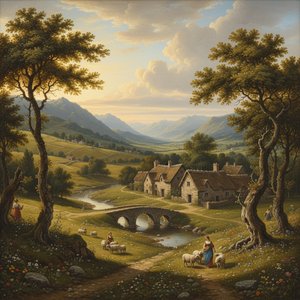
In the quiet, rolling landscapes of the Lehigh Valley, there exists a profound sense of stillness that John Emil Berninger captured with unparalleled mastery in his 1981 work, Kimet. As a prominent figure within the Pennsylvania Impressionist movement, Berninger possessed the rare ability to translate the rugged beauty of his native Allentown into a visual poem of light and earth. This particular piece serves as a breathtaking testament to a lifetime spent observing the subtle shifts of the American countryside. The painting invites the viewer into a serene rural settlement, where the architecture of human habitation meets the soft, undulating rhythm of the natural world. It is not merely a depiction of buildings and hills, but an evocative journey into a bygone era of pastoral tranquility.
The composition of Kimet is a masterclass in balance and visual flow. Berninger utilizes a sophisticated arrangement of leading lines—formed by winding roads and the receding edges of structures—to guide the eye through the heart of the scene toward the distant, hazy hills. The central building acts as an anchor, a focal point around which the smaller structures and organic landscape elements orbit in perfect harmony. Through this deliberate structural design, the artist creates a palpable sense of depth, making the canvas feel less like a flat surface and more like a window into a sprawling, breathing environment. For the collector or interior designer, this balanced composition offers a grounding presence, capable of anchoring a room with its steady, rhythmic grace.
Technically, the painting is a triumph of layered oil application and impressionistic texture. Berninger eschews clinical precision in favor of a more emotive, tactile approach, using visible brushstrokes to build a rich topography on the canvas. The color palette is a warm embrace of earth tones; deep reds, sun-drenched yellows, and rich browns dominate the foreground, providing a sense of warmth and stability. These are artfully contrasted by the cooler blues and soft whites of an overcast sky, which bathes the entire landscape in a diffused, gentle light. This interplay of temperature and texture creates a luminous quality, where the light seems to emanate from within the paint itself, capturing the fleeting atmosphere of a quiet afternoon.
Beyond its aesthetic brilliance, Kimet resonates with deep emotional and symbolic weight. It embodies the spirit of rural life—a celebration of permanence, peace, and the enduring connection between man and land. The soft, diffused lighting suggests a moment of pause, an invitation to reflect on the simplicity and beauty of the natural cycle. For those seeking to adorn a space with art that inspires contemplation, this reproduction offers more than just decoration; it provides a soulful connection to the heritage of American landscape painting. It is a piece that speaks of home, of history, and of the timeless allure of the quiet countryside.
Pytania i odpowiedzi
O czym jest "Kimet"?
Tematyka dzieła "Kimet" to rural landscape, pennsylvania scene, cloudy weather, village setting, rolling hills, american art, impressionist style.
Czy "Kimet" jest typowe dla tego, co zazwyczaj tworzył John Emil Berninger?
Wśród utrwalonych w twórczości John Emil Berninger motywów – pennsylvania impressionism, local allentown community, art museum curator role, regional landscape focus, early 20th century art, artist's regional identity, community arts patronage, documenting rural life – dzieło „Kimet” wprowadza własne skupienie na rural landscape, pennsylvania scene, cloudy weather, village setting, rolling hills, american art, impressionist style.
Jakie nasycenie kolorów ma „Kimet” autorstwa John Emil Berninger?
Paleta dzieła "Kimet" charakteryzuje się Balanced Soft nasyceniem kolorów.
Biografia artysty
John Emil Berninger: A Pennsylvania Impressionist
- Born: December 13, 1896, Allentown, Pennsylvania
- Died: July 16, 1981, Allentown, Pennsylvania
- Nationality: American
- Movement: Pennsylvania Impressionism
- Known for: Landscape painting, snow scenes, depictions of the Lehigh Valley
Early Life and Education
- Berninger was born into a family that valued art and culture in Allentown.
- He began painting in oil from his early teens.
- Significant influences included Orlando Gray Wales and Arlington Nelson Lindenmuth.
- A pivotal moment was attending Walter Emerson Baum's first class in Allentown during the summer of 1926, marking a key development in his artistic style. Baum’s influence is considered central to Berninger’s work.
Artistic Development and Career
- Kline-Baum Art School: In 1932, Berninger became an art instructor at the Kline-Baum Art School, sharing his knowledge and inspiring students.
- Circulating Picture Club: He was recognized in 1934 when he was among four Baum students accepted into the Circulating Picture Club of the Philadelphia Art Alliance – a significant achievement for any artist.
- Allentown Art Museum Curator: From 1936 to 1956, Berninger served as the first curator of the Allentown Art Museum, founded by Walter Emerson Baum. He lived on the museum's second floor with his wife, Mabel, during this time. Mabel assisted him in his curatorial duties and also supported the Kline-Baum School’s Circulating Picture Club.
- Wuchter and Berninger: In 1939, he became a partner in the jewelry store Wuchter and Berninger, using the shop window to showcase his paintings. This exposure led to connections with figures like Robert Rodale, who championed his work.
Style and Notable Works
- Pennsylvania Impressionism: Berninger’s style is firmly rooted in Pennsylvania Impressionism, blending realist techniques with impressionistic color and light. He was considered part of the "outer ring" of the New Hope School.
- Subject Matter: His paintings primarily focused on landscapes of the Lehigh Valley and surrounding areas, often depicting rolling hills, forests, waterways, and winter scenes (snowscapes).
- Technique: Berninger employed bold colors and loose brushstrokes to capture the essence of his subjects.
- Notable Works: Kimet is a well-known example showcasing a balanced composition with warm tones and textured brushwork. Other notable works include depictions of Meyers Bridge in Allentown and various winter scenes.
Legacy and Historical Significance
- Berninger’s work contributes to the rich tradition of Pennsylvania Impressionism, documenting the beauty of the region's landscapes.
- His role as curator of the Allentown Art Museum was instrumental in establishing a cultural institution for the city.
- He is remembered as an influential art instructor and a dedicated advocate for the arts in the Lehigh Valley.
- Berninger’s paintings continue to be appreciated for their vibrant colors, evocative depictions of nature, and representation of Pennsylvania's artistic heritage.

John Emil Berninger
1896 - 1981 , United States of America
Najważniejsze informacje
- Artistic Movement Or Style: Pennsylvania Impressionism
- Artists Who Influenced This Artist:
- Orlando Gray Wales
- Arlington Nelson Lindenmuth
- Walter Emerson Baum
- Full Name: John Emil Berninger
- Nationality: American
- Notable Artworks:
- Kimet
- Winter on the Monocacy
- Looking at the Quarries
- Place Of Birth: Allentown, United States of America
- Date Of Birth: 1896
- Date Of Death: 1981
Zobacz także powiązane artykuły

John Singer Sargent: 25 Arcydzieł Pełnych Elegancji i Światła | OriginalUniqueArt.com
Odkryj 25 arcydzieł Johna Singera Sargenta – mistrza portretu i impresjonizmu. Poznaj historie, techniki i inspiracje za jego najsłynniejszymi obrazami. Reprodukcje najwyższej jakości na OriginalUniqueArt.com. Eksploruj pełną kolekcję online!

Wiejskie Krajobrazy w Sztuce: Studium Ikonografii, Emocji i Społecznego Kontekstu
Odkryj fascynujący świat wiejskich krajobrazów w sztuce! Studium ikonografii, emocji i społecznego kontekstu malarstwa. Ekspercka analiza, inspiracje i możliwość zakupu reprodukcji na OriginalUniqueArt.

Romantyczny Krajobraz w Malarstwie: 10 Arcydzieł, Które Zdefiniowały Epokę | OriginalUniqueArt.com
Odkryj 10 arcydzieł romantyzmu w malarstwie! Poznaj historie Caspara Davida Friedricha, Turnera i innych mistrzów. Inspiracje wnętrzarskie & reprodukcje obrazów najwyższej jakości na OriginalUniqueArt.com. Eksploruj kolekcję online!
Evoking Arcadia: A Historical & Aesthetic Exploration of Rural Landscape Art
Explore the rich history of pastoral landscape art, from classical Arcadia to Impressionism & beyond. Discover key artists, movements, and how to collect serene rural scenes for your home. Expert insights at OriginalUniqueArt.

John Constable: 25 Najlepszych Obrazów Mistrza Angielskiego Krajobrazu | OriginalUniqueArt
Odkryj 25 arcydzieł Johna Constable'a – mistrza angielskiego krajobrazu! Poznaj romantyczne pejzaże, technikę malarską i inspiracje z Dedham Vale. Reprodukcje obrazów najwyższej jakości na OriginalUniqueArt.com. Eksploruj pełną kolekcję online!