Wersja olejowa
 Wszystko o The Mill Stream







































 W przypadku dzieł sztuki lub reprodukcji, których którykolwiek z boków przekracza 105 cm (około 41 cali), rama zostanie wysłana w formie zestawu do samodzielnego montażu. Metoda ta zapewnia bezpieczną dostawę i zapobiega uszkodzeniom podczas transportu.


A Quiet Corner of Suffolk
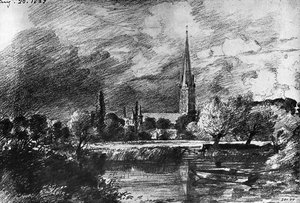
There is a particular stillness found in this view of the mill stream near Willy Lott's Cottage. It captures a moment at Flatford, where the water moves with a slow, rhythmic pulse through the landscape. The composition finds its balance in the architecture of the cottage on the left, anchored by the heavy, leafy presence of trees that rise toward the center. A stream flows from the mid-ground, drawing the eye forward toward the viewer. In this particular rendering, the palette is restrained, relying on shades of grey, black, and white to define the scene. This monochromatic approach emphasizes tonal values over color, allowing the light to dictate the form of the foliage and the surface of the water.
The textures here feel deeply tactile. One can see the painterly application of oil on canvas, particularly in the foreground debris and the rugged trunks of the trees. The lines are soft and organic, avoiding sharp outlines in favor of varying densities of brushwork. This technique creates a sense of natural movement within the water and the leaves. Under an overcast sky, the lighting remains diffused, casting subtle reflections upon the stream to create a sense of receding perspective and depth.
The Spirit of the Landscape
Created around 1814, this work belongs to the Romantic tradition, focusing on the truthful representation of the English countryside. It avoids grand historical narratives, choosing instead to find meaning in the everyday—the way a stream is diverted from the River Stour to power a water-wheel, or the quiet presence of a rural cottage. The artist sought to capture not merely what was seen, but the atmosphere of the place itself. This commitment to direct observation and the fleeting effects of weather brings an immediacy to the scene.
There is a profound sense of nostalgia embedded in these muted tones. The painting captures a vanishing way of life, preserving the dignity of the rural landscape through its soft, atmospheric truth. By focusing on the familiar surroundings of East Bergholt and the River Stour, the work invites a moment of reflection. It offers a window into a peaceful, pastoral existence, where the harmony between human activity and the natural world is felt through the quiet movement of water and the weight of the trees.
Pytania i odpowiedzi
Czy The Mill Stream jest dziełem namalowanym ręcznie, czy wydrukiem?
Malowane ręcznie: wykwalifikowany artysta wykonuje olejną kopię The Mill Stream na płótnie lnianym.
Jaki rozmiar wybrać dla The Mill Stream?
Wymiary oryginału to 31.5 x 49.0cm. Dostępne rozmiary obejmują zakres od 24.9 x 40.2 cm (zł789) do 152.1 x 245.4 cm (zł5556); tabela na tej stronie przedstawia główne warianty oraz ich ceny.
Ile trwa dostawa?
Czas dostawy wynosi od 4 do 5 tygodni, przy czym oferujemy bezpłatną ekspresową wysyłkę na cały świat; na tej stronie dostępna jest również opcja pilnej produkcji. Możesz dokonać zwrotu w ciągu 100 dni z pełnym zwrotem kosztów, bez żadnych dodatkowych warunków.
Gdzie znajduje się oryginał The Mill Stream?
Oryginał znajduje się w zbiorach Statens Museum for Kunst w Kopenhaga.
Jakiej techniki użył/a John Constable w pracy The Mill Stream?
Oil On Canvas
 Podgląd w skali 1:1

 Wyślij jako kartkę
 Udostępnij
 Szczegóły dzieła
 Karta informacyjna


 Pobierz obraz
 Podobne obiekty
 RTG
 Pokaz slajdów
 Pytania i odpowiedzi

 Statystyki