Zobacz w skali 1:1
 Wyślij
 Udostępnij
 Szczegóły
 Przewodnik

 Pobierz plik obrazu
 Podobne obiekty
 RTG
RTG Pokaz slajdów
 Statystyki
Old Sarum
 Watercolor
- WallArt
- Romantic Landscape
 1834
1834- 19th Century
 300.0 x 487.0 cm
 Muzeum Wiktorii i Alberta
 Czytaj więcej
Ręcznie malowana reprodukcja olejowa
Ręcznie malowany obraz olejny na płótnie, wykonany na zamówienie przez naszych artystów w wybranym przez Ciebie wymiarze i oprawie. ( Przełącz na wersję drukowaną Przełącz na wersję cyfrową)




P118B zł10

P118H zł10

P118W zł10

P438Z zł10

P508JH zł12

P508YH zł12

P805H zł10

P805Z zł10

P919BZ zł10

P919G zł10

P919XJ zł10

P959ZH zł10

P968JZ zł12

W106C zł8

W218G zł10

W218JH zł8

W218Y zł10

W307PJ zł10

W316G zł10

W316PJ zł8

W316Y zł10

W398PJ zł8

W4111J zł10

W500HY zł15

W500JH zł15

W692G zł12

W849H zł8

W940BG zł15

W953PJ zł8




Wybierz spośród naszych standardowych rozmiarów, które zachowują oryginalne proporcje dzieła sztuki.

Wpisz wymaganą szerokość i wysokość, aby obraz pasował do Twojej ramy lub ściany. Ponieważ jest to dzieło malowane ręcznie, w przypadku rozmiaru o innym proporcji artysta może domalować nieco więcej wokół obrazu lub przyciąć fragmenty — wybór należy do Ciebie. Przed rozpoczęciem pracy prześlemy Ci cyfrową wizualizację do zatwierdzenia. Obraz widoczny na tej stronie nie przedstawia rzeczywistego efektu — jedynie wizualizacja oddaje realny rezultat.
Po złożeniu zamówienia zespół OriginalUniqueArt.com skontaktuje się z klientem drogą mailową w celu uzyskania instrukcji i prześle wizualizację projektu
Dostawa na całym świecie () w ciągu 3–4 tygodni zamiast standardowych 5 tygodni. (21 Październik). Bez kompromisów w kwestii jakości.

Bezpłatna ekspresowa wysyłka na cały świat

Wysokiej jakości płótno lniane

Pełne ubezpieczenie transportowe

Gwarancja zwrotu należności celnych i podatków importowych

Gwarancja idealnego odwzorowania barw

100-dniowy okres na zwrot dzieła w przypadku wykrycia wad produkcyjnych

Gwarancja 100% zwrotu pieniędzy

Oferta przy zakupie wielu sztuk
 Opcja ze szkłem jest dostępna wyłącznie w rozmiarach poniżej 110 cm

Old Sarum
Technika wykonania
Rozmiar reprodukcji
-


Suma do zapłaty
zł 1329
A Symphony of Sky and Stone
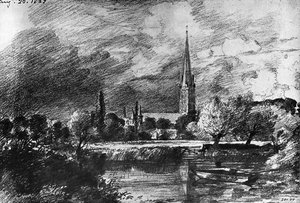
In the vast, sweeping expanse of John Constable’s "Old Sarum," we are invited into a moment where time seems to hold its breath. Completed in 1834, this monumental watercolor is far more than a mere topographical record of an English landmark; it is a profound meditation on the ephemeral nature of human endeavor against the enduring majesty of the natural world. As your eyes wander across the canvas, you are immediately struck by the dramatic interplay of light and shadow, a hallmark of the Romantic movement. The scene is dominated by a massive, verdant hill, its summit crowned with the skeletal, crumbling remains of Sarum Cathedral. This juxtaposition of ancient, decaying stone against the vibrant, living pulse of the grassy slopes creates a tension that is both haunting and deeply tranquil.
The atmosphere of the piece is thick with the scent of impending rain. Constable, a master of capturing the "fleeting moment," has rendered a sky that is restless and alive. Swirling clouds in shades of slate, pearl, and charcoal drift across the upper half of the composition, suggesting a heavy, moisture-laden air that threatens to break into a summer storm. This brooding sky does not merely serve as a backdrop; it acts as a psychological force, casting soft, diffused light across the landscape and imbuing the entire vista with a sense of sublime drama. For the collector or designer, this piece offers an unparalleled emotional depth, bringing a sense of quiet contemplation and historical weight to any curated space.
Mastery of Light and Texture
To gaze upon "Old Sarum" is to witness Constable’s technical brilliance in the medium of watercolor. He achieves a remarkable sense of three-dimensionality through the painstaking layering of translucent washes. By applying thin glazes of color in successive stages, he creates a luminous effect, as if the light itself is trapped within the paper. This technique allows for a sophisticated use of atmospheric perspective; notice how the colors soften and lose their sharpest contrasts as the eye moves toward the distant horizon, perfectly mimicking the way mist and air obscure far-off objects.
The artist’s brushwork is equally expressive, oscillating between delicate precision and bold, gestural strokes. Short, rhythmic dabs of pigment delineate the rugged texture of the windswept grass and the tangled foliage, while broader, more fluid sweeps of the brush capture the turbulent movement of the clouds. This variation in texture prevents the eye from resting too long in one place, instead encouraging a continuous journey through the landscape. The muted, earthy palette—rich with ochre, deep greens, and weathered greys—anchors the work in a naturalistic reality, making the scene feel intimately connected to the very soil of the English countryside.
A Legacy of Romanticism
Historically, "Old Sarum" stands as a testament to the rise of landscape painting as a high art form. During an era when much of the academic focus remained on idealized classical subjects, Constable championed the beauty of the local and the observed. He sought to paint not just what he saw, but what he felt. The ruins atop the hill serve as powerful symbols of the passage of time—a memento mori that reminds us of the inevitable cycle of growth and decay. Yet, there is no despair in this decay; rather, there is a sense of peace found in the way nature reclaims and integrates these human remnants into its own grand design.
For those looking to adorn a home or gallery with a piece of art history, a high-quality reproduction of "Old Sarum" provides more than just decoration. It offers a window into the soul of the Romantic era. Whether placed in a sunlit study or a sophisticated contemporary living room, the painting’s ability to evoke both movement and stillness makes it a timeless centerpiece. It is an invitation to slow down, to breathe with the wind, and to find beauty in the weathered, the wild, and the wonderful.
Pytania i odpowiedzi
W jaki sposób można wykorzystać „Old Sarum” autorstwa John Constable w dekoracji wnętrz?
„Old Sarum” jest polecane do Accent, a rekomendowanym pomieszczeniem jest Living Room.
Jakie są prawa do reprodukcji dzieła "Old Sarum" znajdującego się w Muzeum Wiktorii i Alberta?
Oryginał dzieła „Old Sarum” znajduje się w Muzeum Wiktorii i Alberta, a utwór jest stanowi domenę publiczną – autorskie prawa majątkowe wygasły.
Jaką harmonię kolorów prezentuje „Old Sarum” autorstwa John Constable?
„Old Sarum” autorstwa John Constable prezentuje Discordant Palette harmonię kolorystyczną.
Biografia artysty
A Life Rooted in the English Landscape
John Constable, born in 1776 in the idyllic Suffolk village of East Bergholt, wasn’t merely a painter of landscapes; he was a poet of the land, translating its subtle moods and enduring beauty onto canvas with an unprecedented emotional depth. His father, a prosperous corn merchant who owned both Dedham Vale and mills along the River Stour, provided not only financial security but also the very subject matter that would define Constable’s artistic life. This early immersion in the rural world – the slow rhythm of agricultural life, the ever-changing light on fields and water, the intimate details of nature – became indelibly etched into his sensibility. While initially destined to follow his father into business, a burgeoning passion for art, nurtured by local patrons like George Beaumont who introduced him to the works of Claude Lorrain, ultimately steered him toward a different path. Constable’s artistic journey wasn’t immediate; it was a gradual unfolding, shaped by careful observation and a persistent desire to capture not just *what* he saw, but *how* it felt to be present within the landscape.Breaking with Convention: A New Vision of Nature
Constable’s artistic development was marked by a deliberate rejection of prevailing academic conventions. Dissatisfied with the idealized and often theatrical landscapes favored by the Royal Academy, he sought instead a truthful representation of nature, imbued with personal feeling. He wasn't interested in grand historical narratives or mythological scenes; his focus remained steadfastly on the familiar countryside surrounding him. This commitment to depicting ordinary subjects – hay wains, farm buildings, village life – was initially met with resistance from critics who deemed his work too commonplace and lacking in ambition. However, Constable persevered, driven by a conviction that beauty resided in the everyday. He pioneered a technique of *plein air* painting, venturing outdoors to directly observe and capture the fleeting effects of light and weather. This direct engagement with nature allowed him to infuse his canvases with an immediacy and vitality previously unseen in British landscape art. His brushwork became increasingly loose and expressive, employing impasto – thick layers of paint – to create texture and convey a sense of movement and atmosphere. He wasn’t simply recording what he saw; he was translating his emotional response to the land into visual form.Iconic Works and Lasting Influence
Constable's most celebrated works stand as testaments to his unique vision. The Hay Wain (1821), perhaps his most recognizable painting, depicts a quintessential rural scene on the River Stour, capturing the tranquility and harmony of agricultural life. Hadleigh Castle (1829) showcases his dramatic use of light and atmospheric effects, transforming a crumbling ruin into a powerful symbol of time’s passage. The series of paintings depicting Salisbury Cathedral from the Meadows (1823) demonstrates his ability to evoke different moods and times of day, revealing the cathedral as an integral part of the natural landscape. Netley Abbey (1824), with its evocative depiction of architectural grandeur amidst encroaching nature, exemplifies his skill in blending human creation with the wild beauty of the countryside. Despite facing initial struggles for recognition in England, Constable achieved considerable acclaim in France, where his innovative techniques and emotional depth resonated deeply with artists seeking a more naturalistic approach to landscape painting. He influenced the Barbizon School, a group of French painters who shared his commitment to *plein air* painting and direct observation of nature.Personal Life & Final Years
Constable’s personal life was marked by both joy and sorrow. He married Maria Bicknell in 1816, and they had seven children, though sadly several did not survive infancy. His marriage provided him with emotional support but also financial strain. Elected a Royal Academician in 1829, he continued to face criticism from some quarters, particularly regarding his unconventional techniques. His later years were shadowed by Maria’s declining health and eventual death in 1828, an event that deeply affected him. Despite these hardships, Constable remained dedicated to his art, continuing to paint until his own passing on March 31, 1837. He left behind a rich artistic legacy—a testament to his unwavering commitment to capturing the beauty and emotional resonance of the English countryside. His paintings remain powerful evocations of a bygone era, inviting viewers to experience the landscape through his uniquely sensitive eyes.Influences & Artistic Development
Constable’s artistic journey was shaped by several key influences. Initially, he was drawn to the works of Gainsborough, a fellow Suffolk painter known for his depictions of rural life and portraits. He also deeply admired the landscapes of 17th-century Dutch masters, particularly Jacob Ruisdael, whose atmospheric effects and use of light resonated with Constable’s own artistic sensibilities. The introduction to Claude Lorrain by George Beaumont proved pivotal, exposing him to the idealized beauty of classical landscapes and influencing his early compositions. However, Constable quickly moved beyond mere imitation, developing a distinctly personal style characterized by loose brushwork, vibrant colors, and an intense emotional response to nature. He was a keen observer of light and weather, meticulously studying how these elements transformed the landscape throughout the day. His dedication to *plein air* painting—working directly from nature—was revolutionary for his time, challenging the established conventions of academic art.A Legacy of Emotional Resonance
John Constable’s historical significance lies not only in his artistic innovations but also in his profound impact on the development of landscape painting. He challenged academic conventions, elevated the status of ordinary subjects, and paved the way for a more personal and emotionally expressive approach to art. His emphasis on direct observation, atmospheric effects, and truthful representation of nature anticipated many of the concerns of later Impressionist painters. He demonstrated that landscape could be a vehicle for profound emotional expression, capable of evoking feelings of nostalgia, tranquility, and awe. Though he faced financial hardship throughout much of his career, and died relatively young in 1837, his legacy endures. Today, Constable is celebrated as one of Britain’s greatest artists, whose paintings continue to captivate audiences with their beauty, sincerity, and enduring power. His work serves as a poignant reminder of the profound connection between humanity and the natural world, and the transformative potential of art to capture its essence.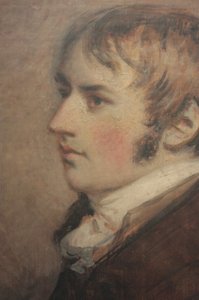
John Constable
1776 - 1837 , Wielka Brytania
Najważniejsze informacje
- Artistic Movement Or Style: Romanticizm
- Artists Or Movements Influenced By This Artist: ['Barbizon School']
- Artists Who Influenced This Artist:
- Claude Lorrain
- Ruisdael
- Date Of Birth: 11 czerwca 1776
- Date Of Death: 31 marca 1837
- Full Name: John Constable
- Nationality: Brytyjski
- Notable Artworks:
- The Hay Wain
- Hadleigh Castle
- Salisbury Cathedral
- Place Of Birth: East Bergholt, UK
Zobacz także powiązane artykuły

Mastering the English Landscape: The Top 25 John Constable Artworks
Immerse yourself in the soul of the English countryside with our curated guide to the top 25 John Constable artworks. Explore the emotive landscapes and Romanticism mastery behind these timeless classics. Find museum-quality reproductions for your decor at OriginalUniqueArt.com.

John Constable: 25 Najlepszych Obrazów Mistrza Angielskiego Krajobrazu | OriginalUniqueArt
Odkryj 25 arcydzieł Johna Constable'a – mistrza angielskiego krajobrazu! Poznaj romantyczne pejzaże, technikę malarską i inspiracje z Dedham Vale. Reprodukcje obrazów najwyższej jakości na OriginalUniqueArt.com. Eksploruj pełną kolekcję online!

Mastering the English Landscape: The Top 25 John Constable Artworks
Immerse yourself in the soul of the English countryside through John Constable’s top 25 masterpieces. Explore the emotive landscapes and romantic techniques that defined an era. Find museum-quality art reproductions and decor inspiration. Discover all masterpieces on OriginalUniqueArt.com.

Mastering the English Landscape: The 25 Best Artworks by John Constable
Immerse yourself in the soul of the English countryside with our curated guide to John Constable's top 25 masterpieces. Explore the emotive landscapes and romantic techniques that defined an era. Find museum-quality art reproductions for your home. Discover all masterpieces on OriginalUniqueArt.com.

Mastering the English Landscape: The Top 25 Artworks by John Constable
Immerse yourself in the soul of the English countryside with our curated guide to John Constable's top 25 masterpieces. Explore the emotive landscapes and Romanticism techniques that define his legacy. Find museum-quality art reproductions at OriginalUniqueArt.com. Discover all masterpieces online.