() ·

Obraz stworzony dla Ciebie, własnoręcznie

Fancy

Ręcznie malowana reprodukcja olejowa

Ręcznie malowany obraz olejny na płótnie, wykonany na zamówienie przez naszych artystów w wybranym przez Ciebie wymiarze i oprawie. ( Przełącz na wydania drukowane Przejdź do wersji cyfrowej)

Opis obiektu

John Angus Chamberlain - amerykański rzeźbiarz i filmowiec, twórca monumentalnych dzieł z elementów samochodowych wykorzystujących technikę prasowania i spawania. Jego abstrakcyjne kompozycje łączą filozofię ekspresjonizmu abstrakcyjnego z nowoczesną sztuką!

Biografia artysty

Explore the dynamic sculptures of John Angus Chamberlain (1927-2011). Known for transforming crushed automobile parts into abstract expressionist art, his innovative work bridges painting & sculpture. Discover a Neo-Dada master!

od ·

Rozdział 1

Jak duży powinien być ten format?

Przesuń suwak, aby zmienić rozmiar; obraz po lewej stronie przedstawia ramę w jej rzeczywistej szerokości. Zachowano proporcje oryginału.

Standardowy format
personalizowane
CM
INCH

Wybierz spośród naszych standardowych rozmiarów, które zachowują oryginalne proporcje dzieła sztuki.

szerokość
wysokość

Wpisz wymaganą szerokość i wysokość, aby obraz pasował do Twojej ramy lub ściany. Ponieważ jest to dzieło malowane ręcznie, w przypadku rozmiaru o innych proporcjach artysta może domalować nieco więcej wokół obrazu lub przyciąć jego fragmenty — wybór należy do Ciebie. Przed rozpoczęciem pracy prześlemy Ci cyfrową wizualizację do zatwierdzenia. Obraz widoczny na tej stronie nie przedstawia rzeczywistego efektu — jedynie wizualizacja oddaje realny rezultat.

Rozdział 2

W jaki sposób ma zostać dostarczone?

Wybierz krawędzie płótna naciągniętego na ramę

Wybierz ramę

Corner sample of the WhiteWrap canvas edge finish, stretched on lite drewno bars
Białe krawędzie zł1
Corner sample of the BlurSideWrap canvas edge finish, stretched on lite drewno bars
rozmyte krawędzie zł1
Corner sample of the ExtendedWrap canvas edge finish, stretched on lite drewno bars
Przedłużony zł1
Corner sample of the P118B picture frame: polistyren formowany, 5 cm wide and 3 cm thick
P118B zł10
Corner sample of the P118H picture frame: polistyren formowany, 5 cm wide and 3 cm thick
P118H zł10
Corner sample of the P118W picture frame: polistyren formowany, 5 cm wide and 3 cm thick
P118W zł10
Corner sample of the P438Z picture frame: polistyren formowany, 5.5 cm wide and 3.5 cm thick
P438Z zł10
Corner sample of the P508JH picture frame: polistyren formowany, 7 cm wide and 3.5 cm thick
P508JH zł12
Corner sample of the P508YH picture frame: polistyren formowany, 7 cm wide and 3.5 cm thick
P508YH zł12
Corner sample of the P805H picture frame: polistyren formowany, 5 cm wide and 3.5 cm thick
P805H zł10
Corner sample of the P805Z picture frame: polistyren formowany, 5 cm wide and 3.5 cm thick
P805Z zł10
Corner sample of the P919BZ picture frame: polistyren formowany, 7 cm wide and 3.5 cm thick
P919BZ zł10
Corner sample of the P919G picture frame: polistyren formowany, 7 cm wide and 3.5 cm thick
P919G zł10
Corner sample of the P919XJ picture frame: polistyren formowany, 7 cm wide and 3.5 cm thick
P919XJ zł10
Corner sample of the P959ZH picture frame: polistyren formowany, 5 cm wide and 3 cm thick
P959ZH zł10
Corner sample of the P968JZ picture frame: polistyren formowany, 6 cm wide and 4 cm thick
P968JZ zł12
Corner sample of the W106C picture frame: lite drewno, 5 cm wide and 3 cm thick
W106C zł8
Corner sample of the W218G picture frame: lite drewno, 5 cm wide and 3 cm thick
W218G zł10
Corner sample of the W218JH picture frame: lite drewno, 5 cm wide and 3 cm thick
W218JH zł8
Corner sample of the W218Y picture frame: lite drewno, 5 cm wide and 3 cm thick
W218Y zł10
Corner sample of the W307PJ picture frame: lite drewno, 6 cm wide and 3 cm thick
W307PJ zł10
Corner sample of the W316G picture frame: lite drewno, 6 cm wide and 3 cm thick
W316G zł10
Corner sample of the W316PJ picture frame: lite drewno, 6 cm wide and 3 cm thick
W316PJ zł8
Corner sample of the W316Y picture frame: lite drewno, 6 cm wide and 3 cm thick
W316Y zł10
Corner sample of the W398PJ picture frame: lite drewno, 5 cm wide and 3 cm thick
W398PJ zł8
Corner sample of the W4111J picture frame: lite drewno, 6.5 cm wide and 3.5 cm thick
W4111J zł10
Corner sample of the W500HY picture frame: lite drewno, 7 cm wide and 5 cm thick
W500HY zł15
Corner sample of the W500JH picture frame: lite drewno, 7 cm wide and 5 cm thick
W500JH zł15
Corner sample of the W692G picture frame: lite drewno, 8 cm wide and 4 cm thick
W692G zł12
Corner sample of the W849H picture frame: lite drewno, 5 cm wide and 3 cm thick
W849H zł8
Corner sample of the W940BG picture frame: lite drewno, 7.5 cm wide and 4.5 cm thick
W940BG zł15
Corner sample of the W953PJ picture frame: lite drewno, 6 cm wide and 3.5 cm thick
W953PJ zł8
Corner sample of the H24-GOLD picture frame: rzeźbione drewno pokryte gipsem, 10 cm wide and 6 cm thick
H24-GOLD zł30
Corner sample of the H24-SILVER picture frame: rzeźbione drewno pokryte gipsem, 10 cm wide and 6 cm thick
H24-SILVER zł30
Corner sample of the H36-GOLD picture frame: rzeźbione drewno pokryte gipsem, 15 cm wide and 6.5 cm thick
H36-GOLD zł45
Corner sample of the H36-SILVER picture frame: rzeźbione drewno pokryte gipsem, 15 cm wide and 6.5 cm thick
H36-SILVER zł45

Profil: . Wymiar całkowity w ramie: .

Rozdział 3

Kto go maluje i czy coś powinno ulec zmianie?

Przykłady możliwych zmian: Zastąpienie twarzy zdjęciem klienta; Dodanie zwierzęcia (np. zamiana kota na psa); Ukrycie wiadomości w tle; Zmiana krajobrazu lub elementów tła.
Po złożeniu zamówienia zespół OriginalUniqueArt.com skontaktuje się z klientem drogą mailową w celu uzyskania instrukcji i prześle podgląd projektu

Dostawa na całym świecie () w ciągu 3–4 tygodni zamiast standardowych 5 tygodni. (4 Listopad). Bez kompromisów w kwestii jakości.

Rozdział 4

Ostatnie szlify

Tabliczka informacyjna, jak w muzeum?

Szczegóły grawerowanej brązowej tabliczki

This elegant plaque features the artist's name and the title of the artwork, finely engraved for a timeless presentation.

It is made from bronze with a refined, elegant finish. The text is precisely laser-engraved for a sharp and permanent result. Measuring 9x2 cm, the plaque is compact yet easy to read. It's built to be durable and scratch-resistant, offering a professional, museum-quality look. Mounting is simple thanks to the included adhesive backing.

Szczegóły przezroczystej tabliczki akrylowej

The plaque includes essential engraved details such as the artist's name, the title of the artwork, the date it was created, the type of media used-like oil on canvas or watercolor-a brief description of the piece, and a QR code that links to the complete artwork information.

It is crafted from clear acrylic, offering a sleek, modern appearance. The text is UV-engraved in black to ensure strong visual contrast. With a size of 10x15 cm, it ensures optimal readability. It comes equipped with two metal hooks for secure wall mounting. The plaque is designed to be weather-resistant, making it suitable for various environments, and it includes interactive features that work seamlessly with smartphone scanning.

Szczegóły czarnej tabliczki akrylowej

This elegant plaque includes engraved information such as the artist's name, the title of the artwork, the date it was created, the type of media used (like oil on canvas or watercolor), a short description of the artwork, and a QR code for quick access to more information.

The plaque itself is made from refined black acrylic with a premium finish. The text is laser-engraved in white for high contrast and readability. Its size is 10x15 cm, designed to be easy to read. It comes with two metal hooks for professional mounting. The design is sleek and fits any interior style. It is also weather-resistant and durable, with built-in digital integration for mobile compatibility.

Werniks ochronny?

Kiedy potrzebujesz dostawy?

Rozdział 5

Twoje dzieło, dokładnie tak, jak zamówiłeś

Fancy

Technika reprodukcji

Wymiary reprodukcji

-

Wybitny mistrz artystyczny

Większa szczegółowość, finezja i dodatkowy czas na realizację

-

Opcje oprawy reprodukcji

-

-

W przypadku dzieł sztuki lub reprodukcji, których którykolwiek z boków przekracza 105 cm (około 41 cali), rama zostanie wysłana w formie zestawu do samodzielnego montażu. Metoda ta zapewnia bezpieczną dostawę i zapobiega uszkodzeniom podczas transportu.

Wymagany profesjonalny montaż – nie jest to produkt typu DIY.
Zestaw musi zostać złożony, a płótno naciągnięte przez doświadczonego profesjonalnego ramiarza, przy użyciu kleju do drewna (brak w zestawie), kleszczy do naciągania płótna oraz ścisków, które utrzymają krosna w równej pozycji podczas schnięcia kleju. Nieprawidłowy montaż lub nierównomierne napięcie płótna może trwale uszkodzić dzieło sztuki i nie podlega naszej gwarancji.

  • W zestawie znajdują się wszystkie listwy z litego drewna, precyzyjnie docięte do wymiarów.

  • Montaż odbywa się przy użyciu dołączonych wkrętów oraz kleju do drewna do łączenia narożników, którego zestaw nie zawiera i który musi zostać dostarczony przez ramiarza.

  • Wymagane są profesjonalne narzędzia, których nie ma w zestawie: kleszcze do naciągania płótna (napinacz) oraz zaciski, które pozwolą utrzymać listwy w równej pozycji podczas schnięcia kleju.

Ważne:
Do połączenia narożników niezbędny jest klej do drewna, listwy należy unieruchomić za pomocą ścisków do momentu całkowitego wyschnięcia kleju, a naciągnięcie płótna na złożoną ramę wymaga użycia kleszczy do naciągania płótna. Żaden z tych elementów nie jest dołączony do zestawu. Przed zamówieniem tego rozmiaru zalecamy konsultację z doświadczonym ramiarzem.

Etykieta obiektu

-

-

Lakier ochronny

Lakier z połyskiem (pogłębia kolory, chroni przed światłem i wilgocią)

-

Personalizacja dzieła

Przykłady możliwości personalizacji: zastąp twarz zdjęciem klienta; dodaj zwierzę domowe (np. zamień kota na psa); umieść ukrytą wiadomość w tle; zmień krajobraz lub elementy tła.

-

Ekspresowa

Dostawa na cały świat () w ciągu 3–4 tygodni zamiast standardowych 5 tygodni. (4 Listopad). Bez kompromisów w kwestii jakości.

-

Przesyłka ekspresowa

Dostawa na cały świat () w ciągu 5 tygodni. (11 Listopad).

W cenie

Cena całkowita

zł 1173

Suma całkowita zł 1173

Opcja ze szkłem jest dostępna wyłącznie w rozmiarach poniżej 110 cm

W każdym zamówieniu

  • Bezpłatna ekspresowa wysyłka na cały świat
  • Wysokiej jakości płótno lniane
  • Pełne ubezpieczenie przesyłki
  • Gwarancja zwrotu należności celnych i podatków importowych
  • Gwarancja wiernego odwzorowania kolorów
  • 100-dniowa polityka zwrotów (tylko w przypadku wad)
  • Gwarancja 100% zwrotu pieniędzy
  • Zniżka przy zakupie wielu sztuk

Fancy That – A Monumental Embrace of Assemblage

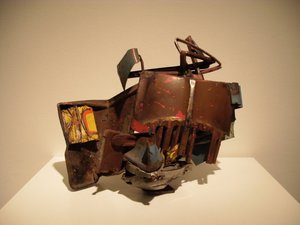
The image captures John Angus Chamberlain’s *Fancy That*, a sculpture that transcends conventional artistic boundaries—a testament to the transformative power of repurposing industrial detritus into breathtaking art. Released in 2025, this piece exemplifies Chamberlain's signature approach: meticulously reshaping discarded automobile parts into monumental forms that echo the spirit of Abstract Expressionism. The photograph focuses intently on a striking red chair – its seat crafted from wood and reinforced by a robust metal frame – positioned against a backdrop of complementary couches and a dining table. This deliberate composition isn’t merely aesthetic; it speaks to Chamberlain's fascination with confronting materiality and challenging artistic conventions.

The Genesis of Innovation: Chamberlain's Method

Chamberlain’s artistic journey began in Indiana, where he honed his skills carving metal alongside fellow artists exploring new frontiers of expression. Pratt Institute cemented his foundational training, equipping him with the technical prowess necessary to pioneer innovative techniques like welding and crushing – processes that fundamentally altered how materials were treated within sculpture. This dedication to experimentation wasn't simply about mastering craft; it was about actively rejecting established norms and forging a path toward artistic liberation. As he himself described, “I wanted to make things that felt like they had come from somewhere else.”

Neo-Dada’s Echoes: Embracing Chance and Transformation

Chamberlain’s work firmly establishes him as a pivotal innovator within the Neo-Dada movement—a reaction against rationalism and formalism following World War II. Like Marcel Duchamp, Chamberlain questioned the very definition of art by elevating commonplace objects – specifically automobile parts – to sculptural status. This audacious gesture wasn't intended to mock artistic seriousness but rather to provoke contemplation about process, perception, and the relationship between artist and material. The resulting sculptures are imbued with a palpable sense of dynamism and unpredictability—a reflection of Chamberlain’s belief that “the best things happen when you don’t know what you’re doing.”

A Symphony of Texture and Color: Analyzing *Fancy That*

The sculpture's visual impact is immediately arresting thanks to its masterful use of color and texture. The dominant hue – a vibrant red – draws the eye, anchoring the chair within the frame of the composition. However, it’s the textural complexity that truly captivates—the rough surfaces of crushed metal juxtaposed against the smooth grain of wood create a compelling dialogue between opposing forces. This deliberate contrast underscores Chamberlain's desire to engage viewers on multiple levels, stimulating tactile sensation alongside visual perception. The resulting artwork embodies the spirit of Abstract Expressionism by prioritizing gesture and emotion over representational accuracy.

Beyond Reproduction: Experiencing Chamberlain’s Vision

A high-quality reproduction captures only a fraction of *Fancy That*'s essence—the palpable energy conveyed through its form and texture. To truly appreciate Chamberlain's artistic vision, consider commissioning a hand-painted replica that faithfully recreates the sculpture's original materiality and chromatic palette. This immersive experience allows you to engage with the artwork’s profound symbolism – the automobile part representing both decay and rebirth – and contemplate its enduring legacy as a champion of assemblage and a pioneer in redefining sculptural practice.

Pytania i odpowiedzi

Do czego zaleca się wykorzystanie wydruku "Fancy"?

Zalecanym zastosowaniem wydruku "Fancy" jest Akcent kolorystyczny.

Jaka jest luminancja dzieła „Fancy” – John Angus Chamberlain?

„Fancy” – John Angus Chamberlain ma luminancję na poziomie Jasna równowaga. Luminancja określa, jak dużą ilość światła zdają się odbijać kolory.

Co przedstawia "Fancy"?

Tematyka obecna w „Fancy” – John Angus Chamberlain obejmuje sculpture, assemblage, automobile parts, abstraction, metal sculpture, john angus chamberlain, neo-dada art. Razem stanowią one podsumowanie tematyki dzieła.

Więcej o tym obrazie

Przełącz na wydania drukowane Przejdź do wersji cyfrowej Wyślij jako kartkę
Szczegóły dzieła Przewodnik Dodaj do ulubionych Pobierz obraz Podobne obiekty Pokaz slajdów Pytania i odpowiedzi Statystyki

W liczbach

  • 29dostępne ramy do wyboru
  • standardowe formaty, w ich własnych proporcjach
  • 5tygodni na namalowanie i dostarczenie dzieła

O oryginale

Wymiary
133.0 x 114.0 cm
John Angus Chamberlain

John Angus Chamberlain

1927 - 2011, United States of America

Krótkie informacje o John Angus Chamberlain

  • Full Name: John Angus Chamberlain
  • Nationality: American
  • Date Of Birth: 1927
  • Date Of Death: 2011
  • Place Of Birth: Rochester, United States of America
  • Notable Artworks:
    • Fancy
    • Sleeping Giant
  • Artistic Movement Or Style: Abstract Expressionism
  • Artists Who Influenced This Artist:
    • Robert Delaunay
    • Jean Dubuffet
  • Artists Or Movements Influenced By This Artist: ['Neo-Dada']

Biografia artysty

The Alchemist of Automobilia: The Life and Legacy of John Angus Chamberlain

In the intersection of industrial decay and high art, few figures loom as large or as provocatively as John Angus Chamberlain. Born in 1927 in Rochester, Indiana, Chamberlain did not merely create sculpture; he orchestrated a metamorphosis of the discarded. To look upon his work is to witness a violent yet poetic dialogue between the mechanical past and the abstract present. He possessed a singular vision that allowed him to see not just rusted scrap, but a vocabulary of form, color, and texture. His journey from the son of a saloonkeeper in the American Midwest to a titan of the Neo-Dada movement is a testament to an unyielding creative impulse that sought to find beauty within the crushed and the broken.

Chamberlain’s artistic consciousness was forged through a diverse and rigorous educational odyssey. After serving in the United States Navy during the pivotal years of World War II, he utilized the GI Bill to immerse himself in the burgeoning avant-garde scenes of America. His time at the Art Institute of of Chicago provided him with a foundational mastery of form, but it was his tenure at the legendary Black Mountain College that truly expanded his intellectual horizons. At Black Mountain, he moved beyond the purely visual, studying under influential poets such as Charles Olson and Robert Creeley. This literary immersion profoundly shaped his sculptural language; he famously viewed his collection of automotive fragments as a reservoir of words, where the act of welding was akin to composing a stanza, seeking the perfect placement of one jagged edge against another to achieve a rhythmic, poetic resonance.

A Symphony of Steel and Spontaneity

The hallmark of Chamberlain’s oeuvre lies in his revolutionary technique of assemblage. While many of his contemporaries were exploring the flat planes of Abstract Expressionist painting, Chamberlain sought to bring that same gestural energy into three-dimensional space. He became a master of the "crushed" aesthetic, meticulously dismantling abandoned automobiles and extracting their vibrant, enamel-coated metal components. Through the intense processes of welding, bending, and compressing, he transformed these industrial remnants into monumental forms that pulsed with an almost organic vitality.

His work defies easy categorization, existing in a fluid state between several major movements:

  • Abstract Expressionism: He translated the spontaneous, emotional brushstrokes of painters like Pollock into the physical manipulation of steel and chrome.
  • Neo-Dada: By utilizing found objects and "readymades" from the industrial age, he challenged the sanctity of traditional sculptural materials like marble or bronze.
  • Pop Art: His use of consumerist detritus—the very skin of the American automobile—connected his high-art ambitions to the burgeoning mass culture of the mid-20th century.

There is a palpable tension in his sculptures, a sense of captured motion and compressed energy. The bright flashes of Cadillac red or Chevrolet blue, often peeking through layers of rust and grime, create a chromatic intensity that mirrors the dynamism of urban life. He did not seek to represent the car, but rather to capture the spirit of its movement and the inevitable entropy of its decay.

Historical Significance and the Enduring Pulse of Art

Throughout his prolific career, Chamberlain’s presence was felt across the most significant art hubs of the world, from Manhattan and Los Angeles to Shelter Island and even Belgium. His ability to disrupt the boundaries between sculpture and painting left an indelible mark on the trajectory of modern art. He proved that the debris of the industrial revolution could serve as the medium for a profound spiritual and aesthetic inquiry. Critics often noted that while his materials were cold and hard, the emotional impact of his work was deeply visceral, aiming—as he himself desired—to "make the viewer’s heart beat."

As we reflect on his life, which concluded in 2011, Chamberlain remains a pivotal figure who bridged the gap between the mechanical and the lyrical. He taught us that art is not merely about the creation of something new, but about the radical reimagining of what already exists. His legacy lives on in every artist who looks at the wreckage of the world and sees the potential for a masterpiece, reminding us that even in the crushed and the discarded, there is an eternal, unyielding beauty waiting to be welded back together.

Najważniejsze informacje

  • Medium: Sculpture
  • Influences: Marcel Duchamp
  • Title: Fancy
  • Subject or theme: Automobile sculpture
  • Dimensions: 133 x 114 cm

Quiz o sztuce

Do każdego pytania dotyczy tylko jedna poprawna odpowiedź.

Pytanie 1:
Jak nazywa się obraz?
Pytanie 2:
Kto jest twórcą przedstawionego dzieła sztuki?
Pytanie 3:
Z jakich materiałów wykonano rzeźbę?
Pytanie 4:
Czy obraz przedstawia elementy abstrakcji?
Pytanie 5:
W którym ruchu artystycznym można przypisać dzieło sztuki?
Odkryj dzieła sztuki uporządkowane według tematów, stylów i cech charakterystycznych.