Rozmiar tekstu

() ·

Obraz stworzony dla Ciebie, własnoręcznie

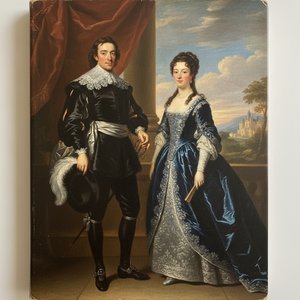
Field-Marshal George Wade

Ręcznie malowana reprodukcja olejowa

Ręcznie malowany obraz olejny na płótnie, wykonany na zamówienie przez naszych artystów w wybranym przez Ciebie wymiarze i oprawie. ( Przełącz na wydania drukowane Przejdź do wersji cyfrowej)

Opis obiektu

A powerful 1731 portrait of Field-Marshal George Wade by Johan van Diest captures Baroque military elegance through dramatic light and meticulous detail, inviting you to bring this piece of history into your collection.

Biografia artysty

Explore the portraits of Johan van Diest, a 18th-century Dutch artist renowned for his detailed group portraits of prominent figures – nobles, statesmen & military leaders.

od ·

Rozdział 1

Jak duży powinien być ten format?

Przesuń suwak, aby zmienić rozmiar; obraz po lewej stronie przedstawia ramę w jej rzeczywistej szerokości. Zachowano proporcje oryginału.

Standardowy format
personalizowane
CM
INCH

Wybierz spośród naszych standardowych rozmiarów, które zachowują oryginalne proporcje dzieła sztuki.

szerokość
wysokość

Wpisz wymaganą szerokość i wysokość, aby obraz pasował do Twojej ramy lub ściany. Ponieważ jest to dzieło malowane ręcznie, w przypadku rozmiaru o innych proporcjach artysta może domalować nieco więcej wokół obrazu lub przyciąć jego fragmenty — wybór należy do Ciebie. Przed rozpoczęciem pracy prześlemy Ci cyfrową wizualizację do zatwierdzenia. Obraz widoczny na tej stronie nie przedstawia rzeczywistego efektu — jedynie wizualizacja oddaje realny rezultat.

Rozdział 2

W jaki sposób ma zostać dostarczone?

Wybierz krawędzie płótna naciągniętego na ramę

Wybierz ramę

Corner sample of the WhiteWrap canvas edge finish, stretched on lite drewno bars
Białe krawędzie zł1
Corner sample of the BlurSideWrap canvas edge finish, stretched on lite drewno bars
rozmyte krawędzie zł1
Corner sample of the ExtendedWrap canvas edge finish, stretched on lite drewno bars
Przedłużony zł1
Corner sample of the P118B picture frame: polistyren formowany, 5 cm wide and 3 cm thick
P118B zł10
Corner sample of the P118H picture frame: polistyren formowany, 5 cm wide and 3 cm thick
P118H zł10
Corner sample of the P118W picture frame: polistyren formowany, 5 cm wide and 3 cm thick
P118W zł10
Corner sample of the P438Z picture frame: polistyren formowany, 5.5 cm wide and 3.5 cm thick
P438Z zł10
Corner sample of the P508JH picture frame: polistyren formowany, 7 cm wide and 3.5 cm thick
P508JH zł12
Corner sample of the P508YH picture frame: polistyren formowany, 7 cm wide and 3.5 cm thick
P508YH zł12
Corner sample of the P805H picture frame: polistyren formowany, 5 cm wide and 3.5 cm thick
P805H zł10
Corner sample of the P805Z picture frame: polistyren formowany, 5 cm wide and 3.5 cm thick
P805Z zł10
Corner sample of the P919BZ picture frame: polistyren formowany, 7 cm wide and 3.5 cm thick
P919BZ zł10
Corner sample of the P919G picture frame: polistyren formowany, 7 cm wide and 3.5 cm thick
P919G zł10
Corner sample of the P919XJ picture frame: polistyren formowany, 7 cm wide and 3.5 cm thick
P919XJ zł10
Corner sample of the P959ZH picture frame: polistyren formowany, 5 cm wide and 3 cm thick
P959ZH zł10
Corner sample of the P968JZ picture frame: polistyren formowany, 6 cm wide and 4 cm thick
P968JZ zł12
Corner sample of the W106C picture frame: lite drewno, 5 cm wide and 3 cm thick
W106C zł8
Corner sample of the W218G picture frame: lite drewno, 5 cm wide and 3 cm thick
W218G zł10
Corner sample of the W218JH picture frame: lite drewno, 5 cm wide and 3 cm thick
W218JH zł8
Corner sample of the W218Y picture frame: lite drewno, 5 cm wide and 3 cm thick
W218Y zł10
Corner sample of the W307PJ picture frame: lite drewno, 6 cm wide and 3 cm thick
W307PJ zł10
Corner sample of the W316G picture frame: lite drewno, 6 cm wide and 3 cm thick
W316G zł10
Corner sample of the W316PJ picture frame: lite drewno, 6 cm wide and 3 cm thick
W316PJ zł8
Corner sample of the W316Y picture frame: lite drewno, 6 cm wide and 3 cm thick
W316Y zł10
Corner sample of the W398PJ picture frame: lite drewno, 5 cm wide and 3 cm thick
W398PJ zł8
Corner sample of the W4111J picture frame: lite drewno, 6.5 cm wide and 3.5 cm thick
W4111J zł10
Corner sample of the W500HY picture frame: lite drewno, 7 cm wide and 5 cm thick
W500HY zł15
Corner sample of the W500JH picture frame: lite drewno, 7 cm wide and 5 cm thick
W500JH zł15
Corner sample of the W692G picture frame: lite drewno, 8 cm wide and 4 cm thick
W692G zł12
Corner sample of the W849H picture frame: lite drewno, 5 cm wide and 3 cm thick
W849H zł8
Corner sample of the W940BG picture frame: lite drewno, 7.5 cm wide and 4.5 cm thick
W940BG zł15
Corner sample of the W953PJ picture frame: lite drewno, 6 cm wide and 3.5 cm thick
W953PJ zł8
Corner sample of the H24-GOLD picture frame: rzeźbione drewno pokryte gipsem, 10 cm wide and 6 cm thick
H24-GOLD zł30
Corner sample of the H24-SILVER picture frame: rzeźbione drewno pokryte gipsem, 10 cm wide and 6 cm thick
H24-SILVER zł30
Corner sample of the H36-GOLD picture frame: rzeźbione drewno pokryte gipsem, 15 cm wide and 6.5 cm thick
H36-GOLD zł45
Corner sample of the H36-SILVER picture frame: rzeźbione drewno pokryte gipsem, 15 cm wide and 6.5 cm thick
H36-SILVER zł45

Profil: . Wymiar całkowity w ramie: .

Rozdział 3

Kto go maluje i czy coś powinno ulec zmianie?

Przykłady możliwych zmian: Zastąpienie twarzy zdjęciem klienta; Dodanie zwierzęcia (np. zamiana kota na psa); Ukrycie wiadomości w tle; Zmiana krajobrazu lub elementów tła.
Po złożeniu zamówienia zespół OriginalUniqueArt.com skontaktuje się z klientem drogą mailową w celu uzyskania instrukcji i prześle podgląd projektu

Dostawa na całym świecie () w ciągu 3–4 tygodni zamiast standardowych 5 tygodni. (6 Listopad). Bez kompromisów w kwestii jakości.

Rozdział 4

Ostatnie szlify

Tabliczka informacyjna, jak w muzeum?

Szczegóły grawerowanej brązowej tabliczki

This elegant plaque features the artist's name and the title of the artwork, finely engraved for a timeless presentation.

It is made from bronze with a refined, elegant finish. The text is precisely laser-engraved for a sharp and permanent result. Measuring 9x2 cm, the plaque is compact yet easy to read. It's built to be durable and scratch-resistant, offering a professional, museum-quality look. Mounting is simple thanks to the included adhesive backing.

Szczegóły przezroczystej tabliczki akrylowej

The plaque includes essential engraved details such as the artist's name, the title of the artwork, the date it was created, the type of media used-like oil on canvas or watercolor-a brief description of the piece, and a QR code that links to the complete artwork information.

It is crafted from clear acrylic, offering a sleek, modern appearance. The text is UV-engraved in black to ensure strong visual contrast. With a size of 10x15 cm, it ensures optimal readability. It comes equipped with two metal hooks for secure wall mounting. The plaque is designed to be weather-resistant, making it suitable for various environments, and it includes interactive features that work seamlessly with smartphone scanning.

Szczegóły czarnej tabliczki akrylowej

This elegant plaque includes engraved information such as the artist's name, the title of the artwork, the date it was created, the type of media used (like oil on canvas or watercolor), a short description of the artwork, and a QR code for quick access to more information.

The plaque itself is made from refined black acrylic with a premium finish. The text is laser-engraved in white for high contrast and readability. Its size is 10x15 cm, designed to be easy to read. It comes with two metal hooks for professional mounting. The design is sleek and fits any interior style. It is also weather-resistant and durable, with built-in digital integration for mobile compatibility.

Werniks ochronny?

Kiedy potrzebujesz dostawy?

Rozdział 5

Twoje dzieło, dokładnie tak, jak zamówiłeś

Field-Marshal George Wade

Technika reprodukcji

Wymiary reprodukcji

-

Wybitny mistrz artystyczny

Większa szczegółowość, finezja i dodatkowy czas na realizację

-

Opcje oprawy reprodukcji

-

-

W przypadku dzieł sztuki lub reprodukcji, których którykolwiek z boków przekracza 105 cm (około 41 cali), rama zostanie wysłana w formie zestawu do samodzielnego montażu. Metoda ta zapewnia bezpieczną dostawę i zapobiega uszkodzeniom podczas transportu.

Wymagany profesjonalny montaż – nie jest to produkt typu DIY.
Zestaw musi zostać złożony, a płótno naciągnięte przez doświadczonego profesjonalnego ramiarza, przy użyciu kleju do drewna (brak w zestawie), kleszczy do naciągania płótna oraz ścisków, które utrzymają krosna w równej pozycji podczas schnięcia kleju. Nieprawidłowy montaż lub nierównomierne napięcie płótna może trwale uszkodzić dzieło sztuki i nie podlega naszej gwarancji.

  • W zestawie znajdują się wszystkie listwy z litego drewna, precyzyjnie docięte do wymiarów.

  • Montaż odbywa się przy użyciu dołączonych wkrętów oraz kleju do drewna do łączenia narożników, którego zestaw nie zawiera i który musi zostać dostarczony przez ramiarza.

  • Wymagane są profesjonalne narzędzia, których nie ma w zestawie: kleszcze do naciągania płótna (napinacz) oraz zaciski, które pozwolą utrzymać listwy w równej pozycji podczas schnięcia kleju.

Ważne:
Do połączenia narożników niezbędny jest klej do drewna, listwy należy unieruchomić za pomocą ścisków do momentu całkowitego wyschnięcia kleju, a naciągnięcie płótna na złożoną ramę wymaga użycia kleszczy do naciągania płótna. Żaden z tych elementów nie jest dołączony do zestawu. Przed zamówieniem tego rozmiaru zalecamy konsultację z doświadczonym ramiarzem.

Etykieta obiektu

-

-

Lakier ochronny

Lakier z połyskiem (pogłębia kolory, chroni przed światłem i wilgocią)

-

Personalizacja dzieła

Przykłady możliwości personalizacji: zastąp twarz zdjęciem klienta; dodaj zwierzę domowe (np. zamień kota na psa); umieść ukrytą wiadomość w tle; zmień krajobraz lub elementy tła.

-

Ekspresowa

Dostawa na cały świat () w ciągu 3–4 tygodni zamiast standardowych 5 tygodni. (6 Listopad). Bez kompromisów w kwestii jakości.

-

Przesyłka ekspresowa

Dostawa na cały świat () w ciągu 5 tygodni. (13 Listopad).

W cenie

Cena całkowita

zł 1173

Suma całkowita zł 1173

Opcja ze szkłem jest dostępna wyłącznie w rozmiarach poniżej 110 cm

W każdym zamówieniu

  • Bezpłatna ekspresowa wysyłka na cały świat
  • Wysokiej jakości płótno lniane
  • Pełne ubezpieczenie przesyłki
  • Gwarancja zwrotu należności celnych i podatków importowych
  • Gwarancja wiernego odwzorowania kolorów
  • 100-dniowa polityka zwrotów (tylko w przypadku wad)
  • Gwarancja 100% zwrotu pieniędzy
  • Zniżka przy zakupie wielu sztuk

A Vision of Command: The Presence of Field-Marshal George Wade

In the grand tradition of eighteenth-century portraiture, few works capture the intersection of military authority and natural majesty as effectively as Johan van Diest’s 1731 masterpiece, Field-Marshal George Wade. This striking oil painting serves as more than a mere likeness; it is a profound study of power, duty, and the indomitable spirit of an era defined by expansion and conflict. As the viewer encounters the subject, they are immediately struck by the commanding presence of the Field-Marshal, whose vibrant red attire—the iconic hue of British military distinction—commands the center of the composition. Van Diest utilizes a masterful command of light to illuminate the textures of the man's uniform, creating a tactile experience that brings the historical weight of the 1730s directly into the modern collector's gaze.

The artistry of Johan van Diest is deeply rooted in the dramatic legacy of the Dutch masters, particularly through his sophisticated use of chiaroscuro. By orchestrating a delicate interplay between deep shadows and brilliant highlights, Van Diest breathes life into the subject’s features, lending an air of contemplative wisdom to the Field-Marshal's expression. The meticulous detail found in the lace of his cravat, the sheen of his military regalia, and the subtle contours of his wig reflects a technical precision that was hallmark to the Enlightenment period. This level of craftsmanship ensures that every brushstroke contributes to a narrative of dignity, making the piece an exquisite focal point for those who appreciate the rigorous standards of classical European portraiture.

Beyond the individual, the painting offers a breathtaking dialogue between man and the wild landscape. The backdrop of rugged, soaring mountains provides a dramatic contrast to the structured, formal elegance of the Field-Marshal’s attire. This juxtaposition serves as a powerful symbol: it represents the imposition of order and civilization upon the untamed frontiers of the world. The distant, smaller figures scattered within the landscape add a sense of immense scale and historical movement, suggesting the vast theaters of war and governance that Wade oversaw. For the interior designer or art enthusiast, this composition offers a unique emotional depth, blending the intimacy of a personal portrait with the epic scope of a historical landscape.

Integrating such a distinguished work into a curated space brings an atmosphere of timeless sophistication and intellectual gravity. Whether placed in a stately library, a formal dining room, or a contemporary gallery setting, this reproduction of Van Diest’s work acts as a window into the past. It invites conversation about leadership, the evolution of military history, and the enduring beauty of the Baroque-influenced style. For collectors seeking to invest in pieces that evoke both prestige and emotional resonance, Field-Marshal George Wade stands as an unparalleled choice, offering a permanent connection to the grandeur of the eighteenth century.

Pytania i odpowiedzi

Jak intensywne są kolory w „Field-Marshal George Wade” – Johan Van Diest?

Intensywność barw w dziele „Field-Marshal George Wade” wynosi Balanced. Intensywność określa, jak nasycone wydają się kolory.

Jaki poziom kontrastu prezentuje „Field-Marshal George Wade” – Johan Van Diest?

Poziom kontrastu dzieła „Field-Marshal George Wade” – Johan Van Diest wynosi Gentle.

Jakie emocje budzi "Field-Marshal George Wade"?

„Field-Marshal George Wade” – Johan Van Diest emanuje Powerful emocjonalnym nastrojem.

Więcej o tym obrazie

Podgląd w skali 1:1 Podgląd AR Przełącz na wydania drukowane Przejdź do wersji cyfrowej Wyślij jako kartkę
Szczegóły dzieła Przewodnik Dodaj do ulubionych Pobierz obraz Podobne obiekty RTG Pokaz slajdów Pytania i odpowiedzi Statystyki

W liczbach

  • 1731rok powstania dzieła
  • 29dostępne ramy do wyboru
  • standardowe formaty, w ich własnych proporcjach
  • 5tygodni na namalowanie i dostarczenie dzieła
Johan Van Diest

Johan Van Diest

1695 - 1757

Krótkie informacje o Johan Van Diest

  • Artistic Movement Or Style: Classical Portraiture
  • Artists Who Influenced This Artist:
    • Peter Paul Rubens
    • Rembrandt
  • Date Of Birth: 1695
  • Date Of Death: 1757
  • Full Name: Johan van Diest
  • Nationality: Dutch
  • Notable Artworks:
    • Portrait of Willem III
    • Portrait of Johan Casimir van Nassau-Siegen
  • Place Of Birth: Amsterdam, Netherlands

Biografia artysty

The Painter of Dignified Presence

Johan van Diest (1695 – 1757) stands as a singular figure in Dutch portraiture during the Enlightenment, distinguished not merely by his technical skill but by an unwavering commitment to capturing the essence of character and conveying profound dignity. Unlike many of his contemporaries who prioritized superficial beauty or flamboyant display, Van Di Diest’s canvases offer glimpses into the inner lives of his subjects—nobles, statesmen, and military leaders—presenting them as embodiments of virtue and intellect. His work serves as a window into an era where the portrait was more than a mere likeness; it was a profound study of power, duty, and the indomitable spirit of a changing world.

Born in Leiden, Van Diest received a rigorous artistic education that deeply embedded the legacy of the Dutch Masters within his technique. The influence of Rembrandt Harmensz van Rijn is particularly palpable in his approach to light; the masterful use of chiaroscuro—the dramatic interplay between deep shadows and brilliant highlights—became a cornerstone of his style. This ability to orchestrate light allowed him to breathe life into his subjects, lending an air of contemplative wisdom to even the most formidable military figures. While the shadows provided depth, his application of thin glazes over meticulous underdrawings achieved a remarkable luminosity, allowing him to render the textures of silk, lace, and heavy military regalia with astonishing realism.

Mastery of Detail and Command

The technical precision of Van Diest’s oeuvre is characterized by an almost sculptural quality. He employed a painstaking layering process that allowed for a tactile experience, where the viewer can almost feel the sheen of a commander's uniform or the delicate crispness of a cravat. This meticulous attention to detail was not merely decorative but served a narrative purpose, reinforcing the status and authority of his sitters. His portraits often juxtapose the structured, formal elegance of human attire against dramatic, rugged landscapes, creating a powerful symbolic dialogue between the order of civilization and the untamed majesty of nature.

His notable commissions reflect the high esteem in which he was held by the European elite. Among his most celebrated works are depictions of:

  • Willem III, Prince of Orange, capturing the weight of royal responsibility.
  • Field-Marshal George Wade, a masterpiece from 1731 that exemplifies the intersection of military authority and natural majesty through vibrant red attire and commanding presence.
  • General George Wade, where Baroque elegance meets the raw power of a seasoned leader.
  • Cornelis Tromp, the commander-in-chief of the Dutch West Indies fleet, rendered with psychological insight.

Legacy of the Enlightenment

While the shadows of Rembrandt, Rubens, and Caravaggio loom large over his formative years, Van Diest forged a path uniquely his own. His artistic legacy is defined by an uncompromising pursuit of dignity and a refusal to succumb to the purely ornamental. In an age of expansion and conflict, his portraits provided a sense of permanence and moral weight. Through his ability to capture both the physical likeness and the psychological depth of his subjects, Johan van Diest ensured that his work would remain a vital record of the individuals who shaped the political and military landscape of the eighteenth century.

Najważniejsze informacje

  • Artistic style: Baroque elegance
  • Subject or theme: Military portraiture and dignity
  • Year: 1731