

 Zobacz w skali 1:1
 Wyślij
 Udostępnij
 Szczegóły
 Przewodnik

 Pobierz plik obrazu
 Podobne obiekty
 RTG
RTG Pokaz slajdów
 Statystyki
Untitled (ARJCHM)
 Oil On Canvas
- WallArt
- Romanticism
 19th Century
 97.0 x 130.0 cm
 Luwr
Luwr
 Czytaj więcej
Giclée / Wydruk artystyczny
Wydruki giclée lub płótna o jakości muzealnej, szybka realizacja i szeroki wybór opcji wykończenia. ( Kup ręcznie malowany obraz Przełącz na wersję cyfrową)




P118B zł10

P118H zł10

P118W zł10

P438Z zł10

P508JH zł12

P508YH zł12

P805H zł10

P805Z zł10

P919BZ zł10

P919G zł10

P919XJ zł10

P959ZH zł10

P968JZ zł12

W106C zł8

W218G zł10

W218JH zł8

W218Y zł10

W307PJ zł10

W316G zł10

W316PJ zł8

W316Y zł10

W398PJ zł8

W4111J zł10

W500HY zł15

W500JH zł15

W692G zł12

W849H zł8

W940BG zł15

W953PJ zł8




Wybierz spośród naszych standardowych rozmiarów, które zachowują oryginalne proporcje dzieła sztuki.

Wpisz wymaganą szerokość i wysokość, aby dopasować grafikę do ramy lub ściany. Wydruk można jedynie przyciąć, nigdy nie powiększając go poza oryginalny obraz, dlatego format o innym proporcji spowoduje utratę części kompozycji. Przed rozpoczęciem druku prześlemy Ci cyfrowy podgląd do zatwierdzenia. Obraz wyświetlany na tej stronie nie pokazuje rzeczywistego przycięcia — jedynie podgląd oddaje ten efekt.
Dostawa na cały świat () w ciągu 2 tygodni zamiast standardowych 4/5 tygodni. (23 Październik)

Bezpłatna ekspresowa wysyłka na cały świat

Wysokiej jakości płótno lniane

Pełne ubezpieczenie transportowe

Gwarancja zwrotu należności celnych i podatków importowych

Gwarancja idealnego odwzorowania barw

100-dniowy okres na zwrot dzieła w przypadku wykrycia wad produkcyjnych

Gwarancja 100% zwrotu pieniędzy

Oferta przy zakupie wielu sztuk
 Opcja ze szkłem jest dostępna wyłącznie w rozmiarach poniżej 110 cm

Untitled (ARJCHM)
Giclée / Wydruk artystyczny
Rozmiar reprodukcji
-


Suma do zapłaty
zł 308
A Tempestuous Vision: The Raw Power of Géricault’s Masterpiece
In the annals of art history, few works command the room with such visceral intensity as Théodore Géricault’s The Raft of the Medusa. This monumental oil on canvas is far more than a mere depiction of maritime disaster; it is a profound meditation on human suffering, resilience, and the moral complexities that emerge when civilization fractures under the weight of crisis. Measuring an imposing 97 x 130 cm, the painting immediately captures the viewer's gaze, transporting them into the harrowing reality of the shipwrecked Medusa frigate. As waves surge and shadows deepen, the artwork serves as a searing indictment of governmental negligence, making it a timeless piece for those who appreciate art that challenges the soul and stirs the conscience.
The composition is a masterclass in Romantic tension, utilizing a dramatic pyramidal structure that draws the eye upward through a hierarchy of despair. Inspired by the monumental scale of Michelangelo’s Sistine Chapel, Géricault guides our gaze from the heavy, shadowed figures at the base—those succumbing to exhaustion and death—toward a central figure reaching desperately toward a distant, flickering hope. This movement creates a psychological journey for the observer, mirroring the very struggle for survival depicted on the canvas. The turbulent brushstrokes and the interplay of light and shadow, or chiaroscuro, evoke the fury of a storm that feels almost palpable, as if the salt spray and the roar of the ocean could be felt through the texture of the paint.
The Anatomy of Emotion and Historical Truth
What truly sets this work apart for collectors and connoisseurs is Géricault’s unwavering commitment to realism. To capture the true essence of agony, the artist famously studied cadavers at the Morgue Beaujon in Paris, meticulously observing the pallor of decaying flesh and the slackness of limbs. This dedication to anatomical accuracy lends an unsettling, haunting beauty to the piece, ensuring that every muscle tension and hollow eye socket resonates with authentic grief. His technique, heavily influenced by the dramatic lighting of masters like Rubens and Rembrandt, uses deep, murky tones to create an atmosphere thick with palpable tension and impending doom.
Beyond its technical brilliance, the painting is steeped in the political scandal of its era. The shipwreck itself was a national disgrace in France, a moment where incompetence met catastrophe. By choosing this subject, Géricault transformed a contemporary news event into a universal symbol of the human condition. For an interior designer or art enthusiast, placing a high-quality reproduction of such a work provides more than just a focal point; it introduces a narrative of strength and endurance. It is a piece that invites conversation, offering a window into the Romantic movement's obsession with the sublime—the terrifying beauty of nature’s uncontrollable power and the indomitable spirit of those caught within its grasp.
Pytania i odpowiedzi
Jakie są prawa do reprodukcji dzieła "Untitled (ARJCHM)" znajdującego się w Luwr?
Oryginał dzieła „Untitled (ARJCHM)” znajduje się w Luwr, a utwór jest stanowi domenę publiczną – autorskie prawa majątkowe wygasły.
Gdzie mogę kupić cyfrowy obraz dzieła „Untitled (ARJCHM)” autorstwa Teodor Gericault?
Aby otrzymać plik cyfrowy dzieła „Untitled (ARJCHM)” autorstwa Teodor Gericault, zamów wysokiej rozdzielczości cyfrowe zdjęcie do pobrania na stronie Obraz cyfrowy.
Jakie pochodzenie narodowe stoi za Romanticism dzieła "Untitled (ARJCHM)"?
"Untitled (ARJCHM)" łączy nurt Romanticism z Francja poprzez miejsce urodzenia jego twórcy.
Biografia artysty
A Life Forged in Romantic Fire
Jean-Louis André Théodore Géricault, a name that resonates with the burgeoning spirit of French Romanticism, was born into a world poised on the brink of dramatic change. Arriving in Rouen, France, in 1791, his early life unfolded amidst the echoes of revolution and the rising tide of Napoleonic ambition. Though inheriting a comfortable existence through his family’s legal and business ventures – including a tobacco enterprise – Géricault's destiny lay not in law or commerce but within the realm of artistic expression. His initial training under Carle Vernet, a master of English sporting art, instilled in him a keen eye for anatomy and movement, particularly evident in his depictions of horses. However, it was his subsequent studies with Pierre-Narcisse Guérin that provided a foundation in classical composition, though Géricault’s restless spirit soon led him to seek knowledge independently within the hallowed halls of the Louvre.The Louvre as Academy: A Dialogue with Masters
From 1810 to 1815, the Louvre became Géricault's true academy. He immersed himself in the works of the Old Masters – Rubens, Titian, Velázquez, and Rembrandt – not merely copying their techniques but engaging in a profound dialogue with their artistic philosophies. This period was crucial in shaping his distinctive style, characterized by dramatic chiaroscuro, dynamic compositions, and an intense emotionality that set him apart from his contemporaries. He wasn’t simply replicating; he was absorbing the essence of these masters, internalizing their approaches to light, shadow, and human form. This self-directed education fostered a unique artistic voice, one that would soon challenge the prevailing Neoclassical conventions. His early works, like *The Charging Chasseur* (1812), already hinted at this emerging sensibility, showcasing a boldness of execution and a fascination with movement reminiscent of Rubens’ energetic canvases. He continued to explore equestrian themes, honing his skills in depicting the power and grace of horses – a subject that would remain a recurring motif throughout his career.The Raft of the Medusa: A Monument to Human Suffering
Géricault's name is inextricably linked with *The Raft of the Medusa* (1818-1819), a monumental canvas that transcends mere historical depiction and becomes a searing indictment of human fallibility and societal injustice. Inspired by the harrowing true story of the shipwreck of the French frigate Méduse in 1816, where negligence and incompetence led to unimaginable suffering for its passengers, the painting is a visceral portrayal of desperation, hope, and despair. Géricault undertook meticulous research, interviewing survivors, studying corpses at hospitals, and even constructing a scale model of the raft itself to ensure accuracy. The resulting work is not simply a depiction of tragedy; it’s an immersive experience that confronts viewers with the raw reality of human suffering. The composition, built around two pyramidal structures – one representing despair and death, the other embodying hope and potential rescue – creates a dynamic tension that draws the eye across the canvas. *The Raft of the Medusa* was controversial upon its exhibition at the Salon of 1819, sparking political debate and solidifying Géricault’s reputation as a daring and unconventional artist. The painting's impact extended beyond the art world, becoming a symbol of governmental incompetence and human resilience in the face of unimaginable hardship.Beyond Tragedy: Military Themes and Artistic Legacy
While *The Raft of the Medusa* remains his most celebrated achievement, Géricault's artistic output extended beyond this singular masterpiece. He continually returned to military themes, evident in works like *Wounded Cuirassier* (1814) and *The Derby of Epsom* (1821), demonstrating a fascination with drama and expressive force. These paintings reveal his continued exploration of human emotion under duress, often focusing on the physical and psychological toll of conflict. He also ventured into portraiture and lithography, further expanding his artistic repertoire. Sadly, Géricault’s life was cut short by illness at the age of 32 in 1824, following years of suffering from riding accidents and a chronic tubercular infection. His premature death robbed the art world of a prodigious talent, but his influence on subsequent generations of artists – particularly Eugène Delacroix – was profound. He is remembered as a pioneer of Romanticism, an artist who dared to confront difficult truths and imbue his work with a powerful emotional resonance that continues to captivate audiences today. His bronze figure reclines, brush in hand, on his tomb at Père Lachaise Cemetery in Paris, above a low-relief panel depicting the harrowing scene from *The Raft of the Medusa* – a fitting tribute to an artist who dedicated his life to capturing the complexities and contradictions of the human condition.Key Characteristics & Influences
- Romanticism: Géricault is considered one of the first French Romantic painters, moving away from Neoclassical ideals towards emotional intensity and dramatic expression.
- Dramatic Composition: His paintings are known for their dynamic compositions, often utilizing diagonal lines and contrasting light and shadow to create a sense of movement and tension.
- Realism & Research: Géricault was committed to realism, conducting extensive research – including studying corpses and interviewing survivors – to ensure the accuracy and emotional impact of his work.
- Influence of Old Masters: He drew inspiration from Baroque masters like Rubens, Titian, and Velázquez, adopting their techniques for dramatic lighting and expressive brushwork.
- Focus on Human Suffering: His art often depicts scenes of tragedy, despair, and the darker aspects of human experience, reflecting a Romantic fascination with intense emotions.

Teodor Gericault
1791 - 1824 , Francja
Najważniejsze informacje
- Artistic Movement Or Style: Romantyzm
- Artists Or Movements Influenced By This Artist:
- Rubens
- Titian
- Artists Who Influenced This Artist:
- Carle Vernet
- Guérin
- Date Of Birth: 26 września 1791
- Date Of Death: 26 stycznia 1824
- Full Name: Jean-Louis André Théodore Géricault
- Nationality: Francuz
- Notable Artworks:
- Raft Meduzy
- Wounded Cuirassier
- Derby Epsom
- Place Of Birth: Rouen, Francja
Zobacz także powiązane artykuły
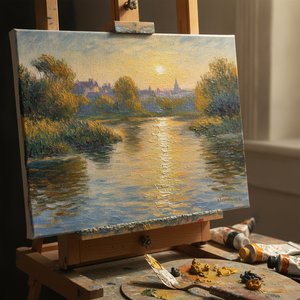
The Soul of Impressionism: Why Oil on Canvas Captures Eternal Light and Timeless Emotion
Discover the enchanting alchemy of Impressionism. Explore how the mastery of oil on canvas, through glazing and impasto, captures eternal light and emotion. Perfect for lovers of Monet and Van Gogh seeking the profound depth of hand-painted fine art.

Odbitki Giclée: Jakość Archiwalna i Estetyczne Niuanse dla Wymagającego Kolekcjonera
Poznaj sekrety druku giclée – technologii zapewniającej najwyższą jakość reprodukcji sztuki i trwałość archiwalaną. Poradnik dla wymagających kolekcjonerów o wyborze papieru, tuszy i profilach kolorystycznych.

Olej na płótnie: Historia, techniki i ponadczasowy urok malarskiego medium
Poznaj historię i techniki malarstwa olejowego! Od renesansowych mistrzów po współczesne zastosowania – wszystko o oleju na płótnie. Poradniki, konserwacja i inspiracje dla pasjonatów sztuki.

Trwała Spuścizna Malarstwa Olejnego: Technika, Historia i Współczesna Praktyka
Poznaj historię i techniki malarstwa olejnego. Poradniki dla artystów, informacje o konserwacji oraz możliwość zamówienia wysokiej jakości reprodukcji obrazów. Ekspercka wiedza i gwarancja trwałości dzieł sztuki.

Trwała Spuścizna Malarstwa Olejnego: Technika, Historia i Estetyczny Wpływ
Poznaj historię i technikę malarstwa olejnego! Eksperckie artykuły o konserwacji, renowacji oraz współczesnych zastosowaniach. Dowiedz się więcej o mistrzach i trwałości obrazów olejnych.


