Menu
BEZPŁATNA KONSULTACJA ARTYSTYCZNA
Zamów wydruk Zamów wydrukKup cyfrowy obraz Kup cyfrowy obraz UdostępnijUdostępnij
Szczegóły dziełaSzczegóły dzieła Dodaj do ulubionych Dodaj do ulubionych PobierzPobierz Podobne obiektyPodobne obiekty RTGRTG Pokaz slajdówPokaz slajdów

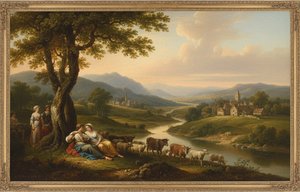
Farmhouse

Discover Jean-Baptiste Oudry’s ‘Farmhouse,’ a quintessential Rococo painting brimming with pastoral charm. Admire the elegant composition, vibrant colors & detailed animal scenes of 18th-century French rural life. Hand-painted reproductions available.

Jean-Baptiste Oudry: Ekskluzywne pejzaże i sceny łowieckie! Znany z naturalistycznych obrazów zwierząt oraz roli twórcy dekoracji królewskich francuskich wnętrz.

Ręcznie malowana reprodukcja olejowa

Ręcznie malowany olej na płótnie w Twoim wymiarze i ramie, tworzony na zamówienie przez naszych artystów.

P118B $10
P118H $10
P118W $10
P438Z $10
P508JH $12
P508YH $12
P805H $10
P805Z $10
P919BZ $10
P919G $10
P919XJ $10
P959ZH $10
P968JZ $12
W106C $8
W218G $10
W218JH $8
W218Y $10
W307PJ $10
W316G $10
W316PJ $8
W316Y $10
W398PJ $8
W4111J $10
W500HY $15
W500JH $15
W692G $12
W849H $8
W940BG $15
W953PJ $8

Standard
custom
CM
INCH

Wybierz spośród naszych predefiniowanych rozmiarów, które zachowują oryginalne proporcje dzieła sztuki.

szerokość
wysokość

Możesz wprowadzić własne wymiary, aby dopasować obraz do konkretnej ramy lub przestrzeni. Jeśli wybrany rozmiar nie będzie odpowiadał proporcjom oryginału, przytniecie dzieło sztuki lub rozszerzymy je o dodatkowe elementy, ręcznie domalowane przez artystę. Przed rozpoczęciem produkcji wyślemy projekt cyfrowy do Twojej akceptacji.
Należy pamiętać, że podgląd na ekranie nie odzwierciedla rzeczywistego przycinania ani rozszerzania obrazu. Tylko projekt dokładnie pokaże ostateczną kompozycję.
Choć oferujemy możliwość zamówienia niestandardowych rozmiarów, zalecamy wybór wymiaru z gotowej listy, aby zachować oryginalne proporcje dzieła.

Przykłady możliwych zmian: Zamień twarz na zdjęcie klienta; Dodaj zwierzę domowe (np. zamień kota na psa); Ukryj wiadomość w tle; Zmień krajobraz lub elementy tła.
Po złożeniu zamówienia zespół OriginalUniqueArt.com skontaktuje się z klientem drogą mailową w celu uzyskania instrukcji i prześle wizualizację projektu

Dostawa na całym świecie () w ciągu 3/4 tygodni zamiast standardowych 5 tygodni. (22 Lipiec). Bez kompromisów w kwestii jakości.

why_choose_icon
Bezpłatna ekspresowa wysyłka na cały świat
why_choose_icon
Wysokiej jakości płótno lniane
why_choose_icon
Pełne ubezpieczenie przesyłki
why_choose_icon
Gwarancja zwrotu należności celnych
why_choose_icon
Gwarancja pełnego zgodności kolorystycznej
why_choose_icon
Polityka 60-dniowego zwrotu (tylko w przypadku wad)
why_choose_icon
Gwarancja 100% zwrotu pieniędzy
why_choose_icon
Zniżka przy większych zamówieniach

Suma całkowita

-

reproduction

Farmhouse

Technika reprodukcji

Wymiary reprodukcji

-

Cena całkowita

-

Szybkie fakty

  • Medium: Oil on canvas
  • Dimensions: 130 x 212 cm
  • Title: Farmhouse
  • Location: Louvre, Paris
  • Year: 1750
  • Artistic style: Elegant, naturalism
  • Influences: Rococo

Quiz o sztuce

Na każde pytanie istnieje tylko jedna poprawna odpowiedź.

Pytanie 1:
What artistic style is ‘Farmhouse’ by Jean-Baptiste Oudry primarily associated with?
Pytanie 2:
The painting ‘Farmhouse’ depicts a scene set in which historical period?
Pytanie 3:
Which of the following best describes Oudry’s technique in ‘Farmhouse’?
Pytanie 4:
What is prominently featured in the foreground of ‘Farmhouse’?
Pytanie 5:
The painting 'Farmhouse' is currently housed in which museum?

Opis dzieła

A Pastoral Dream in Rococo Hues

To gaze upon Jean-Baptiste Oudry's "Farmhouse" is to step directly into an idealized vision of 18th-century French rural life. This painting, executed in 1750, transcends a mere depiction of farmstead; it is a carefully orchestrated symphony of light, color, and pastoral tranquility. The Rococo style, with its inherent lightness and elegant exuberance, bathes the entire scene in a soft, almost dreamlike glow. One feels an immediate sense of calm wash over the viewer as the eye wanders from the rustic farmhouse, crowned with its thatched roof, across the fertile expanse of farmland stretching toward the horizon.

Mastery of Light and Detail

Oudry’s technical brilliance is immediately apparent in every meticulously rendered element. His handling of light is nothing short of masterful; it seems to emanate naturally from the scene itself, highlighting the textures of the wood, the softness of the sheep's wool, and the delicate folds of the clouds overhead. The composition is a study in balance, framed beautifully by lush trees that flank both sides, lending an almost theatrical depth to the foreground. Notice the scattered life—the contented cows grazing near the structure, the busy chickens pecking at the earth. These animals are not mere props; they imbue the scene with palpable vitality, suggesting the rhythm of daily existence.

Symbolism of Abundance and Harmony

Beyond its surface beauty, "Farmhouse" carries deep symbolic weight. It speaks to an era's idealized relationship with nature—a time when agricultural bounty was celebrated as a source of both sustenance and aesthetic pleasure. The combination of the thriving farmland, the sheltering farmhouse, and the gentle presence of human figures engaged in labor suggests themes of harmony, prosperity, and settled domestic bliss. Even the inclusion of farm implements hints at a life lived in respectful partnership with the land.

Bringing the Countryside Home

For the collector or designer seeking to infuse a space with timeless elegance, this piece offers unparalleled depth. The warm palette, dominated by rich earth tones punctuated by soft pastels, ensures that "Farmhouse" can anchor any room, whether it be a grand salon yearning for rustic charm or a sunlit breakfast nook desiring an air of cultivated serenity. Owning a reproduction allows one to possess not just a painting, but a tangible piece of 18th-century French artistry—a window into a bygone era of idyllic simplicity and exquisite craftsmanship.


Biografia artysty

Jean-Baptiste Oudry: A Life in Art

Jean-Baptiste Oudry, born March 17, 1686, in Paris, France, was a painter and engraver whose artistic vision captured the essence of Rococo elegance and naturalistic observation. His lineage traced back to an artistic family; his father, Jacques Oudry, practiced painting and art dealing, while his mother, Nicole Papillon, possessed connections within the engraving world thanks to her relation with Jean-Baptiste-Michel Papillon. This familial heritage undoubtedly instilled in him a deep appreciation for visual artistry from a young age. His formative years were spent at the Académie de Saint-Luc, where he honed his skills under the tutelage of Nicolas de Largillière between 1707 and 1712. Largillière’s influence proved pivotal in shaping Oudry's initial proficiency in portraiture and fostering a meticulous attention to detail—a characteristic that would permeate his entire oeuvre. Recognizing his burgeoning talent, Oudry swiftly ascended the academic ranks, becoming an assistant professor in 1714 and attaining full professorship by 1717. This dedication to artistic education cemented his position as one of France’s foremost artists of his time. Oudry's artistic journey began with portraiture but soon expanded into diverse mediums—still lifes depicting fruits and animals, alongside religious subjects—reflecting the broader stylistic trends of the Rococo period. The movement championed by François Boucher and Jean Honoré Fragonard embraced a playful aesthetic infused with naturalism, mirroring the opulent leisure activities enjoyed by aristocratic circles. Oudry’s mastery extended beyond painting; he seamlessly transitioned to tapestry design, creating breathtaking fabrics that adorned royal palaces and solidified his reputation as a visionary craftsman. His meticulous rendering of animal textures—the velvety fur of foxes, the iridescent plumage of birds—became instantly recognizable and profoundly impacted subsequent generations of artists. A monumental achievement was undoubtedly his contribution to the Beauvais Tapestry Manufactory, where he conceived and executed *Les Amusements Champêtres*, a series of tapestries depicting idyllic rural scenes and hunting expeditions. These works exemplify Oudry’s ability to convey both grandeur and tranquility simultaneously—a hallmark of Rococo artistry. Furthermore, Oudry served as official painter for Louis XV's royal hunts, immortalizing the thrill of the chase alongside stunning depictions of the forest environment. His meticulous attention to detail ensured that every brushstroke captured not only the visual splendor but also the palpable atmosphere of these aristocratic pursuits. His prolific output included numerous commissions portraying deceased game—a testament to his anatomical precision and compositional skill—and portraits of prominent figures, including Stanisław Leszczyński and Lady Mary Josephine Drummond. Oudry’s legacy extends beyond individual artworks; he profoundly influenced the decorative arts of the era, shaping the visual language of French aristocratic culture. His enduring fame rests upon masterpieces such as *Martwa natura z bażantem* housed in the Louvre Museum and *Martwy wilk*, residing in the Wallace Collection—testaments to his unparalleled artistic talent and lasting impact on art history. Oudry died April 30, 1755, leaving behind a remarkable body of work that continues to inspire admiration for its beauty and technical brilliance.
Jean-Baptiste Oudry

Jean-Baptiste Oudry

1686 - 1755 , Francja

Kluczowe informacje

  • Artistic Movement Or Style: Rokoko
  • Artists Who Influenced This Artist: ['Nicolas de Largillière']
  • Date Of Birth: 17 marca 1686
  • Date Of Death: 30 kwietnia 1755
  • Full Name: Jean-Baptiste Oudry
  • Nationality: Francuz
  • Notable Artworks:
    • Jamnik Pehr
    • Martwa natura z bażantem
    • Martwa natura z cielęcym udźcem
    • Martwa natura z owocami
    • Martwy wilk
    • Martwy żuraw
    • Nosorożec Clara
  • Place Of Birth: Paris, Francja
Odkryj dzieła sztuki uporządkowane według tematów, stylów i cech charakterystycznych.