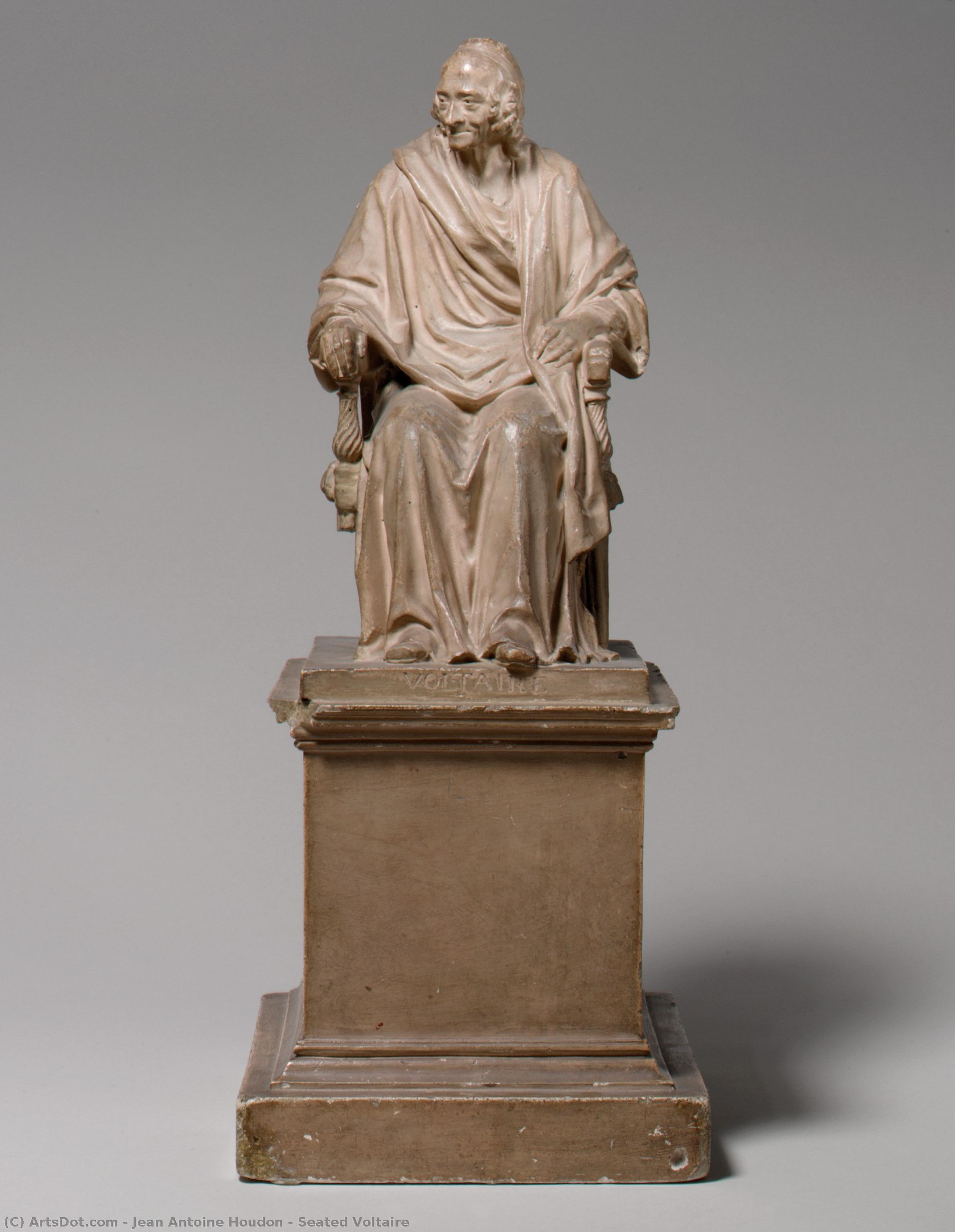
Seated Voltaire
Ręcznie malowana reprodukcja olejowa
Ręcznie malowany obraz olejny na płótnie, wykonany na zamówienie przez naszych artystów w wybranym przez Ciebie wymiarze i oprawie. ( Zamów wydruk
Kup obraz wysokiej rozdzielczości)
Wybierz spośród naszych standardowych rozmiarów, które zachowują oryginalne proporcje dzieła sztuki.
Możesz wprowadzić własne wymiary, aby dopasować obraz do konkretnej ramy lub przestrzeni. Jeśli wybrany rozmiar nie będzie odpowiadał proporcjom oryginału, przytniecie dzieło sztuki lub rozszerzymy je o dodatkowe elementy, ręcznie domalowane przez artystę. Przed rozpoczęciem produkcji wyślemy projekt cyfrowy do Twojej akceptacji.
Należy pamiętać, że podgląd na ekranie nie odzwierciedla rzeczywistego przycinania ani rozszerzania obrazu. Tylko projekt dokładnie pokaże ostateczną kompozycję.
Choć oferujemy możliwość zamówienia niestandardowych rozmiarów, zalecamy wybór wymiaru z gotowej listy, aby zachować oryginalne proporcje dzieła.
Po złożeniu zamówienia zespół OriginalUniqueArt.com skontaktuje się z klientem drogą mailową w celu uzyskania instrukcji i prześle wizualizację projektu
Dostawa na całym świecie () w ciągu 3–4 tygodni zamiast standardowych 5 tygodni. (26 Sierpień). Bez kompromisów w kwestii jakości.
Bezpłatna ekspresowa wysyłka na cały świat
Wysokiej jakości płótno lniane
Pełne ubezpieczenie przesyłki
Gwarancja zwrotu należności celnych i podatków importowych
Gwarancja wiernego odwzorowania kolorów
Polityka 60-dniowego zwrotu (tylko w przypadku wad)
Gwarancja 100% zwrotu kosztów
Zniżka przy zamówieniu wielu produktów
Seated Voltaire
Technika reprodukcji
Wymiary reprodukcji
-
Cena całkowita
$ 300
Opis dzieła
The Soul in Stone: Rediscovering Houdon’s Seated Voltaire
In the quiet, hallowed halls of art history, few works capture the electric tension of an era quite like Jean-Antoine Houdon’s "Seated Voltaire." Completed in 1778, this marble masterpiece is far more than a mere anatomical study; it is a profound distillation of the Enlightenment itself. As the philosopher Voltaire sat for the sculptor, he was not merely posing for a likeness, but participating in the creation of an enduring intellectual icon. Through Houdon’s masterful hands, the cold, unyielding medium of marble is transformed into a living, breathing testament to human reason and the restless spirit of inquiry that defined the eighteenth century.
To gaze upon this sculpture is to encounter a man caught in the very act of thought. The composition centers on the legendary thinker, seated with a dignity that commands the space around him. There is an intimate, almost whispered quality to the work, as if the viewer has stumbled upon a private moment of contemplation. Houdon, a sculptor who famously bridged the gap between the ornate flourishes of the Rococo and the disciplined grandeur of Neoclassicism, utilizes every ounce of his technical prowess to convey this psychological depth. The way the light catches the subtle folds of Voltaire’s robes and the furrowed brow of his forehead creates a silent dialogue between the stone and the spectator, inviting us to share in the philosopher's profound introspection.
A Masterclass in Neoclassical Precision
The technical brilliance of "Seated Voltaire" lies in Houdon’s ability to manipulate texture and line to evoke life. Working within his workshop, Houdon employed traditional sculpting tools to achieve an astonishing level of realism that borders on the miraculous. The marble surface is polished to a luminous finish, allowing for delicate tonal variations that mimic the softness of skin and the heavy drape of fabric. Every line is intentional; the sharp, precise contours of the facial features reflect the clarity of Voltaire’s intellect, while the smoother, flowing lines of the drapery provide a sense of classical elegance and movement.
For the discerning collector or interior designer, this piece offers a sophisticated study in monochromatic harmony. The palette—a serene arrangement of beiges, creams, and soft greys inherent to fine marble—provides a neutral yet visually rich anchor for any high-end space. It possesses a timeless quality that transcends fleeting trends, making it an ideal centerpiece for a library, a formal study, or a curated gallery wall. A high-quality reproduction of this work does not merely decorate a room; it elevates the entire atmosphere, infusing the environment with a sense of historical weight and intellectual prestige.
The Enduring Legacy of Enlightenment Thought
Beyond its aesthetic splendor, the sculpture serves as a powerful symbol of the values that shaped the modern world. In an age of revolution and radical new ideas, Houdon’s portrayal of Voltaire stands as a monument to the power of the human mind. The seated posture, stable and grounded upon its pedestal, suggests the enduring nature of truth and the permanence of philosophical legacy. There is a palpable sense of gravity in the work, a weight that is both physical—due to the density of the marble—and metaphorical, representing the heavy responsibility of wisdom.
Bringing a reproduction of "Seated Voltaire" into one's collection is an act of honoring this intellectual heritage. It serves as a daily reminder of the beauty found in clarity, the strength found in reason, and the artistry required to immortalize the human spirit. Whether viewed as a triumph of Neoclassical technique or as a window into the heart of the Enlightenment, Houdon’s work continues to inspire awe, offering a sophisticated touch of history and soul to the most refined contemporary interiors.
O artyście
A Sculptor of the Enlightenment
Jean-Antoine Houdon, born in Versailles in 1741, stands as a pivotal figure bridging the Rococo and Neoclassical eras—a sculptor whose work embodies the intellectual fervor and evolving aesthetic sensibilities of the eighteenth century. His life unfolded amidst dramatic shifts in French society, from the waning opulence of the monarchy through the revolutionary upheaval and Napoleonic ascendance. Yet, Houdon remained remarkably consistent in his artistic vision: to capture not merely a likeness, but the very essence of his subjects—their intellect, character, and inner lives—in enduring marble and bronze. This dedication stemmed from an early aptitude for sculpture, nurtured by formal training at the Académie Royale de Peinture et de Sculpture beginning in 1752 under esteemed sculptors like René-Michel Slodtz, Jean-Baptiste Lemoyne, and Jean-Baptiste Pigalle. His subsequent enrollment at the École Royale des Élèves Protégés from 1761 to 1764 solidified his foundation, culminating in a triumphant win of the Prix de Rome competition in 1761—an award that granted him invaluable study time with classical art firsthand in Italy, an experience profoundly shaping his aesthetic sensibilities.The Art of Verisimilitude and Psychological Insight
Houdon’s sculptures are immediately recognizable for their breathtaking realism and meticulous attention to detail. He wasn't content with simply replicating physical features; he sought to penetrate the surface, revealing the personality and intellect within. This commitment to verisimilitude arose from a deep fascination with anatomy—evident in his celebrated *Muscleman Sideview* bronze sculpture—and an unwavering dedication to observation. Unlike many contemporaries who idealized their subjects, Houdon embraced imperfections, believing they contributed to a more truthful and compelling portrayal. He employed innovative techniques, including taking casts directly from life, allowing him to capture remarkable nuance and subtlety that distinguished his work from others of the time. This approach was particularly evident in his portrait busts, which became his signature achievement. These weren’t merely static representations; they were dynamic studies of character, imbued with psychological depth and emotional resonance. Houdon's ability to convey not just *how* someone looked, but *who* they were—their virtues, their passions, their anxieties—was a revolutionary departure from prevailing artistic conventions. He achieved this through subtle nuances in expression, posture, and the rendering of details like the eyes—often carved with a slight concavity to capture the play of light and suggest inner thought. This meticulous attention to detail wasn’t merely stylistic; it reflected Houdon's conviction that sculpture could illuminate the human condition and communicate profound truths about human nature.Immortalizing an Era: A Pantheon of Enlightenment Figures
The breadth of Houdon’s clientele reads as a veritable who’s who of the Enlightenment. He immortalized some of the most influential thinkers, writers, politicians, and leaders of his time—individuals who championed reason, liberty, and progress amidst the turbulent currents of European history. His terracotta portrait of Denis Diderot captures the philosopher’s intellectual intensity and unconventional spirit with remarkable sensitivity, reflecting his belief in the power of critical inquiry and challenging established dogma. Benjamin Franklin, portrayed during his diplomatic mission to France, appears as a man of wisdom and pragmatism, his gaze both shrewd and benevolent—a testament to his astute understanding of politics and diplomacy. Jean-Jacques Rousseau, sculpted with characteristic empathy, embodies both the passion and melancholy that defined his philosophy—a poignant portrayal of human vulnerability and moral responsibility. Perhaps most famously, Houdon sculpted Voltaire—creating multiple versions of the celebrated writer, including a dynamic seated figure for the Comédie-Française that captures his wit and intellectual energy. This sculpture exemplifies Houdon’s masterful ability to distill complex ideas into tangible form, conveying Voltaire's philosophical convictions with arresting clarity. Beyond these intellectual giants, Houdon also received commissions from royalty, notably Louis XVI—a symbol of the waning grandeur of the Bourbon monarchy—and rising political figures like Napoleon Bonaparte—marking a pivotal moment in French history.Key Characteristics of Houdon’s Style
- Neoclassical Realism: Houdon's sculptures are characterized by their exceptional realism and attention to detail, rooted in classical principles but infused with a commitment to portraying subjects as they truly were.
- Psychological Depth: He meticulously captured not only the physical features but also the psychological essence of his subjects—their intellect, character, and inner lives—moving beyond mere likeness to convey personality and intellect.
- Historical Significance: His portraits offer invaluable glimpses into the lives and times of influential figures like Washington, Franklin, Voltaire, and Rousseau, serving as important historical documents.
- Innovative Techniques: Houdon pioneered techniques such as taking casts directly from life—a groundbreaking practice that ensured unparalleled accuracy in capturing anatomical detail and conveying emotional nuance.
Legacy and Enduring Influence
Jean-Antoine Houdon’s impact on the world of sculpture is undeniable. He elevated portraiture to an art form capable of profound psychological insight and historical documentation, establishing a new standard for sculptural representation that continues to inspire artists today. His dedication to realism—combined with his ability to capture the essence of his subjects—set him apart from many of his contemporaries and cemented his place as one of history’s greatest portrait sculptors. Throughout his life, he received widespread recognition, being named a Chevalier de la Légion d'honneur in 1804 and a Chevalier de l'Empire in 1809—testaments to his esteemed status within French society. His sculptures remain highly valued today, not only for their artistic merit but also for the invaluable glimpses they provide into the lives and times of the Enlightenment era. Houdon’s legacy extends far beyond his own lifetime, influencing generations of sculptors who followed him—a testament to his enduring contribution to the history of art. Houdon's work serves as a powerful reminder of the enduring power of art to capture the human spirit and preserve it for generations to come.Jean-Antoine Houdon
1741 - 1828 , Francja
Krótka nota
- Artistic Movement Or Style: Neoklasycizm
- Artists Or Movements Influenced By This Artist: ['Canova']
- Artists Who Influenced This Artist:
- René-Michel Slodtz
- Jean-Baptiste Lemoyne
- Jean-Baptiste Pigalle
- Bernini
- Date Of Birth: 1741
- Full Name: Jean-Antoine Houdon
- Nationality: Francuski
- Notable Artworks:
- George Washington
- Voltaire
- Benjamin Franklin
- Place Of Birth: Versailles, France


Opcja ze szkłem jest dostępna wyłącznie w rozmiarach poniżej 110 cm






































