

 Zobacz w skali 1:1
 Wyślij
 Udostępnij
 Szczegóły
 Przewodnik

 Pobierz plik obrazu
 Podobne obiekty
 RTG
RTG Pokaz slajdów
 Statystyki
Three Flags


 Czytaj więcej
Dzieło sztuki prezentowane na tej stronie podlega ochronie prawem autorskim, co oznacza, że nie mamy prawa do tworzenia ani sprzedaży jego identycznej reprodukcji. Ochrona ta jest egzekwowana na mocy umów międzynarodowych, takich jak Konwencja berneńska oraz przez przepisy prawa krajowego, w tym te określone w Prawo autorskie USA – Tytuł 17.
Metoda ta jest w pełni zgodna z przepisami prawa autorskiego, ponieważ nie polega na kopiowaniu ani powielaniu chronionego dzieła. Stanowi ona kreatywną reinterpretację – nowy obraz, który czerpie inspirację z oryginału, ale nie jest z nim tożsamy.
Giclée / Wydruk artystyczny
Wydruki giclée lub płótna o jakości muzealnej, szybka realizacja i szeroki wybór opcji wykończenia. ( Kup ręcznie malowany obraz Przełącz na wersję cyfrową)




P118B zł10

P118H zł10

P118W zł10

P438Z zł10

P508JH zł12

P508YH zł12

P805H zł10

P805Z zł10

P919BZ zł10

P919G zł10

P919XJ zł10

P959ZH zł10

P968JZ zł12

W106C zł8

W218G zł10

W218JH zł8

W218Y zł10

W307PJ zł10

W316G zł10

W316PJ zł8

W316Y zł10

W398PJ zł8

W4111J zł10

W500HY zł15

W500JH zł15

W692G zł12

W849H zł8

W940BG zł15

W953PJ zł8




Wybierz spośród naszych standardowych rozmiarów, które zachowują oryginalne proporcje dzieła sztuki.

Wpisz wymaganą szerokość i wysokość, aby dopasować grafikę do ramy lub ściany. Wydruk można jedynie przyciąć, nigdy nie powiększając go poza oryginalny obraz, dlatego format o innym proporcji spowoduje utratę części kompozycji. Przed rozpoczęciem druku prześlemy Ci cyfrowy podgląd do zatwierdzenia. Obraz wyświetlany na tej stronie nie pokazuje rzeczywistego przycięcia — jedynie podgląd oddaje ten efekt.
Dostawa na cały świat () w ciągu 2 tygodni zamiast standardowych 4/5 tygodni. (18 Październik)

Bezpłatna ekspresowa wysyłka na cały świat

Wysokiej jakości płótno lniane

Pełne ubezpieczenie transportowe

Gwarancja zwrotu należności celnych i podatków importowych

Gwarancja idealnego odwzorowania barw

100-dniowy okres na zwrot dzieła w przypadku wykrycia wad produkcyjnych

Gwarancja 100% zwrotu pieniędzy

Oferta przy zakupie wielu sztuk
 Opcja ze szkłem jest dostępna wyłącznie w rozmiarach poniżej 110 cm

Three Flags
Giclée / Wydruk artystyczny
Rozmiar reprodukcji
-


Suma do zapłaty
zł 304
A Masterpiece of Texture and Presence
In the pantheon of twentieth-century American art, few works command the room with as much tactile authority as Jasper Johns’ Three Flags. Created in 1958, this monumental achievement is far more than a mere depiction of national iconography; it is a profound exploration of how we perceive the world around us. At first glance, the viewer is met with a striking, tiered arrangement of three American flags, stacked vertically and decreasing in size as they move toward the background. However, Johns employs a brilliant subversion of classical perspective. Instead of receding into the distance, the canvases appear to project outward, invading the viewer's personal space and creating an object-like quality that blurs the line between a flat painting and a three-dimensional sculpture.
For the discerning collector or interior designer, this piece offers a unique architectural dimension. It does not simply hang on a wall; it inhabits the room. The way the smallest flag sits atop the larger ones creates an illusion of depth that can transform a minimalist gallery space or add a sophisticated, intellectual focal point to a contemporary study. It is a work that demands close inspection, rewarding the observer with a complex interplay of light and shadow that changes as one moves around it.
The Alchemy of Encaustic and Symbolism
The true soul of Three Flags lies in its extraordinary surface. Johns utilized the ancient technique of encaustic—a method involving pigments mixed with heated beeswax—to achieve a level of textural richness that is almost unparalleled in modern painting. As the wax cooled, it captured every deliberate mark, stamp, and fragment of newspaper, resulting in a sensuous, variegated surface that feels both rugged and luminous. This thick, sculptural application of medium gives the red, white, and blue stripes a physical weight, making the familiar symbols of the flag feel grounded and visceral.
Beyond its technical brilliance, the painting serves as a cornerstone of the Neo-Dada movement. By choosing an emblem as ubiquitous and "seen but not looked at" as the American flag, Johns challenged the emotive excesses of Abstract Expressionism. He took a symbol that the mind already knows and forced the eye to truly examine it. Through this process, he stripped away the purely political or patriotic connotations of the flag, refocusing the viewer's attention on its geometric patterns, its colors, and the very essence of its form. It is a masterful exercise in turning the familiar into something extraordinary.
An Enduring Legacy for Modern Interiors
Integrating a high-quality reproduction of Three Flags into a curated collection allows one to bring a piece of art history into the modern home. The painting’s palette—a classic combination of deep reds, crisp whites, and authoritative blues—is inherently versatile, complementing both mid-century modern aesthetics and ultra-contemporary decor. It provides a sense of historical gravity while maintaining a bold, avant-garde edge that remains strikingly relevant.
To own a piece inspired by this work is to possess a fragment of the moment when art redefined itself for the post-war era. It is an invitation to contemplate the boundaries between abstraction and representation, and a celebration of the beauty found in the textures of everyday life. Whether placed in a high-end residential setting or a professional design studio, Three Flags continues to inspire awe, provocation, and a deep appreciation for the transformative power of the artist's hand.
Pytania i odpowiedzi
W którym roku i w ramach jakiego nurtu powstało dzieło "Three Flags"?
"Three Flags" powstało w 1958 roku jako dzieło należące do nurtu Neo-Dada. Data oraz przynależność do tego kierunku osadzają dzieło w historii sztuki.
Do którego okresu twórczości Jasper Johns należy dzieło "Three Flags"?
"Three Flags" reprezentuje Mature Period twórczości Jasper Johns.
Czy mogę obejrzeć "Three Flags" w formie pełnoekranowej prezentacji slajdów?
Dostępna jest prezentacja zdjęć: strona Pokaz slajdów dzieła „Three Flags” autorstwa Jasper Johns.
Biografia artysty
A Life Painted in Symbols: The World of Jasper Johns
Jasper Johns emerged as a pivotal figure in the landscape of American art, bridging the emotive intensity of Abstract Expressionism with the burgeoning Pop Art movement that would soon redefine artistic boundaries. Born in Augusta, Georgia, in 1930, his early life was marked by a sense of displacement following his parents’ divorce, an experience that perhaps subtly informed his later explorations of identity and belonging within the context of American iconography. His formative years unfolded across various schools before he briefly attended the University of South Carolina, but it wasn't until his move to New York City in 1949 that Johns truly began to forge his artistic path. A period of service during the Korean War further shaped his perspective, exposing him to a world far removed from the burgeoning art scene he was eager to embrace upon his return.Breaking with Abstraction: The Dawn of a New Visual Language
The post-war American art world was dominated by Abstract Expressionism—a style characterized by spontaneous gesture and deeply personal emotional expression. While initially influenced by this movement, Johns felt compelled to move beyond its purely non-representational approach. He sought a new visual language, one that incorporated recognizable imagery not as illustrations but as vehicles for deeper contemplation. This wasn’t simply about *depicting* the world; it was about questioning how we perceive and interpret symbols within it. Key influences guided his departure: Marcel Duchamp's radical readymades challenged conventional notions of art-making, while the emphasis on materiality in Abstract Expressionism informed Johns’ early techniques. However, it was the everyday objects and potent symbols of American culture—flags, targets, maps, numbers—that truly became central to his artistic vocabulary. He wasn’t interested in escaping representation; he wanted to dissect it, layer it with meaning, and ultimately reveal its inherent ambiguities.Iconic Images: Flags, Targets, and the Language of Symbols
Johns' breakthrough works arrived in the mid-1950s, instantly establishing him as a force to be reckoned with. His paintings of flags, most notably *Flag* (1954–55), were not patriotic declarations but rather investigations into the very nature of representation. Rendered in a semi-abstract style, using encaustic—pigment mixed with hot wax—and collage techniques, these flags weren’t simply images; they were textured surfaces laden with symbolic weight. The *Flag* series wasn't about celebrating American nationalism, but rather exploring themes of perception, memory, and the relationship between image and reality. The target series, beginning in 1958, further explored this fascination with recognizable forms, questioning perception and meaning through the seemingly straightforward image of a bullseye. *Map* (1961), with its fragmented and layered depictions of the United States, delved into themes of geography, identity, and the complexities of national representation. Works like *False Start* (1959) demonstrated his experimentation with language and visual codes, creating complex compositions that challenged viewers to decipher their underlying meanings. Even *White Flag* (1955), a seemingly simple monochrome canvas, prompted profound questions about absence, surrender, and the very act of seeing.Influences and Techniques
Johns’ artistic development was shaped by a diverse range of influences. The work of Marcel Duchamp profoundly impacted his thinking about representation, encouraging him to question the traditional boundaries between art and reality. The emphasis on materiality in Abstract Expressionism—particularly the use of texture and surface—provided a foundation for his later techniques. He experimented with various media, including encaustic, collage, lithography, and woodcut, often combining them in innovative ways. His meticulous attention to detail and his willingness to incorporate found objects into his work reflected a deep engagement with the physical world. The influence of Robert Rauschenberg, with whom he collaborated closely during the early 1950s, was also significant, fostering a spirit of experimentation and pushing the boundaries of artistic practice.Recognition and Enduring Impact
Jasper Johns has received numerous accolades throughout his illustrious career. He was awarded the Golden Lion at the Venice Biennale in 1988, the National Medal of Arts in 1990, and the Presidential Medal of Freedom in 2011 – a testament to his profound impact on American art. His works are held in major museum collections across the globe—the Museum of Modern Art, the Whitney Museum of American Art, the Metropolitan Museum of Art in New York, and Tate Modern in London, to name just a few. Beyond his paintings, Johns’ contributions extend to sculpture and printmaking, demonstrating his versatility and unwavering commitment to artistic innovation. His enduring legacy lies not only in the iconic images he created but also in the profound questions he raised about the nature of representation, symbolism, and the very essence of what it means to be an artist in a rapidly changing world. He remains an active artist, constantly evolving his approach and solidifying his position as one of the most important figures in 20th and 21st-century art.
Jasper Johns
1930 - , Stany Zjednoczone
Najważniejsze informacje
- Artistic Movement Or Style: Pop Art, Abstrakcjonizm
- Artists Or Movements Influenced By This Artist:
- Andy Warhol
- Roy Lichtenstein
- Artists Who Influenced This Artist: ['Marcel Duchamp']
- Date Of Birth: 15 maja 1930
- Full Name: Jasper Johns
- Nationality: Amerykański
- Notable Artworks:
- Flag
- Target
- Mapa
- Place Of Birth: Augusta, USA
Zobacz także powiązane artykuły

John Singer Sargent: 25 Arcydzieł Pełnych Elegancji i Światła | OriginalUniqueArt.com
Odkryj 25 arcydzieł Johna Singera Sargenta – mistrza portretu i impresjonizmu. Poznaj historie, techniki i inspiracje za jego najsłynniejszymi obrazami. Reprodukcje najwyższej jakości na OriginalUniqueArt.com. Eksploruj pełną kolekcję online!
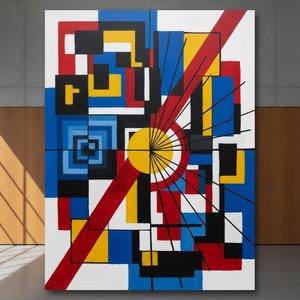
Neo-Abstract Art: Redefining Modern Expression Through Bold Compositions and Geometric Sophistication
Explore the profound evolution of Neo-Abstract art. Discover how bold geometric forms, vibrant chromatic depth, and tactile textures redefine modern expression for the discerning collector seeking sophisticated, high-impact masterpieces for contemporary interiors.

Neo-Abstract Art: The High-Impact Evolution of Modern Visual Energy and Geometric Sophistication
Discover the power of Neo-Abstract art. Explore how bold geometric forms and high-impact visual energy are redefining modern design. Learn to curate sophisticated, high-energy spaces with the latest trends in contemporary abstraction and structural color.

John Constable: 25 Najlepszych Obrazów Mistrza Angielskiego Krajobrazu | OriginalUniqueArt
Odkryj 25 arcydzieł Johna Constable'a – mistrza angielskiego krajobrazu! Poznaj romantyczne pejzaże, technikę malarską i inspiracje z Dedham Vale. Reprodukcje obrazów najwyższej jakości na OriginalUniqueArt.com. Eksploruj pełną kolekcję online!

Top 10 arcydzieł ekspresjonizmu abstrakcyjnego – inspiracje dla Twojego wnętrza | OriginalUniqueArt.com
Odkryj 10 arcydzieł ekspresjonizmu abstrakcyjnego – Pollock, Rothko, de Kooning i inni. Poznaj historie artystów, techniki i inspiracje dla Twojego wnętrza. Reprodukcje najwyższej jakości na OriginalUniqueArt.com!


