

 Zobacz w skali 1:1
 Wyślij
 Udostępnij
 Szczegóły
 Przewodnik

 Pobierz plik obrazu
 Podobne obiekty
 RTG
RTG Pokaz slajdów
 Statystyki
Acanthostega


 Czytaj więcej
Dzieło sztuki prezentowane na tej stronie podlega ochronie prawem autorskim, co oznacza, że nie mamy prawa do tworzenia ani sprzedaży jego identycznej reprodukcji. Ochrona ta jest egzekwowana na mocy umów międzynarodowych, takich jak Konwencja berneńska oraz przez przepisy prawa krajowego, w tym te określone w Prawo autorskie USA – Tytuł 17.
Metoda ta jest w pełni zgodna z przepisami prawa autorskiego, ponieważ nie polega na kopiowaniu ani powielaniu chronionego dzieła. Stanowi ona kreatywną reinterpretację – nowy obraz, który czerpie inspirację z oryginału, ale nie jest z nim tożsamy.
Giclée / Wydruk artystyczny
Wydruki giclée lub płótna o jakości muzealnej, szybka realizacja i szeroki wybór opcji wykończenia. ( Kup ręcznie malowany obraz Przełącz na wersję cyfrową)




P118B zł10

P118H zł10

P118W zł10

P438Z zł10

P508JH zł12

P508YH zł12

P805H zł10

P805Z zł10

P919BZ zł10

P919G zł10

P919XJ zł10

P959ZH zł10

P968JZ zł12

W106C zł8

W218G zł10

W218JH zł8

W218Y zł10

W307PJ zł10

W316G zł10

W316PJ zł8

W316Y zł10

W398PJ zł8

W4111J zł10

W500HY zł15

W500JH zł15

W692G zł12

W849H zł8

W940BG zł15

W953PJ zł8




Wybierz spośród naszych standardowych rozmiarów, które zachowują oryginalne proporcje dzieła sztuki.

Wpisz wymaganą szerokość i wysokość, aby dopasować grafikę do ramy lub ściany. Wydruk można jedynie przyciąć, nigdy nie powiększając go poza oryginalny obraz, dlatego format o innym proporcji spowoduje utratę części kompozycji. Przed rozpoczęciem druku prześlemy Ci cyfrowy podgląd do zatwierdzenia. Obraz wyświetlany na tej stronie nie pokazuje rzeczywistego przycięcia — jedynie podgląd oddaje ten efekt.
Dostawa na cały świat () w ciągu 2 tygodni zamiast standardowych 4/5 tygodni. (23 Październik)

Bezpłatna ekspresowa wysyłka na cały świat

Wysokiej jakości płótno lniane

Pełne ubezpieczenie transportowe

Gwarancja zwrotu należności celnych i podatków importowych

Gwarancja idealnego odwzorowania barw

100-dniowy okres na zwrot dzieła w przypadku wykrycia wad produkcyjnych

Gwarancja 100% zwrotu pieniędzy

Oferta przy zakupie wielu sztuk
 Opcja ze szkłem jest dostępna wyłącznie w rozmiarach poniżej 110 cm

Acanthostega
Giclée / Wydruk artystyczny
Rozmiar reprodukcji
-


Suma do zapłaty
zł 308
The Silent Witness: Jane Kim’s “Acanthostega”
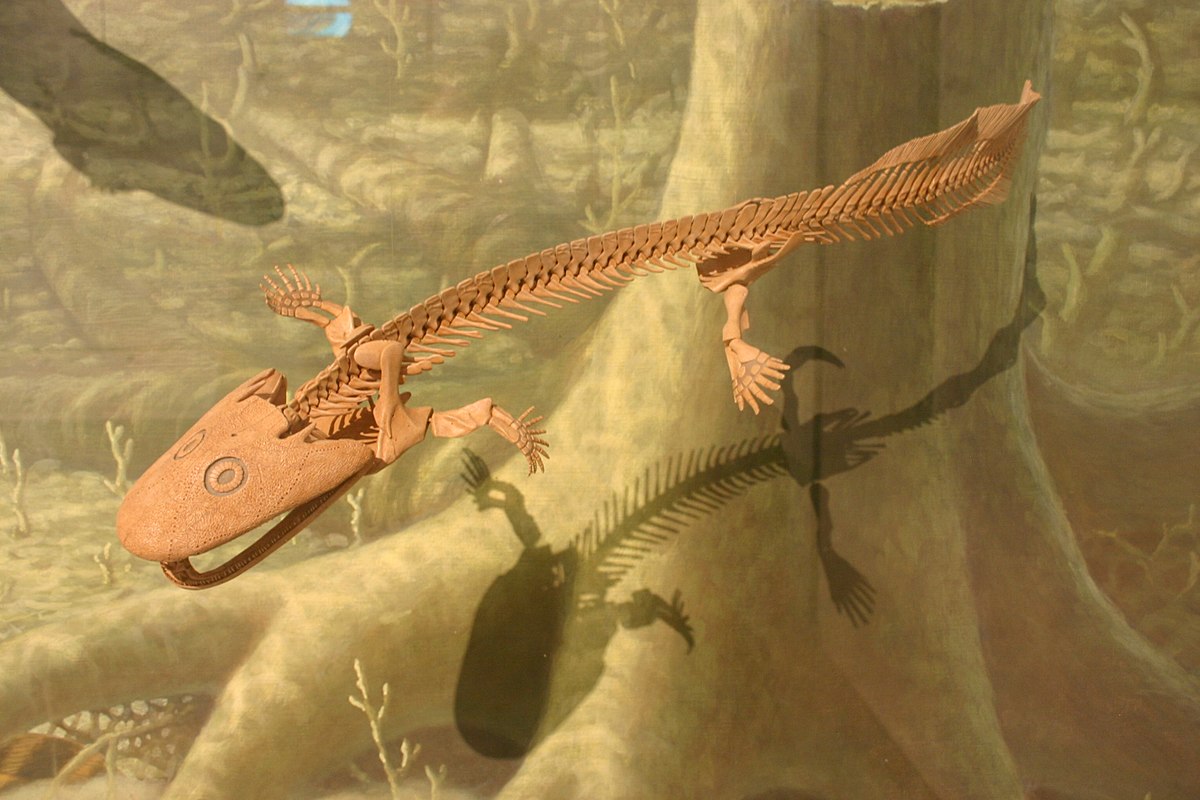
Jane Kim's "Acanthostega" isn’t merely a depiction of a fish; it’s an evocative portal into the distant past, a frozen moment in the evolutionary drama that birthed our own terrestrial existence. The painting, rendered with meticulous detail and a restrained palette of blacks, whites, and subtle grays, captures a creature – Acanthostega gunnari – that lived approximately 365 million years ago during the Famennian age of the Late Devonian period. This remarkable specimen represents one of the earliest known tetrapods, those elusive ancestors from which all land vertebrates ultimately descended. Kim’s work transcends simple representation, instead offering a profound meditation on transition and the slow, incremental steps that led to our dominance on land.
An Aquatic Ancestor: Morphology and Paleobiology
The painting meticulously portrays Acanthostega’s unique anatomy, a fascinating blend of fish-like and amphibian characteristics. Notice the elongated body, reminiscent of a lobe-finned fish, yet coupled with eight digits on each hand – a crucial evolutionary step towards limb development. The webbing connecting these digits suggests an adaptation for paddling through shallow waters, likely inhabiting weed-choked swamps teeming with life. Jennifer Clack’s extensive research into this species reveals that Acanthostega wasn't a fully terrestrial animal; its shoulder structure and limited ability to bend its elbows indicate it primarily inhabited aquatic environments. The painting subtly conveys this duality – a creature poised on the brink of land, yet firmly rooted in the water.
Kim’s artistic choices are informed by paleontological understanding. She doesn't shy away from depicting the fish-like features—the prominent gills, the streamlined form—but simultaneously highlights the nascent limb structure, hinting at the potential for future locomotion. This delicate balance between familiarity and transformation is central to the artwork’s power.
Symbolism of Transition: Crowns and the Dawn of Potential
Beyond its anatomical accuracy, “Acanthostega” resonates with symbolic weight. The prominent crown adorning the fish's head – a motif frequently employed by Kim – represents not just royalty but also potential and nascent power. It’s a visual metaphor for the evolutionary leap from aquatic to terrestrial life, suggesting that even in this ancient creature, the seeds of future dominance were already being sown. The careful rendering of the scales and fins evokes a sense of vulnerability and fragility, while the crown subtly asserts an inherent strength – a promise of what was yet to come.
Ink Dwell’s Legacy: A Masterful Reproduction
Jane Kim's work, as exemplified by “Acanthostega,” is a testament to her skill and dedication. Her meticulous attention to detail, combined with a deep understanding of paleontology and artistic expression, results in images that are both scientifically accurate and emotionally resonant. OriginalUniqueArt offers high-quality reproductions of this captivating piece, allowing art lovers to bring this pivotal moment in evolutionary history into their homes or offices. Each reproduction is crafted with the same care and precision as the original, ensuring a faithful representation of Kim’s artistic vision – a silent witness to the dawn of limbs and the unfolding story of life on Earth.
Pytania i odpowiedzi
Jak intensywne są kolory dzieła "Acanthostega"?
Kolor dzieła "Acanthostega" charakteryzuje się nasyceniem na poziomie Muted oraz intensywnością wynoszącą Monochromatic.
Jak jasny jest Acanthostega w ogólnym ujęciu?
Postrzegana jasność dzieła „Acanthostega” autorstwa Jane Kim wynosi brilliant. Można ją dopasować do oświetlenia w docelowym pomieszczeniu.
Czy mogę obejrzeć podgląd „Acanthostega” autorstwa Jane Kim przed złożeniem zamówienia?
Strona podglądu Podgląd dla dzieła „Acanthostega” umożliwia obejrzenie obrazu przed złożeniem zamówienia.
Zobacz także powiązane artykuły

Mastering the Line: A Comprehensive Expert Guide to Technical Precision and Expressive Depth in Drawing
Elevate your artistic practice with this expert guide to mastering the line. Discover advanced techniques in graphite, charcoal, and contour drawing designed for art students seeking technical precision and expressive depth in their fine art studies.
The Nuances of Graphite: Exploring Emotional Depth & Technical Mastery in Pencil Drawing
Explore the captivating world of graphite drawing! Discover its rich history, master essential techniques like chiaroscuro, and learn how artists evoke emotion through this timeless medium. Expert insights for art enthusiasts.
Czarne arcydzieła: 10 słynnych obrazów w odcieniach mroku | OriginalUniqueArt.pl
Odkryj 10 słynnych obrazów, w których dominuje głęboka czerń – od Rembrandta po Picassa. Poznaj historie artystów i techniki tworzenia mrocznych arcydzieł. Reprodukcje najwyższej jakości na OriginalUniqueArt.com! Eksploruj kolekcję online.

Czarne arcydzieła: Top 10 słynnych obrazów pełnych mroku i ekspresji | OriginalUniqueArt.com
Odkryj 10 słynnych obrazów, w których czerń króluje! Poznaj historie artystów, ekspresjonizm i mroczną paletę barw. Reprodukcje dzieł sztuki najwyższej jakości na OriginalUniqueArt.com – inspiracje do wnętrz i kolekcjonerstwo.
Czarne arcydzieła: 10 słynnych obrazów w odcieniach lamp black | OriginalUniqueArt.pl
Odkryj 10 arcydzieł malarstwa zdominowanych przez odcienie lamp black. Poznaj historie Rembrandta, Caravaggia i innych mistrzów. Reprodukcje obrazów najwyższej jakości na OriginalUniqueArt.com – inspiracje dla Twojego wnętrza! Eksploruj kolekcję online.

