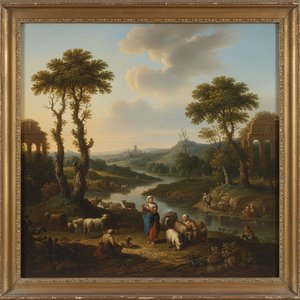
Jan Miel: Pomost między niderlandzkim realizmem a barokowym przepychem
Jan Miel (1599–1663) jawi się jako postać kluczowa dla artystycznego krajobrazu siedemnastego wieku, stanowiąc fascynujące ucieleśnienie zbieżności flamandzkiej tradycji i włoskiej innowacji. Urodzony w Beveren w Belgii — choć Antwerpia i ’s-Hertogenbosch pozostają równie prawdopodobnymi miejscami jego narodzin — Miel spędził wczesne lata w relatywnym niebycie, co sprawia, że szczegóły biograficzne są niezwykle skąpe. Niemniej jednak, to, co wyłania się z badań naukowych, to zdumiewająca podróż artystyczna, naznaczona ewolucją stylistyczną i wspólnymi przedsięwzięciami, które ugruntowały jego pozycję w tętniącym życiem środowisku kulturalnym Rzymu i Turynu.
Lata formacyjne artysta spędził głównie w Antwerpii, gdzie chłonął wpływy wybitnych flamandzkich mistrzów, takich jak Anthony van Dyck. Choć dokładny zakres jego szkolenia pozostaje nieuchwytny, bez wątpienia zaszczepił w nim on podziw dla skrupulatnej obserwacji i wyrafinowanej techniki — cech, które miały charakteryzować znaczną część jego późniejszego dorobku. To fundamentalne przygotowanie w zakresie klasycznego rysunku i portretu dostarczyło mu niezbędnych narzędzi do kariery, która ostatecznie przekroczyła granice regionalne.
Rzymska transformacja i duch Bamboccianti
Przybycie Miela do Rzymu około 1636 roku zwiastowało przełomowy moment w jego artystycznej trajektorrii. Szybko dołączył on do Bentvueghels, wpływowego stowarzyszenia holenderskich i flamandzkich artystów mieszkających w Wiecznym Mieście. W ramach tego braterstwa przyjął on niezapomniany przydomek „bieco”, który odzwierciedlał jego charakterystyczne, lekko zezowate spojrzenie — cechę, która stała się synonimem jego artystycznej persony. Ta przynależność sprzyjała nawiązywaniu głębokich relacji w szerszej społeczności artystycznej, znajdującej się pod silnym wpływem stylu Bamboccianti autorstwa Pietera van Laera.
Ruch ten poświęcony był przedstawianiu scen z codziennego życia niższych warstw społecznych w Rzymie i jego okolicach, odrzucając idealizowany przepych sztuki dojrzałego renesansu na rzecz czegoś znacznie bardziej zmysłowego i bezpośredniego. Miel przyjął ten trend z całego serca, tworząc urzekające malarstwo rodzajowe, które z niezwykłym realizmem i wrażliwością chwytało ducha miejskiej egzystencji. Jego dzieła często zawierały:
- Tętniące życiem sceny uliczne zamieszkane przez podróżnych, kupców i robotników.
- Mistrzowskie wykorzystanie światła, przywołujące zakurzoną, skąpaną w słońcu atmosferę rzymskich zaułków.
- Subtelną grę ludzkich emocji w tłocznych, chaotycznych sceneriach.
- Skrupulatną uwagę poświęconą teksturze tkanin, kamienia i ziemi.
Ewolucja ku klasycyzmowi i dworskiemu majestatowi
W miarę postępów w karierze, wizja artystyczna Miela przeszła znaczącą metamorfozę. Choć pozostał mistrzem scen rodzajowych, zaczął odchodzić od surowego realizmu Bamboccianti w stronę bardziej klasyzujących obrazów historycznych. Ta zmiana odzwierciedlała szerszy trend w sztuce europejskiej, gdzie pierwotna energia baroku była coraz częściej łagodzona przez pragnienie ładu, szlachetności i klasycznej alegorii.
Ta ewolucja doprowadziła go ostatecznie do prestiżowych nominacji, a w szczególności do służby jako artysta dworski u Karola Emmanuela II, księcia Sabaudii. W służbie na dworze w Turynie, twórczość Miela nabrała bardziej formalnego i wspaniałego charakteru. Intymność jego wcześniejszych rzymskich scen ustąpiła miejsca kompozycjom o większej skali i złożoności, zaprojektowanym tak, by odzwierciedlać potęgę i prestiżd królewskiego patrona. Okres ten stanowi szczyt jego zawodowych osiągnięć, w którym jego flamandzkie korzenie w detalach spotkały się z wielkimi, rozległymi narracjami pożądanymi przez europejską arystokrację.
Historyczne znaczenie Jana Miela tkwi w jego zdolności do poruszania się między tymi odmiennymi światami. Był artystą, który potrafił odnaleźć piękno w pokornych zmaganiach rzymskiego ulicznego żebraka oraz godność w epickich opowieściach antyku. Łącząc przepaść między skrupulatnym realizmem Północy a dramatycznym klasycyzmem Południa, Miel pozostawił niezatarte piętno w kanonie siedemnastego wieku, zapewniając sobie dziedzictwo prawdziwego kosmopolity ery baroku.

 Przełącz na wydania drukowane
 Rozwiń treść







































 W przypadku dzieł sztuki lub reprodukcji, których którykolwiek z boków przekracza 105 cm (około 41 cali), rama zostanie wysłana w formie zestawu do samodzielnego montażu. Metoda ta zapewnia bezpieczną dostawę i zapobiega uszkodzeniom podczas transportu.


 Podgląd w skali 1:1
 Wyślij jako kartkę
 Udostępnij
 Szczegóły dzieła
 Przewodnik

 Pobierz obraz
 Podobne obiekty
 RTG
RTG Pokaz slajdów
 Pytania i odpowiedzi
 Statystyki