Przełącz na wydania drukowane
 Rozwiń treść







































 W przypadku dzieł sztuki lub reprodukcji, których którykolwiek z boków przekracza 105 cm (około 41 cali), rama zostanie wysłana w formie zestawu do samodzielnego montażu. Metoda ta zapewnia bezpieczną dostawę i zapobiega uszkodzeniom podczas transportu.


A Tapestry of Life in the Italian Courtyard
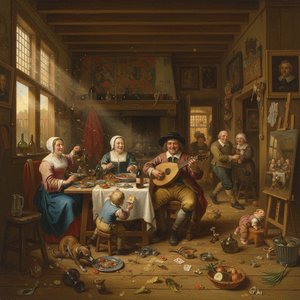
To gaze upon Jan Miel's "Dance in the Trattoria" is to be instantly transported across the centuries and into the warm, vibrant heart of an Italian gathering. This scene, rendered with masterful detail, captures more than just a moment; it encapsulates the very essence of communal joy and human connection. The composition buzzes with life—a lively tableau featuring at least thirteen figures gathered in what appears to be a sun-dappled courtyard or trattoria setting. One can almost hear the murmur of conversation, the clinking of unseen glasses, and the rhythm of an impromptu dance echoing through the space. Miel has gifted us a glimpse into a social ecosystem where every individual plays a part, contributing to the rich, palpable atmosphere.
Mastery in Monochrome: Technique and Atmosphere
Though this particular depiction is presented in striking black and white tones, one must appreciate the technical brilliance that underpins the drama. Miel’s handling of light and shadow—the interplay between illumination and deep shade across the figures and architectural elements—is breathtaking. The artist employs a technique that suggests both the robust realism of Flemish tradition and the dramatic flair characteristic of Baroque grandeur. Notice how the seating arrangements, the two benches flanking the scene, the central chair, and the dining table on the right anchor the composition while simultaneously allowing the human element to float above the mundane structure. This careful balance between static setting and dynamic action is a hallmark of Miel's genius.
The Social Fabric: Context and Symbolism
Dating from 1647, this painting serves as a rich document of genre life during the mid-seventeenth century. The varied attire of the assembled group hints at a fascinating cross-section of society—a mingling of different classes enjoying leisure time together. Symbolically, the gathering itself speaks to themes of community, pleasure, and the enduring human need for fellowship. It is an ode to shared experience. For the modern collector or designer, this piece offers more than mere decoration; it suggests a curated atmosphere of conviviality, perfect for evoking the spirit of grand entertaining within a home.
Bringing Baroque Warmth Home
Owning a reproduction of "Dance in the Trattoria" is to invite a piece of historical narrative into your own space. The emotional impact of this work is one of immediate warmth and nostalgic delight. It doesn't demand quiet contemplation; rather, it invites participation. Whether placed above a mantelpiece or used as an accent piece in a dining area, its lively energy acts as a visual catalyst, transforming a room into a place where stories are shared and laughter rings out. It is art that breathes life back into the stillness.
Pytania i odpowiedzi
Jaką kolorystykę wykorzystuje "Dance in the Trattoria"?
Paleta dzieła „Dance in the Trattoria” – Jan Miel jest opisywana jako Earthy. Stanowi ona zwięzłe zestawienie barw użytych w pracy.
Jakie emocje wywołują kolory w „Dance in the Trattoria” – Jan Miel?
Paleta Earthy dzieła „Dance in the Trattoria” – Jan Miel współgra z jego Joyful wydźwiękiem emocjonalnym. Kolor jest jednym ze sposobów, w jakie praca przekazuje emocje.
Gdzie mogę znaleźć dzieła sztuki podobne do „Dance in the Trattoria” – Jan Miel?
Dzieła podobne do „Dance in the Trattoria” można znaleźć na stronie Podobne dzieła danego dzieła.
 Podgląd w skali 1:1
 Wyślij jako kartkę
 Udostępnij
 Szczegóły dzieła
 Przewodnik

 Pobierz obraz
 Podobne obiekty
 RTG
RTG Pokaz slajdów
 Q&A
Q&A Statystyki