

 Zobacz w skali 1:1
 Wyślij
 Udostępnij
 Szczegóły
 Przewodnik

 Pobierz plik obrazu
 Podobne obiekty
 RTG
RTG Pokaz slajdów
 Statystyki
Skarga`s Sermon
 Oil On Canvas
- WallArt
- Romanticism
 1864
1864- 19th Century
 224.0 x 397.0 cm
 Czytaj więcej
Ręcznie malowana reprodukcja olejowa
Ręcznie malowany obraz olejny na płótnie, wykonany na zamówienie przez naszych artystów w wybranym przez Ciebie wymiarze i oprawie. ( Przełącz na wersję drukowaną Przełącz na wersję cyfrową)




P118B zł10

P118H zł10

P118W zł10

P438Z zł10

P508JH zł12

P508YH zł12

P805H zł10

P805Z zł10

P919BZ zł10

P919G zł10

P919XJ zł10

P959ZH zł10

P968JZ zł12

W106C zł8

W218G zł10

W218JH zł8

W218Y zł10

W307PJ zł10

W316G zł10

W316PJ zł8

W316Y zł10

W398PJ zł8

W4111J zł10

W500HY zł15

W500JH zł15

W692G zł12

W849H zł8

W940BG zł15

W953PJ zł8




Wybierz spośród naszych standardowych rozmiarów, które zachowują oryginalne proporcje dzieła sztuki.

Możesz wprowadzić własne wymiary, aby dopasować obraz do konkretnej ramy lub przestrzeni. Jeśli wybrany rozmiar nie będzie odpowiadał proporcjom oryginału, przytniecie dzieło sztuki lub rozszerzymy je o dodatkowe elementy, ręcznie domalowane przez artystę. Przed rozpoczęciem produkcji wyślemy projekt cyfrowy do Twojej akceptacji.
Należy pamiętać, że podgląd na ekranie nie odzwierciedla rzeczywistego przycinania ani rozszerzania obrazu. Tylko projekt dokładnie pokaże ostateczną kompozycję.
Choć oferujemy możliwość zamówienia niestandardowych rozmiarów, zalecamy wybór wymiaru z gotowej listy, aby zachować oryginalne proporcje dzieła.
Po złożeniu zamówienia zespół OriginalUniqueArt.com skontaktuje się z klientem drogą mailową w celu uzyskania instrukcji i prześle wizualizację projektu
Dostawa na całym świecie () w ciągu 3–4 tygodni zamiast standardowych 5 tygodni. (6 Październik). Bez kompromisów w kwestii jakości.

Bezpłatna ekspresowa wysyłka na cały świat

Wysokiej jakości płótno lniane

Pełne ubezpieczenie transportowe

Gwarancja zwrotu należności celnych i podatków importowych

Gwarancja idealnego odwzorowania barw

100-dniowy okres na zwrot dzieła w przypadku wykrycia wad produkcyjnych

Gwarancja 100% zwrotu pieniędzy

Oferta przy zakupie wielu sztuk
 Opcja ze szkłem jest dostępna wyłącznie w rozmiarach poniżej 110 cm

Skarga`s Sermon
Technika wykonania
Rozmiar reprodukcji
-


Suma do zapłaty
zł 1112
A Dramatic Encounter in 17th-Century Poland
In the grand tapestry of Polish Romanticism, few works command the room with as much gravity and historical weight as Jan Matejko’s masterpiece, Skarga's Sermon. Created in 1864, this monumental oil on canvas serves as a window into a pivotal moment of spiritual and political tension. The scene captures a gathering of souls within a dimly lit room, where the air seems thick with the weight of impending change. At the heart of this composition is the Jesuit priest Piotr Skarga, whose powerful sermon acts as the catalyst for the profound emotions displayed by those gathered around him. Through his commanding presence, Matej and the artist invites us to witness not just a religious service, but a moment of intense national reflection.
The painting is a triumph of narrative depth, where every figure contributes to a larger story of duty and dissent. Dressed in the intricate, old-fashioned attire of the 17th century, the individuals present—some standing in rapt attention, others lost in somber thought—embody the various facets of a society at a crossroads. The artist masterfully utilizes body language and facial expressions to convey the underlying tensions of an era marked by upheaval. It is a scene that transcends mere historical documentation, offering instead a visceral experience of the psychological landscape of Poland during a time of great turmoil.
Mastery of Light, Color, and Texture
Technically, Skarga's Sermon is a testament to Matejko’s extraordinary skill in handling large-scale oil painting. The artist employs a somber and dramatic color palette, dominated by deep browns, heavy blacks, and striking reds. This choice of tones does more than just set the historical stage; it creates a chiaroscuro effect that pulls the viewer into the very center of the congregation. The light seems to struggle against the shadows, highlighting the textures of fine fabrics, the glint of metal, and the weathered skin of the listeners, lending an almost tactile quality to the canvas.
For the discerning collector or interior designer, this work offers an unparalleled sense of prestige and intellectual depth. The composition is dense and layered, rewarding repeated viewings with new discoveries—from the subtle interplay of light on a dining table to the quiet, brooding presence of figures tucked into the periphery. A high-quality reproduction of such a piece brings more than just decoration to a space; it introduces a profound sense of history and a sophisticated, dramatic atmosphere that can serve as the definitive focal point of a curated gallery or an elegant study.
A Legacy of National Identity
Beyond its aesthetic brilliance, Skarga's Sermon carries a heavy symbolic burden. As a work of historical painting, it was designed to stir the soul and remind the viewer of the complexities of the Polish spirit. The sermon itself, delivered by Skarga, is a metaphor for the call to conscience and the necessity of unity in the face of external threats. This emotional resonance is what has allowed the painting to endure as one of Jan Matejko's most celebrated achievements, housed within the prestigious National Museum in Warsaw.
To possess or display a reproduction of this work is to engage with a piece of cultural heritage that speaks of resilience and introspection. It is an ideal choice for those who appreciate art that tells a story, offering a sophisticated blend of historical accuracy and Romantic passion. Whether viewed as a study in light and shadow or as a profound historical narrative, Skarga's Sermon remains an enduring icon of artistic and national importance.
Pytania i odpowiedzi
Ile lat miał(a) Jan Matejko, tworząc "Skarga`s Sermon" w 1864 roku?
Gdy w 1864 roku powstało dzieło „Skarga`s Sermon”, Jan Matejko – urodzony/a w 1838 – miał/a 26 lat.
Czy mogę użyć rozszerzonej rzeczywistości, aby zobaczyć „Skarga`s Sermon” autorstwa Jan Matejko w swoim pokoju?
Dzieło „Skarga`s Sermon” posiada podgląd w rozszerzonej rzeczywistości: strona Podgląd AR dzieła pozwala zobaczyć je w Twojej własnej przestrzeni na kompatybilnym urządzeniu.
W stronę jakiej tonacji skłania się "Skarga`s Sermon"?
Dominującym odcieniem dzieła „Skarga`s Sermon” autorstwa Jan Matejko jest Warm Sunset Tones. Odcień ten stanowi bazową tonację palety barw.
Do jakiego nurtu artystycznego należy „Skarga`s Sermon” autorstwa Jan Matejko?
Nurt związany z „Skarga`s Sermon” autorstwa Jan Matejko to Romanticism. Ta klasyfikacja sytuuje dzieło wśród pokrewnych artystów i dzieł sztuki.
Co łączy "Skarga`s Sermon" z resztą twórczości Jan Matejko?
"Skarga`s Sermon" dzieli z innymi dziełami Jan Matejko styl właściwy dla Romanticism oraz powracające motywy: romanticism influence, polish historical narrative, counter reformation themes, political rebuke of elite, national identity preservation, key early masterpiece.
Któremu artyście przypisuje się "Skarga`s Sermon"?
„Skarga`s Sermon” zostało stworzone przez Jan Matejko. Informacje na tej stronie opisują oryginalne dzieło autorstwa Jan Matejko.
W którym roku powstało dzieło "Skarga`s Sermon"?
Dzieło „Skarga`s Sermon” autorstwa Jan Matejko powstało w 1864.
Biografia artysty
Early Life and Education
Jan Alojzy Matejko, a renowned Polish painter, was born on June 24, 1838, in Krakow, Poland. His father, Franciszek Ksawery Matejko, was a Czech-born tutor and music teacher. Jan’s early life was marked by the Kraków Revolution of 1846 and the 1848 siege of Kraków by the Austrians, events that would later influence his artistic themes. Matejko attended St. Ann's High School but dropped out in 1851 due to poor grades. However, he showed exceptional talent for art from an early age. He studied at the School of Fine Arts in Krakow from 1852 to 1858, specializing in historical painting under the tutelage of Wojciech Korneli Stattler and Władysław Łuszczkiewicz. His father’s influence instilled in him a love for music and fostered his artistic sensibilities. The turbulent political climate surrounding his formative years undoubtedly shaped his worldview and fueled his desire to depict significant moments in Polish history.Artistic Career
Matejko's first major work, *Tsars Shuyski Before Zygmunt III*, was completed in 1853. It immediately established him as a prodigious talent within the Kraków artistic community. He began exhibiting his historical paintings at the Kraków Society of Friends of Fine Arts in 1855, garnering critical acclaim and attracting considerable attention. Notable works include:- *Rejtan (1866)*: A monumental oil on canvas painting depicting a pivotal moment in Polish history – the Battle of Rejów between Poles and Russians in 1863. Matejko skillfully captured the dynamism and emotional intensity of the scene, utilizing dramatic lighting and vibrant colors to convey the heroism and sacrifice of the Polish defenders.
- *Union of Lublin (1869)*: This ambitious canvas portrays the signing ceremony of the Union of Lublin in 1863 – a crucial step towards establishing Poland as a unified state after centuries of division. Matejko’s meticulous attention to detail and masterful composition effectively communicate the grandeur and solemnity of the occasion, reflecting his deep understanding of Polish political history.
- *Battle of Grunwald (1878)*: Considered by many to be Matejko's magnum opus, *Battle of Grunwald* is a breathtaking depiction of the decisive battle between Poland and Lithuania against Teutonic Knights in 1410. The painting’s sheer scale—over six meters wide—is matched by its unparalleled artistic achievement. Matejko employed innovative techniques to convey the overwhelming force of the battlefield, utilizing chiaroscuro (contrast between light and dark) to heighten dramatic tension and create a palpable sense of immediacy.
- *The Astronomer Kopernik, czyli Rozmowa z Bogiem (1874)*: This monumental painting explores philosophical themes alongside historical narrative. Matejko’s depiction of Nicolaus Copernicus contemplating the cosmos embodies the spirit of scientific inquiry and challenges conventional beliefs.
Museological Contributions and Legacy
Matejko dedicated his life to artistic pursuits, becoming a director at the Jan Matejko Academy of Fine Arts, formerly known as the Kraków Academy of Fine Arts, from 1873 until his death in 1893. He nurtured the talents of numerous prominent painters who would go on to shape Polish art history, including Maurycy Gottlieb, Jacek Malczewski, Józef Mehoffer, and Stanisław Wyspiański. His influence extended beyond teaching; he championed artistic innovation and encouraged students to delve into complex historical subjects. Matejko’s unwavering commitment to portraying Polish history with uncompromising realism cemented his reputation as “the National Painter” of Poland.Notable Works Available on OriginalUniqueArt:
- Jan Matejko: Varna (romanticism)
- Jan Matejko: Still Life (romanticism)
- Jan Matejko: The Union of Lublin (298 x 512 cm, romanticism, oil on canvas)

Jan Matejko
1838 - 1893 , Polska
Najważniejsze informacje
- Artistic Movement Or Style: Romanticizm
- Artists Or Movements Influenced By This Artist: ['Maurycy Gottlieb']
- Artists Who Influenced This Artist:
- Wojciech Korneli Stattler
- Łuszczkiewicz
- Date Of Birth: 24 czerwca 1838
- Date Of Death: 1 listopada 1893
- Full Name: Jan Alojzy Matejko
- Nationality: Polak
- Notable Artworks:
- Bitwa pod Grunwaldem
- Unia Lubelska
- Place Of Birth: Kraków, Polska
Zobacz także powiązane artykuły

Reason vs. Emotion: The Epic Battle Between Neoclassicism and Romanticism
Explore the profound tension between Neoclassicism's rational order and Romanticism's emotional depth. A sophisticated journey through art history, from Enlightenment logic to the sublime passion of Delacroix, curated for the true classical art enthusiast.
Stanisław Wyspiański: Symbolism, National Identity & the Polish Secession
Explore the life & work of Stanisław Wyspiański, a pivotal figure in Polish Symbolism and the Young Poland movement. Discover his iconic paintings, dramas, and stained glass designs reflecting national identity & artistic innovation.

10 Iconic Masterpieces That Defined the Romanticism Movement
Immerse yourself in the sublime beauty of Romanticism. Explore 10 iconic masterpieces that defined an era through dramatic landscapes and raw emotion. Find inspiration for your decor with our museum-quality art reproductions. Discover all masterpieces on OriginalUniqueArt.com.
Ekspresyjny Pociąg Pędzla: Emocje i Indywidualizm w Romantycznym Krajobrazie Artystycznym
Odkryj fascynujący świat romantyzmu w malarstwie! Analiza emocji, indywidualizmu i technik ekspresyjnych pędzla. Poznaj polski romantyzm i dziedzictwo mistrzów.
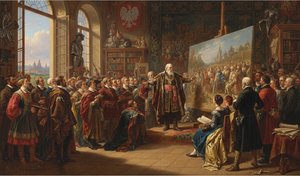
Jan Matejko: Historical Narrative & National Identity in 19th-Century Polish Painting
Explore the powerful historical paintings of Jan Matejko, Poland's national artist. Discover his iconic works & learn how he shaped Polish identity in the 19th century. High-quality reproductions available.

