
 Podgląd w skali 1:1
 Wyślij jako kartkę
 Udostępnij
 Szczegóły dzieła
 Przewodnik

 Pobierz obraz
 Podobne obiekty
 RTG
RTG Pokaz slajdów
 Pytania i odpowiedzi
 Statystyki
Copernicus in the tower at Frombork, or Conversations with God

- 221.0 x 315.0 cm


 Rozwiń treść
Giclée / Wydruk artystyczny
Wydruki giclée lub płótna o jakości muzealnej, szybka realizacja i szeroki wybór opcji wykończenia. ( Zamów ręcznie malowaną reprodukcję Przejdź do wersji cyfrowej)




P118B zł10

P118H zł10

P118W zł10

P438Z zł10

P508JH zł12

P508YH zł12

P805H zł10

P805Z zł10

P919BZ zł10

P919G zł10

P919XJ zł10

P959ZH zł10

P968JZ zł12

W106C zł8

W218G zł10

W218JH zł8

W218Y zł10

W307PJ zł10

W316G zł10

W316PJ zł8

W316Y zł10

W398PJ zł8

W4111J zł10

W500HY zł15

W500JH zł15

W692G zł12

W849H zł8

W940BG zł15

W953PJ zł8




Wybierz spośród naszych standardowych rozmiarów, które zachowują oryginalne proporcje dzieła sztuki.

Wpisz wymaganą szerokość i wysokość, aby dopasować grafikę do ramy lub ściany. Wydruk można jedynie przyciąć, nigdy nie powiększając go poza oryginalny obraz, dlatego format o innych proporcjach spowoduje utratę części kompozycji. Przed rozpoczęciem druku prześlemy Ci cyfrowy podgląd do zatwierdzenia. Obraz wyświetlany na tej stronie nie pokazuje rzeczywistego przycięcia — jedynie podgląd oddaje ten efekt.
Dostawa na cały świat () w ciągu 2 tygodni zamiast standardowych 4/5 tygodni. (8 Listopad)

Bezpłatna ekspresowa wysyłka na cały świat

Wysokiej jakości płótno lniane

Pełne ubezpieczenie przesyłki

Gwarancja zwrotu należności celnych i podatków importowych

Gwarancja wiernego odwzorowania kolorów

100-dniowa polityka zwrotów (tylko w przypadku wad)

Gwarancja 100% zwrotu pieniędzy

Zniżka przy zakupie wielu sztuk
 Opcja ze szkłem jest dostępna wyłącznie w rozmiarach poniżej 110 cm

Copernicus in the tower at Frombork, or Conversations with God
Giclée / Wydruk artystyczny
Wymiary reprodukcji
-


Cena całkowita
zł 317
The Visionary Canvas: Jan Matejko’s “Copernicus in the Tower at Frombork”
Jan Matejko's "Copernicus in the Tower at Frombork, or Conversations with God" isn’t merely a painting; it’s a potent distillation of intellectual fervor and spiritual contemplation. Completed in 1873, this monumental oil on canvas transports us to the heart of Renaissance Poland, capturing a pivotal moment not just in astronomical history but also in the nation's burgeoning sense of self-awareness. The scene unfolds within the austere yet majestic confines of Frombork Cathedral’s tower, a location imbued with both religious significance and scientific curiosity – a perfect embodiment of the painting’s central theme: the harmonious intersection of faith and reason.

A Masterpiece of Romantic Drama
Matejko, a towering figure in 19th-century Polish art, masterfully employs the tenets of Romanticism to elevate this historical subject. The painting pulsates with dramatic lighting – a chiaroscuro effect that sculpts the figures and emphasizes the solemnity of the scene. The deep blues and purples of the night sky contrast sharply with the warm hues of Copernicus’s study, creating a visual tension that mirrors the intellectual struggle he embodies. Notice how Matejko uses loose brushstrokes to convey movement and emotion, imbuing the composition with a sense of dynamism rarely found in earlier historical paintings. The figures are rendered with an almost theatrical intensity, their gestures and expressions conveying profound thought and perhaps even a touch of awe.
The Anatomy of Inquiry: Symbolism and Detail
Beyond its dramatic impact, “Copernicus” is rich in symbolic detail. Nicolaus Copernicus himself, depicted as a man of quiet contemplation, sits at his desk surrounded by the tools of his trade – astronomical instruments, charts, and open books. The globe, prominently displayed, speaks to his revolutionary heliocentric model of the universe, challenging the established geocentric view. A partially visible diagram of the solar system hints at the complex calculations he undertook. The inclusion of a skullcap suggests the weight of religious tradition alongside the pursuit of scientific truth. Even the brick wall in the background serves as a grounding element, anchoring the scene within the physical reality of Frombork and reminding us of the earthly context of this extraordinary intellectual journey.
A Legacy Forged in Faith and Reason
The painting’s creation coincided with the 400th anniversary of Copernicus' birth, a moment of national pride for Poland. Matejko’s decision to portray Copernicus not as a triumphant discoverer but as a man engaged in dialogue with something greater than himself—perhaps even God—resonates deeply within Polish cultural identity. The painting became a symbol of the nation’s intellectual and spiritual heritage, embodying the spirit of inquiry and the courage to challenge established dogma. Its eventual acquisition by the Jagiellonian University – a bastion of learning since the 14th century – underscores its enduring significance as a testament to the power of human intellect and the pursuit of knowledge. Today, this magnificent work continues to inspire contemplation on the relationship between science, faith, and the boundless mysteries of the universe.
Pytania i odpowiedzi
Czy mogę zobaczyć „Copernicus in the tower at Frombork, or Conversations with God” – Jan Matejko na własnej ścianie przed zakupem?
Strona Podgląd w AR dzieła „Copernicus in the tower at Frombork, or Conversations with God” – Jan Matejko wykorzystuje rozszerzoną rzeczywistość, aby dzięki kompatybilnemu urządzeniu pokazać obraz w Twojej własnej przestrzeni.
Kto stworzył "Copernicus in the tower at Frombork, or Conversations with God" i w jakim roku?
"Copernicus in the tower at Frombork, or Conversations with God" – autorstwa Jan Matejko, rok powstania: 1872.
Gdzie mogę znaleźć przewodnik do "Copernicus in the tower at Frombork, or Conversations with God"?
Przewodnik po "Copernicus in the tower at Frombork, or Conversations with God" to strona Karta informacyjna dla uczniów dzieła sztuki – nadrukowalna karta informacyjna zawierająca opis utworu, informacje o autorstwie oraz tabelę danych (artysta, daty, technika, wymiary oryginału, kolekcja).
Biografia artysty
Early Life and Education
Jan Alojzy Matejko, a renowned Polish painter, was born on June 24, 1838, in Krakow, Poland. His father, Franciszek Ksawery Matejko, was a Czech-born tutor and music teacher. Jan’s early life was marked by the Kraków Revolution of 1846 and the 1848 siege of Kraków by the Austrians, events that would later influence his artistic themes. Matejko attended St. Ann's High School but dropped out in 1851 due to poor grades. However, he showed exceptional talent for art from an early age. He studied at the School of Fine Arts in Krakow from 1852 to 1858, specializing in historical painting under the tutelage of Wojciech Korneli Stattler and Władysław Łuszczkiewicz. His father’s influence instilled in him a love for music and fostered his artistic sensibilities. The turbulent political climate surrounding his formative years undoubtedly shaped his worldview and fueled his desire to depict significant moments in Polish history.Artistic Career
Matejko's first major work, *Tsars Shuyski Before Zygmunt III*, was completed in 1853. It immediately established him as a prodigious talent within the Kraków artistic community. He began exhibiting his historical paintings at the Kraków Society of Friends of Fine Arts in 1855, garnering critical acclaim and attracting considerable attention. Notable works include:- *Rejtan (1866)*: A monumental oil on canvas painting depicting a pivotal moment in Polish history – the Battle of Rejów between Poles and Russians in 1863. Matejko skillfully captured the dynamism and emotional intensity of the scene, utilizing dramatic lighting and vibrant colors to convey the heroism and sacrifice of the Polish defenders.
- *Union of Lublin (1869)*: This ambitious canvas portrays the signing ceremony of the Union of Lublin in 1863 – a crucial step towards establishing Poland as a unified state after centuries of division. Matejko’s meticulous attention to detail and masterful composition effectively communicate the grandeur and solemnity of the occasion, reflecting his deep understanding of Polish political history.
- *Battle of Grunwald (1878)*: Considered by many to be Matejko's magnum opus, *Battle of Grunwald* is a breathtaking depiction of the decisive battle between Poland and Lithuania against Teutonic Knights in 1410. The painting’s sheer scale—over six meters wide—is matched by its unparalleled artistic achievement. Matejko employed innovative techniques to convey the overwhelming force of the battlefield, utilizing chiaroscuro (contrast between light and dark) to heighten dramatic tension and create a palpable sense of immediacy.
- *The Astronomer Kopernik, czyli Rozmowa z Bogiem (1874)*: This monumental painting explores philosophical themes alongside historical narrative. Matejko’s depiction of Nicolaus Copernicus contemplating the cosmos embodies the spirit of scientific inquiry and challenges conventional beliefs.
Museological Contributions and Legacy
Matejko dedicated his life to artistic pursuits, becoming a director at the Jan Matejko Academy of Fine Arts, formerly known as the Kraków Academy of Fine Arts, from 1873 until his death in 1893. He nurtured the talents of numerous prominent painters who would go on to shape Polish art history, including Maurycy Gottlieb, Jacek Malczewski, Józef Mehoffer, and Stanisław Wyspiański. His influence extended beyond teaching; he championed artistic innovation and encouraged students to delve into complex historical subjects. Matejko’s unwavering commitment to portraying Polish history with uncompromising realism cemented his reputation as “the National Painter” of Poland.Notable Works Available on OriginalUniqueArt:
- Jan Matejko: Varna (romanticism)
- Jan Matejko: Still Life (romanticism)
- Jan Matejko: The Union of Lublin (298 x 512 cm, romanticism, oil on canvas)

Jan Matejko
1838 - 1893 , Polska
Krótka nota
- Artistic Movement Or Style: Romanticizm
- Artists Or Movements Influenced By This Artist: ['Maurycy Gottlieb']
- Artists Who Influenced This Artist:
- Wojciech Korneli Stattler
- Łuszczkiewicz
- Date Of Birth: 24 czerwca 1838
- Date Of Death: 1 listopada 1893
- Full Name: Jan Alojzy Matejko
- Nationality: Polak
- Notable Artworks:
- Bitwa pod Grunwaldem
- Unia Lubelska
- Place Of Birth: Kraków, Polska
Powiązane artykuły

Trwała Spuścizna Malarstwa Olejnego: Technika, Historia i Estetyczny Wpływ
Poznaj historię i technikę malarstwa olejnego! Eksperckie artykuły o konserwacji, renowacji oraz współczesnych zastosowaniach. Dowiedz się więcej o mistrzach i trwałości obrazów olejnych.

Trwała Spuścizna Malarstwa Olejnego: Technika, Historia i Współczesna Praktyka
Poznaj historię i techniki malarstwa olejnego. Poradniki dla artystów, informacje o konserwacji oraz możliwość zamówienia wysokiej jakości reprodukcji obrazów. Ekspercka wiedza i gwarancja trwałości dzieł sztuki.

The Enduring Power of Painting: A Historical & Contemporary Exploration of Form and Emotion
Explore the rich history & enduring techniques of oil painting with OriginalUniqueArt. Discover masterpieces, learn about art collecting, and find authentic handmade reproductions crafted by skilled artists.

Olej na płótnie: Historia, techniki i ponadczasowy urok malarskiego medium
Poznaj historię i techniki malarstwa olejowego! Od renesansowych mistrzów po współczesne zastosowania – wszystko o oleju na płótnie. Poradniki, konserwacja i inspiracje dla pasjonatów sztuki.
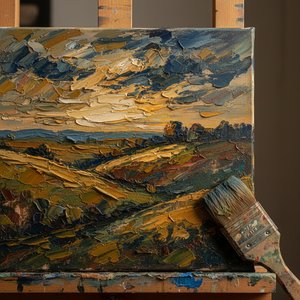
The Timeless Beauty of Oil on Canvas: A Masterclass in Texture, Impasto, and Artistic Mastery
Discover the profound allure of oil on canvas. Explore the mastery of impasto textures, the science of pigment longevity, and expert guides to selecting museum-quality reproductions that elevate your collection with timeless elegance and tactile depth.

