

 Zobacz w skali 1:1
 Wyślij
 Udostępnij
 Szczegóły
 Przewodnik

 Pobierz plik obrazu
 Podobne obiekty
 RTG
RTG Pokaz slajdów
 Statystyki
The Reapers
 Oil On Canvas
- WallArt
- Romanticism
 1800
1800 46.0 x 62.0 cm
 Yale Center for British Art
 Czytaj więcej
Ręcznie malowana reprodukcja olejowa
Ręcznie malowany obraz olejny na płótnie, wykonany na zamówienie przez naszych artystów w wybranym przez Ciebie wymiarze i oprawie. ( Przełącz na wersję drukowaną Przełącz na wersję cyfrową)




P118B $10

P118H $10

P118W $10

P438Z $10

P508JH $12

P508YH $12

P805H $10

P805Z $10

P919BZ $10

P919G $10

P919XJ $10

P959ZH $10

P968JZ $12

W106C $8

W218G $10

W218JH $8

W218Y $10

W307PJ $10

W316G $10

W316PJ $8

W316Y $10

W398PJ $8

W4111J $10

W500HY $15

W500JH $15

W692G $12

W849H $8

W940BG $15

W953PJ $8




Wybierz spośród naszych standardowych rozmiarów, które zachowują oryginalne proporcje dzieła sztuki.

Możesz wprowadzić własne wymiary, aby dopasować obraz do konkretnej ramy lub przestrzeni. Jeśli wybrany rozmiar nie będzie odpowiadał proporcjom oryginału, przytniecie dzieło sztuki lub rozszerzymy je o dodatkowe elementy, ręcznie domalowane przez artystę. Przed rozpoczęciem produkcji wyślemy projekt cyfrowy do Twojej akceptacji.
Należy pamiętać, że podgląd na ekranie nie odzwierciedla rzeczywistego przycinania ani rozszerzania obrazu. Tylko projekt dokładnie pokaże ostateczną kompozycję.
Choć oferujemy możliwość zamówienia niestandardowych rozmiarów, zalecamy wybór wymiaru z gotowej listy, aby zachować oryginalne proporcje dzieła.
Po złożeniu zamówienia zespół OriginalUniqueArt.com skontaktuje się z klientem drogą mailową w celu uzyskania instrukcji i prześle wizualizację projektu
Dostawa na całym świecie () w ciągu 3–4 tygodni zamiast standardowych 5 tygodni. (26 Wrzesień). Bez kompromisów w kwestii jakości.

Bezpłatna ekspresowa wysyłka na cały świat

Wysokiej jakości płótno lniane

Pełne ubezpieczenie transportowe

Gwarancja zwrotu należności celnych i podatków importowych

Gwarancja idealnego odwzorowania barw

100-dniowy okres na zwrot dzieła w przypadku wykrycia wad produkcyjnych

Gwarancja 100% zwrotu pieniędzy

Oferta przy zakupie wielu sztuk
 Opcja ze szkłem jest dostępna wyłącznie w rozmiarach poniżej 110 cm

The Reapers
Technika wykonania
Rozmiar reprodukcji
-


Suma do zapłaty
$ 350
A Window into Rural Life: The Significance of “The Reapers”
James Ward’s “The Reapers,” painted in 1800, isn't merely a depiction of agricultural labor; it’s a profound meditation on the rhythms of nature, the dignity of work, and the enduring connection between humanity and the land. This oil painting, now housed within the Yale Center for British Art, transports us to a quintessential English countryside scene – a moment captured in time during the harvest season. The composition is remarkably balanced, drawing our eye through a carefully orchestrated arrangement of figures, livestock, and rolling hills under a subtly clouded sky. Ward masterfully employs linear perspective, guiding our gaze from the foreground activity towards the distant village, creating a sense of depth and spatial awareness that anchors the scene within its landscape.
A Romantic Vision: Style, Technique, and Artistic Influences
Ward’s style is firmly rooted in the burgeoning Romantic movement, a reaction against the rigid formalism of Neoclassicism. He eschews idealized beauty for a more earthy realism, capturing the weathered faces, sturdy bodies, and practical attire of his subjects. The brushwork itself is deliberately visible – not meticulously blended but rather applied with confident strokes that convey texture and immediacy. This technique, reminiscent of George Morland’s earlier work (with whom Ward initially shared stylistic similarities), lends a sense of vitality and authenticity to the scene. The use of muted earth tones—ochres, browns, and greens—creates a harmonious palette that reflects the natural world, while subtle highlights draw attention to key details like the gleam of metal tools or the texture of hay.
Beyond Morland’s influence, Ward was deeply inspired by Rubens, whose dynamic compositions and masterful use of light informed his approach. The painting's dramatic lighting – a diffused glow suggesting late afternoon—casts long shadows and highlights the figures, imbuing the scene with an emotional resonance. The careful arrangement of the figures within the landscape also speaks to a broader artistic tradition, echoing the compositional strategies found in works by masters like Poussin.
Symbolism and Social Commentary
“The Reapers” is more than just a picturesque rural scene; it carries subtle layers of symbolic meaning. The central group—a man, woman, and child engaged in harvesting—represents the family unit, working together to provide for their livelihood. The presence of the horse-drawn cart laden with hay symbolizes abundance and prosperity, yet also hints at the arduous labor required to achieve it. The watchful woman on horseback, observing the scene, could be interpreted as a representation of rural virtue or perhaps a commentary on the role of women in society. The distant village, nestled amongst the hills, suggests community and connection, while the cloudy sky subtly foreshadows the coming winter – a reminder of the cyclical nature of life and the importance of preparation.
A Legacy of Romantic Landscape
James Ward’s “The Reapers” stands as a pivotal work in British art history. It exemplifies the Romantic movement's emphasis on emotion, imagination, and the sublime beauty of the natural world. His ability to capture both the physical details of rural life and the underlying emotional resonance of the scene cemented his reputation as one of the era’s most accomplished landscape painters. Reproductions of this captivating artwork continue to resonate with viewers today, offering a glimpse into a bygone era and reminding us of the enduring power of art to transport us to another time and place.
Biografia artysty
Early Life and Artistic Beginnings
James Ward, a name perhaps less familiar than some of his contemporaries, nevertheless holds a significant place in the history of British art during the 19th century. Born on October 23rd, 1769, in the bustling heart of London, he was not born into an artistic dynasty but rather nurtured within a family that valued craftsmanship and observation – a foundation crucial to his future success. His elder brother, William Ward, was already established as a skilled engraver, and it was through this apprenticeship that young James first encountered the world of visual representation, learning the meticulous techniques of line and shading.
While formal artistic training remained largely absent from his early life, James’s innate talent quickly became apparent. He possessed an exceptional eye for detail and a deep appreciation for the natural world – qualities he would later translate into his celebrated animal paintings. Crucially, his brother-in-law, George Morland, a prominent genre painter known for his charming depictions of rural life, served as a formative influence during this initial period. Ward’s early works mirrored Morland's style, capturing scenes of everyday life and the simple pleasures of the countryside – a testament to the powerful impact of observation and imitation.
The Influence of Rubens and Artistic Transformation
Around 1803, a pivotal moment occurred in James Ward’s artistic development. A transformative encounter with the paintings of Peter Paul Rubens proved to be a catalyst for profound change. Viewing Rubens' *Chateau de Steen* at the British Institution, Ward was captivated by the master’s dynamic compositions, rich color palettes, and dramatic use of light and shadow – elements that fundamentally altered his approach to painting. This exposure ignited a desire to move beyond the static realism of Morland’s style and embrace a more expressive and emotionally charged aesthetic.
The shift was deliberate and marked a significant departure from his earlier work. Ward began to incorporate Rubensian techniques into his paintings, injecting a sense of movement, drama, and heightened emotion into his compositions. He experimented with looser brushstrokes, bolder colors, and a greater emphasis on capturing the essence of his subjects rather than simply replicating their appearance. This transition marked the beginning of a new chapter in his career – one characterized by a more ambitious and individualistic style.
Notable Works and Artistic Style
James Ward’s artistic versatility is evident in the breadth of his subject matter, encompassing history painting, portraiture, landscape, and, most famously, animal art. His paintings are distinguished by an extraordinary level of detail, particularly in their rendering of animals – a testament to his meticulous observation and deep understanding of anatomy. However, it's not merely technical skill that sets Ward apart; he possessed a remarkable ability to imbue his subjects with personality and emotion.
Among his most celebrated works is undoubtedly Gordale Scar (1814/15), a dramatic depiction of the Yorkshire gorge that exemplifies the sublime qualities of English Romanticism. The painting captures the raw power and beauty of nature, evoking a sense of awe and wonder in the viewer. Other notable achievements include The Deer Stealer (1823), commissioned by Theophilus Levett, which showcases Ward’s skill in narrative storytelling and his ability to capture the essence of animal behavior; and John Levett Hunting at Wychnor, Staffordshire (1817), a portrait that skillfully blends likeness with atmospheric detail.
Patronage, Exhibitions, and Legacy
James Ward’s artistic career was supported by a network of patrons, including members of the landed gentry and prominent figures in society. His commissions from Theophilus Levett, for example, provided him with financial stability and opportunities to develop his skills. He regularly exhibited his work at the Royal Academy, gaining recognition for his talent and establishing himself as a respected artist within the British art establishment.
Despite facing personal tragedies – including the loss of his wife and daughter – Ward continued to paint prolifically until 1859. His later years were marked by a shift towards religious painting, reflecting a deepening sense of spirituality. James Ward’s legacy extends beyond his individual works; he played a crucial role in bridging the gap between Neoclassical and Romantic art, paving the way for future generations of animal painters and landscape artists. Today, his paintings are held in prestigious collections such as Tate Britain and the Yale Center for British Art, ensuring that his contributions to British art continue to be appreciated and celebrated.
Historical Significance
James Ward occupies a unique position within the artistic landscape of 19th-century Britain. He was not merely a skilled painter; he was an innovator who skillfully blended traditional techniques with emerging Romantic ideals. His work reflects a growing interest in the natural world and a desire to capture its beauty and power – themes that resonated deeply with contemporary audiences. Furthermore, Ward’s commitment to portraying animals with sensitivity and realism contributed significantly to the development of animal art as a distinct genre.

James Ward
1769 - 1859 , Wielka Brytania
Najważniejsze informacje
- Artistic Movement Or Style: Romantyzm
- Artists Or Movements Influenced By This Artist: ['Morland']
- Artists Who Influenced This Artist:
- George Morland
- Rubens
- Date Of Birth: 23 października 1769
- Date Of Death: 17 listopada 1859
- Full Name: James Ward
- Nationality: Brytyjski
- Notable Artworks:
- Gordale Scar
- The Deer Stealer
- John Levett Hunting
- Place Of Birth: Londyn, Wielka Brytania
Zobacz także powiązane artykuły

Olej na płótnie: Historia, techniki i ponadczasowy urok malarskiego medium
Poznaj historię i techniki malarstwa olejowego! Od renesansowych mistrzów po współczesne zastosowania – wszystko o oleju na płótnie. Poradniki, konserwacja i inspiracje dla pasjonatów sztuki.
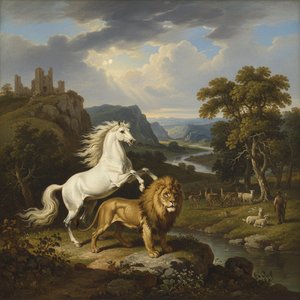
James Ward: A Study in British Romantic Landscape and Animal Painting
Explore the captivating world of James Ward (1769-1859), a master of British Romantic landscape & animal painting. Discover his iconic 'Gordale Scar' and exquisite portraits – a timeless art investment. Learn about his influences, style, and enduring legacy.

Sir Alfred James Munnings: 25 Arcydzieł Malarstwa Koni i Angielskiej Wsi | OriginalUniqueArt.com
Odkryj 25 arcydzieł Sir Alfreda Jamesa Munningsa – mistrza malarstwa koni i angielskiego krajobrazu. Poznaj historię, technikę i piękno jego obrazów. Reprodukcje najwyższej jakości na OriginalUniqueArt.com! Eksploruj pełną kolekcję online.

James Abbott McNeill Whistler: 25 Arcydzieł Sztuki Pejzażowej i Portretowej | OriginalUniqueArt
Odkryj 25 arcydzieł Jamesa Abbotta McNeilla Whistler'a! Poznaj historię impresjonistycznych pejzaży, portretów i słynnych 'Nokturnów'. Reprodukcje obrazów najwyższej jakości na OriginalUniqueArt.com – inspiracje dla Twojego wnętrza.

Trwała Spuścizna Malarstwa Olejnego: Technika, Historia i Estetyczny Wpływ
Poznaj historię i technikę malarstwa olejnego! Eksperckie artykuły o konserwacji, renowacji oraz współczesnych zastosowaniach. Dowiedz się więcej o mistrzach i trwałości obrazów olejnych.

