Wyślij jako kartkę
 Udostępnij
 Szczegóły dzieła
 Przewodnik

 Pobierz obraz
 Podobne obiekty
 Pokaz slajdów
 Pytania i odpowiedzi
 Statystyki
Sala Pawia


 Rozwiń treść
Giclée / Wydruk artystyczny
Wydruki giclée lub płótna o jakości muzealnej, szybka realizacja i szeroki wybór opcji wykończenia. ( Zamów ręcznie malowaną reprodukcję Przejdź do wersji cyfrowej)




































Wybierz spośród naszych standardowych rozmiarów, które zachowują oryginalne proporcje dzieła sztuki.

Wpisz wymaganą szerokość i wysokość, aby dopasować grafikę do ramy lub ściany. Wydruk można jedynie przyciąć, nigdy nie powiększając go poza oryginalny obraz, dlatego format o innych proporcjach spowoduje utratę części kompozycji. Przed rozpoczęciem druku prześlemy Ci cyfrowy podgląd do zatwierdzenia. Obraz wyświetlany na tej stronie nie pokazuje rzeczywistego przycięcia — jedynie podgląd oddaje ten efekt.
Dostawa na cały świat () w ciągu 2 tygodni zamiast standardowych 4/5 tygodni. (9 Listopad)

Bezpłatna ekspresowa wysyłka na cały świat

Wysokiej jakości płótno lniane

Pełne ubezpieczenie przesyłki

Gwarancja zwrotu należności celnych i podatków importowych

Gwarancja wiernego odwzorowania kolorów

100-dniowa polityka zwrotów (tylko w przypadku wad)

Gwarancja 100% zwrotu pieniędzy

Zniżka przy zakupie wielu sztuk
 Opcja ze szkłem jest dostępna wyłącznie w rozmiarach poniżej 110 cm

Sala Pawia
Giclée / Wydruk artystyczny
Wymiary reprodukcji
-


Cena całkowita
zł 317
Peacock Room – A Symphony of Aestheticism
The Peacock Room stands as an unparalleled testament to Victorian artistic ambition and the burgeoning movement known as Aestheticism—a philosophy that championed beauty above all else, rejecting didactic narratives in favor of pure sensory experience. Commissioned by Frederick R. Leyland, a wealthy shipping magnate with a passion for collecting exotic artifacts, the room’s transformation into a masterpiece was spearheaded by James Abbott McNeill Whistler and Thomas Jeckyll, two figures at the forefront of British decorative arts. This wasn't merely about furnishing a dining space; it was about crafting an immersive environment designed to stimulate contemplation and elevate the spirit—a bold declaration that art should exist for its own intrinsic value.The Narrative Within Decoration: Peacocks and Discord
At first glance, the room’s centerpiece – Whistler’s mural depicting two battling peacocks – appears as a simple decorative flourish. However, scholars have interpreted this dynamic scene as a profound visual representation of the fraught relationship between Whistler and Leyland. The fiercely contesting birds symbolize their artistic disagreements regarding the color palette and overall aesthetic direction of the project. Beyond this personal drama, the peacock itself carries rich symbolism rooted in Eastern cultures where it represents royalty, immortality, and opulent beauty. Yet, its flamboyant display simultaneously embodies vanity and pride—layers of meaning that contribute to the mural’s complex emotional resonance and underscore Whistler's masterful use of tonalism – a technique prioritizing atmospheric effects and subtle harmonies of color over precise representation.Technique and Materials: A Celebration of Craftsmanship
Whistler meticulously oversaw every aspect of the room’s redesign, demonstrating an unwavering commitment to artistic excellence. He replaced Thomas Jeckyll’s original wall hangings with intricately carved walnut panels adorned with Cuir de Cordoue – a Moroccan leather textile featuring geometric patterns—creating a textural counterpoint to the shimmering gold leaf covering walls, doors, and furniture. This lavish use of gold leaf harkens back to Byzantine mosaics and illuminated manuscripts, elevating the room's grandeur beyond mere ornamentation. The painstaking application of gold leaf demanded considerable skill and patience, reflecting the meticulous standards of Victorian craftsmanship. Furthermore, Whistler skillfully blended tonalism with traditional techniques—resulting in a harmonious blend of color and texture that captivated viewers.Historical Context: Aestheticism’s Influence
The Peacock Room embodies the core tenets of Aestheticism – a movement that rejected materialism and moralizing themes, arguing instead for art as an end in itself. Whistler's vision aligned perfectly with this philosophical stance, rejecting the Victorian preoccupation with social commentary and embracing instead the pursuit of pure aesthetic pleasure. The room’s creation coincided with a period of intense artistic experimentation and debate, challenging prevailing conventions and establishing Whistler as a champion of “art for art’s sake.” Its enduring appeal lies in its ability to transport viewers back to a time when beauty was considered paramount—a legacy that continues to inspire artists and designers today.A Legacy of Beauty: The Peacock Room Today
Today, reproductions of Whistler's masterpiece offer collectors and interior decorators alike the opportunity to experience the room’s breathtaking atmosphere firsthand. High-quality prints capture the subtle nuances of color and texture, allowing admirers to appreciate the artistry and sophistication that defined Victorian decorative arts—a timeless testament to the transformative power of beauty.Pytania i odpowiedzi
Któremu artyście przypisuje się "Sala Pawia"?
Autorstwo dzieła "Sala Pawia" przypisuje się James McNeill Whistler.
Co przedstawia „Sala Pawia” – James McNeill Whistler i jaki ma nastrój?
"Sala Pawia" przedstawia orientalism, decorative arts, symbolism, interior design, whistler painting, chinese porcelain, gold leaf murals, a jego nastrojowy charakter można określić jako Złocisty przepych.
Czy „Sala Pawia” – James McNeill Whistler znajduje się w domenie publicznej?
Status praw autorskich dla „Sala Pawia” – James McNeill Whistler: dzieło znajduje się w należy do domeny publicznej – autorskie prawa majątkowe wygasły. Określa to, czy reprodukcje obrazu mogą być sporządzane swobodnie.
Biografia artysty
A Life Shaped by Aestheticism: The World of James Abbott McNeill Whistler
James Abbott McNeill Whistler, born in Lowell, Massachusetts in 1834, was a figure perpetually at odds with convention—a painter who championed “art for art’s sake” during an era obsessed with moralizing narratives. His early life, marked by frequent relocations due to his father's railroad engineering career, instilled within him a sense of adaptability and exposure to diverse environments. A brief, unhappy stint at West Point proved ill-suited to his artistic temperament, followed by work with the U.S. Coast and Geodetic Survey that, while delaying, did not extinguish his burgeoning passion for art. These formative years were characterized by an innate talent for drawing and a resolute desire to forge a path as a professional artist, a pursuit that would ultimately lead him across the Atlantic and into the heart of the European avant-garde. The seeds of Whistler’s artistic rebellion were sown early, nurtured by a spirit that resisted conformity and embraced aesthetic exploration above all else.Parisian Beginnings and the Cultivation of Style
The pivotal moment in Whistler's artistic journey arrived with his move to Paris in 1855. Here, under the tutelage of Sébastien Bouré, he honed his skills in oil painting, watercolor, and printmaking, absorbing the influences of French Realism and the Barbizon School painters. However, Whistler quickly transcended mere imitation, developing a distinctive style characterized by tonal harmonies and atmospheric effects. He wasn’t interested in replicating reality; rather, he sought to capture its *essence*, its fleeting moods and subtle nuances. This period marked a crucial shift from representational accuracy towards an exploration of pure aesthetic form. His early works already hinted at the delicate balance between observation and abstraction that would define his mature style. It was in Paris that Whistler began to articulate his belief that art should be judged solely on its aesthetic qualities, free from didactic or moralizing constraints—a philosophy that would become the cornerstone of his artistic practice and a defining characteristic of the Aesthetic movement. He experimented with color palettes, often favoring muted tones and subtle gradations, creating paintings that prioritized mood and atmosphere over precise detail.Nocturnes, Portraits, and the Pursuit of Harmony
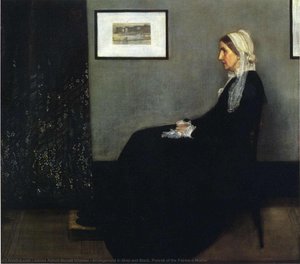
Whistler’s artistic vision crystallized in several key themes and stylistic choices. He championed the concept of “art for art’s sake,” rejecting narratives laden with moral or social commentary. His work became an exercise in capturing subtle nuances of light, color, and atmosphere—a pursuit that led to his iconic *Nocturnes*. These atmospheric paintings of twilight scenes, often depicting the Thames River at night, were not intended as literal depictions but rather as evocative impressions, studies in tonal harmony and mood. He frequently employed limited palettes and delicate brushwork, creating a sense of ethereal beauty and quiet contemplation. Whistler also produced a significant body of portraiture, though he approached them with a unique sensibility. He wasn’t concerned with capturing perfect likenesses; instead, he focused on formal arrangements and tonal relationships, treating his sitters as compositional elements within a carefully constructed aesthetic framework. Works like *Arrangement in Grey and Black No. 1*—better known as *Whistler's Mother*—demonstrate this approach perfectly, transforming a familial portrait into an iconic image of Victorian motherhood through its masterful use of form and tone. The painting’s power lies not in the depiction of a specific woman but in its distillation of maternal dignity and quiet strength.Controversy, Influence, and Lasting Legacy
Whistler’s career was not without controversy. The infamous libel suit brought against him by the critic John Ruskin in 1878, sparked by *Nocturne in Black and Gold – The Falling Rocket*, became a landmark moment in art history. Whistler successfully defended his artistic autonomy, arguing that his paintings were not intended to be realistic representations but rather aesthetic arrangements of color and form. This case elevated his profile and ignited important debates about the nature of art criticism and artistic freedom. Beyond this legal battle, Whistler’s influence extended far and wide. He was deeply inspired by Japanese prints (ukiyo-e), which informed his compositional principles and emphasis on decorative patterns, as well as the tonal mastery of Spanish painters like Velázquez. His advocacy for “art for art’s sake” profoundly impacted the Aesthetic movement in England and America, paving the way for modernism and challenging conventional notions about artistic purpose. He left an indelible mark on American art, inspiring generations of artists to embrace formalist approaches and explore the expressive potential of color and composition. Whistler's work continues to be studied and admired for its innovative use of light, color, and form, solidifying his position as a key figure in the development of modern painting.- Notable Works: *The Forge* (1861), *Portrait of Charles Lang Freer* (1873), *Brown and Gold: The Gold Girl—Connie Gilchrist* (1876-77), *Arrangement in Grey and Black No. 1 (Whistler’s Mother)* (1871), *Nocturne in Black and Gold – The Falling Rocket* (1875).
- Influences: Japanese prints, Velázquez.
A Lasting Impression
James Abbott McNeill Whistler died in London in 1903, leaving behind a body of work that continues to captivate and inspire. His unwavering commitment to artistic principles and his relentless pursuit of aesthetic beauty cemented his place as a pivotal figure in the history of art. His legacy endures not only through his paintings but also through the enduring debate about the very definition of art itself—a conversation that remains relevant today.
James McNeill Whistler
1834 - 1903 , Stany Zjednoczone
Krótka nota
- Artistic Movement Or Style: Tonalizm, Estetyzm
- Artists Or Movements Influenced By This Artist:
- Estetyzm
- Modernizm
- Artists Who Influenced This Artist:
- Velázquez
- Japońskie drzeworyty
- Date Of Birth: 10 lip 1834
- Full Name: James Abbott McNeill Whistler
- Nationality: Amerykański
- Notable Artworks:
- Matka Whistlera
- Nocturne
- Uporządkowanie
- Place Of Birth: Lowell, USA
Powiązane artykuły

Curated Rooms: The Designer's Guide to Integrating Masterpiece Reproductions into Luxury Interiors
Elevate your interior design projects with our expert guide on matching masterpiece reproductions to luxury styles. Discover professional techniques for selecting hand-painted oils, multi-panel layouts, and custom commissions that transform spaces into curated galleries.

Sir Alfred James Munnings: 25 Arcydzieł Malarstwa Koni i Angielskiej Wsi | OriginalUniqueArt.com
Odkryj 25 arcydzieł Sir Alfreda Jamesa Munningsa – mistrza malarstwa koni i angielskiego krajobrazu. Poznaj historię, technikę i piękno jego obrazów. Reprodukcje najwyższej jakości na OriginalUniqueArt.com! Eksploruj pełną kolekcję online.
Top 10 Arcydzieł Malarstwa do Salonu: Inspiracje i Dekoracje od OriginalUniqueArt
Odkryj top 10 słynnych obrazów idealnych do salonu! Poznaj historie Van Gogha, Moneta i Klimta. Inspiracje malarstwem klasycznym i współczesnym dla Twojego wnętrza. Reprodukcje najwyższej jakości na OriginalUniqueArt.com

James Abbott McNeill Whistler: 25 Arcydzieł Sztuki Pejzażowej i Portretowej | OriginalUniqueArt
Odkryj 25 arcydzieł Jamesa Abbotta McNeilla Whistler'a! Poznaj historię impresjonistycznych pejzaży, portretów i słynnych 'Nokturnów'. Reprodukcje obrazów najwyższej jakości na OriginalUniqueArt.com – inspiracje dla Twojego wnętrza.

Fernand Léger: 25 Arcydzieł Kubizmu i Maszynerii - Kolekcja OriginalUniqueArt
Odkryj 25 arcydzieł Fernanda Légera – pioniera kubizmu i malarstwa maszyn. Poznaj historię, technikę i inspiracje tych ikonicznych obrazów. Reprodukcje najwyższej jakości na OriginalUniqueArt.com! Eksploruj pełną kolekcję online.