Menu
Text size

() ·

A painting made for you, by hand

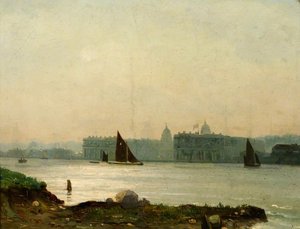
Hampstead Heath, Sunset

Ręcznie malowana reprodukcja olejowa

Ręcznie malowany obraz olejny na płótnie, wykonany na zamówienie przez naszych artystów w wybranym przez Ciebie wymiarze i oprawie. ( Przełącz na wydania drukowane Przejdź do wersji cyfrowej)

Opis obiektu

Discover James Francis Danby’s "Hampstead Heath, Sunset." A Romantic landscape painting of serene beauty & dramatic skies. Oil on canvas, 1845. #art #landscape #romanticism

Biografia artysty

Francis Danby – wizjoner romantyzmu! Jego dramatyczne krajobrazy, inspirowane poezją Byrona i mrokiem natury, kształtowały sztukę XIX wieku. Odkryj jego monumentalne obrazy i wpływ na brytyjskie malarstwo!

from ·

Chapter 1

How large should it be?

Slide to change the size; the picture on the left shows the frame at its real width. The proportions of the original are kept.

Standardowy format
personalizowane
CM
INCH

Wybierz spośród naszych standardowych rozmiarów, które zachowują oryginalne proporcje dzieła sztuki.

szerokość
wysokość

Wpisz wymaganą szerokość i wysokość, aby obraz pasował do Twojej ramy lub ściany. Ponieważ jest to dzieło malowane ręcznie, w przypadku rozmiaru o innych proporcjach artysta może domalować nieco więcej wokół obrazu lub przyciąć jego fragmenty — wybór należy do Ciebie. Przed rozpoczęciem pracy prześlemy Ci cyfrową wizualizację do zatwierdzenia. Obraz widoczny na tej stronie nie przedstawia rzeczywistego efektu — jedynie wizualizacja oddaje realny rezultat.

Chapter 2

How should it arrive?

Choose the edges of the stretched canvas

Choose your frame

Corner sample of the WhiteWrap canvas edge finish, stretched on lite drewno bars
White zł1
Corner sample of the BlurSideWrap canvas edge finish, stretched on lite drewno bars
Blurside zł1
Corner sample of the ExtendedWrap canvas edge finish, stretched on lite drewno bars
Extended zł1
Corner sample of the P118B picture frame: polistyren formowany, 5 cm wide and 3 cm thick
P118B zł10
Corner sample of the P118H picture frame: polistyren formowany, 5 cm wide and 3 cm thick
P118H zł10
Corner sample of the P118W picture frame: polistyren formowany, 5 cm wide and 3 cm thick
P118W zł10
Corner sample of the P438Z picture frame: polistyren formowany, 5.5 cm wide and 3.5 cm thick
P438Z zł10
Corner sample of the P508JH picture frame: polistyren formowany, 7 cm wide and 3.5 cm thick
P508JH zł12
Corner sample of the P508YH picture frame: polistyren formowany, 7 cm wide and 3.5 cm thick
P508YH zł12
Corner sample of the P805H picture frame: polistyren formowany, 5 cm wide and 3.5 cm thick
P805H zł10
Corner sample of the P805Z picture frame: polistyren formowany, 5 cm wide and 3.5 cm thick
P805Z zł10
Corner sample of the P919BZ picture frame: polistyren formowany, 7 cm wide and 3.5 cm thick
P919BZ zł10
Corner sample of the P919G picture frame: polistyren formowany, 7 cm wide and 3.5 cm thick
P919G zł10
Corner sample of the P919XJ picture frame: polistyren formowany, 7 cm wide and 3.5 cm thick
P919XJ zł10
Corner sample of the P959ZH picture frame: polistyren formowany, 5 cm wide and 3 cm thick
P959ZH zł10
Corner sample of the P968JZ picture frame: polistyren formowany, 6 cm wide and 4 cm thick
P968JZ zł12
Corner sample of the W106C picture frame: lite drewno, 5 cm wide and 3 cm thick
W106C zł8
Corner sample of the W218G picture frame: lite drewno, 5 cm wide and 3 cm thick
W218G zł10
Corner sample of the W218JH picture frame: lite drewno, 5 cm wide and 3 cm thick
W218JH zł8
Corner sample of the W218Y picture frame: lite drewno, 5 cm wide and 3 cm thick
W218Y zł10
Corner sample of the W307PJ picture frame: lite drewno, 6 cm wide and 3 cm thick
W307PJ zł10
Corner sample of the W316G picture frame: lite drewno, 6 cm wide and 3 cm thick
W316G zł10
Corner sample of the W316PJ picture frame: lite drewno, 6 cm wide and 3 cm thick
W316PJ zł8
Corner sample of the W316Y picture frame: lite drewno, 6 cm wide and 3 cm thick
W316Y zł10
Corner sample of the W398PJ picture frame: lite drewno, 5 cm wide and 3 cm thick
W398PJ zł8
Corner sample of the W4111J picture frame: lite drewno, 6.5 cm wide and 3.5 cm thick
W4111J zł10
Corner sample of the W500HY picture frame: lite drewno, 7 cm wide and 5 cm thick
W500HY zł15
Corner sample of the W500JH picture frame: lite drewno, 7 cm wide and 5 cm thick
W500JH zł15
Corner sample of the W692G picture frame: lite drewno, 8 cm wide and 4 cm thick
W692G zł12
Corner sample of the W849H picture frame: lite drewno, 5 cm wide and 3 cm thick
W849H zł8
Corner sample of the W940BG picture frame: lite drewno, 7.5 cm wide and 4.5 cm thick
W940BG zł15
Corner sample of the W953PJ picture frame: lite drewno, 6 cm wide and 3.5 cm thick
W953PJ zł8
Corner sample of the H24-GOLD picture frame: rzeźbione drewno pokryte gipsem, 10 cm wide and 6 cm thick
H24-GOLD zł30
Corner sample of the H24-SILVER picture frame: rzeźbione drewno pokryte gipsem, 10 cm wide and 6 cm thick
H24-SILVER zł30
Corner sample of the H36-GOLD picture frame: rzeźbione drewno pokryte gipsem, 15 cm wide and 6.5 cm thick
H36-GOLD zł45
Corner sample of the H36-SILVER picture frame: rzeźbione drewno pokryte gipsem, 15 cm wide and 6.5 cm thick
H36-SILVER zł45

Moulding: . Overall size with the frame: .

Chapter 3

Who paints it, and should anything change?

Examples of what can be changed: Replace face with customer photo; Add pet (e.g., replace cat with dog); Include hidden message in background; Change background landscape or elements.
After order, OriginalUniqueArt.com team will email client for instructions and provide a mockup preview

Dostawa na całym świecie () w ciągu 3–4 tygodni zamiast standardowych 5 tygodni. (30 Październik). Bez kompromisów w kwestii jakości.

Chapter 4

The finishing touches

A nameplate, as in a museum?

Szczegóły grawerowanej brązowej tabliczki

This elegant plaque features the artist's name and the title of the artwork, finely engraved for a timeless presentation.

It is made from bronze with a refined, elegant finish. The text is precisely laser-engraved for a sharp and permanent result. Measuring 9x2 cm, the plaque is compact yet easy to read. It's built to be durable and scratch-resistant, offering a professional, museum-quality look. Mounting is simple thanks to the included adhesive backing.

Szczegóły przezroczystej tabliczki akrylowej

The plaque includes essential engraved details such as the artist's name, the title of the artwork, the date it was created, the type of media used-like oil on canvas or watercolor-a brief description of the piece, and a QR code that links to the complete artwork information.

It is crafted from clear acrylic, offering a sleek, modern appearance. The text is UV-engraved in black to ensure strong visual contrast. With a size of 10x15 cm, it ensures optimal readability. It comes equipped with two metal hooks for secure wall mounting. The plaque is designed to be weather-resistant, making it suitable for various environments, and it includes interactive features that work seamlessly with smartphone scanning.

Szczegóły czarnej tabliczki akrylowej

This elegant plaque includes engraved information such as the artist's name, the title of the artwork, the date it was created, the type of media used (like oil on canvas or watercolor), a short description of the artwork, and a QR code for quick access to more information.

The plaque itself is made from refined black acrylic with a premium finish. The text is laser-engraved in white for high contrast and readability. Its size is 10x15 cm, designed to be easy to read. It comes with two metal hooks for professional mounting. The design is sleek and fits any interior style. It is also weather-resistant and durable, with built-in digital integration for mobile compatibility.

A protective varnish?

When do you need it?

Chapter 5

Your painting, as you ordered it

Hampstead Heath, Sunset

Technika reprodukcji

Wymiary reprodukcji

-

Wybitny mistrz artystyczny

Większa szczegółowość, finezja i dodatkowy czas na realizację

-

Opcje oprawy reprodukcji

-

-

W przypadku dzieł sztuki lub reprodukcji, których którykolwiek z boków przekracza 105 cm (około 41 cali), rama zostanie wysłana w formie zestawu do samodzielnego montażu. Metoda ta zapewnia bezpieczną dostawę i zapobiega uszkodzeniom podczas transportu.

Wymagany profesjonalny montaż – nie jest to produkt typu DIY.
Zestaw musi zostać złożony, a płótno naciągnięte przez doświadczonego profesjonalnego ramiarza, przy użyciu kleju do drewna (brak w zestawie), kleszczy do naciągania płótna oraz ścisków, które utrzymają krosna w równej pozycji podczas schnięcia kleju. Nieprawidłowy montaż lub nierównomierne napięcie płótna może trwale uszkodzić dzieło sztuki i nie podlega naszej gwarancji.

  • W zestawie znajdują się wszystkie listwy z litego drewna, precyzyjnie docięte do wymiarów.

  • Montaż odbywa się przy użyciu dołączonych wkrętów oraz kleju do drewna do łączenia narożników, którego zestaw nie zawiera i który musi zostać dostarczony przez ramiarza.

  • Wymagane są profesjonalne narzędzia, których nie ma w zestawie: kleszcze do naciągania płótna (napinacz) oraz zaciski, które pozwolą utrzymać listwy w równej pozycji podczas schnięcia kleju.

Ważne:
Do połączenia narożników niezbędny jest klej do drewna, listwy należy unieruchomić za pomocą ścisków do momentu całkowitego wyschnięcia kleju, a naciągnięcie płótna na złożoną ramę wymaga użycia kleszczy do naciągania płótna. Żaden z tych elementów nie jest dołączony do zestawu. Przed zamówieniem tego rozmiaru zalecamy konsultację z doświadczonym ramiarzem.

Etykieta obiektu

-

-

Lakier ochronny

Lakier z połyskiem (pogłębia kolory, chroni przed światłem i wilgocią)

-

Personalizacja dzieła

Przykłady możliwości personalizacji: zastąp twarz zdjęciem klienta; dodaj zwierzę domowe (np. zamień kota na psa); umieść ukrytą wiadomość w tle; zmień krajobraz lub elementy tła.

-

Ekspresowa

Dostawa na cały świat () w ciągu 3–4 tygodni zamiast standardowych 5 tygodni. (30 Październik). Bez kompromisów w kwestii jakości.

-

Przesyłka ekspresowa

Dostawa na cały świat () w ciągu 5 tygodni. (6 Listopad).

W cenie

Cena całkowita

zł 1165

Suma całkowita zł 1165

Opcja ze szkłem jest dostępna wyłącznie w rozmiarach poniżej 110 cm

Included with every order

  • Bezpłatna ekspresowa wysyłka na cały świat
  • Wysokiej jakości płótno lniane
  • Pełne ubezpieczenie przesyłki
  • Gwarancja zwrotu należności celnych i podatków importowych
  • Gwarancja wiernego odwzorowania kolorów
  • 100-dniowa polityka zwrotów (tylko w przypadku wad)
  • Gwarancja 100% zwrotu pieniędzy
  • Zniżka przy zakupie wielu sztuk

James Francis Danby: A Romantic Visionary

James Francis Danby (1793–1861) stands as a pivotal figure in British Romantic landscape painting, crafting canvases that resonate with dramatic intensity and profound emotion—a legacy firmly rooted in his Irish upbringing and artistic evolution. Unlike many of his contemporaries who embraced theatrical grandeur or fantastical narratives, Danby’s approach prioritized capturing the sublime beauty of nature through meticulous observation and masterful execution. His output reflects a deep engagement with the philosophical currents of the era, particularly Coleridge's exploration of imagination and emotion as pathways to spiritual understanding. Danby’s formative years were shaped by considerable upheaval; the untimely death of his father in 1807 necessitated relocation to Dublin, where he embarked on formal artistic training under James Arthur O’Connor at the Royal Dublin Society’s schools alongside George Petrie. This early education instilled not only technical proficiency but also a fundamental conviction that landscape could serve as an expressive medium unparalleled in its capacity to convey human experience—a cornerstone of Romantic aesthetics. The influence of Turner, whose atmospheric landscapes captivated audiences and championed scientific observation alongside artistic intuition, undoubtedly played a role in shaping Danby’s stylistic sensibilities. A defining moment arrived in 1813 when Danby traveled to Italy with O’Connor, immersing himself in the artistic traditions of Pompeii and Rome. This journey ignited his passion for classical art and architecture, fostering an appreciation for idealized forms and harmonious compositions—elements that would subtly permeate his subsequent works. He returned to Dublin invigorated by newfound inspiration, continuing his studies and honing his skills under Petrie’s guidance, solidifying his position as a leading voice within the burgeoning Romantic movement. ### Hampstead Heath, Sunset: A Study in Atmospheric Luminosity “Hampstead Heath, Sunset” exemplifies Danby's signature style—a luminous landscape painting characterized by an unwavering commitment to capturing the fleeting effects of light and atmosphere. Executed in 1845, this piece depicts a solitary pine tree dominating a coastal vista bathed in the warm hues of twilight. The composition prioritizes verticality, emphasized by the towering pine trunk, creating a palpable sense of grandeur and conveying a feeling of contemplative solitude. Danby skillfully employs Luminist techniques—drawing inspiration from Turner’s pioneering explorations of atmospheric perspective—to achieve an ethereal quality that transcends mere representation. The color palette is deliberately muted yet vibrant, dominated by cool blues and greens interspersed with streaks of golden light filtering through the haze. Loose brushstrokes convey a sense of immediacy and spontaneity, mirroring the artist's fascination with capturing transient moments in time. Texture is achieved through impasto—thickly applied paint—particularly evident in the sky and foliage, adding depth and visual richness to the scene. Danby’s meticulous attention to detail—evident in the rendering of bark texture and subtle variations in color—underscores his dedication to conveying not just what he saw but also how he felt when observing the landscape. ### Symbolism and Emotional Resonance Beyond its aesthetic beauty, “Hampstead Heath, Sunset” carries symbolic weight reflecting Danby’s Romantic worldview. The solitary pine tree serves as a potent emblem of resilience—a symbol of endurance against adversity—while simultaneously embodying the profound stillness and contemplation associated with communion with nature. The expansive coastal horizon evokes the sublime—the awe-inspiring grandeur of the natural world that inspires feelings of humility and wonder. Danby’s masterful depiction captures not merely a visual record but also an emotional response, inviting viewers to contemplate the mysteries of existence and appreciate the transformative power of beauty. ### Technique: Oil Painting with Visible Brushwork Danby's technique—primarily oil painting—is characterized by its deliberate embrace of visible brushstrokes, reflecting his conviction that artistic expression should prioritize capturing the artist’s process alongside the finished product. The resulting surface possesses a tactile quality—a palpable sense of materiality—that enhances the artwork’s visual impact and contributes to its overall emotional resonance. This approach aligns seamlessly with Luminist principles, prioritizing atmospheric effects and conveying an impressionistic rendering of reality rather than striving for photographic accuracy. Danby's unwavering dedication to mastering his craft cemented his place as one of Britain’s most influential landscape painters—a legacy celebrated by institutions like Yale University who hold a significant collection of his works.

Pytania i odpowiedzi

Czy „Hampstead Heath, Sunset” – James Francis Danby należy do najbardziej pożądanych dzieł w nurcie Romanticism?

W ramach nurtu Romanticism, dzieło „Hampstead Heath, Sunset” cechuje się poziomem popularności Recognized.

Jaki nastrój i emocje wyraża „Hampstead Heath, Sunset” – James Francis Danby?

Nastrój utrwalony w „Hampstead Heath, Sunset” – James Francis Danby to Romantic, a jego ton emocjonalny to Melancholic.

Do jakiego pomieszczenia polecane jest dzieło „Hampstead Heath, Sunset” – James Francis Danby?

Zalecaną przestrzenią dla „Hampstead Heath, Sunset” – James Francis Danby jest Living Room. Sugestia ta może być oczywiście dostosowana do Twojego wnętrza.

More about this painting

Podgląd w skali 1:1 Podgląd AR Przełącz na wydania drukowane Przejdź do wersji cyfrowej Wyślij jako kartkę
Szczegóły dzieła Przewodnik Dodaj do ulubionych Pobierz obraz Podobne obiekty RTG Pokaz slajdów Q&A Statystyki

In numbers

  • 1845the year it was painted
  • 29frames to choose from
  • standard sizes, in its own proportions
  • 5weeks to paint and deliver it
James Francis Danby

James Francis Danby

1793 - 1861, Irlandia

Quick facts about James Francis Danby

  • Artistic Movement Or Style: Romantyzm
  • Artists Or Movements Influenced By This Artist: ['Szkoła Bristolska']
  • Artists Who Influenced This Artist:
    • John Martin
    • William Blake
  • Date Of Birth: 1793
  • Date Of Death: 1861
  • Full Name: James Francis Danby
  • Nationality: Irlandzka
  • Notable Artworks:
    • Upas Tree
    • Zgorzknięta Miłość
    • Ucztowanie Siódmej Пеczęci
  • Place Of Birth: Wexford, Irlandia

Biografia artysty

A Romantic Visionary: The Life and Art of James Francis Danby

Born in County Wexford, Ireland, in 1793, James Francis Danby emerged as a significant figure within the British Romantic movement, crafting landscapes imbued with dramatic intensity and emotional resonance. His canvases, often vast in scale and steeped in atmospheric effects, stand alongside those of contemporaries like John Martin and J.M.W. Turner, yet possess a unique character rooted in his Irish origins and artistic journey. Danby’s early life was marked by upheaval; the death of his father in 1807 forced a relocation to Dublin, where he began formal art training at the Royal Dublin Society's schools under James Arthur O’Connor and alongside George Petrie. This foundational period instilled in him not only technical skills but also an appreciation for landscape as a vehicle for expressing profound feeling—a hallmark of the burgeoning Romantic sensibility. A pivotal moment arrived in 1813 when Danby, accompanied by O’Connor and Petrie, ventured to London seeking artistic opportunities. Initial struggles led them to Bristol, where Danby discovered success selling watercolor drawings, an experience that proved crucial in shaping his developing style.

The Flourishing of the Bristol School

Bristol became a fertile ground for Danby’s artistic growth, as he quickly rose to prominence within the informal collective known as the Bristol School. Initially centered around Edward Bird, this group fostered an environment of shared sketching excursions and mutual influence. Danby soon succeeded Bird as its leading figure, inheriting a naturalistic approach characterized by fresh colors and meticulous observation. Works like “Boys Sailing a Little Boat” (circa 1821) exemplify this early style, showcasing his ability to capture the subtle nuances of light and atmosphere. However, Danby’s ambition extended beyond mere representation; encouraged by figures such as Edward Villiers Rippingille, Francis Gold, and notably George Cumberland—a friend of William Blake—he began to explore more imaginative and poetic subjects. Cumberland's influence was particularly significant, suggesting themes for paintings and potentially introducing Danby to the visionary power of Blake’s art. This exposure ignited a shift towards grander, more emotionally charged compositions that would define his mature style. The Bristol School provided not just technical guidance but also a vital network of support and encouragement as Danby began to forge his own distinct artistic path.

Dramatic Visions and Critical Acclaim

Danby’s breakthrough arrived with “The Upas Tree of Java” (1820), a painting that garnered immediate recognition and secured his election as an Associate Member of the Royal Academy. This work, depicting a poisonous tree from Indonesian folklore, showcased his mastery of dramatic composition and atmospheric effects—qualities that resonated deeply with the Byronic taste prevalent in the 1820s. He continued to produce ambitious canvases such as “Disappointed Love” (1821), demonstrating his characteristic poetical approach to landscape, potentially influenced by the writings of Samuel Taylor Coleridge. "An Enchanted Island" (1825) proved particularly influential, inspiring other Bristol School artists and earning praise from Letitia Elizabeth Landon in her celebrated collection, “The Troubadour.” His ambition reached new heights with “Opening of the Sixth Seal” (1828), a large-scale narrative scene purchased by the discerning collector William Beckford. These works established Danby as a leading exponent of Romantic landscape painting, renowned for his ability to evoke powerful emotions and transport viewers to realms of imagination and awe. His style is characterized by vast illusionist canvases depicting grand, gloomy, and fantastic subjects – themes that resonated with the Byronic taste of the 1820s.

Later Years and Enduring Legacy

Following a period spent on the shores of Lake Geneva in Switzerland and a brief sojourn in Paris, Danby returned to England in 1840, revitalizing his reputation with “The Deluge” – a monumental work that showcased his continued mastery of dramatic composition. While some later paintings, such as "The Woodnymph's Hymn to the Rising Sun" (1845), displayed a calmer aesthetic, he ultimately returned to his earlier, more theatrical mode with pieces like “The Shipwreck” (1859). Throughout his career, Danby grappled with financial difficulties and critical fluctuations, yet he remained committed to his artistic vision. He continued exhibiting regularly, showcasing both new works and revisiting themes from his earlier successes. James Francis Danby died in 1861, leaving behind a body of work that continues to captivate audiences today. His legacy rests on his significant contribution to British Romantic art. Along with John Martin and J.M.W. Turner, he is celebrated for his imaginative landscapes and ability to evoke powerful emotions through his paintings, solidifying his place as a visionary artist of the 19th century.

Key Characteristics of Danby’s Art

  • Dramatic Landscapes: Vast, sweeping vistas often featuring turbulent skies and seas.
  • Emotional Intensity: Paintings imbued with a sense of awe, mystery, and emotional depth.
  • Romantic Themes: Exploration of themes such as the sublime, the power of nature, and human vulnerability.
  • Illusionistic Technique: Masterful use of light, shadow, and perspective to create a sense of realism and grandeur.
  • Narrative Elements: Many works incorporate narrative elements drawn from mythology, literature, or biblical stories.

Najważniejsze informacje

  • Title: Hampstead Heath, Sunset
  • Influences: John Martin
  • Year: 1845
  • Dimensions: 387U174789 × 286U174789 mm
  • Artistic style: Luminism
  • Artist: James Francis Danby

Quiz o sztuce

Do każdego pytania dotyczy tylko jedna poprawna odpowiedź.

Pytanie 1:
What artistic movement is Hampstead Heath, Sunset primarily associated with?
Pytanie 2:
The painting utilizes a dominant color palette characterized by:
Pytanie 3:
What technique is Danby known for employing in his landscapes?
Pytanie 4:
The hazy horizon contributes to what artistic concept?
Pytanie 5:
James Francis Danby's work often explores themes of:
Odkryj dzieła sztuki uporządkowane według tematów, stylów i cech charakterystycznych.