
 Podgląd w skali 1:1
 Wyślij jako kartkę
 Udostępnij
 Szczegóły dzieła
 Przewodnik

 Pobierz obraz
 Podobne obiekty
 RTG
RTG Pokaz slajdów
 Statystyki
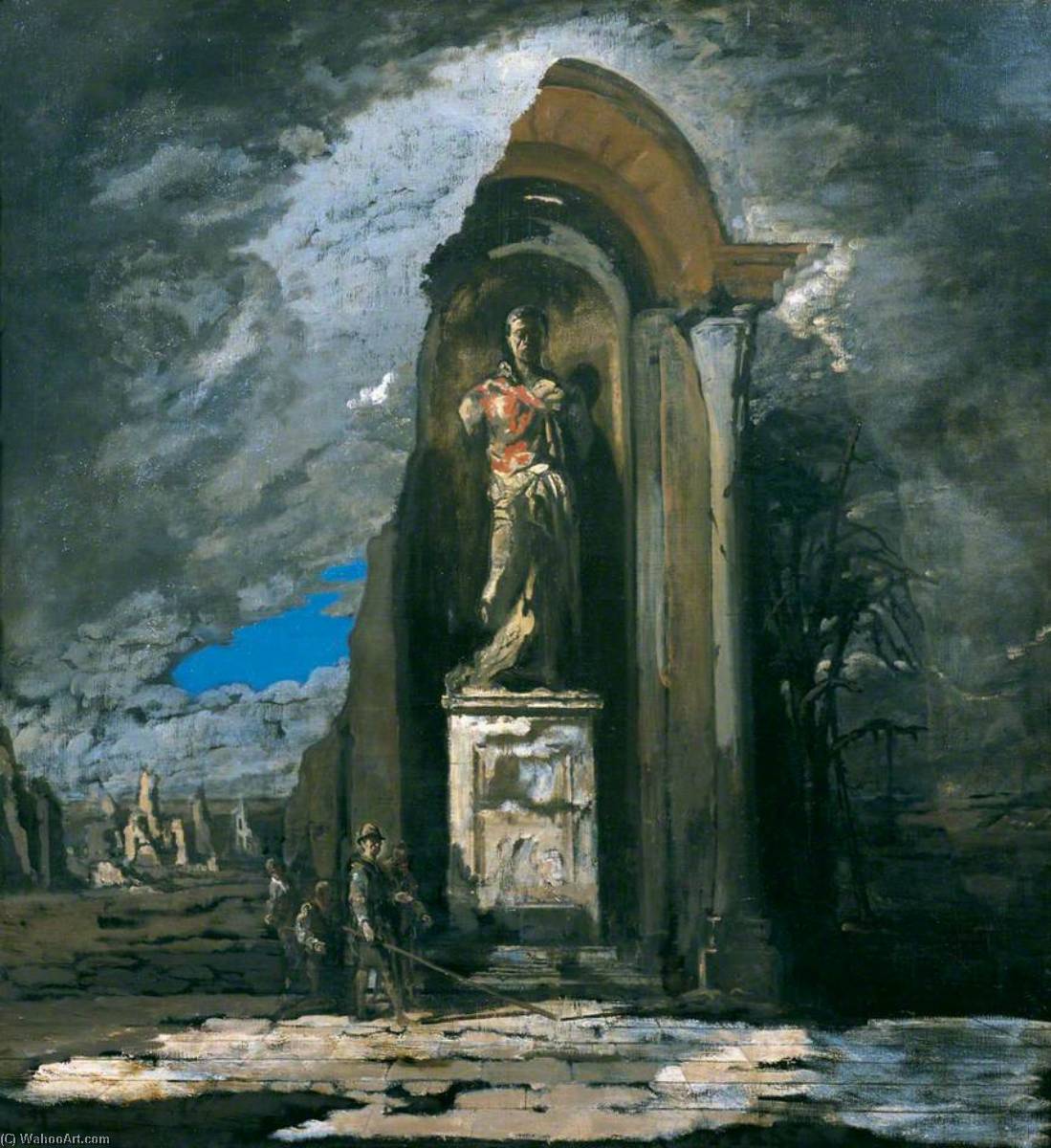
Monument
 Olej na płótnie
- Sztuka ścienna
- Glasgow School
 1917
1917 152.0 x 139.0 cm
 Government Art Collection
 Rozwiń treść
Ręcznie malowana reprodukcja olejowa
Ręcznie malowany obraz olejny na płótnie, wykonany na zamówienie przez naszych artystów w wybranym przez Ciebie wymiarze i oprawie. ( Przełącz na wydania drukowane Przejdź do wersji cyfrowej)




P118B zł10

P118H zł10

P118W zł10

P438Z zł10

P508JH zł12

P508YH zł12

P805H zł10

P805Z zł10

P919BZ zł10

P919G zł10

P919XJ zł10

P959ZH zł10

P968JZ zł12

W106C zł8

W218G zł10

W218JH zł8

W218Y zł10

W307PJ zł10

W316G zł10

W316PJ zł8

W316Y zł10

W398PJ zł8

W4111J zł10

W500HY zł15

W500JH zł15

W692G zł12

W849H zł8

W940BG zł15

W953PJ zł8




Wybierz spośród naszych standardowych rozmiarów, które zachowują oryginalne proporcje dzieła sztuki.

Wpisz wymaganą szerokość i wysokość, aby obraz pasował do Twojej ramy lub ściany. Ponieważ jest to dzieło malowane ręcznie, w przypadku rozmiaru o innych proporcjach artysta może domalować nieco więcej wokół obrazu lub przyciąć jego fragmenty — wybór należy do Ciebie. Przed rozpoczęciem pracy prześlemy Ci cyfrową wizualizację do zatwierdzenia. Obraz widoczny na tej stronie nie przedstawia rzeczywistego efektu — jedynie wizualizacja oddaje realny rezultat.
Po złożeniu zamówienia zespół OriginalUniqueArt.com skontaktuje się z klientem drogą mailową w celu uzyskania instrukcji i prześle wizualizację projektu
Dostawa na całym świecie () w ciągu 3–4 tygodni zamiast standardowych 5 tygodni. (28 Październik). Bez kompromisów w kwestii jakości.

Bezpłatna ekspresowa wysyłka na cały świat

Wysokiej jakości płótno lniane

Pełne ubezpieczenie przesyłki

Gwarancja zwrotu należności celnych i podatków importowych

Gwarancja wiernego odwzorowania kolorów

100-dniowa polityka zwrotów (tylko w przypadku wad)

Gwarancja 100% zwrotu pieniędzy

Zniżka przy zakupie wielu sztuk
 Opcja ze szkłem jest dostępna wyłącznie w rozmiarach poniżej 110 cm

Monument
Technika reprodukcji
Wymiary reprodukcji
-


Cena całkowita
zł 1156
James Ferrier Pryde’s “The Monument”: A Testament to Resilience Amidst Turbulent Times
“The Monument,” painted by James Ferrier Pryde in 1916–1917, stands as a poignant emblem of Britain's determination during the First World War. This monumental oil on canvas captures a dramatic tableau – figures ascending a ladder towards a colossal stone monolith emblazoned with a triumphant laurel wreath – embodying not merely victory but also aspiration and unwavering faith in overcoming adversity. Pryde’s masterful depiction transcends mere visual representation; it speaks to the spirit of an era grappling with immense suffering and striving for enduring triumph.- Style & Technique: Pryde's style aligns closely with the Glasgow School, characterized by atmospheric landscapes infused with expressive brushstrokes and a penchant for capturing fleeting moments of emotion. He employs a rich palette dominated by muted browns and ochres, skillfully blending tonal variations to convey depth and solidity – mirroring the monumental stone structure itself. The artist’s meticulous attention to detail is evident in the rendering of textures, particularly on the ladder and the monolith, creating a palpable sense of physicality.
- Historical Context: Created during the height of the Great War, “The Monument” reflects the pervasive anxieties and hopes of British society. The imagery draws upon classical symbolism – the laurel wreath representing victory – to reaffirm national pride and resilience in the face of unimaginable loss. Pryde’s work served as part of the Government Art Collection, commissioned to bolster morale during wartime.
- Symbolism & Narrative: The ladder symbolizes progress toward achievement, while the monolith represents permanence and enduring triumph. Ascending figures embody humanity's relentless pursuit of betterment despite hardship. The laurel wreath signifies honor and success—a visual declaration that even amidst devastation, Britain would persevere.
- Size: 152 x 139 cm
- Artist: James Ferrier Pryde (1866–1941)
Pytania i odpowiedzi
Gdzie najlepiej eksponować dzieło „Monument” w formacie Kwadratowy format?
Dzięki formatowi Kwadratowy format, reprodukcja dzieła „Monument” idealnie sprawdzi się w Salon lub strefa dzienna.
Czy dzieło "Monument" jest w ogólnym rozrachunku jaśniejsze czy ciemniejsze?
Jasność dzieła „Monument” – James Ferrier Pryde wynosi cień, przy luminancji na poziomie Miękki cień.
Jaki nastrój oddaje styl Glasgow School w dziele „Monument”?
Spokój emocja dzieła „Monument” współgra z jego stylem Glasgow School.
Biografia artysty
A Life Etched in Atmosphere: The World of James Ferrier Pryde
Born in Edinburgh on March 30, 1866, into a family steeped in artistic lineage – related to the renowned Scottish painters Robert Scott Lauder and James Eckford Lauder – James Ferrier Pryde embarked on a journey that would see him leave an indelible mark on both painting and graphic design. His early life was nurtured within a stimulating intellectual environment; his father, David Pryde, served as headmaster of Edinburgh Ladies’ College, fostering a household valuing education and creativity. Young James received his formal artistic training at the Royal Scottish Academy from 1885 to 1888, laying the foundation for a career that would ultimately defy easy categorization. He was encouraged by leading figures of the Glasgow School, notably James Guthrie and Edward Arthur Walton, whose influence helped shape his initial artistic explorations. A brief sojourn in Paris, studying under William-Adolphe Bouguereau at the Académie Julian, proved less formative; Pryde found the atmosphere stifling, quickly returning to Scotland with a clearer sense of his own path.The Beggarstaffs and a Revolution in Design
Pryde’s most significant collaborative venture began in 1893 with the formation of “The Beggarstaffs,” a partnership with William Nicholson. This union proved remarkably fruitful, pioneering a new aesthetic in poster design that dramatically challenged prevailing conventions. Prior to The Beggarstaffs, posters were often cluttered and illustrative; Pryde and Nicholson stripped away excess detail, embracing bold compositions, striking imagery, and a theatrical sensibility. Their designs weren’t merely advertisements—they were statements, elevating the status of poster art from commercial necessity to legitimate artistic expression. They deliberately eschewed established norms, creating work that was both visually arresting and intellectually stimulating. The partnership dissolved in 1899, but its impact resonated for decades, influencing generations of graphic designers and fundamentally altering the landscape of visual communication. Their innovative approach wasn’t limited to posters; they also produced distinctive signboards and other graphic works, all characterized by a unique blend of artistic vision and commercial practicality. The Beggarstaffs' work is often described as “atmospheric,” capturing a sense of mood and mystery that was entirely new for the advertising world.Atmospheric Visions: A Painterly Language
While celebrated for his contributions to graphic design, Pryde’s true passion lay in painting. He developed a deeply personal style centered around atmospheric architectural scenes. These weren’t straightforward depictions of buildings; they were evocative explorations of mood and emotion, often imbued with a sense of drama and foreboding. His canvases frequently feature structures dwarfing the human figures within them, emphasizing our fragility against the weight of history and time. Broad brushwork and dramatic lighting effects are hallmarks of his technique, creating an almost palpable atmosphere that draws the viewer into the scene. The influence of Giovanni Battista Piranesi’s etchings is evident in Pryde's monumental compositions and fascination with architectural ruins. He wasn’t interested in precise representation; rather, he sought to capture the *feeling* of a place, its history, and its inherent melancholy. His paintings often feel like fragments of dreams, hauntingly beautiful and subtly unsettling. He frequently depicted Edinburgh landmarks – the British Linen Bank, Melville Monument – transforming them into imposing, almost surreal subjects.A Multifaceted Artist: Stagecraft and Recognition
Pryde’s artistic pursuits weren't confined to painting and design. He briefly pursued an acting career between 1894 and 1899, a period that undoubtedly informed his theatrical sensibility and understanding of spatial dynamics. This foray into the performing arts also brought him into contact with influential figures like Edward Gordon Craig, who recognized Pryde’s exceptional talent as a painter despite acknowledging his limitations as an actor. He became actively involved in artistic societies, becoming an associate of the International Society of Sculptors, Painters and Gravers in 1901 and later serving as its vice-president in 1921. In 1930, he brought his visual artistry to the stage, designing sets for Paul Robeson’s production of *Othello* at the Savoy Theatre, demonstrating a versatility that extended beyond the canvas. His designs were noted for their dramatic lighting and evocative use of space, creating an immersive theatrical experience. Though he held only two solo exhibitions during his lifetime – one at the Baillie Gallery in 1911 and another at the Leicester Galleries in 1933 – Pryde received recognition from patrons like Viscountess Cowdray and was lauded by critics such as Frank Rutter, who described him as “stupendous.”A Lasting Legacy
James Ferrier Pryde passed away on February 24, 1941, in London. While he didn’t align himself with any specific artistic movement, his unique style and contributions to early 20th-century art are increasingly recognized. A memorial exhibition held in 1949, touring Edinburgh, Brighton, and London, helped revive interest in his work. Though exhibitions of his paintings remain relatively infrequent, a growing number of his works are held in public collections, ensuring that his atmospheric visions continue to captivate audiences. Pryde’s legacy rests not only on the beauty of his individual artworks but also on the profound impact of The Beggarstaffs' innovative graphic design, which continues to inspire artists and designers today. He remains a compelling figure—a painter who dared to explore the emotional power of architecture and a designer who helped redefine the very language of visual communication.
James Ferrier Pryde
1866 - 1941 , Wielka Brytania
Krótka nota
- Artistic Movement Or Style: Grafika, Atmosfericzne obrazy
- Artists Or Movements Influenced By This Artist:
- William Nicholson
- Grafika
- Artists Who Influenced This Artist:
- James Guthrie
- Edward Walton
- Whistler
- Bouguereau
- Date Of Birth: 30 marca 1866
- Date Of Death: 24 lutego 1941
- Full Name: James Ferrier Pryde
- Nationality: Brytyjczyk
- Notable Artworks:
- Ruiny z figurą
- Zabłocony dom
- Kolumna księcia Jerzego
- Place Of Birth: Edynburg, Wielka Brytania
Powiązane artykuły

Trwała Forma: Rzeźba w Historii – Technika i Rezonans Emocjonalny
Poznaj historię rzeźby od antyku do współczesności! Ekspercka analiza technik, stylów i emocjonalnego wpływu arcydzieł. Inspiracje dla kolekcjonerów i miłośników sztuki.

10 Legendarnych Brązów, Które Zrewolucjonizowały Sztukę | OriginalUniqueArt
Odkryj 10 legendarnych rzeźb brązowych, które zrewolucjonizowały sztukę! Poznaj historie Rodina, Donatello i innych mistrzów. Inspiracje wnętrzarskie & reprodukcje najwyższej jakości na OriginalUniqueArt.com.

10 Legendarnych Brązów Rzeźbiarskich, Które Zmieniły Sztukę | OriginalUniqueArt
Odkryj 10 legendarnych rzeźb brązowych od Rodina, Degasa i innych mistrzów! Poznaj historię powstania arcydzieł sztuki i inspiruj się do dekoracji wnętrz. Reprodukcje najwyższej jakości na OriginalUniqueArt.com – zobacz kolekcję!

Trwałe Formy: Ewolucja Technik i Tematów w Rzeźbie Przez Wieki – Od Antyku do Renesansu
Poznaj fascynującą historię rzeźby od antyku do renesansu! Odkryj techniki, wybitnych artystów i wpływ na współczesną sztukę. Ekspercka analiza dla kolekcjonerów i miłośników.

James Abbott McNeill Whistler: 25 Arcydzieł Sztuki Pejzażowej i Portretowej | OriginalUniqueArt
Odkryj 25 arcydzieł Jamesa Abbotta McNeilla Whistler'a! Poznaj historię impresjonistycznych pejzaży, portretów i słynnych 'Nokturnów'. Reprodukcje obrazów najwyższej jakości na OriginalUniqueArt.com – inspiracje dla Twojego wnętrza.


