Symbolist Expressionism · 1895
The Skeleton Painter (James Ensor, 1895)
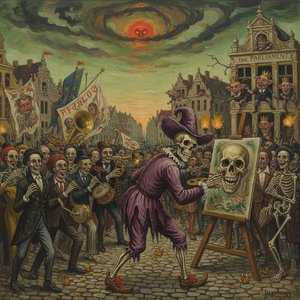
James Ensor (1860–1949) stworzył The Skeleton Painter. Dzieło pochodzi z 1895. Należy do nurtu Symbolist Expressionism. Wykonano w technice Acrylic On Canvas. Przechowywane jest w Koninklijk Museum voor Schone Kunsten w Antwerpia, Belgia.
- 1895
- Acrylic On Canvas
- Koninklijk Museum voor Schone Kunsten, Antwerpia

 Podgląd w skali 1:1

 Ręcznie malowany obraz olejny
 Wyślij jako kartkę
 Udostępnij
 Karta informacyjna


 Pobierz obraz
 Podobne obiekty
 RTG
 Pokaz slajdów
 Pytania i odpowiedzi

 Statystyki
The Skeleton Painter w skrócie
- Tytuł
- The Skeleton Painter
- Artysta
- James Ensor (1860–1949)
- Miejsce urodzenia artysty
- Ostenda, Belgia
- Data powstania
- 1895
- Technika wykonania
- Acrylic On Canvas
- Gdzie można je zobaczyć
- Koninklijk Museum voor Schone Kunsten, Antwerpia, Belgia
- Temat
- skeleton, artist, death, masks, paintings, room
Co przedstawia The Skeleton Painter?
A Dance with Mortality: James Ensor’s “The Skeleton Painter”
James Ensor's "The Skeleton Painter," completed in 1895, is not merely a painting; it’s an unsettling plunge into the subconscious, a meticulously crafted tableau of morbidity and artistic obsession. The image, rendered with a distinctive and increasingly personal style, immediately confronts the viewer with a scene both bizarre and profoundly familiar – a room overflowing with art, dominated by a central figure: a skeleton diligently wielding a paintbrush. This isn’t a morbid spectacle intended to shock for shock's sake; rather, it’s a complex meditation on life, death, creativity, and the inescapable nature of artistic endeavor. Ensor, born in Ostend, Belgium, in 1860, cultivated an intensely individual vision, one deeply rooted in his upbringing amidst the vibrant chaos of a seaside resort town and fueled by a fascination with masks, disguise, and the theatricality of human experience.
The Artist’s Studio – A Realm of Shadows
The setting itself is crucial to understanding the painting's power. The room is crammed with canvases, each bearing witness to Ensor’s restless hand. A dining table, laden with objects—a clock, a partially consumed meal—suggests an interrupted life, a space where sustenance and creation intertwine. The presence of other skeletons, scattered amongst the chairs and leaning against walls, reinforces the pervasive theme of mortality. These aren't simply decorative elements; they are active participants in the scene, almost as if they’re observing or even contributing to the artist’s work. The inclusion of a cat, curled up near the left edge, adds an element of domesticity and perhaps a subtle critique – a creature of instinct and survival nestled within this world of intellectual pursuit.
Symbolism and Technique: A Palette of Unease
Ensor’s technique is immediately recognizable. He employed a thick, impasto application of paint, building up layers of color to create a tactile surface that seems almost sculptural. The palette is deliberately muted – browns, greys, ochres, and deep blues dominate—contributing to the painting's somber mood. The skeletal figure itself is rendered with remarkable detail, highlighting the fragility of bone while simultaneously conveying a sense of focused determination. Notice how Ensor uses strong diagonals – particularly in the arrangement of the chairs and paintings – to create a feeling of unease and instability. The use of color is not about beauty; it’s about evoking emotion, creating a visual atmosphere of melancholy and contemplation. His style evolved significantly throughout his career, moving away from academic influences towards a highly expressive, often unsettling, approach that anticipated the Symbolist movement.
Ensor's Exploration of Artistic Identity
"The Skeleton Painter" can be interpreted as an exploration of Ensor’s own artistic identity and his relationship to mortality. The skeleton artist represents not just death but also the inevitable end of creative endeavor, the fading of inspiration with time. It speaks to the paradox of the artist – someone who often seems detached from the everyday realities of life, yet is ultimately defined by their engagement with them. Ensor’s own struggles with artistic recognition and his rejection of traditional academic training likely fueled this preoccupation with themes of isolation and the ephemeral nature of existence. The painting isn't a celebration of art; it’s a questioning of its purpose and its ultimate significance in the face of oblivion. It invites us to consider what drives an artist to create, knowing that their work, like their own physical form, will eventually succumb to time.
OriginalUniqueArt offers exquisite, hand-painted reproductions of James Ensor’s “The Skeleton Painter,” allowing you to bring this haunting masterpiece into your home or office. Each reproduction is created with the same meticulous attention to detail and expressive technique as the original, capturing the painting's unique atmosphere and emotional depth. Explore our collection today and experience the unsettling beauty of Ensor’s vision.
W którym muzeum znajduje się The Skeleton Painter?
Koninklijk Museum voor Schone Kunsten
Antwerpia, Belgia
Początki i historia muzeum Koninklijk Museum voor Schone Kunsten został założony w 1810 roku, a jego fundamenty tkwią głęboko w dziedzictwie Antwerpskiego Bractwa Świętego Łukasza – instytucji, która tętniła życiem od późnego XIV wieku aż do 1773 roku. Kolekcja muzeum narodziła się z dzieł sztuki należących niegdyś do tego bractwa, tworząc bezpośredni pomost między kupiecką przeszłością miasta a jego niezwykłym rozwojem artystycznym. Zgromadzone zbiory obejmują niezwykle szerokie spektrum chronologiczne, obejmujące dzieła od XIV do XX wieku.


Zdjęcia w wysokiej rozdzielczości dzieła The Skeleton Painter

Domena publiczna: artysta zmarł w 1949.
Inne rozmiary, kadrowanie i cytowanie →James Ensor, The Skeleton Painter (1895), Koninklijk Museum voor Schone Kunsten. Domena publiczna
Odpowiedzi na pytania dotyczące The Skeleton Painter
Gdzie można zobaczyć oryginał „The Skeleton Painter” – James Ensor?
Oryginał dzieła „The Skeleton Painter” można zobaczyć w Koninklijk Museum voor Schone Kunsten, Antwerpia, Belgia.
W którym roku powstało „The Skeleton Painter” – James Ensor?
"The Skeleton Painter" powstało w 1895 roku. Data ta pozwala umiejscowić dzieło w kontekście twórczości James Ensor oraz epoki, w której powstało.
W jakiej technice wykonano „The Skeleton Painter” – James Ensor?
Technika wykonania dzieła „The Skeleton Painter” – James Ensor to Acrylic On Canvas. Reprodukcje mają na celu wierne oddanie wyglądu tej techniki.
Co przedstawia „The Skeleton Painter” – James Ensor?
Tematyka obecna w „The Skeleton Painter” – James Ensor obejmuje skeleton, artist, death, masks, paintings, room, cat, decay. Razem stanowią one podsumowanie tematyki dzieła.
Czy dzieło "The Skeleton Painter" znajduje się w domenie publicznej?
Jeśli chodzi o prawa autorskie, "The Skeleton Painter" znajduje się w należy do domeny publicznej – autorskie prawa majątkowe wygasły.
Któremu artyście przypisuje się "The Skeleton Painter"?
Autorstwo dzieła "The Skeleton Painter" przypisuje się James Ensor.
Do jakiego nurtu należy "The Skeleton Painter"?
„The Skeleton Painter” to dzieło należące do nurtu Symbolist Expressionism. Nurt ten określa tradycję artystyczną, w której osadzone jest dzieło.
Do którego okresu twórczości James Ensor należy dzieło „The Skeleton Painter”?
„The Skeleton Painter” pochodzi z okresu Late Period w twórczości James Ensor. Klasyfikacja ta wiąże dzieło z rozwojem artysty.
W jakim wieku James Ensor stworzył(a) "The Skeleton Painter"?
Gdy w 1895 roku powstało dzieło „The Skeleton Painter”, James Ensor – urodzony/a w 1860 – miał/a 35 lat.
O artyście: James Ensor

1860–1949, Belgia
James Ensor
Wczesne lata, rodzina i kształcenie artystyczne James Ensor urodził się 13 kwietnia 1860 roku w Ostendzie w Belgii. Jego tożsamość została ukształtowana przez specyficzne przecięcie kultur: jego ojciec, James Frederic Ensor, urodził się w Brukseli w rodzinie o angielskich korzeniach, natomiast matka, Maria Catherina Haegheman, była Belgijką. To podwójne dziedzictwo stało się fundamentem dla perspektywy, która często wykraczała poza wąskie ramy lokalnej tradycji. Dorastając, artysta mieszkał w murach sklepu z pamiątkami prowadzonego przez jego rodziców w Ostendzie.
Inne prace James Ensor
 Wej Chrystusa do Brukseli1888
 Portret z Maskami1899
 Kąpieliska w Ostendzie
 Szkielety ogrzewające się przy piecu1889

Eseje o The Skeleton Painter
 Beauty in Mortality: Capturing the Soul of the Skull through the Luminous Lens of Impressionist ArtExplore the profound beauty of mortality through Impressionism. Discover how masters like Monet and Renoir transformed the Memento Mori tra…
 Psychologia zabawnego obrazowania: Eksploracja humorystycznych i kapryśnych malarstw jako katalizatorów dobrostanu emocjonalnego i więzi społecznychOdkryj psychologię zabawnego obrazowania! Eksplorujemy wpływ ekspresjonizmu, surrealizmu i pop-artu na emocje i relacje. Poradniki dla kole…
 James Ensor's Grotesque Visions: Social Commentary & Artistic InnovationExplore the unsettling yet captivating world of James Ensor, a pioneer of Expressionism. Discover his satirical masterpieces, symbolic imag…