Expressionism
The Bad Doctors (James Ensor)
James Ensor (1860–1949) stworzył The Bad Doctors. Należy do nurtu Expressionism. Wykonano w technice Oil On Panel. Przechowywane jest w Fin-de-Siècle Museum w Brussels, Belgium.
- Oil On Panel
- Fin-de-Siècle Museum, Brussels

 Podgląd w skali 1:1

 Ręcznie malowany obraz olejny
 Wyślij jako kartkę
 Udostępnij
 Karta informacyjna


 Pobierz obraz
 Podobne obiekty
 RTG
 Pokaz slajdów
 Pytania i odpowiedzi

 Statystyki
The Bad Doctors w skrócie
- Tytuł
- The Bad Doctors
- Artysta
- James Ensor (1860–1949)
- Miejsce urodzenia artysty
- Ostenda, Belgia
- Technika wykonania
- Oil On Panel
- Gdzie można je zobaczyć
- Fin-de-Siècle Museum, Brussels, Belgium
- Ruch
- Expressionism
- Epoka
- 19th Century
- Temat
- doctors, horror, grotesque, time, symbolism, decay
Co przedstawia The Bad Doctors?
A Descent into Grotesque Symbolism
James Ensor’s The Bad Doctors is far more than a mere depiction of a room; it is a chilling, visceral descent into the depths of societal anxiety. Completed in the late nineteenth century, this masterpiece serves as a darkly satirical panorama, pulling the viewer into a claustrophobic interior that feels less like a physical space and more like a psychological trap. Within this unsettling scene, Ensor orchestrates a collection of distorted figures that seem to emerge from a fever dream, populated by characters that reflect his profound critique of the medical profession and the broader human condition. The composition is intentionally oppressive, with couches and chairs arranged in a way that hems in the viewer, mirroring the suffocating weight of moral decay and corruption that Ensor so masterfully captured.The Visceral Power of Expressionist Technique
To behold this work is to experience the raw power of early Expressionism. Ensor eschews objective reality in favor of a more profound, emotional truth, utilizing thick, palpable brushstrokes that lend a heavy, textural quality to the surface. The artist’s palette is deliberately jarring, dominated by sickly yellows, bruised reds, and murky greens—hues that evoke the very essence of illness and psychological distress. This use of color does not merely decorate the scene; it infects it, creating an atmosphere where decay feels almost tangible. Every stroke contributes to a sense of disorientation, as if the very air within the painting is thick with the scent of mortality and unrest.Symbolism and the Weight of Time
Beyond its striking visual impact, The Bad Doctors is laden with potent symbols that demand deep contemplation. Most haunting are the multiple clocks scattered throughout the room—reminders of time's relentless, indifferent march toward death. A large clock hangs prominently above a physician, acting as a silent witness to the inevitable confrontation with mortality that haunts every figure in the frame. For the discerning collector or interior designer, this piece offers an unparalleled opportunity to introduce a work of immense intellectual and emotional depth into a space. It is a painting that does not merely sit upon a wall; it commands the room, inviting conversation through its complex layers of meaning, from the grotesque masks of identity to the haunting shadows of social critique.W którym muzeum znajduje się The Bad Doctors?
Fin-de-Siècle Museum
Brussels, Belgium
The Fin-de-Siècle Museum Overview Located at 1, place Royale/Koningsplein in Brussels, Belgium, the Fin-de-Siècle Museum occupies a significant position within the Royal Museums of Fine Arts of Belgium. The institution was inaugurated on 6 December 2013. It is partly housed in the former halls of the Royal Museum of Modern Art, creating a physical connection between different eras of Belgian creative expression.


Zdjęcia w wysokiej rozdzielczości dzieła The Bad Doctors

Domena publiczna: artysta zmarł w 1949.
Inne rozmiary, kadrowanie i cytowanie →James Ensor, The Bad Doctors, Fin-de-Siècle Museum. Domena publiczna
Odpowiedzi na pytania dotyczące The Bad Doctors
W którym muzeum znajduje się oryginał "The Bad Doctors"?
Oryginał dzieła „The Bad Doctors” można zobaczyć w Fin-de-Siècle Museum, Brussels, Belgium.
W jakiej technice wykonano „The Bad Doctors” – James Ensor?
Technika wykonania dzieła „The Bad Doctors” – James Ensor to Oil On Panel. Reprodukcje mają na celu wierne oddanie wyglądu tej techniki.
Co przedstawia „The Bad Doctors” – James Ensor?
Tematyka dzieła "The Bad Doctors" to doctors, horror, grotesque, time, symbolism, decay, medicine.
Czy obraz „The Bad Doctors” – James Ensor można swobodnie reprodukować?
Jeśli chodzi o prawa autorskie, "The Bad Doctors" znajduje się w należy do domeny publicznej – autorskie prawa majątkowe wygasły.
Kto stworzył "The Bad Doctors"?
Autorstwo dzieła "The Bad Doctors" przypisuje się James Ensor.
Do jakiego nurtu artystycznego należy „The Bad Doctors” – James Ensor?
„The Bad Doctors” – James Ensor należy do nurtu Expressionism. Nurt ten stanowi stylistyczny kontekst dzieła.
Do którego etapu twórczości James Ensor należy dzieło „The Bad Doctors”?
W dorobku artystycznym James Ensor dzieło „The Bad Doctors” przypada na Mature Period. Ten etap pozwala zestawić je z innymi pracami twórcy.
Z czego wynika obecny status praw autorskich dzieła "The Bad Doctors"?
„The Bad Doctors” – James Ensor jest należy do domeny publicznej – autorskie prawa majątkowe wygasły. Okres ochrony praw autorskich liczony jest od śmierci artysty, która nastąpiła w 1949.
Czy dzieło "The Bad Doctors" pozostało w ojczyźnie swojego artysty?
Nie – dzieło znajduje się poza granicami kraju artysty. James Ensor urodził(a) się w Belgia, natomiast muzeum przechowujące oryginał dzieła „The Bad Doctors” znajduje się w Belgium.
O artyście: James Ensor

1860–1949, Belgia
James Ensor
Wczesne lata, rodzina i kształcenie artystyczne James Ensor urodził się 13 kwietnia 1860 roku w Ostendzie w Belgii. Jego tożsamość została ukształtowana przez specyficzne przecięcie kultur: jego ojciec, James Frederic Ensor, urodził się w Brukseli w rodzinie o angielskich korzeniach, natomiast matka, Maria Catherina Haegheman, była Belgijką. To podwójne dziedzictwo stało się fundamentem dla perspektywy, która często wykraczała poza wąskie ramy lokalnej tradycji. Dorastając, artysta mieszkał w murach sklepu z pamiątkami prowadzonego przez jego rodziców w Ostendzie.
Inne prace James Ensor
 Wej Chrystusa do Brukseli1888
 Portret z Maskami1899
 Kąpieliska w Ostendzie
 Szkielety ogrzewające się przy piecu1889

Eseje o The Bad Doctors
 Emocjonalna Transmutacja w Sztuce Wizualnej: Studium Reprezentacji Afektywnych Poprzez Kolor, Formę i TeksturęZgłębiaj subtelny język emocji w sztuce wizualnej! Analizujemy kolor, formę i teksturę w malarstwie barokowym i ekspresjonistycznym. Eksper…
 The Visceral Canvas: A Collector's Guide to the Emotional Power of ExpressionismMaster the emotional depth of Expressionism through expert analysis of color and form. Explore this visceral movement today.
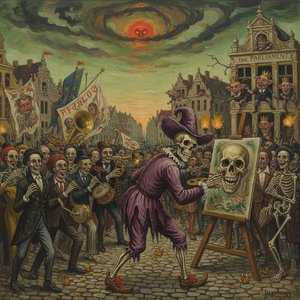 James Ensor's Grotesque Visions: Social Commentary & Artistic InnovationExplore the unsettling yet captivating world of James Ensor, a pioneer of Expressionism. Discover his satirical masterpieces, symbolic imag…