

 Podgląd w skali
 Wyślij jako kartkę
 Udostępnij
 Szczegóły dzieła

 Pobierz
 Podobne obiekty
 RTG
RTG Pokaz slajdów
The Blacksmith
 Academic Classical
 1909
1909 133.0 x 82.0 cm
 Rozwiń treść
Ręcznie malowana reprodukcja olejowa
Ręcznie malowany obraz olejny na płótnie, wykonany na zamówienie przez naszych artystów w wybranym przez Ciebie wymiarze i oprawie. ( Zamów wydruk Kup obraz wysokiej rozdzielczości)




































Wybierz spośród naszych standardowych rozmiarów, które zachowują oryginalne proporcje dzieła sztuki.

Możesz wprowadzić własne wymiary, aby dopasować obraz do konkretnej ramy lub przestrzeni. Jeśli wybrany rozmiar nie będzie odpowiadał proporcjom oryginału, przytniecie dzieło sztuki lub rozszerzymy je o dodatkowe elementy, ręcznie domalowane przez artystę. Przed rozpoczęciem produkcji wyślemy projekt cyfrowy do Twojej akceptacji.
Należy pamiętać, że podgląd na ekranie nie odzwierciedla rzeczywistego przycinania ani rozszerzania obrazu. Tylko projekt dokładnie pokaże ostateczną kompozycję.
Choć oferujemy możliwość zamówienia niestandardowych rozmiarów, zalecamy wybór wymiaru z gotowej listy, aby zachować oryginalne proporcje dzieła.
Po złożeniu zamówienia zespół OriginalUniqueArt.com skontaktuje się z klientem drogą mailową w celu uzyskania instrukcji i prześle wizualizację projektu
Dostawa na całym świecie () w ciągu 3–4 tygodni zamiast standardowych 5 tygodni. (20 Sierpień). Bez kompromisów w kwestii jakości.

Bezpłatna ekspresowa wysyłka na cały świat

Wysokiej jakości płótno lniane

Pełne ubezpieczenie przesyłki

Gwarancja zwrotu należności celnych i podatków importowych

Gwarancja wiernego odwzorowania kolorów

Polityka 60-dniowego zwrotu (tylko w przypadku wad)

Gwarancja 100% zwrotu kosztów

Zniżka przy zamówieniu wielu produktów
 Opcja ze szkłem jest dostępna wyłącznie w rozmiarach poniżej 110 cm

The Blacksmith
Technika reprodukcji
Wymiary reprodukcji
-


Cena całkowita
$ 300
Opis dzieła
About the Painting
The painting depicts a man wearing a black hat and apron, standing in front of a workbench with various tools on it. The Blacksmith appears to be engaged in his work, surrounded by hammers, scissors, and knives. The artwork has a vintage feel to it, evoking a sense of nostalgia and appreciation for the artistry and dedication that went into creating these works of art. Key Features:- The painting is a portrait of a man wearing a black hat and apron
- The artwork measures 133 x 82 cm
- Created in 1909 using oil on canvas
- Currently housed at the Smithsonian American Art Museum
Artist and Style
James Carroll Beckwith was an American artist known for his Academic Classical style. His work, including the Blacksmith, is characterized by its exceptional detail and realism. The painting's use of bold colors and energetic brushstrokes adds to its captivating nature. Learn More: Visit https://OriginalUniqueArt.com to explore more artworks by James Carroll Beckwith and other renowned artists. Discover the beauty of handmade oil painting reproductions, each carefully crafted to capture the essence of the original artwork.The Blacksmith is a testament to Beckwith's skill as an artist and his ability to capture the essence of his subjects. This painting is a must-see for art enthusiasts and anyone interested in exploring the world of Academic Classical art.
For more information on James Carroll Beckwith and his artwork, visit https://OriginalUniqueArt.com or check out the Smithsonian American Art Museum's website to learn more about their collection.
O artyście
James Carroll Beckwith (1852-1917): A Life Etched in Realism
Born amidst the burgeoning American landscape of Hannibal, Missouri, in 1852, James Carroll Beckwith embarked on a journey that would establish him as a significant figure in late 19th and early 20th-century American art. Though he preferred to be known simply as Carroll Beckwith, his name became synonymous with a meticulous naturalist style, deeply influenced by both the artistic traditions of Europe and the evolving spirit of American realism. His story is one marked by resilience – rising from the ashes of personal tragedy to achieve critical acclaim and lasting recognition. The devastating Great Fire of Chicago in 1871, which consumed not only the city but also his early artistic endeavors, proved a pivotal moment, propelling him eastward toward New York City and ultimately, across the Atlantic to Paris.Early Years and Artistic Foundations
James Carroll Beckwith’s formative years were shaped by circumstances that instilled within him an unwavering determination. Born into a family of grocers in Hannibal, Missouri, he experienced profound hardship when his father's business was destroyed by the Great Fire of Chicago in 1871 – a catastrophe that obliterated much of the city and tragically extinguished Beckwith’s initial artistic aspirations. Undeterred by this setback, he relocated to New York City and enrolled at the National Academy of Design under Lemuel Everett Wilmarth, where he honed his skills alongside fellow artists like Cornelius Vanderbilt II House. This period was crucial in establishing his foundational knowledge of art history and technique—a bedrock upon which he would build his distinctive artistic vision. Beckwith’s early training included studies at the Chicago Academy of Design with Walter Shirlaw, fostering a disciplined approach to draughtsmanship and observation that would characterize his entire career.Parisian Refinement: Influence and Training
Beckwith's decision to travel to Paris in 1873 marked a transformative juncture in his artistic development. Recognizing the unparalleled opportunities for artistic enrichment offered by European ateliers, he immersed himself in rigorous instruction under Adolphe Yvon for drawing and Carolus Duran for painting—artists who championed the naturalist style that would become Beckwith’s hallmark. Duran's mentorship proved particularly influential, exposing Beckwith to monumental art projects and fostering a deep appreciation for composition and scale. Crucially, Beckwith forged an enduring friendship with John Singer Sargent, sharing studio space and exchanging artistic philosophies – a relationship that nurtured his creative sensibilities and broadened his intellectual horizons. The Parisian atmosphere instilled within him a profound understanding of color theory and light manipulation—skills he skillfully deployed throughout his prolific output.A Muralist's Vision: Collaborations and Recognition
Beckwith’s talent extended beyond individual portraits; he achieved considerable renown as a muralist, collaborating on ambitious projects that showcased his artistic prowess on a grand scale. His involvement in the decoration of the Palais du Luxembourg in 1877 alongside Sargent—a commission entrusted to him by Duran—provided invaluable experience in tackling large-scale compositions and mastering the demands of monumental art. This undertaking cemented Beckwith’s reputation as a visionary artist capable of capturing complex narratives and conveying powerful emotions through visual storytelling. Furthermore, his unwavering commitment to artistic excellence garnered widespread acclaim: he received honorable mentions at the Paris Exposition of 1889 and gold medals at both the Atlanta Exposition in 1895 and the Exposition Universelle in Paris in 1899—testaments to his enduring contribution to American art.Legacy and Artistic Output
James Carroll Beckwith’s artistic legacy transcends mere stylistic innovation; it resides in his profound engagement with the human condition and his ability to convey beauty and truthfulness through meticulously crafted paintings. His oeuvre encompassed portraits, genre scenes, and landscapes—each infused with a distinctive blend of realism and sensitivity. Notable among his works are “Woman with Guitar,” “Sylvan Toilette,” “A Wistful Look”, "Bassin de Neptune Versailles", “L'Empereur” and “Cathédrale Notre-Dame du Puy (le Puy-en-Velay)”—pieces that exemplify Beckwith’s mastery of technique and his capacity to evoke atmosphere and emotion. His paintings are housed in prominent museums across the United States and Europe, ensuring that his artistic vision continues to inspire audiences today. James Carroll Beckwith's contribution to American art lies not only in his beautiful paintings but also in his dedication to artistic excellence and his lasting impact on generations of artists—a testament to a life devoted to capturing the essence of human experience with unwavering precision and grace.
James Carroll Beckwith
1852 - 1917 , Stany Zjednoczone
Krótka nota
- Artistic Movement Or Style: Naturalist
- Artists Who Influenced This Artist:
- Adolphe Yvon
- Carolus Duran
- Date Of Birth: September 23, 1852
- Date Of Death: October 24, 1917
- Full Name: James Carroll Beckwith
- Nationality: American
- Notable Artworks:
- Woman with Guitar
- Sylvan Toilette
- A Wistful Look
- Bassin de Neptune Versailles
- L'Empereur
- Place Of Birth: Hannibal, USA
Powiązane artykuły

James Carroll Beckwith: Luminism, Spirituality & the American Landscape Tradition
Explore the captivating world of James Carroll Beckwith (1852-1917), a leading figure in American Luminism. Discover his landscapes, portraits & spiritual influences – a deep dive for art enthusiasts and collectors.

James Abbott McNeill Whistler: 25 Arcydzieł Sztuki Pejzażowej i Portretowej | OriginalUniqueArt
Odkryj 25 arcydzieł Jamesa Abbotta McNeilla Whistler'a! Poznaj historię impresjonistycznych pejzaży, portretów i słynnych 'Nokturnów'. Reprodukcje obrazów najwyższej jakości na OriginalUniqueArt.com – inspiracje dla Twojego wnętrza.

Sir Alfred James Munnings: 25 Arcydzieł Malarstwa Koni i Angielskiej Wsi | OriginalUniqueArt.com
Odkryj 25 arcydzieł Sir Alfreda Jamesa Munningsa – mistrza malarstwa koni i angielskiego krajobrazu. Poznaj historię, technikę i piękno jego obrazów. Reprodukcje najwyższej jakości na OriginalUniqueArt.com! Eksploruj pełną kolekcję online.
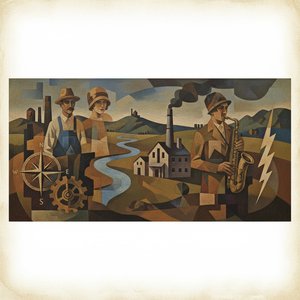
James Otto Lewis: Navigating American Modernism Through Regional Identity & Stylistic Innovation
Explore the captivating portraits of James Otto Lewis, a pivotal figure bridging 19th-century realism & American Modernism. Discover his groundbreaking work documenting Native American culture and regional identity.

James Bard: Navigating Light & Landscape in American Impressionism
Explore the captivating world of James Bard (1815-1897), a meticulous chronicler of 19th-century American maritime life. Discover his detailed steamboat paintings and lasting legacy within the American Impressionism movement.

