Przełącz na wydania drukowane
 Rozwiń treść







































 W przypadku dzieł sztuki lub reprodukcji, których którykolwiek z boków przekracza 105 cm (około 41 cali), rama zostanie wysłana w formie zestawu do samodzielnego montażu. Metoda ta zapewnia bezpieczną dostawę i zapobiega uszkodzeniom podczas transportu.


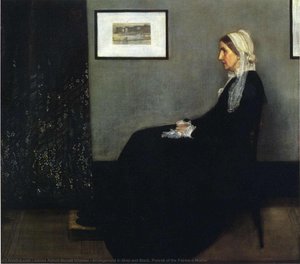
A Quiet Observation: James Abbott McNeill Whistler’s Bibi Valentin
James Abbott McNeill Whistler's “Bibi Valentin,” created in 1859, stands as a cornerstone of Tonalism—a movement that championed subtlety and nuance over bold color palettes. More than just a portrait, it embodies Whistler’s radical aesthetic philosophy: ‘art for art’s sake,’ prioritizing formal beauty and tonal harmony above narrative content or moral instruction.
- Subject Matter & Composition: The artwork depicts a young girl seated on a bed, capturing a moment of serene repose. Whistler employs a triangular composition, positioning the girl's head at its apex to create visual balance. Minimal background space emphasizes the subject’s presence and fosters intimacy.
- Style & Technique – Line Drawing Dominance: Whistler’s masterful technique relies heavily on line drawing—specifically hatching and cross-hatching—to achieve tonal variations and convey texture. Loose, sketchy lines define contours with remarkable precision, mirroring Whistler's belief in capturing essence rather than meticulous detail.
- Color Palette & Atmosphere: The palette is deliberately restrained, utilizing shades of brown and beige on tan paper to evoke a sense of quietude and understated elegance. Whistler’s deliberate avoidance of vibrant hues underscores the artwork’s contemplative mood.
- Symbolic Resonance – Gestural Expression & Emotion: The girl's direct gaze speaks volumes about observation and perhaps melancholy—elements that resonate deeply with Whistler’s artistic vision. The artist’s expressive style communicates a profound connection between himself and his subject, reflecting the humanist spirit of the era.
- Historical Context – Aestheticism & Whistler’s Legacy: “Bibi Valentin” emerged during the height of Aestheticism—a cultural movement that championed beauty for its own sake. Whistler's influence extends far beyond his immediate contemporaries, establishing him as a pivotal figure in modern art and inspiring generations of artists to prioritize form and tonal exploration.
The Detroit Institute of Arts holds one of the two impressions produced from Whistler’s plate, demonstrating the enduring appeal of this seminal work. Its reproduction offers an opportunity to appreciate Whistler's groundbreaking approach to painting—a testament to his unwavering commitment to artistic integrity and a captivating glimpse into the contemplative spirit of Victorian England.
Pytania i odpowiedzi
Kto jest autorem dzieła "Bibi Valentin" i do jakiego nurtu ono należy?
Za dziełem "Bibi Valentin" stoi James McNeill Whistler oraz nurt Tonalism & Aestheticism.
Skąd pochodzą odwiedzający „Bibi Valentin” – James McNeill Whistler?
Dla dzieła „Bibi Valentin” dostępna jest strona Statystyki wyświetleń. Przedstawia ona miesięczną liczbę odwiedzin tego dzieła oraz innych prac artysty, z podziałem na kraje i języki.
Czy dzieło "Bibi Valentin" znajduje się w domenie publicznej?
„Bibi Valentin” – James McNeill Whistler znajduje się w domenie publicznej (należy do domeny publicznej – autorskie prawa majątkowe wygasły). Status ten określa zasady reprodukcji obrazu tego dzieła.
 Podgląd w skali 1:1
 Wyślij jako kartkę
 Udostępnij
 Szczegóły dzieła
 Przewodnik

 Pobierz obraz
 Podobne obiekty
 RTG
RTG Pokaz slajdów
 Pytania i odpowiedzi
 Statystyki