Podgląd w skali
 Wyślij jako kartkę
 Udostępnij
 Szczegóły dzieła

 Pobierz
 Podobne obiekty
 RTG
RTG Pokaz slajdów
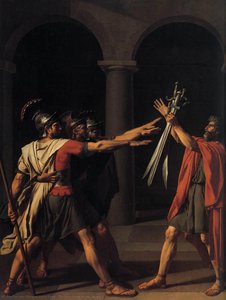
Śluby Horacji
 Olej na płótnie
- Sztuka ścienna
- Neoclassicism
 1784
1784- Renesans
 330.0 x 425.0 cm
 Luwr
Luwr
 Rozwiń treść
Ręcznie malowana reprodukcja olejowa
Ręcznie malowany obraz olejny na płótnie, wykonany na zamówienie przez naszych artystów w wybranym przez Ciebie wymiarze i oprawie. ( Zamów wydruk Kup obraz wysokiej rozdzielczości)




P118B $10

P118H $10

P118W $10

P438Z $10

P508JH $12

P508YH $12

P805H $10

P805Z $10

P919BZ $10

P919G $10

P919XJ $10

P959ZH $10

P968JZ $12

W106C $8

W218G $10

W218JH $8

W218Y $10

W307PJ $10

W316G $10

W316PJ $8

W316Y $10

W398PJ $8

W4111J $10

W500HY $15

W500JH $15

W692G $12

W849H $8

W940BG $15

W953PJ $8




Wybierz spośród naszych standardowych rozmiarów, które zachowują oryginalne proporcje dzieła sztuki.

Możesz wprowadzić własne wymiary, aby dopasować obraz do konkretnej ramy lub przestrzeni. Jeśli wybrany rozmiar nie będzie odpowiadał proporcjom oryginału, przytniecie dzieło sztuki lub rozszerzymy je o dodatkowe elementy, ręcznie domalowane przez artystę. Przed rozpoczęciem produkcji wyślemy projekt cyfrowy do Twojej akceptacji.
Należy pamiętać, że podgląd na ekranie nie odzwierciedla rzeczywistego przycinania ani rozszerzania obrazu. Tylko projekt dokładnie pokaże ostateczną kompozycję.
Choć oferujemy możliwość zamówienia niestandardowych rozmiarów, zalecamy wybór wymiaru z gotowej listy, aby zachować oryginalne proporcje dzieła.
Po złożeniu zamówienia zespół OriginalUniqueArt.com skontaktuje się z klientem drogą mailową w celu uzyskania instrukcji i prześle wizualizację projektu
Dostawa na całym świecie () w ciągu 3–4 tygodni zamiast standardowych 5 tygodni. (20 Sierpień). Bez kompromisów w kwestii jakości.

Bezpłatna ekspresowa wysyłka na cały świat

Wysokiej jakości płótno lniane

Pełne ubezpieczenie przesyłki

Gwarancja zwrotu należności celnych i podatków importowych

Gwarancja wiernego odwzorowania kolorów

Polityka 60-dniowego zwrotu (tylko w przypadku wad)

Gwarancja 100% zwrotu kosztów

Zniżka przy zamówieniu wielu produktów
 Opcja ze szkłem jest dostępna wyłącznie w rozmiarach poniżej 110 cm

Śluby Horacji
Technika reprodukcji
Wymiary reprodukcji
-


Cena całkowita
$ 300
Opis dzieła
Le Serment des Horaces : Un Cri de Culte et d'Héroïsme
Jacques-Louis David’s “Le Serment des Horaces” – a monumental work completed in 1784 and unveiled to immediate acclaim in 1785 – isn’t merely a painting; it’s a visceral embodiment of Roman virtue, civic duty, and the profound sacrifices demanded by loyalty. More than just a historical depiction, this artwork pulsates with an emotional intensity that continues to resonate powerfully today, inviting viewers into a world of stark contrasts, dramatic light, and unwavering resolve. The scene, meticulously rendered in a style emblematic of Neoclassicism, transports us back to 669 BC, the heart of Rome’s legendary conflict with Alba Longa – a struggle resolved not through brute force, but through an oath sworn by three brothers, the Horatii, willing to lay down their lives for the glory of their city. David masterfully captures this pivotal moment, transforming it into a timeless allegory about courage, honor, and the enduring power of collective purpose.
The composition itself is a testament to David’s artistic genius. The scene unfolds within a classically inspired architectural setting – arches and columns subtly suggesting an ancient Roman temple – creating a sense of solemn grandeur. At the painting's core stand the three Horatii brothers, their muscular physiques and determined expressions radiating strength and resolve. Each brother raises his sword aloft, mirroring the gesture of their father, who holds out the weapons as symbols of duty and sacrifice. The pyramidal structure, a hallmark of Neoclassical art, draws the eye directly to this central act of commitment, establishing a clear hierarchy of importance. Notice how David deliberately isolates these figures against a muted, almost somber background – a strategic choice that amplifies their heroic stature and underscores the gravity of their decision.
La Danse des Ombres : Symbolisme et Contraste
Beyond its formal brilliance, “Le Serment des Horaces” is rich in symbolic meaning. The stark contrast between the men – embodying civic duty and masculine strength – and the women on the right side of the composition immediately establishes a powerful dichotomy. These figures, representing the domestic sphere, are consumed by grief and lamentation, their faces etched with sorrow as they witness the brothers’ impending sacrifice. This deliberate juxtaposition highlights the tension inherent in any society: the call to public service versus the personal bonds of family and love. The weeping women aren't presented as obstacles to the heroic act; rather, they serve as a poignant reminder of the human cost of such devotion – a recognition that every act of valor comes with an inevitable price.
The color palette further reinforces this symbolic narrative. David employs a restrained range of earthy tones – browns, grays, and ochres – creating a sense of seriousness and solemnity. The dramatic use of light and shadow – *chiaroscuro* – sculpts the figures, emphasizing their muscular forms and highlighting the intensity of their expressions. The stark contrast between the bright highlights on the brothers’ faces and weapons and the deep shadows enveloping the women creates a visual metaphor for the conflict between duty and emotion, action and sorrow. The subtle use of red in the swords adds to the dramatic effect, symbolizing both courage and bloodshed.
Un Héritage Néoclassique : Influence et Impact
“Le Serment des Horaces” was an immediate sensation upon its unveiling, solidifying Jacques-Louis David’s position as a leading figure in the Neoclassical movement. The painting's emphasis on classical ideals – reason, order, and civic virtue – resonated deeply with audiences during a period of significant social and political upheaval in France. It served as a visual manifesto for the values that would ultimately underpin the French Revolution, advocating for a return to the principles of ancient Rome and Greece. The work’s influence extended far beyond the art world, shaping public opinion and inspiring generations of artists and intellectuals.
Today, “Le Serment des Horaces” remains one of the Louvre Museum's most treasured possessions – a testament to David’s artistic mastery and its enduring power. Reproductions, such as those offered by OriginalUniqueArt, provide an opportunity for art enthusiasts to experience this iconic masterpiece firsthand, bringing its dramatic composition, profound symbolism, and timeless message into their own homes or spaces. The meticulous detail of these reproductions ensures that every brushstroke and color is faithfully captured, allowing viewers to appreciate the full beauty and emotional impact of David’s extraordinary work.
Répliques d'Art : Un Voyage dans l'Histoire
OriginalUniqueArt offers high-quality, hand-painted oil painting reproductions of “Le Serment des Horaces,” meticulously crafted to capture every nuance of the original. These reproductions are not merely copies; they are artistic interpretations that honor David’s legacy while providing a tangible connection to this pivotal moment in history. The availability of these reproductions allows art lovers and collectors alike to own a piece of this iconic artwork, celebrating its enduring beauty and historical significance. Explore our selection today and bring the drama and inspiration of “Le Serment des Horaces” into your world.
O artyście
A Brushstroke Across Revolution: The Life and Art of Jacques-Louis David
Jacques-Louis David, born in Paris in 1748, was more than just a painter; he was a visual chronicler of an era defined by upheaval, idealism, and the relentless pursuit of new orders. His life mirrored the dramatic shifts unfolding across France – from the waning opulence of the Rococo to the austere clarity of Neoclassicism, and ultimately, through the tumultuous years of revolution and Napoleonic glory. A childhood marked by the early loss of his father and a facial impediment that initially hindered his speech seemed only to sharpen his observational skills and fuel an unwavering dedication to artistic mastery. Though initially apprenticed to François Boucher, David quickly found himself drawn to the more morally resonant work of Joseph-Marie Vien, whose emphasis on history painting and classical subjects resonated with a burgeoning sense of purpose within the young artist. His early attempts to win the prestigious Prix de Rome were fraught with frustration, yet these repeated setbacks only intensified his resolve, forging a relentless perfectionism that would characterize his entire career.The Birth of Neoclassical Drama
David’s artistic evolution wasn't merely a stylistic shift; it was a philosophical statement. He rejected the frivolous ornamentation and playful themes of the Rococo, embracing instead the clarity, order, and moral seriousness inherent in classical antiquity. This commitment was profoundly influenced by archaeological discoveries at Pompeii and Herculaneum, which unveiled a world of Roman art and architecture previously lost to time. These unearthed ruins provided him with an idealized vision of republican virtue and civic duty – principles he would translate into his paintings. His breakthrough came with “Oath of the Horatii” (1784), a painting that transcended mere artistic skill to become an emblem of civic virtue and patriotic sacrifice. The stark composition, dramatic lighting, and precise draftsmanship were revolutionary, signaling a decisive break from the past. It wasn’t simply *what* he painted but *how* – a deliberate construction designed to evoke powerful emotional responses and inspire contemplation on themes of duty, honor, and self-sacrifice. The figures are rendered with an almost sculptural quality, their bodies conveying both strength and vulnerability, while the pyramidal composition creates a sense of stability and order. This work didn't just announce a new style; it foreshadowed the ideological currents that would soon sweep across France.Revolution and Remembrance: Art as Political Weapon
As the French Revolution erupted in 1789, David was not merely an observer but an active participant. A fervent supporter of the revolutionary cause and a close associate of Maximilien Robespierre, he saw art as a powerful tool for shaping public opinion and immortalizing the ideals of the new republic. His paintings during this period became potent symbols of revolutionary martyrdom and republican fervor. Perhaps his most iconic work from this era is “The Death of Marat” (1793), a hauntingly realistic depiction of the assassinated journalist, transformed into a secular saint. The painting’s stark simplicity – the pale body, the makeshift desk, the poignant letter clutched in Marat's hand – elevates the scene to a level of profound emotional resonance. David deliberately chose to depict Marat in a state of vulnerability and suffering, emphasizing his sacrifice for the cause of liberty. This image was widely circulated throughout revolutionary Paris, serving as a powerful reminder of the price of freedom. He also created “The Death of Socrates” (1787) and "The Lictors Bringing Brutus the Bodies of His Sons" (1789), both exploring themes of sacrifice and civic duty in the face of tyranny. During this time, David served on the Committee of Public Safety, a testament to his commitment to the revolution.From Revolution to Empire: Serving Napoleon
The fall of Robespierre marked another turning point in David’s career. With remarkable adaptability, he navigated the shifting political landscape and aligned himself with Napoleon Bonaparte, becoming the First Consul’s official court painter. This new patronage ushered in a period of grand-scale commissions designed to glorify Napoleon’s victories and achievements. “Napoleon Crossing the Alps” (1801-1805) is perhaps the most famous example – a masterful piece of propaganda that presents Napoleon as a heroic, almost mythical figure conquering both nature and adversity. The painting utilizes dramatic lighting, dynamic composition, and carefully chosen details to create an image of unparalleled grandeur and power. “The Coronation of Napoleon” (1807), an immense canvas capturing the opulence and grandeur of the imperial ceremony, further cemented David’s position as the preeminent artist of the Napoleonic era. During this time, his palette subtly shifted, incorporating warmer Venetian colours while maintaining the precision and clarity that defined his style. He also produced portraits of Napoleon and other prominent figures, solidifying his role as the Emperor's official visual propagandist.Legacy and Influence
The Bourbon Restoration in 1814 brought renewed peril for David, whose association with the fallen Napoleon made him a target of persecution. He chose exile in Brussels in 1816, where he continued to paint and teach until his death on December 29, 1825. Despite facing political challenges, David’s influence remained profound. He trained numerous pupils, including Jean-Auguste-Dominique Ingres, who would become one of the most important neoclassical painters of the 19th century. David's emphasis on draftsmanship, composition, and historical accuracy left an indelible mark on French art. *His legacy extends beyond mere imitation*; his expressive distortions of form and space even foreshadowed the innovations of later artists like Henri Matisse and Pablo Picasso. Jacques-Louis David was not simply a painter of his time; he *defined* it, capturing its spirit of revolution, ambition, and enduring ideals on canvas for generations to come.
Jacques-Louis David
1748 - 1800 , Francja
Krótka nota
- Artistic Movement Or Style: Neoklasycyzm
- Artists Or Movements Influenced By This Artist:
- Ingres
- Matisse
- Artists Who Influenced This Artist:
- Vien
- Poussin
- Date Of Birth: 30 VIII 1748
- Date Of Death: 29 DC 1825
- Full Name: Jacques-Louis David
- Nationality: Francuz
- Notable Artworks:
- Oaths Horatii
- Śmierć Marata
- Napoleon na Alpach
- Place Of Birth: Paryż, Francja
Powiązane artykuły

Echa Olimpu: Mity w sztuce Zachodu – od antycznych korzeni do współczesnych reinterpretacji
Odkryj fascynującą historię mitów w sztuce Zachodu! Analizujemy wpływ greckich bogów na ikonografię, reinterpretacje klasycznych opowieści i ich obecność we współczesnej kulturze. Ekspercka wiedza dla miłośników sztuki.

Neoklasycyzm: Powrót do antyku i triumf rozumu w sztuce
Poznaj neoklasycyzm – fascynujący nurt sztuki inspirowany antykiem i ideami oświecenia. Analiza architektury, malarstwa i muzyki z perspektywy historyków sztuki. Odkryj dzieła Davida, Strawinskiego i wpływ Winckelmanna.

Jacques-Louis David: Neoclassical Ideals & Revolutionary Witness
Explore the life & art of Jacques-Louis David, leading Neoclassical painter of the French Revolution. Discover iconic works like 'The Death of Marat' and his lasting impact on art history. Expert analysis & high-quality reproductions at OriginalUniqueArt.
Timeless Legends: A Curated Guide to the Eternal Allure of Mythological Masterpieces
Embark on a sophisticated journey through the eternal allure of mythological art. Discover how master painters breathe life into ancient legends, from Greek deities to Baroque masterpieces, and learn to curate these timeless narratives within your own exquisite art collection.
Neoklasycyzm: Powrót do antyku i trwałe dziedzictwo w sztuce i kulturze
Poznaj neoklasycyzm – fascynujący powrót do antycznych ideałów w sztuce i architekturze. Analiza dzieł, wpływ na kulturę polską i europejską. Ekspercka wiedza o mistrzach jak David i Ingres.